Guides
How to avoid common neon sign restoration mistakes before you publish
Neon sign restoration mistakes to avoid in 2027, from unsupported claims and weak image records to unclear disclosures and improper property-specific advice.
In a neon sign restoration article, the most avoidable mistakes happen before anyone discusses physical work: a weak source can become a confident claim, and an undated photo can become a condition finding. A provider quote can look like independent certification.
The safer, more useful approach: document what a record actually shows and explain what remains unknown. Route property-specific questions to an appropriate responsible process.
What to take away
- Do not turn a visible change into a diagnosis.
- Keep source links, image credits, captions, and dates together.
- Attribute owner and provider statements instead of presenting them as independent facts.
- Separate historical context from present operations, access, ownership, and safety.
- Correct a material error with a dated source note instead of silently rewriting it.
Mistake 1: Treating a photo as a conclusion
A photo may be useful evidence, and its value depends on its date, viewpoint, source, caption, and link to the claim.
A wide streetscape image can show a sign was visible from a given direction on a given day. It cannot alone show why the sign looks different, who owns it, whether it operates, or whether an area is safe.
The National Archives' photograph-research guidance points researchers toward photographic records and access tools. It is not an instruction for a sign owner. Its limited editorial lesson is straightforward: identify the image source, preserve its finding information, and write a factual caption before using it to support public wording.
The Library of Congress Prints and Photographs collections provide image records with descriptive and rights information. They do not answer a current site question. They support checking the item record and retaining the context for an image used in a feature.
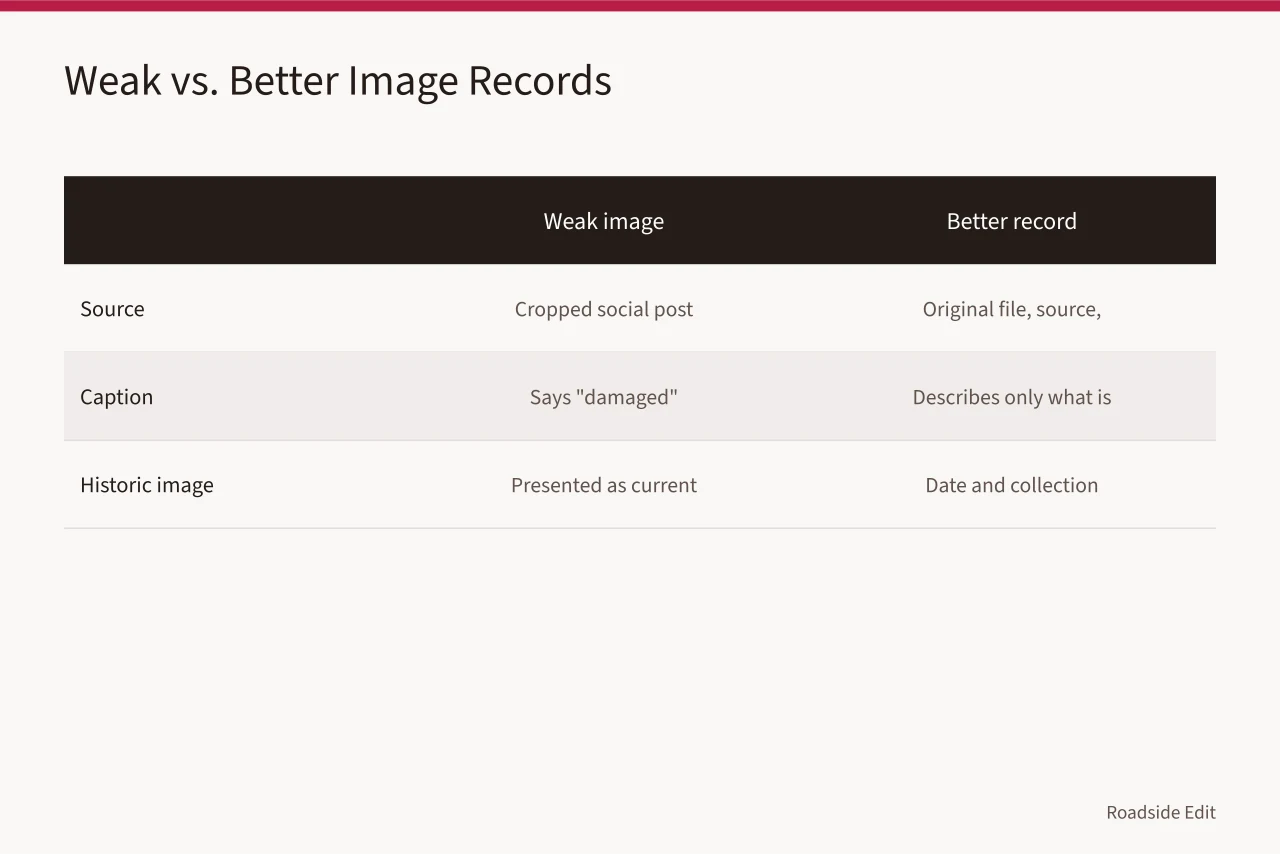
| Weak image practice | Better record |
|---|---|
| Cropped social post with no source | Original file or clear source reference, date, and credit |
| Caption says "damaged" | Caption describes only what is visible and where it was photographed from |
| Historic image presented as current | Date and collection are stated; historical context is kept separate |
| Illustration presented as owner evidence | Image is labeled illustrative and not property-specific |
Mistake 2: Making the headline more certain than the source
Headlines and listicle headings often spread farther than the source note. Avoid words such as "safe," "approved," "original," "best," or "fully restored" unless an appropriate source supports the exact word. A compelling feature does not need inflated language. A headline can identify the subject, place it in context, and state the article's limited purpose.
Read the headline alongside the first paragraph and image caption. If the headline promises a conclusion that the source does not establish, revise it before publication. This simple check prevents a careful body section from being undermined by its own title.
Mistake 3: Blurring historical and current records
An archive item can support a local story. It may show a business name, a date, an earlier appearance, or a community setting. It should not be used as proof of current ownership, operating status, access conditions, or treatment results. Store historical sources and current information in different parts of the research file.
This separation also helps with corrections. When a current owner updates a visitor instruction, the update belongs in a dated current-information record. It should not overwrite a historical caption or cause a writer to recast old evidence as a present finding.
The National Park Service documentation standards and guidelines concern recording historic properties. They do not establish a specific sign's status, condition, or treatment. They support keeping dated descriptions and evidence limits with the historical material used in an article.
Mistake 4: Treating a provider statement as editorial certification
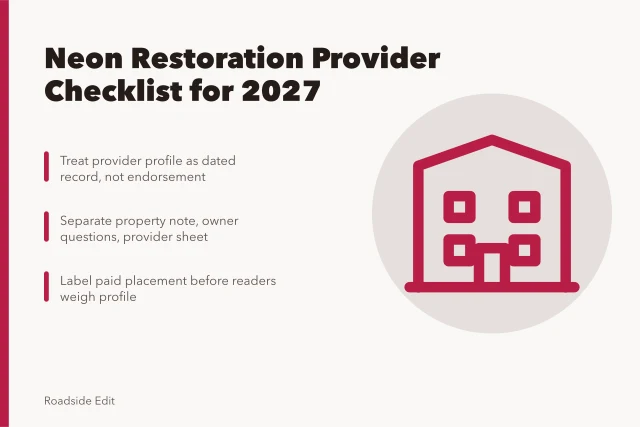
A business may accurately describe its services, hours, reported project role, or geographic coverage. That information can help in a paid placement or directory. It must stay attributed to the business and be clearly disclosed when compensation or placement is involved.
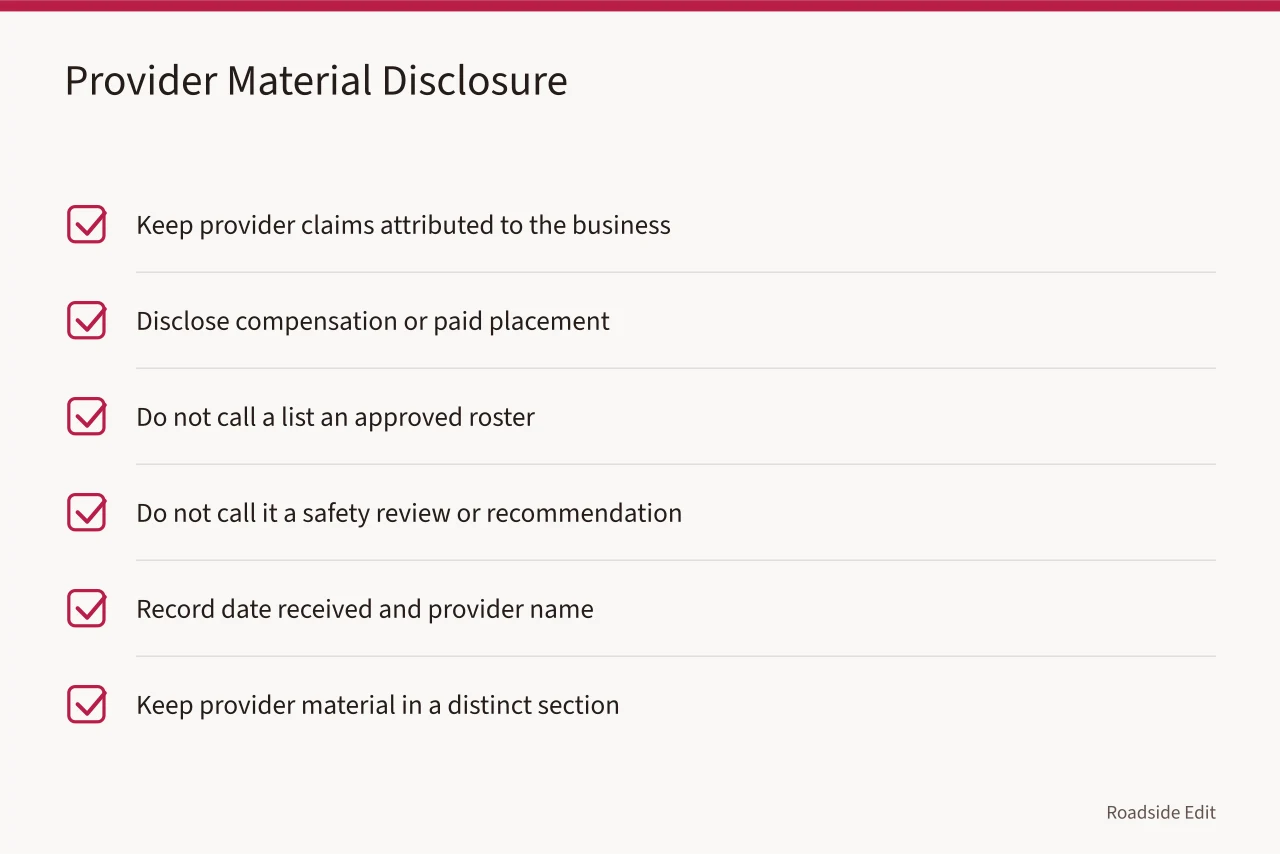
Do not call a provider list an approved roster, a safety review, or a recommendation unless the article can prove that exact process.
Keep provider material in a distinct section. Record the date received, the provider name, any supporting document, and the disclosure language. This protects both the publisher and the business from a claim that was never intended.
The Federal Trade Commission's endorsement guides address endorsements and testimonials in advertising. They do not certify providers or projects. They support visible disclosure and attribution when commercial material appears in editorial content.
Mistake 5: Giving property-specific instructions in a general article
An article cannot see the actual sign, its equipment, its setting, or the current local requirements that may apply. It should not instruct a visitor, writer, volunteer, or owner to test, clean, open, move, install, or repair anything. The responsible article records the observable fact, identifies the access context, and asks a narrow question for the appropriate party.
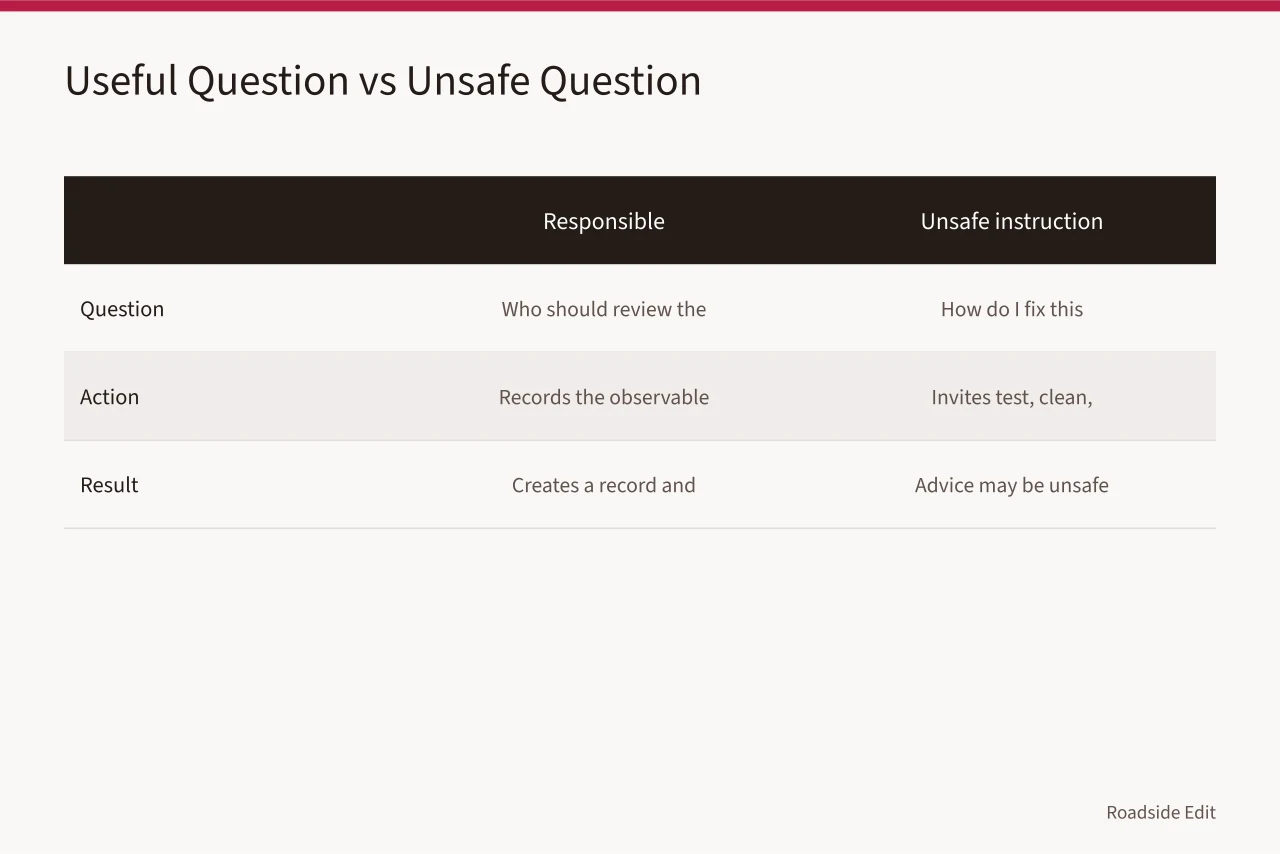
For example, "Who should review the dated observation before public copy is updated?" is a useful handoff question. "How do I fix this sign?" is not. The first creates a record; the second invites advice that may be unsafe, incomplete, or unrelated to the property.
Mistake 6: Losing the correction trail
When an article changes, retain a brief correction record: the old claim, the revised wording, the source that prompted the revision, and the date. This does not require publishing every editorial detail. It does require preserving enough history that a later editor can see why a statement changed.
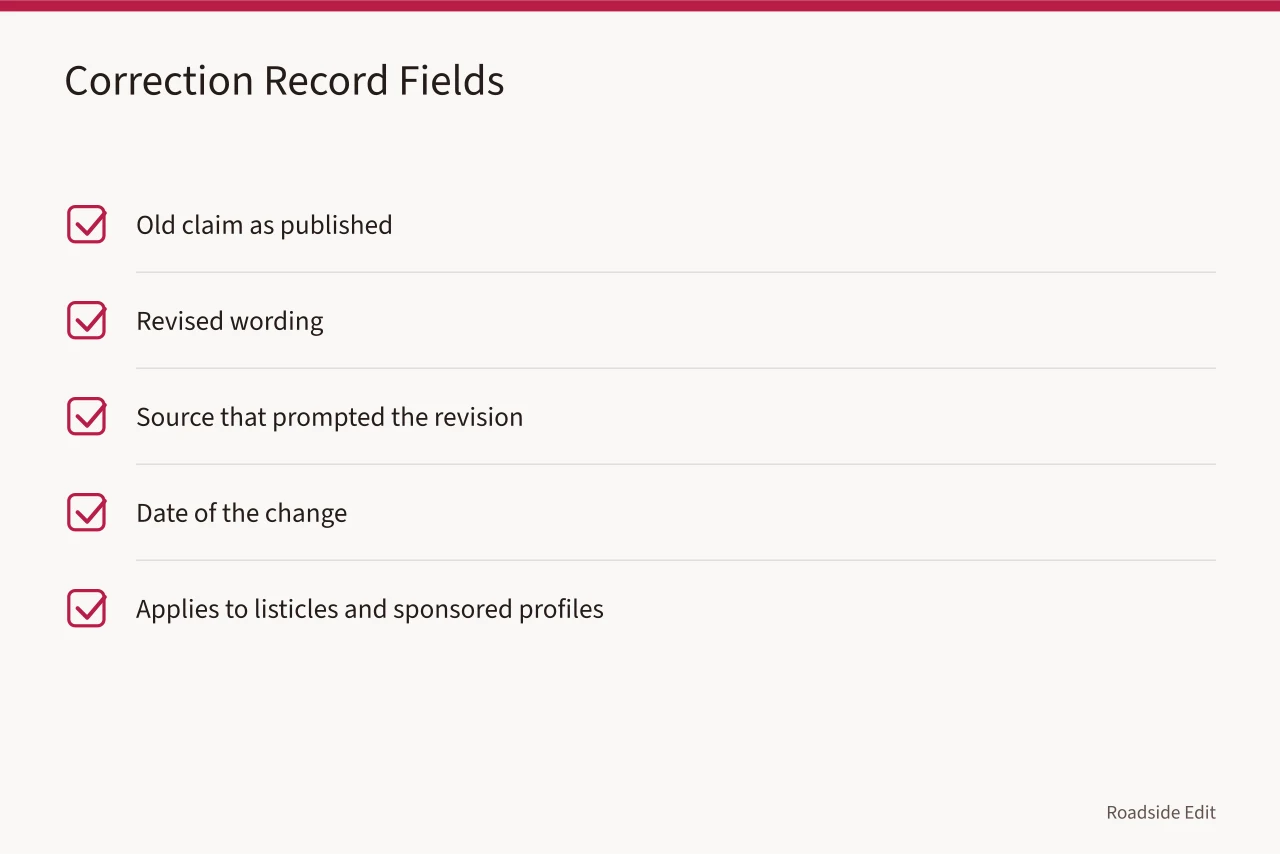
The correction trail is especially valuable for listicles and sponsored profiles. These formats are easy to update and easy to copy. A dated source note helps prevent an old, incorrect phrase from returning after the page has been refreshed.
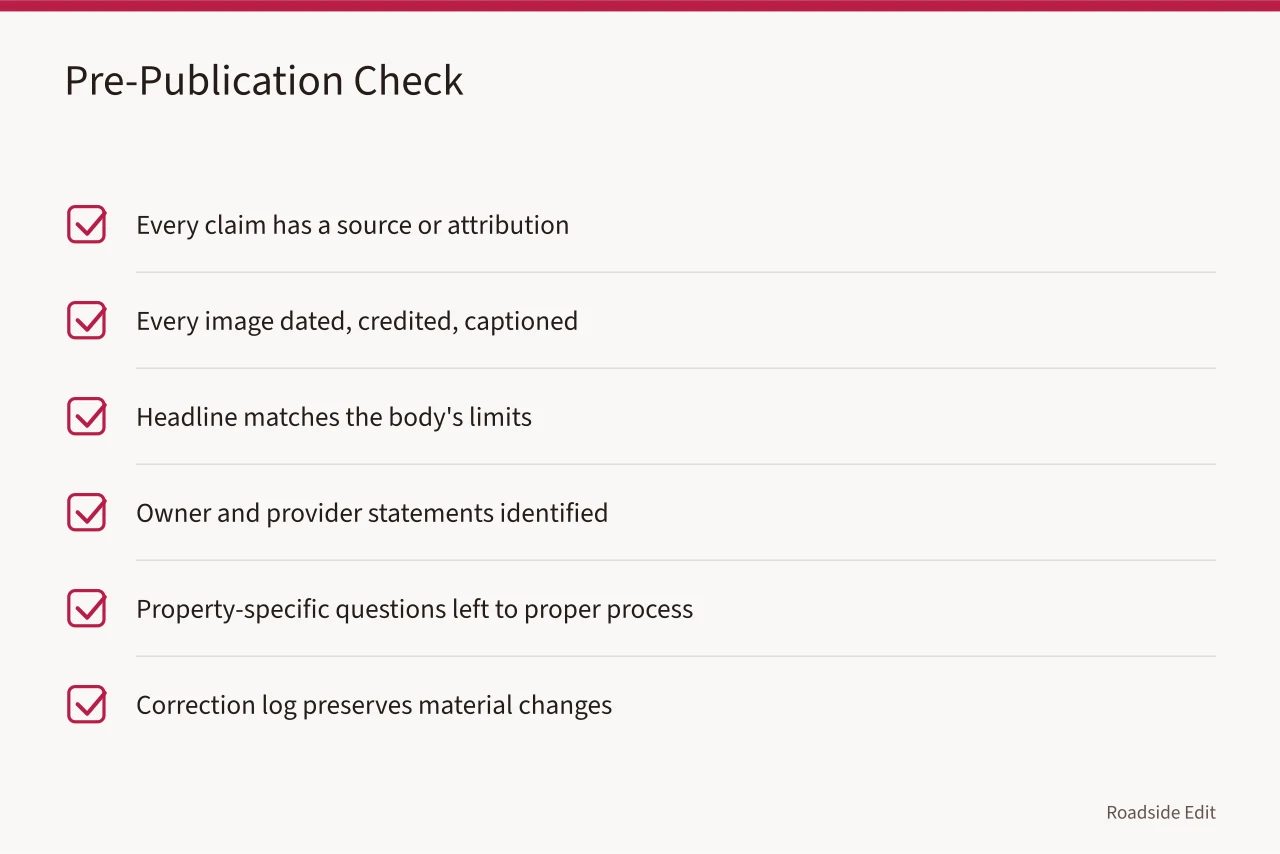
A pre-publication check
Before publication, ask the following questions.
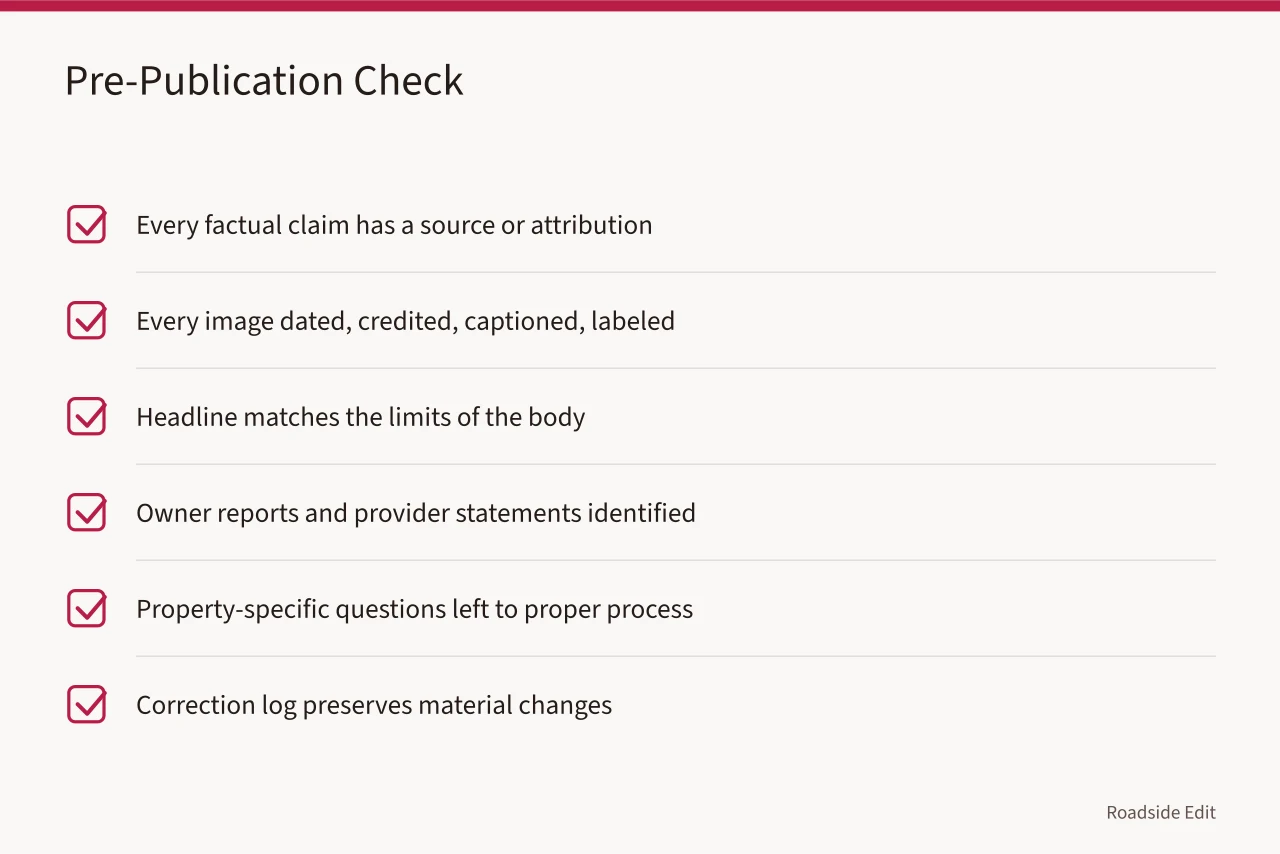
This short review is more valuable than adding unnecessary technical detail. It makes the article trustworthy while preserving room for future, properly sourced updates.
Mistake 7: Publishing a source without its context
A link alone is not a research record. Save the page title, organization, access date, the sentence it supports, and any important limitation.
A public archive may describe an historical photograph but not its present condition, an owner statement may describe current access but not history, and a provider page may describe services but not an independent assessment.
These distinctions should survive long after article drafting.
For a recurring feature, use a small claim sheet. Give each claim an identifier, source link, source date, status, and the page section where it appears. The sheet does not need to be public. It gives editors a practical way to correct a claim after a source moves, a caption changes, or an owner provides new information.
Mistake 8: Confusing an update with proof
An update is not automatically verification. An owner may announce a temporary access change, a business may report it has been hired, or a social post may share a new photograph.
Preserve the information and identify who supplied it, then decide whether the article needs an attributed update, more checking, or no change. Do not turn a new statement into a broader conclusion just because it is recent.
This is especially important for annual pages. A 2027 heading can help readers recognize the article's currency, but the year should not conceal an old source or imply that every fact was verified in 2027. State the relevant update date, keep source dates in the record, and revise only the claims the evidence actually changes.
Mistake 9: Letting a listicle become an endorsement list
Listicles can serve readers when they explain the inclusion standard, label paid entries, and distinguish an organization's own description from editorial fact. They become unreliable when ranking language, awards, safety claims, or historic status is added without a source. A simple inclusion note is better than hidden criteria.
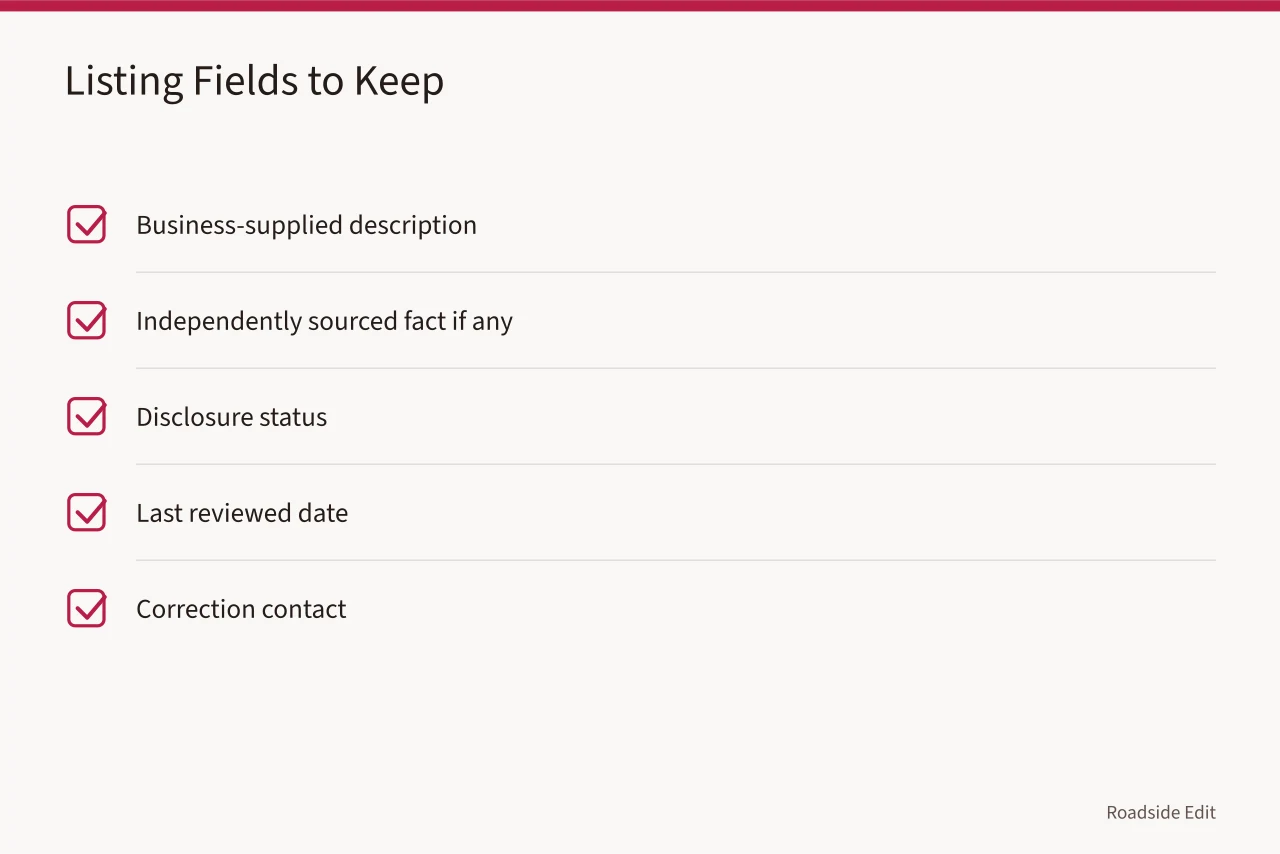
For every listing, keep the same fields: business-supplied description, independently sourced fact if any, disclosure status, last reviewed date, and a correction contact. Consistent fields let readers compare entries fairly and give a business a clear way to request a factual correction without pressuring the editorial process.
Mistake 10: Forgetting the reader's next step
An article should not leave a reader with a dramatic observation and no responsible path forward. If information is incomplete, say what has been confirmed, identify the source, and point to the appropriate owner, public office, archive, or qualified process for the unanswered question. Avoid generic calls to inspect, repair, or test a sign.
This makes a correction-friendly article more useful than a confident but unsupported guide. It gives local businesses and agencies a sensible way to contribute accurate information while keeping editorial judgment traceable and separate from paid placement.
Common questions
Can a writer describe what a photo shows?
Yes. Use a factual caption with the date, location context, and source. Avoid describing cause, safety, ownership, or treatment unless a specific source supports it.
Should a sponsored business be excluded from an article?
Not necessarily. Label the relationship, attribute the business-supplied information, and keep it separate from independent editorial claims.
What is the most common publication mistake?
Using a single source for a claim it does not actually establish. Match each sentence to the record that supports it.
Is it better to remove an uncertain claim?
Usually, yes. You can retain the question in the research file and add it later when an appropriate source confirms it.