Reviews
Part of Motel exterior cost planning: 7 steps before you ask for a 2027 estimate
Motel exterior cost planning: 7 questions to ask before comparing 2027 bids
Motel exterior cost questions for 2027 help owners compare scope, assumptions, evidence, and change records before treating an estimate as a decision.
A motel exterior estimate is a description of work, not a price. Two documents can carry the same total and describe different jobs. The sign face, the entry canopy, the wall veneer, and the walkway slab are four separate scopes. The roof edge and the parking apron are two more scopes with separate trades.
This guide gives owners and preservation committees seven questions for reading early cost information. It is not a bid form, a contract, or a tax opinion.
What to take away
- Name the exterior element before you compare totals. A canopy soffit and a wall face are not one scope.
- Ask what evidence the number rests on: a dated photo, an owner record, a site review, or an assumption.
- Put assumptions, exclusions, and change terms in the same worksheet as the total.
- Check license and insurance claims through the issuing state or county office, not the provider's own page.
- Get the work description in writing before any payment, per FTC consumer guidance.
What exact work does the number describe?
"Motel exterior work" is not a scope. A figure can be valid for a porcelain-enamel sign face. It can also be valid for a canopy soffit, a brick veneer wall, a walkway slab, or a roof edge. They are not the same request, and their totals are not comparable.
State four things for each line: the location on the property, the visible feature, the deliverable, and the boundary where the work stops.
| Question | What a useful answer contains | What it does not prove |
|---|---|---|
| What element is named? | Sign face, canopy, wall, walkway, roof edge, or parking apron | That other elements are included |
| What is the deliverable? | Survey, research, drawings, repair, or construction | Final acceptance |
| What evidence was used? | Dated photo, owner record, site review, or stated assumption | Hidden condition or permit result |
| What is excluded? | Work, fees, access, materials, or approvals outside the figure | That exclusions will not matter |
| What is the date? | Date prepared and the event that could change it | A future price |
The National Park Service cost-estimating quality-assurance checklist calls for a stated basis of estimate, identified data sources, explained assumptions and allowances, and attention to major changes between versions. Review the NPS cost-estimating checklist. It applies to NPS projects, not to your motel. The transferable lesson is that a number needs a stated basis before anyone can evaluate it.
What evidence supports the scope?
Ask the cost author what they used: a public image, an owner-supplied record, a site visit, drawings, or a condition note. One or a combination changes what the number means.
A photo-based figure is an early planning input. It is not a finding about what is behind the brick veneer, where water travels, or what the final treatment will be. A 1950s porcelain-enamel sign and a 1960s plastic-faced box sign read differently in a photograph, and neither tells you the condition of the can.
Label each input in your comparison sheet:
- Visual-only input: a dated image or public view, with no property access implied.
- Owner-supplied input: information attributed to the owner or manager.
- Site-specific input: information its author states came from an authorized review.
- Open item: a fact that could change the scope and is not yet known.
The Government Accountability Office's cost-estimating guide lists what makes an estimate reliable: a well-defined purpose, documented data, and a complete account of assumptions. Read the GAO cost-estimating guide. It is federal guidance and does not set your price. It supports one editorial point: documents built on different information should not be ranked as if they describe the same work.
Which assumptions could change the comparison?
An assumption is not an error. It is a condition that needs a visible label. Access may be assumed. A material may be described from a distant image. A local review may be pending. Hidden assumptions let a lower total look better while describing less work.
| Assumption to name | Follow-up question |
|---|---|
| Access | Who can authorize a review, and which areas are unavailable? |
| Existing condition | What record identifies it, and what cannot be seen? |
| Material | Was it documented, sampled, or only described? |
| Approvals | Which office or owner must decide first? |
| Time | What date or event could change labor, access, or scope? |
| Weather context | Does an exterior observation depend on a season or a storm event? |
Do not write that an estimate includes an item because it would seem sensible. Ask the author. Keep the question and the answer with the same version of the sheet, so a later reader can see whether the scope changed or the wording was misread.
How should proposals and agreements be distinguished?
A cost document may be a preliminary estimate, a proposal, a contract price, an invoice, or a change request. Those titles can carry different meanings. Do not assign a legal effect to a document title. Record how its author described it and send contract questions to your attorney.
The Federal Acquisition Regulation discusses how contract type is determined in federal purchasing. See FAR guidance on contract type. Federal procurement rules do not govern a motel project. The limited habit worth borrowing is that form and allocation of uncertainty matter, so never read a price without knowing the agreement type behind it.
Keep these stages in separate fields:
| Stage | Record |
|---|---|
| Idea | The question being explored and the evidence still needed |
| Estimate | Author, date, scope basis, assumptions, and exclusions |
| Proposal | Terms the provider states it is offering |
| Authorization | The owner or authority decision, if documented |
| Change | New fact, revised scope, and effect on the prior figure |
| Completion | A sourced status statement, not an inference from a payment or a photo |
What should be checked before money changes hands?
Payment terms vary by state and by contract, so this guide cannot set them. It can list what the Federal Trade Commission tells consumers to check.
The FTC advises checking a contractor's license with state or county government, requesting proof of insurance, getting a written contract, and not paying in full before the work is done. Read the FTC contractor-scam consumer alert.
That is consumer-protection guidance. It is not a project-management rule and not an endorsement test. Its lesson is that transaction claims deserve a written record and verification through the issuing office.
When a general article names a provider, do not call that provider affordable, licensed, insured, or recommended. This applies without a current, source-matched record. Label provider-submitted language and sponsored listings as such. A paid placement is not independent proof of price or outcome.
How can a reader compare figures fairly?
Put each document in the same worksheet and compare one field at a time. If one figure includes a site review and another rests on a photo, note the difference. If a figure is dated months earlier, do not treat it as current. If a document omits an element, mark it unanswered.
| Field | Estimate A | Estimate B | Editorial note |
|---|---|---|---|
| Work element | State exact boundary | State exact boundary | Are the boundaries comparable? |
| Evidence basis | List source type | List source type | Does either need more review? |
| Assumptions | Quote or summarize | Quote or summarize | Which facts remain open? |
| Exclusions | Name them | Name them | Could they change total scope? |
| Date | State date | State date | Is either document stale? |
Do not manufacture a winner. A useful comparison may conclude that two figures cannot yet be compared because their scope, date, or evidence differs. That is better information than a ranking by total alone.
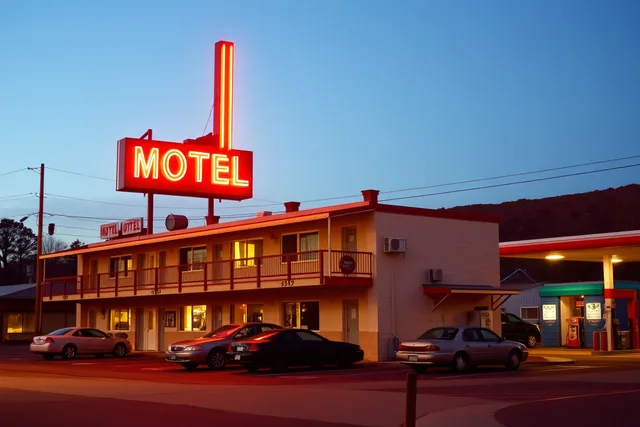
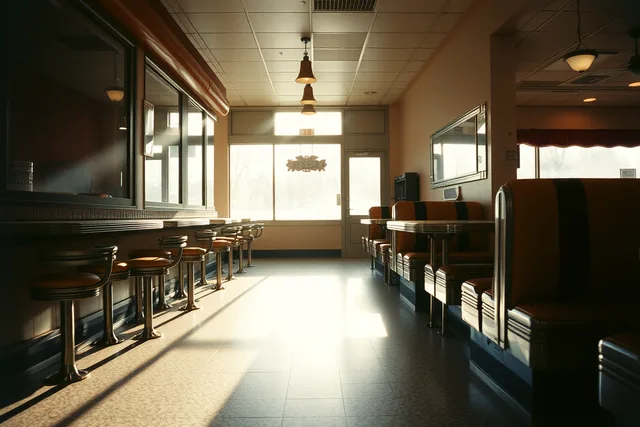
The image is illustrative. It does not establish the cost, condition, ownership, or project status of any motel named here.
A cost-comparison handoff
Before a decision, write a dated handoff note. Include the decision question, each document's version, evidence basis, assumptions, and exclusions.
Add the open questions, the next decision owner, and any change since the first comparison. Keep the note with its sources. It gives an editor, an owner, or a later reviewer a clear account of what the figures covered and what they did not.
Pause the comparison when the scope is vague, access is unresolved, a required authority is unknown, or a price rests on a condition nobody has checked. The next step may be research or a qualified review, not another total. For the fuller sequence, see motel exterior cost planning and the budget notes.
Common questions
Can I rank estimates by total price?
Not until scope, assumptions, exclusions, evidence basis, and date can be compared on the same terms. Two totals built on different scopes are two different projects.
What if an estimate omits a key detail?
Record the gap and ask its author to clarify. Do not infer that the item is included, and do not let the omission pass as an exclusion.
Does a public photo establish the work needed?
No. It documents a visible view, not hidden conditions or a project-specific treatment. Condition calls belong to a qualified reviewer on site.
Is an estimate an approval to begin work?
No. An estimate records what its author offered under stated assumptions. Authorization belongs to the responsible owner and any relevant authority.