Guides
A motel exterior planning workflow, from decision question to next step
Planning a motel exterior project for 2027 helps U.S. readers define scope, document conditions, identify authorities, compare options, and keep records.
Exterior planning starts before a repair, redesign, paint decision, lighting change, sign update, or contractor conversation. The first job is not to select a treatment. It is to define what question needs an answer, what information already exists, who has authority to make decisions, and what evidence is missing.
This guide helps U.S. readers organize an early planning record for a motel exterior. It does not inspect a building, diagnose a condition, select a material, determine code requirements, authorize work, or recommend a provider.
What to take away
- Set a project question and location boundary before collecting ideas.
- Record existing conditions with dates, sources, and clear limits.
- Separate maintenance observations from scope decisions and approvals.
- Compare options on the same evidence basis.
- Preserve a change log so the plan stays traceable as information changes.
Step 1: Write the decision question
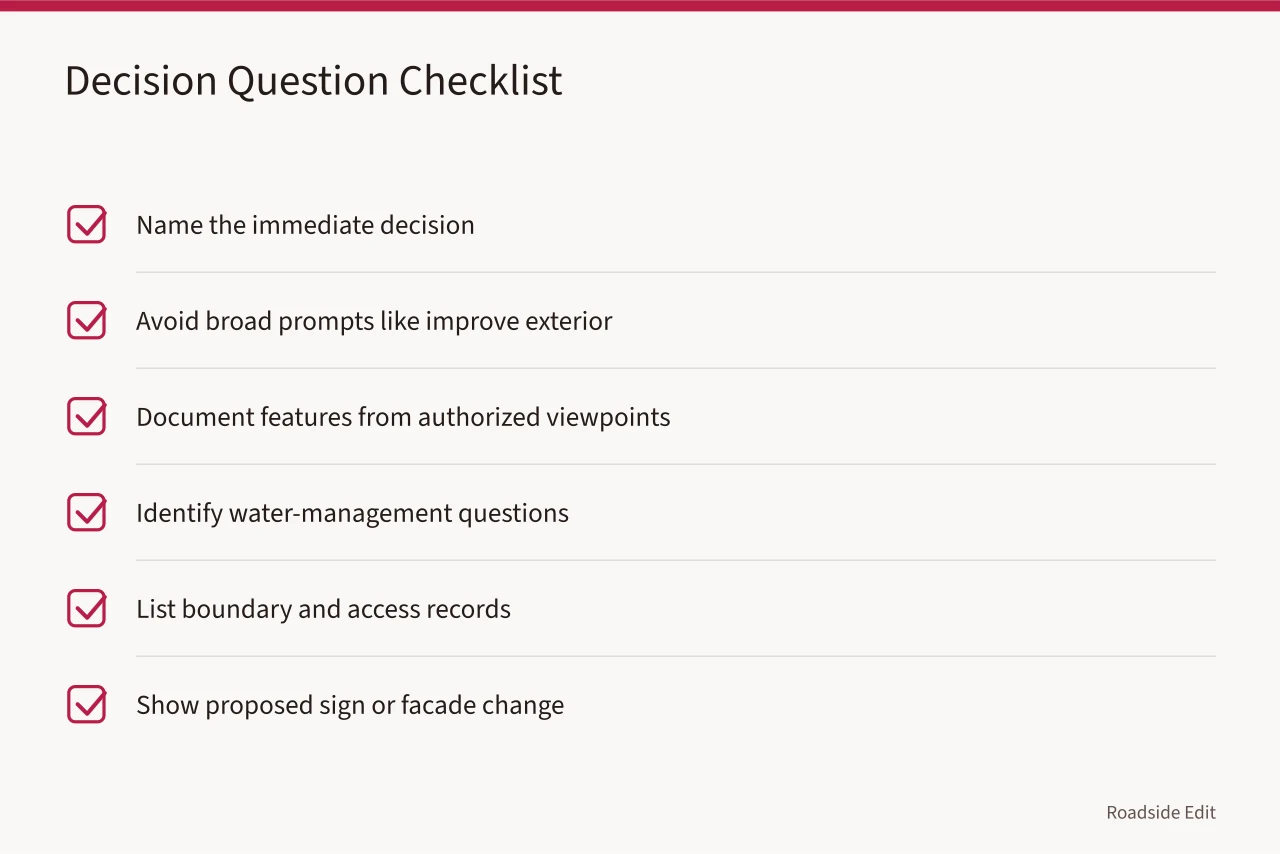
Avoid a broad prompt such as "improve the motel exterior." It can mean cleaning, repair, accessibility work, drainage, signage, security, landscaping, new construction, or a design change. A planning question should name the immediate decision.
Examples:
- What exterior features can be documented from authorized viewpoints before a project scope is written?
- Which visible water-management questions need qualified review before any exterior work is proposed?
- What records identify the current property boundary, access authority, and relevant local review path?
- What does a proposed sign, lighting, or facade change need to show before a responsible party can compare it with the existing condition?
The question does not need to solve the project. It should prevent the project from being shaped by an unsupported conclusion.
Step 2: Make an existing-conditions record
Create a dated inventory. Include only observations and records that can be described accurately. A current photograph can show a visible surface or feature. It cannot establish hidden conditions, property rights, code compliance, operating status, or a suitable treatment.
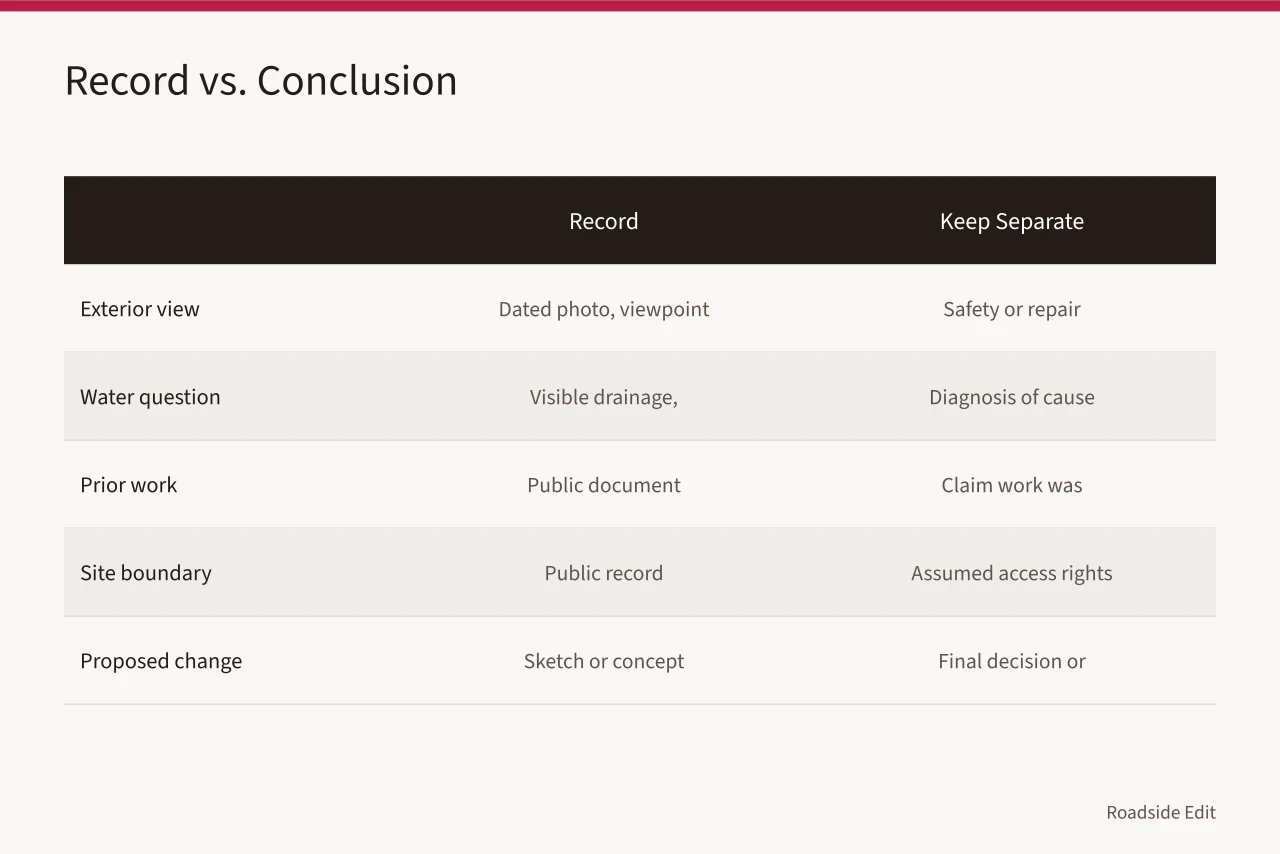
The purpose is to build a record that a later reviewer can understand. A brief note such as "image taken from the public sidewalk on this date" is more valuable than an elegant caption that adds claims the image cannot support.
The National Park Service explains that its existing-conditions work uses research, observation, and images to document the current condition of a site. See the NPS existing-conditions definition. The source concerns NPS work, not every motel. It supports the planning practice of recording current evidence separately from a proposal for change.
Step 3: Identify the decision owners
Different questions belong to different people or bodies. An owner or authorized manager may control access. A local authority may control permits or zoning review. A qualified professional may be needed for a project-specific condition, design, or code question. A preservation office may have a role only when a designated property, funding program, or local rule applies.
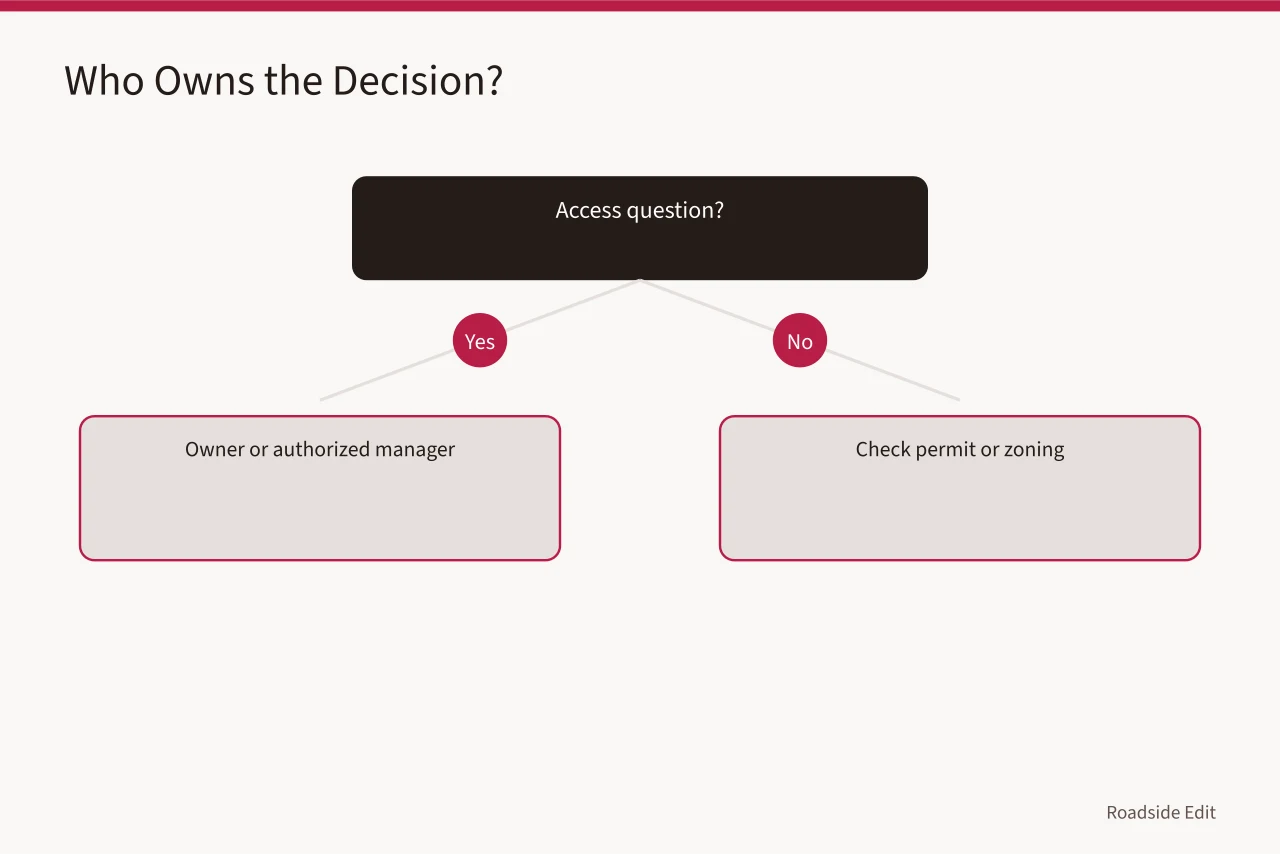
Do not assume that an older-looking motel has a historic designation, or that a general guide can name the requirements for every U.S. location. Keep a contact and source note for each authority the plan identifies. State what was checked, when it was checked, and what remains to be confirmed.
FEMA's National Flood Hazard Layer provides federal flood hazard information for mapped areas. Check FEMA's National Flood Hazard Layer information. It does not decide whether a specific motel is safe, damaged, insurable, or subject to a project rule. It gives a planning team a defined source to consult when mapped flood information may affect the question.
Step 4: Build a scope card
Use one card for each possible work area. A card makes vague ideas comparable.
| Field | What to enter |
|---|
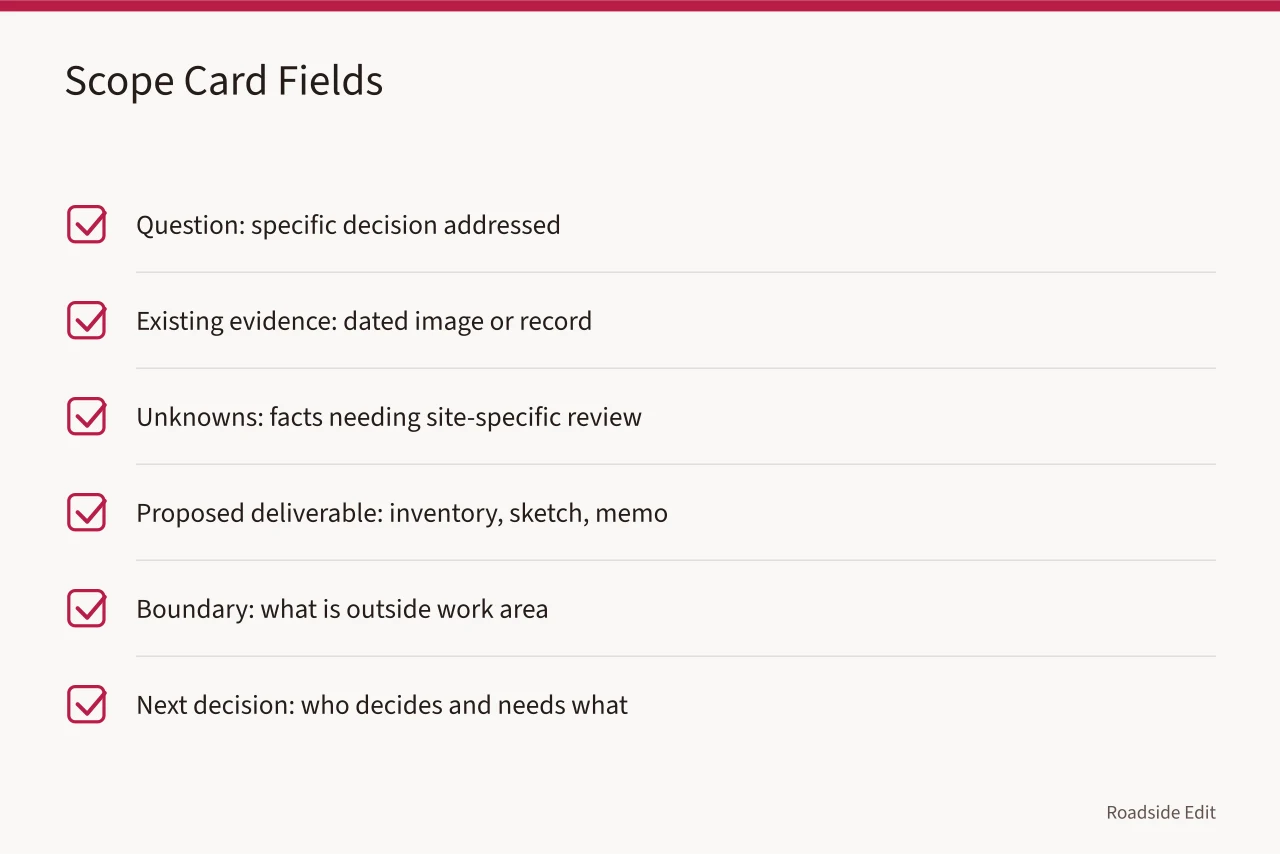
For example, a sign study can document the sign's visible placement, a historic photograph, and the relevant local question. It should not promise electrical safety, structural adequacy, permit approval, or a final design. A drainage study can identify where water is visibly present in a dated record. It should not prescribe a remedy without appropriate project information.
Step 5: Keep options comparable
Options articles can become unfair when one idea has a detailed drawing and a story while another is only a label. Give each option the same information: goal, source basis, assumptions, likely decision owner, unknowns, and next step. If the information is uneven, say that the options cannot yet be compared fairly.
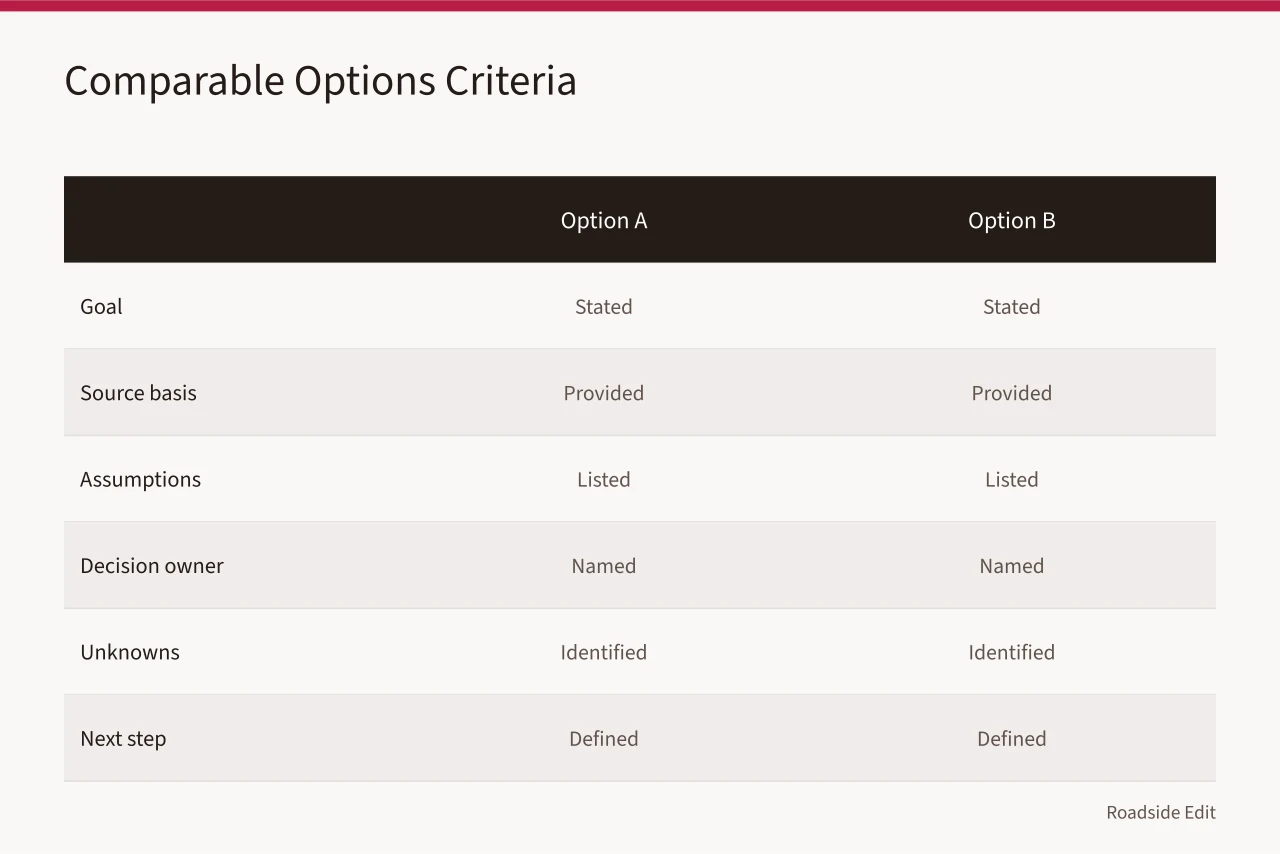
Do not use a number to hide a judgment. A score can be useful only when readers can see the criteria and the evidence supporting each score. In early planning, plain language is often better: "needs property record," "needs access authorization," "requires a qualified assessment," or "outside the article's scope."
An entry, walk, curb, or ramp may need its own review path. The ADA Standards for Accessible Design are technical standards for covered facilities. Consult the ADA Standards for Accessible Design.
They do not determine a particular motel's conditions or duties. A planning article should send a compliance question to the proper authority or qualified reviewer, not label a feature compliant from an image.
Step 6: Plan for records and changes
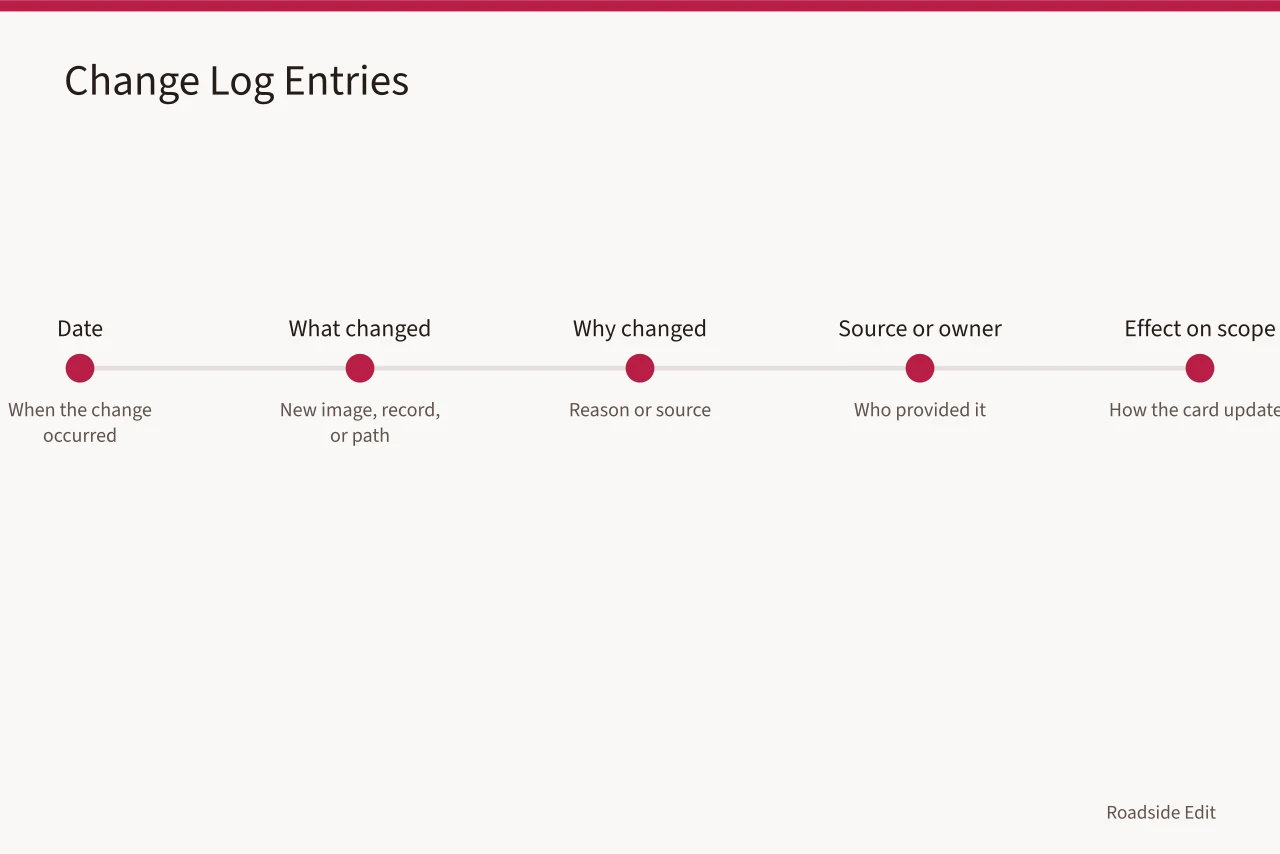
Planning information changes. A new image may correct an old caption. An owner may provide a record. A local office may identify a different review path. A project boundary may narrow. Maintain a simple change log with the date, what changed, why it changed, source or decision owner, and effect on the scope card.
National Archives scheduling material identifies project-planning documents such as schedules, risk registers, and other records supporting project planning. It also identifies closeout records such as lessons learned. Read the National Archives project-planning record schedule.
The schedule applies to federal records, not a private motel project. Its useful principle: planning and change information need a consistent record, not disconnected messages.
Step 7: Treat commercial information clearly
Provider descriptions, sponsorships, paid placements, and submitted listings can be useful if they are labeled. A provider's statement may explain the services it offers. It is not independent proof of a property's condition, a project's suitability, or an outcome. Keep submitted language in a separate record and disclose material relationships near the related content.
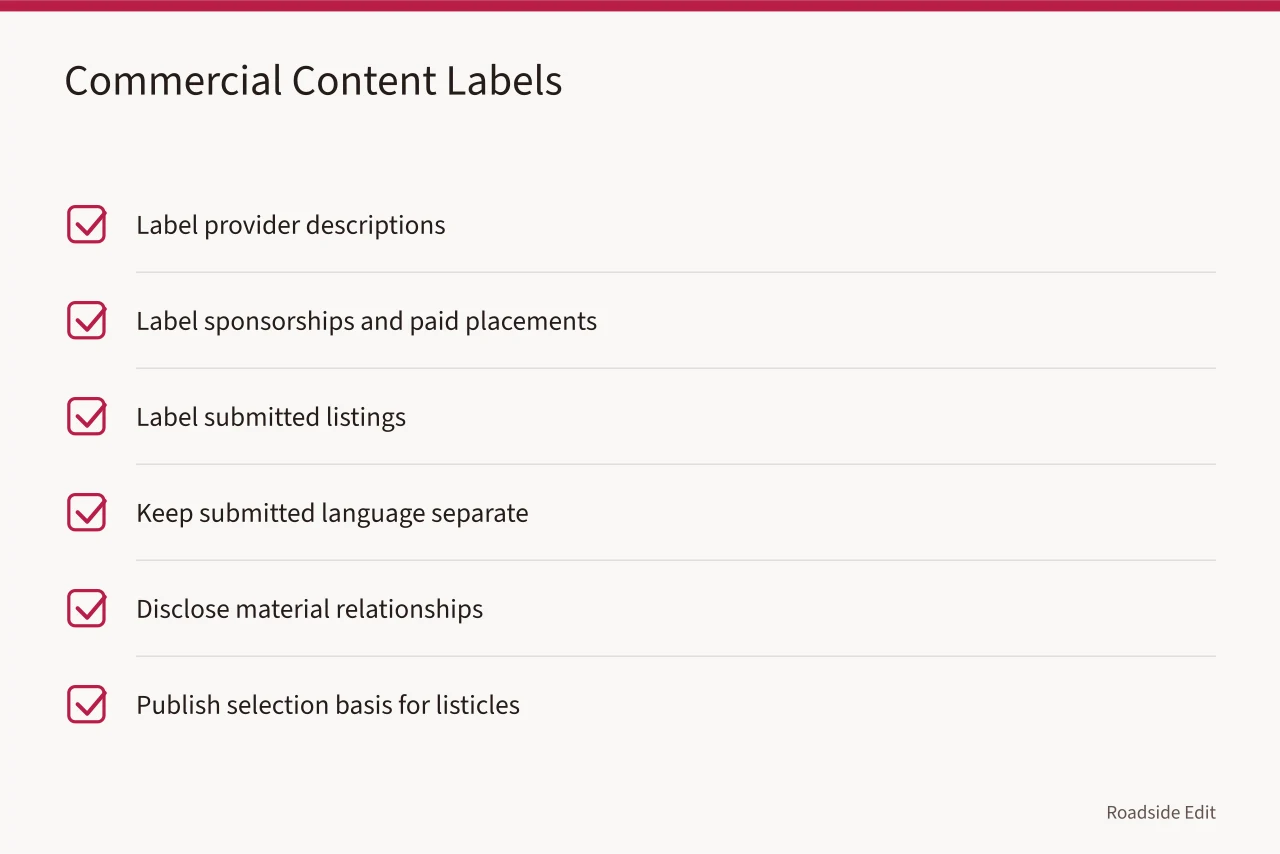
For a future listicle, publish the selection basis. It might be geography, category, a public directory, a disclosed submission process, or editorial research. Do not claim that every listing has been assessed under the same professional standard unless that assessment really occurred.
Step 8: End with an accountable next step
Every planning article should close with a small, concrete next action: collect a dated exterior record, locate the responsible owner, request a property-specific record, define a deliverable, or ask the appropriate authority which review applies. This is more useful than pretending a general article can move a project straight to construction.
Common planning mistakes
Starting with a solution
Selecting paint, lighting, drainage, signage, or a contractor before defining the question can make later evidence look like an obstacle. Record the current information first, then identify the decision that the information supports.
Treating a public image as permission
An online photo may be useful as an image source under its stated terms, but it does not grant access to the property or permission to alter it. Preserve the image credit and confirm project permissions separately.
Losing the boundary between proposal and approval
A concept, sketch, article, or provider submission is not an approval. Use words that identify its status. This protects both readers and any organization mentioned in the content.
A short predecision review
Before moving an item from idea to project request, review the full chain. Does the scope card name the correct place and decision, and does every factual statement have a source that supports its date and geography?
Are existing-condition images credited and dated, and is a commercial submission visibly separate from editorial evidence? Has the responsible owner or authority been identified without implying approval of the proposed work?
Use the answer to create the next task, not an artificial conclusion. A missing record may call for archival research. An uncertain visible condition may call for a qualified assessment. A question about local requirements may call for the responsible local office. An early plan succeeds when it makes those next questions obvious.
A durable planning record
The strongest early plan is not the longest one. It is the one that clearly shows the decision question, the evidence available, the limits of that evidence, the parties who control the next step, and the record of changes. That foundation makes later design, maintenance, editorial, or commercial decisions easier to explain and correct.
Keep the record usable. Give each file a plain name, retain the original source page with the item, and note when a conclusion is only a question for a later reviewer. That small discipline lets a future owner, editor, or consultant understand what was observed instead of reconstructing the decision from memory.
The image is illustrative. It does not establish current condition, ownership, safety, operating status, or approval for any project.
Common questions
Can an article create a project scope?
It can explain a scope-writing method, but a project-specific scope needs the responsible parties and appropriate evidence.
Does a public image show the current condition?
Only if its date and subject are confirmed, and even then it shows one view rather than a complete assessment.
What is the first planning document to create?
Start with a one-sentence decision question, a dated existing-conditions record, and a list of open questions.
In this guide
- How to build a motel exterior planning checklist before you pick contractorsA pre-bid motel exterior checklist: fix the scope in writing, record dated conditions, list the authorities, and log every change before contractors price it.
- Motel exterior planning questions: how to compare workflow options before work beginsMotel exterior planning questions for 2027 help U.S. readers define scope, test evidence, identify authority checks, and record open decisions.
- How to keep motel exterior planning workflow budget notes before pricingA motel exterior budget note separates defined work, unknowns, decision points, and change logs so no early number reads as a project quote.
- How motel owners can organize exterior planning records before project workMotel exterior planning records for 2027 help U.S. readers keep source pages, images, scope notes, decisions, and corrections organized before any project work.