Guides
Part of How to run a roadside renovation case study method that separates evidence from inference
How to organize roadside renovation case study records with clear limits
Organize 2027 roadside renovation case study records with a source ledger, dated evidence notes, image credits, issue log, and clear limits for every claim.
Case-study records make a later correction possible. A writer may remember why a sentence sounded reasonable. An editor needs to see the exact page, date, image credit, and note that support it. Build the record set while researching, not after the article is drafted.
What to take away
- Keep a source ledger beside the draft from the first research note.
- Separate the source copy from the editorial note about what it proves.
- Preserve image-credit information with the local media file.
- Log uncertainty, chronology conflicts, and corrections as part of the record set.
What is the minimum evidence record?
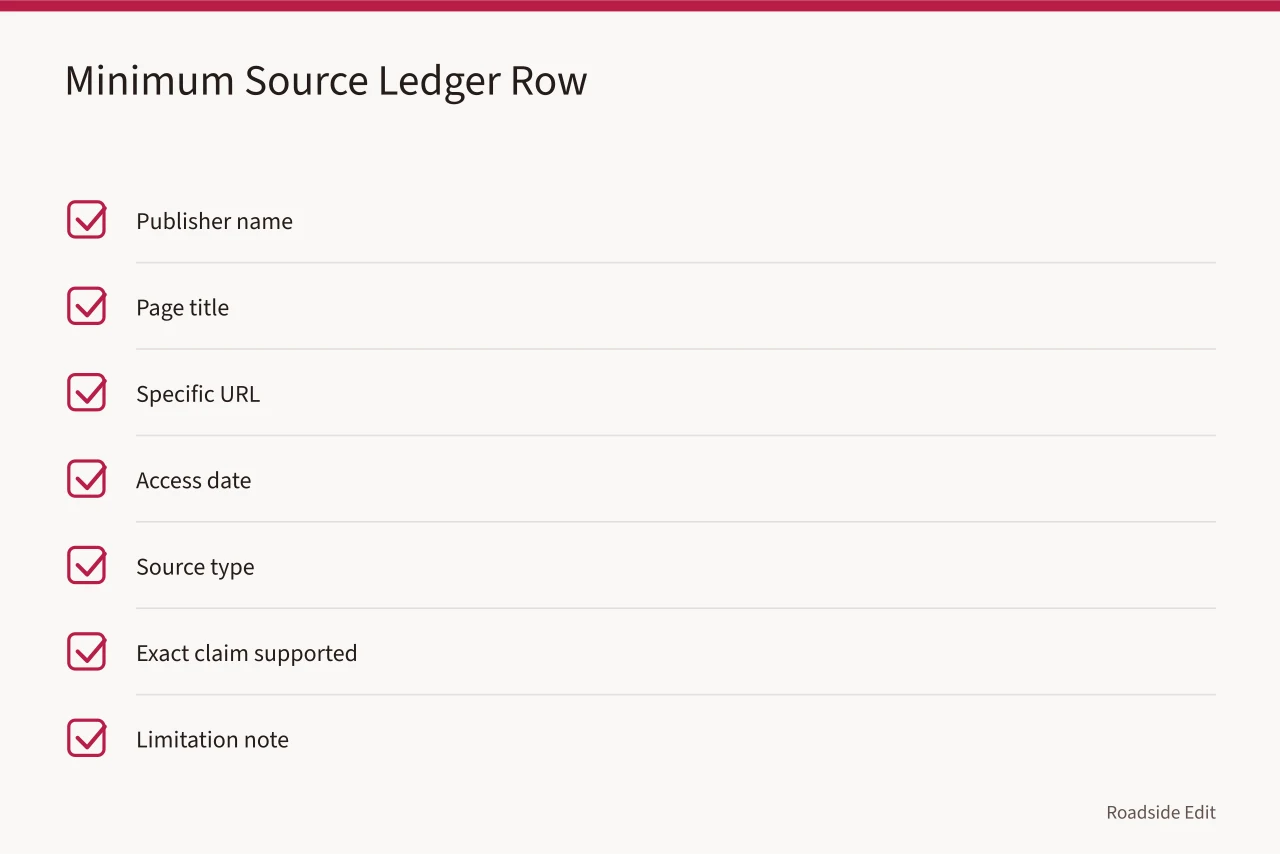
Add project date if stated, the exact claim supported, and the limitation. A general home page is not a useful citation record; a later editor should open the cited page to check the sentence without searching an institution's site.
The difference between a source copy and a source note is worth preserving. A copy keeps what the publisher made available; a note explains why the writer used it.
For example: "Used for the date and name of a documented project; does not report final cost, later maintenance, or a result for another property." This stops a later draft from treating the source as a broad endorsement.
The National Park Service's case study on 3D documentation and visualization describes a documented method in its own cultural-resource and museum context. Read the NPS documentation case study. It supports reporting that the case study describes that method and context. It does not make the same method mandatory, suitable, or sufficient for a different roadside project.
How should sources be classified?
Classify each item before writing from it. A primary source is a document, image, record, or account made by someone with direct knowledge. A secondary source interprets, summarizes, or reports on other material. Both can be useful.
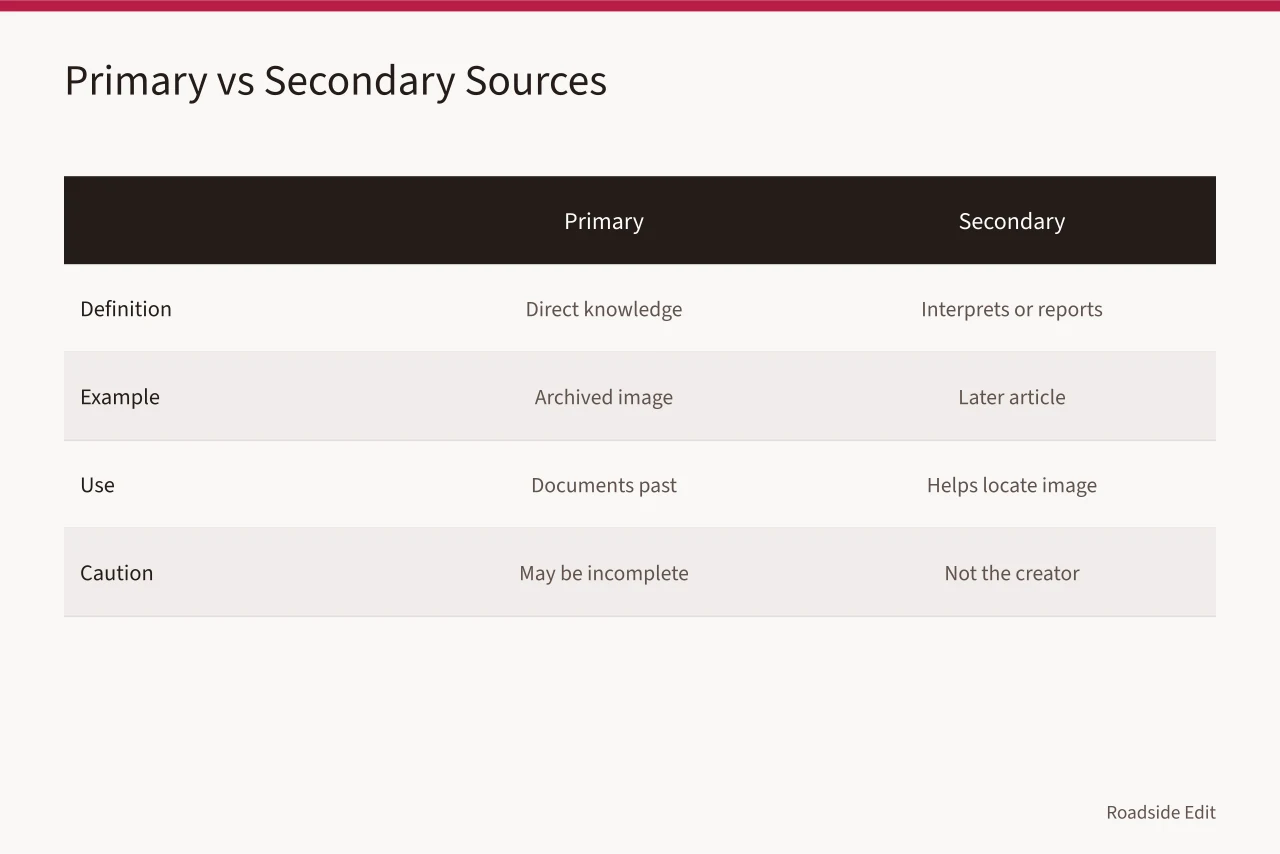
The record must name the distinction. An archived image may document a past appearance. A later article may help locate the image, but do not treat it as the image's creator.
The Library of Congress describes primary sources as original materials created at the time under study or later by people with direct knowledge. Read the Library of Congress guide to primary-source research. That description helps an editor label research material accurately. It does not mean every primary source is complete, current, or suitable for a present-day conclusion.
The National Archives also explains that primary sources can offer direct evidence from witnesses or participants. Review the National Archives explanation of primary sources. Add the source date and provenance to the ledger so an old record remains evidence of its own period rather than an unsupported statement about the site today.
How should the record folders work?
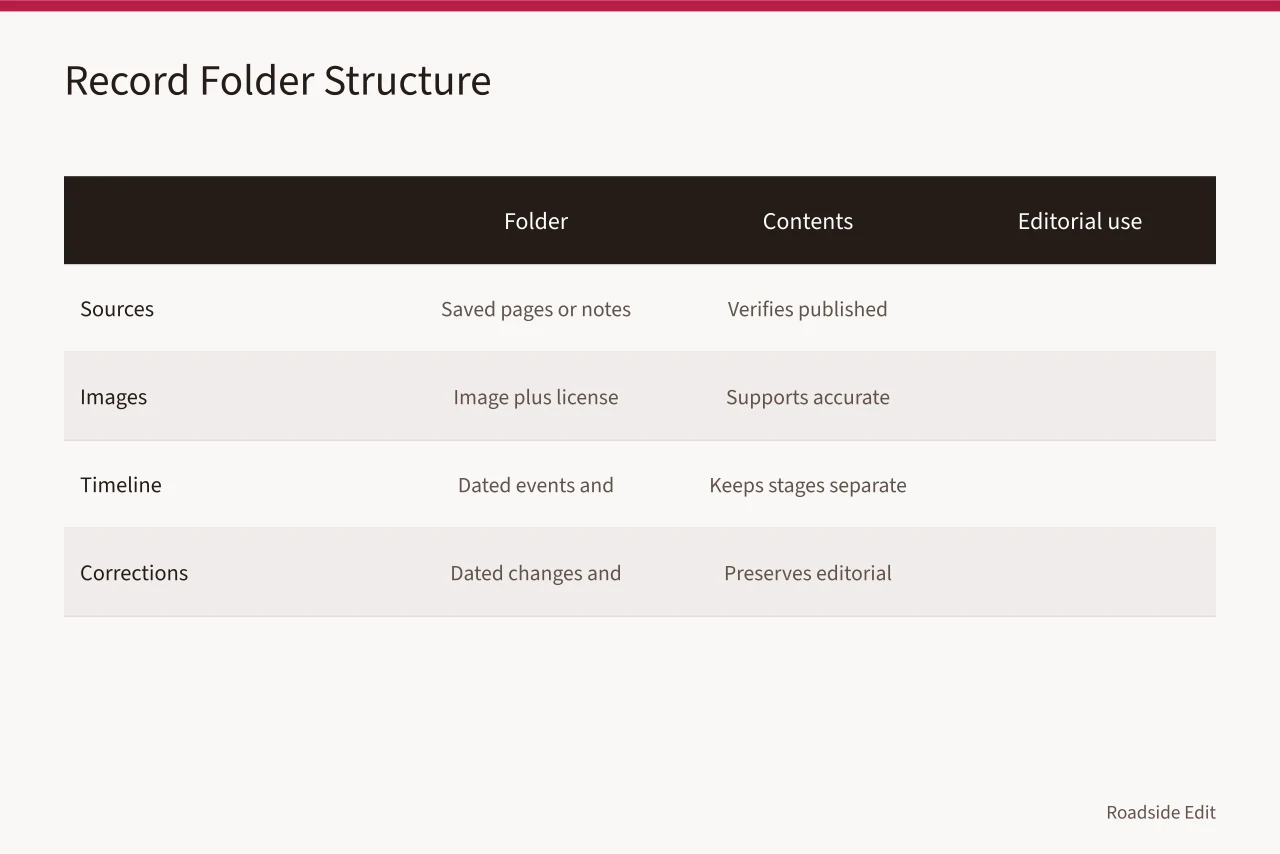
| Folder | Contents | Editorial use |
|---|---|---|
| Sources | Saved permitted pages or reference notes | Verifies published claims |
| Images | Local image plus license and credit data | Supports accurate captions |
| Timeline | Dated events, publication dates, and conflicts | Keeps stages from being blended |
| Corrections | Dated changes, source updates, and removed claims | Preserves the editorial history |
Use filenames that show a record's role, not just a download number. A source title and access date are easier to identify months later than "image-final-2." Avoid putting sensitive owner information or private documents in an article-production folder unless there is a clear, authorized reason to store them.
The National Archives describes records management as the creation, maintenance, use, and disposition of records. See the National Archives records-management overview. The federal program governs agency records, not every editorial folder. Its basic principle is still useful for case studies: preserve enough context for the next user to understand the record's role and sequence.
How do you handle chronology conflicts?
Create a timeline entry for each important date, and record the source date, its publication date, and the event described.
When two sources differ, do not pick a favorite without reason; record both, note the conflict, and state the article's wording.
If unresolved, use a narrower sentence or omit the disputed detail.
Every source note should include a limitation. A photograph may not be dated precisely. A case-study page may summarize the project but not list every participant. A technical description may explain a method but not report long-term results. This is not paperwork for its own sake. It prevents a later rewrite from expanding a source beyond its actual reach.
How do you keep image credits reliable?
Save the exact image-page URL, description, creator information when supplied, and the license or rights statement visible on the source page. The article credit should lead to the specific file page. Do not rely on a general collection page or memory of where the file originated. If the credit cannot be verified, replace the image before publication.
Keep the media note separate from the evidence note. The fact that a photograph has a valid credit does not make it proof of a property condition or project result. State what the image is used to illustrate and what it cannot establish. This distinction protects both the credit and the article's factual boundaries.
How should corrections be recorded?
When a source changes, add a date, short description of the change, and the affected sentence. When a claim is removed because it was unsupported, record that too. The log helps future editors avoid restoring a sentence that was deliberately corrected. It also creates a short audit trail that distinguishes a factual correction from a cosmetic revision.
For each correction, list: old wording, new wording, source that triggered the change, date made, and reason. Keep a claim removed for lack of support in the same log. The absence of a definitive record is itself editorial information.
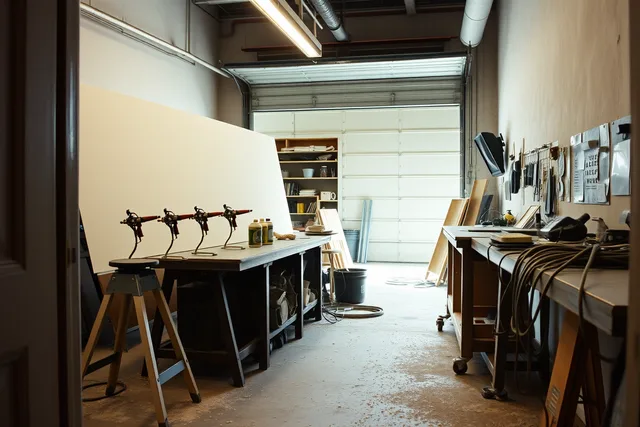
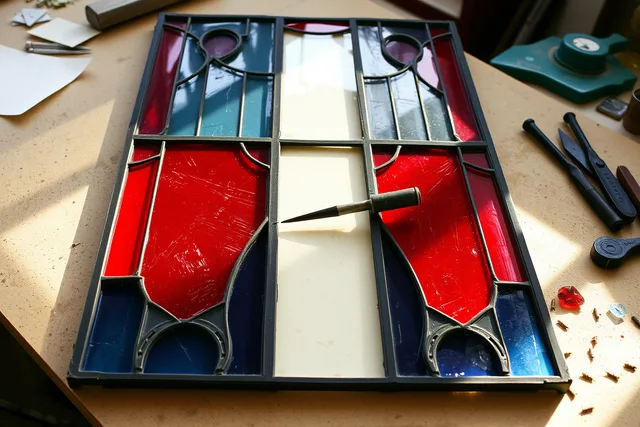
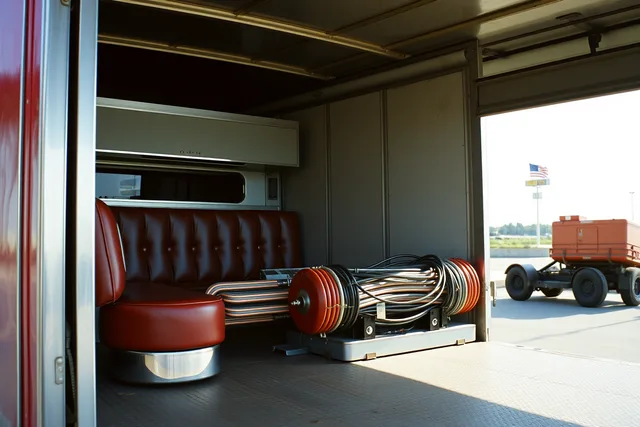
The image is illustrative only. It does not document another property's project scope, chronology, condition, or evidence record.
A case-study records checklist
- One ledger row for every cited source.
- A source type, date, provenance note, and limitation for each row.
- A separate timeline for event dates and publication dates.
- A verified source page for every media credit.
- A correction log that preserves removed and revised claims.
- No conclusion that is broader than the source note permits.
Common questions
Should every source have a limitation note?
Yes. It tells the next editor what the record supports and where its authority ends.
Can a media credit point to a collection homepage?
No. Credit the specific file page so the image, description, and rights information can be checked.
What belongs in a correction log?
The date, what changed, the source involved, and the affected statement are usually enough.