Guides
Part of How to run a roadside renovation case study method that separates evidence from inference
Roadside renovation case study questions to ask before you cite one
Ask better 2027 roadside renovation case study questions about scope, chronology, sources, attribution, omissions, and the limits of a project example.
Good research questions stop a roadside renovation case study from becoming a polished claim with no evidence behind it. They focus an editor on one property, the records that exist for it, and the line between a documented example and advice for another place.
The questions below cover scope, chronology, sources, and attribution. They also cover omissions and the limits of a single project.
What to take away
- Ask what the source records show, not what the article hopes to prove.
- Separate questions about identity, chronology, scope, decision roles, and results.
- Treat a gap in the record as a finding rather than filling it with a likely answer.
- End with a limited lesson, not a universal recommendation.
- Name the archive or agency behind each fact: a National Register nomination, a Historic American Buildings Survey record, a state historic preservation office file.
Which project is this case study about?
Start with identity. What is the property's exact documented name? Where is it? Which period does the record cover? Who published the material? Does the source name an owner, an agency, an architect, or a funder, and in what role? These questions keep an editor from blending material about different sites, phases, or eras.
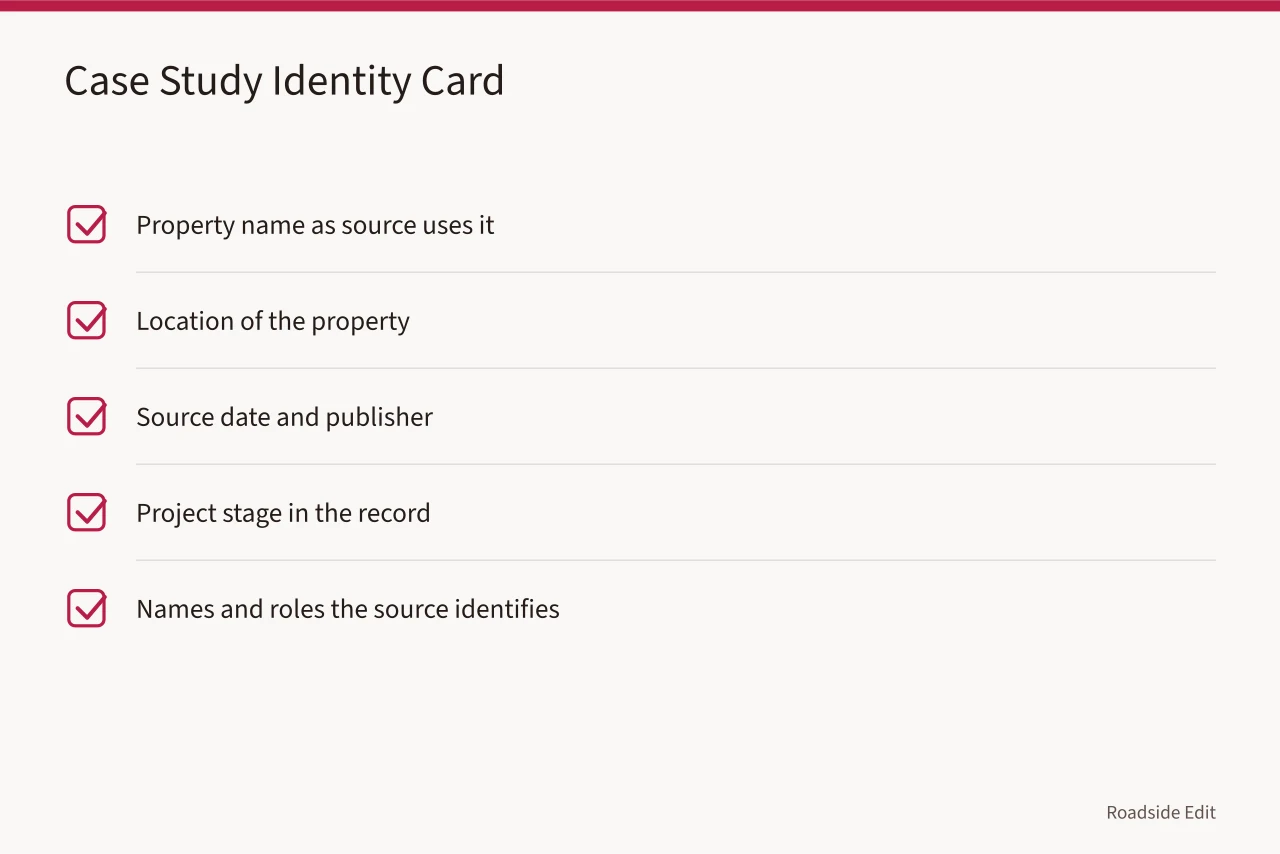
A source that calls someone a project contact has not shown that the person owned, designed, or decided anything. That distinction matters when a later source describes a different phase of the same property.
The National Park Service's Pence Automobile Company Building case study is a documented example of a specific property and project context. Read the NPS case study. It can support an account of what that page says about that example. It cannot establish that another roadside site has the same condition, eligibility, costs, or appropriate treatment.
A National Register of Historic Places nomination is often the first document to pull. Nominations are filed with the National Park Service and posted in NPGallery, and each one carries a location map, a physical description, and a statement of significance. State historic preservation offices also hold survey files, photographs, and correspondence that never reach a nomination.
Which sources can answer each question?
Do not ask one source to answer every question. Give each source one defined job in the research notes.
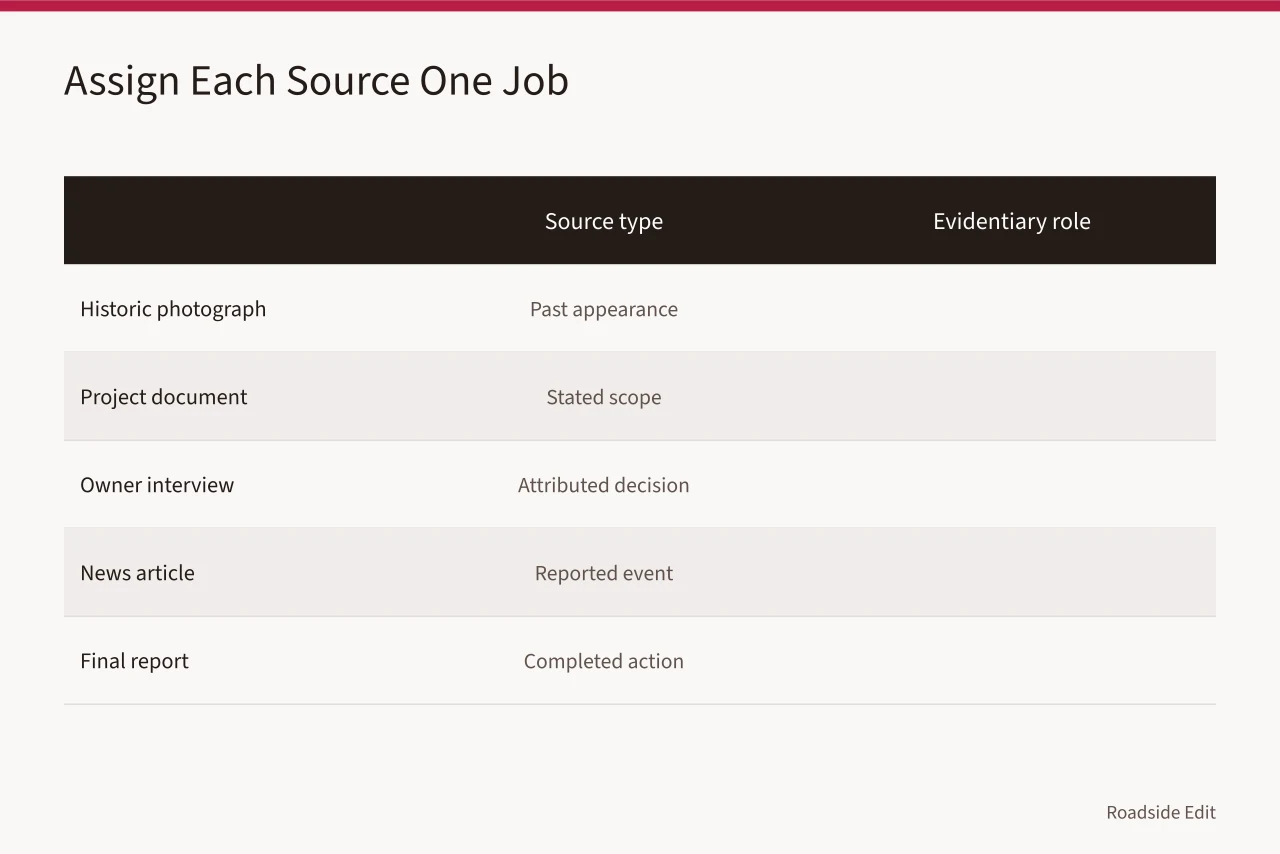
| Question | Why it matters |
|---|---|
| What is the primary source for this statement? | It lets a reader trace the claim. |
| Is the date an event date or a publication date? | It preserves chronology. |
| Is the statement attributed? | It avoids turning a participant's view into a fact. |
| What detail is visible versus documented in text? | It limits what an image can prove. |
| What information is absent? | It keeps a case from implying a complete record. |
| Which archive holds the document? | A National Register nomination, a HABS record, and a state office file carry different weight. |
The Library of Congress notes primary sources are original materials created at the time under study or afterward by people with direct knowledge. Read the Library of Congress guide to primary-source research.
That does not make every contemporary item correct or complete. It helps an editor see what evidence a source can provide and whether a claim needs corroboration.
The Library of Congress also runs the Historic American Buildings Survey, known as HABS, along with the Historic American Engineering Record. HABS records combine measured drawings, large-format photographs, and a written history, and they are free to search by state and county.
The National Archives also explains that primary sources can give direct evidence from witnesses or participants. Review the National Archives explanation of primary sources. Use that distinction to label a source accurately. A retrospective summary is not a primary source just because it contains useful details.
Deeds, assessor files, city building permits, and IRS Form 990 filings for nonprofit owners are public in most states. Each answers a narrow question about ownership, work dates, or spending.
What is the project's chronology?
Build the timeline from dated records. Separate the date an event occurred from the date an article or report was published. Proposal, funding request, and award are one set of dates. Permit, construction activity, and final result are another. They are not interchangeable descriptions of completion.
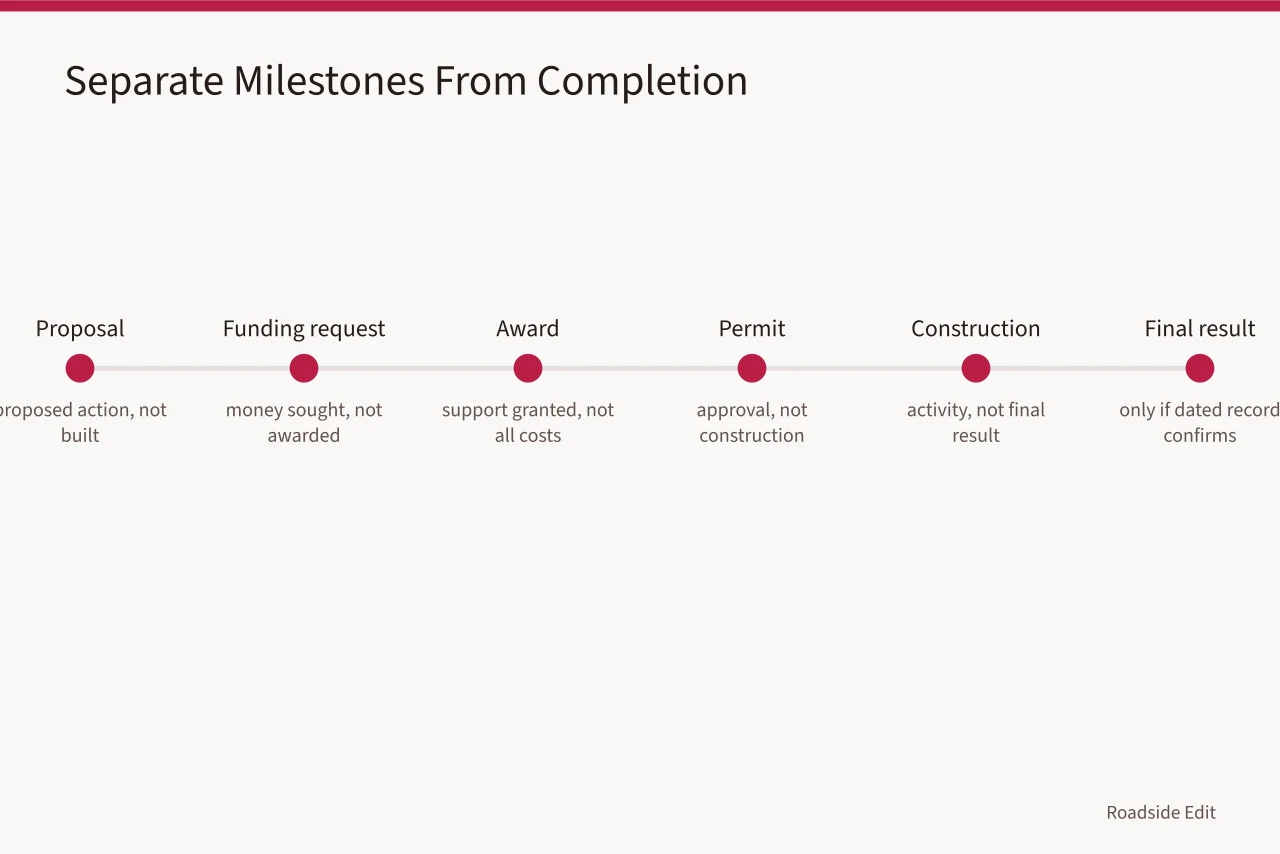
For each entry, ask who supplied the date and whether the source describes an event or repeats an earlier claim. Is this the first mention of the action or confirmation that it happened? Does another source contradict or narrow it?
If the record is unclear, write a precise limit: "The available record describes a proposal in 2025 but does not confirm construction completion."
A local building department permit, a Section 106 memorandum of agreement, and a National Park Service Route 66 Corridor Preservation Program award list each date a different stage of work. Federal agencies must weigh effects on historic properties under Section 106 of the National Historic Preservation Act, and the Advisory Council on Historic Preservation can join that consultation.
The 20 percent federal rehabilitation tax credit for certified historic structures moves through three National Park Service application parts: evaluation of significance, description of rehabilitation, and certification of completed work. Those dates rarely match a construction schedule.
Do not begin with an outcome such as "successful revitalization" and search backward for support. Begin with the dated documents. If they do not report an outcome, the case study should not state one. This method supports a smaller claim, but readers can verify it.
What did the case actually change?
Ask what feature, use, material, or public service the record says changed. Then ask whether the source names the reason, decision maker, work period, and result.
A case study on a reopened storefront may not explain its building systems. A preservation grant document may not report final cost. A post-construction photograph may not show what happened behind the wall or how the work was funded.
A National Register listing on its own does not control what a private owner does with a building. Federal funding, a federal permit, or a local preservation ordinance is what triggers review, and that review covers the effects of the specific action.
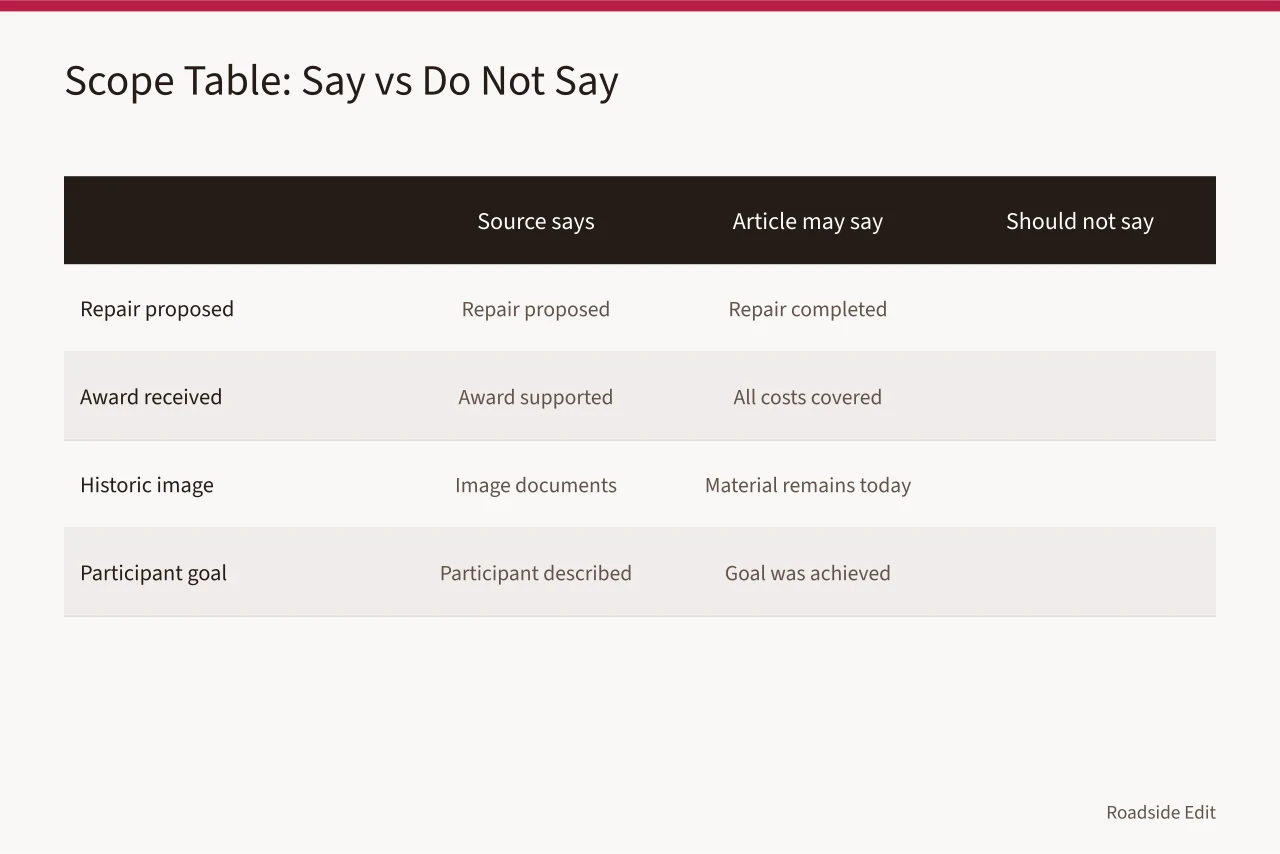
Use a scope table in the research file:
| Source says | The article may say | The article should not say |
|---|---|---|
| A repair was proposed | A repair was proposed | The repair was completed |
| A project received an award | An award supported the stated activity | All project costs were covered |
| A historic image shows an earlier appearance | The image documents that earlier appearance | The same material remains today |
| A participant describes a goal | The participant described that goal | The goal was achieved |
What claim needs attribution or disclosure?
Case studies can include partner, sponsor, owner, or provider claims. Keep the speaker visible. "According to the property owner's statement" makes the basis clear. Avoid converting a participant's enthusiasm into an independent ranking, performance result, or recommendation.
The Federal Trade Commission's endorsement guidance addresses disclosure of material connections in endorsements and advertising. Read the FTC's endorsement-guides questions and answers. It does not set the research method for every case study. It supports clear treatment of commercial relationships when paid placement, sponsorship, or another material connection could affect how readers interpret a claim.
The FTC guides treat payment, free products, and business or family relationships as material connections. A disclosure has to be hard to miss, and it belongs near the claim it qualifies.
What can this example teach another project?
The answer should be modest. A case may reveal a useful question, a record type worth seeking, or a process step another team should examine. It provides no ready-made budget, approval path, treatment decision, or performance promise for a different site.
Compare location, condition, ownership, and project stage. Then compare source quality and legal context before drawing a limited parallel.
Section 106 consultation, the Secretary of the Interior's Standards for Rehabilitation, and the terms of a specific grant all shape what a project could do. A case study from one state cannot predict the outcome in another.
End with the questions the record cannot answer. Unreported cost, uncertain maintenance history, a missing decision record, and unknown later use are all legitimate limits. Readers can then see what makes the example relevant and what still requires local research.
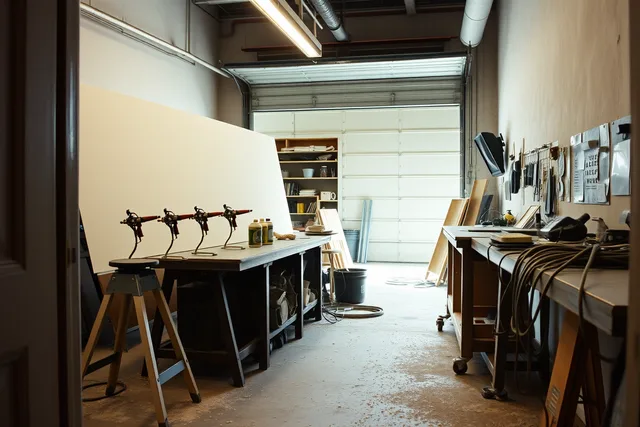
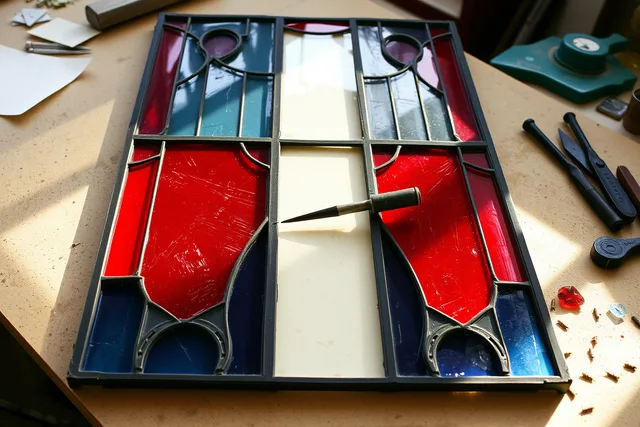
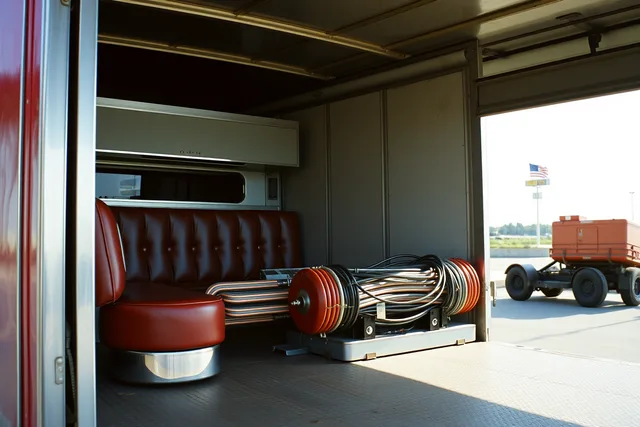
The image is illustrative only. It does not establish another project's current condition, scope, cost, or result.
A case-study review checklist
- Is the property identity tied to a dated source?
- Does every timeline date identify its source and stage?
- Has each source been assigned a limited evidentiary role?
- Are participant claims attributed?
- Does the article distinguish proposal, approval, work, and result?
- Does the article name the archive, agency, or filing behind each fact?
- Does the conclusion explain what the case does not establish?
Common questions
Can a case study answer whether a project is affordable today?
Only if the cited record provides current, comparable cost information. A historic project record usually cannot do that alone.
Is an owner quote a fact?
It is an attributed statement. Keep the attribution visible and do not present it as independent verification.
What question prevents the most overclaiming?
Ask what the source does not establish. It often reveals the needed boundary.