Reviews
Part of A motel exterior planning workflow, from decision question to next step
Motel exterior planning questions: how to compare workflow options before work begins
Motel exterior planning questions for 2027 help U.S. readers define scope, test evidence, identify authority checks, and record open decisions.
The first planning questions should make a motel exterior project clearer, not larger. A photograph, owner note, provider suggestion, or public map can begin a conversation. None automatically creates a scope, proves a condition, or grants permission to act. Ask one question per decision and keep the answer tied to a dated record.
This guide helps U.S. readers organize planning questions before exterior work is selected. It is not a site assessment, permit decision, design service, code opinion, or construction direction. The responsible owner, authority, and qualified project professionals must make those decisions for the actual property.
What to take away
- Start with the decision, location, and evidence gap rather than a preferred solution.
- Keep existing observations, assumptions, and proposed work in different fields.
- Compare options only when they are based on comparable records and limits.
- Identify who has authority for access, permits, safety, and public statements.
- Leave unknown facts open until the right source can answer them.
What is the first decision?
Write the decision in a short sentence. "What information is needed before deciding whether to change the entrance canopy?" is a planning question. "Replace the entrance canopy" is a proposed result. The first leaves room to learn about access, materials, local requirements, cost, and why the feature exists. The second assumes those questions are already answered.
Define the feature as precisely as possible. A motel can have multiple wings, entries, signs, walks, parking areas, roof edges, and service areas. A wide image may identify a building without showing the area that concerns the owner. State the elevation, unit range, sign face, or arrival route when the record allows it.
| Planning field | A useful entry | It does not establish |
|---|---|---|
| Decision | Whether a defined feature needs further review | A chosen treatment |
| Location | Named entry, wall, walkway, or sign | Owner approval or access rights |
| Existing record | Dated image, note, or public document | A hidden-condition finding |
| Unknown | Missing date, material, or project history | Permission to guess |
| Decision owner | Person, office, or review path | That approval was granted |
The National Park Service defines existing conditions as a site's current condition and says to document site context through research, observation, and images. Read the NPS existing-conditions definition.
That guidance concerns NPS work, not every motel project. It supports one planning habit: keep the record of what exists separate from the proposal for what might change.
Which evidence belongs in the planning file?
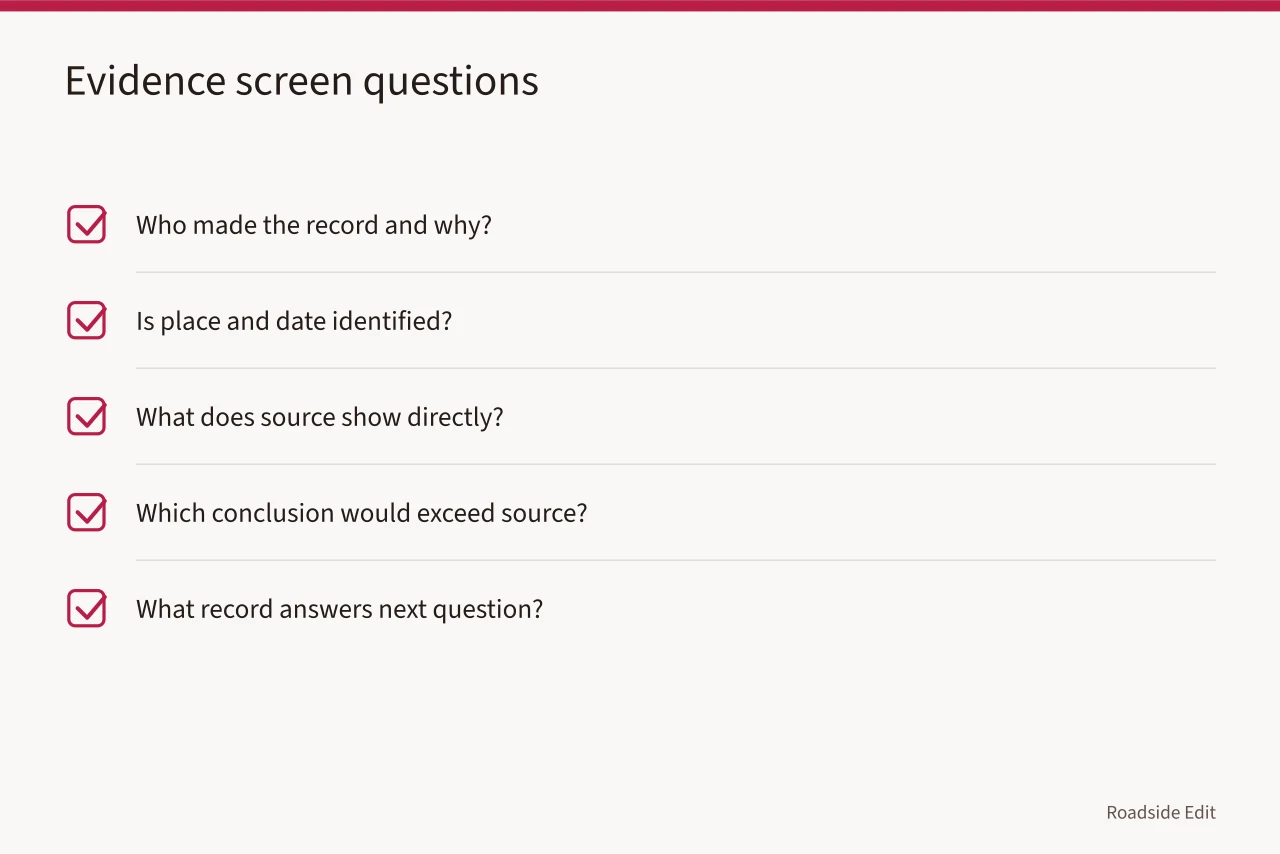
Gather records before comparing possible responses. Include dated images, publicly available maps or agency material, owner-authorized site notes, prior project records if supplied, and a statement of who provided each item. Keep an evidence note beside every source. It should say what the source supports and what it does not.
For example, a 2026 image may support that paint loss is visible on a sign face. It cannot identify the paint system, cause of the loss, or safe work method.
A public notice may describe an application. It may not prove work began or was completed. An owner's note may report a past repair. It should remain attributed unless another record confirms it.
The National Park Service notes that exterior maintenance decisions should be informed by an understanding of the building and its materials. Review NPS guidance on maintaining historic exteriors. The guidance does not specify work for a motel or decide whether a particular building is historic. It backs the planning principle that a visible symptom is not a complete scope.
What assumptions must be named?
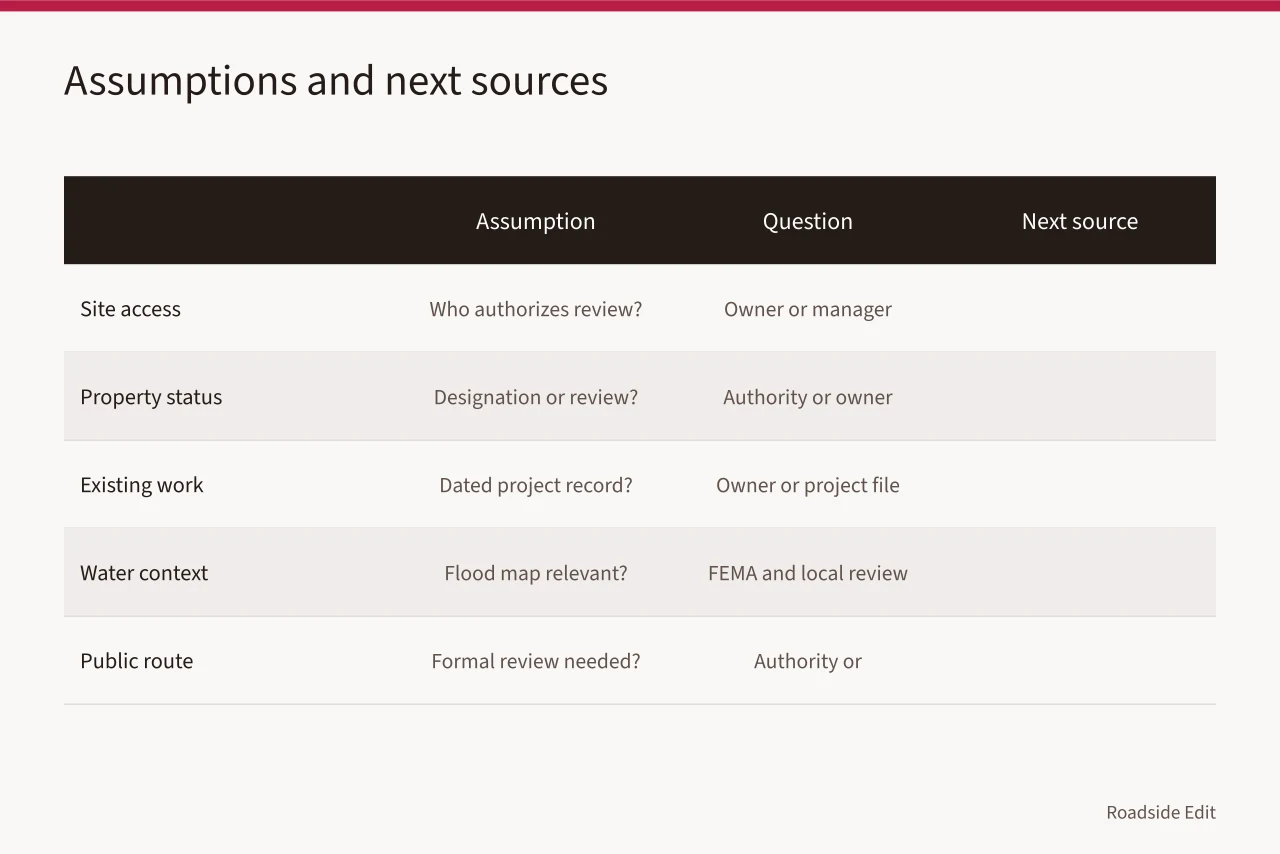
Every early option has assumptions. One idea may assume access to a roof edge. Another may assume an owner can approve a change. A third may assume that a current image shows a continuing condition. Write these assumptions down. They are not embarrassing gaps. They determine whether an option can be fairly compared.
| Assumption | Question to ask | Responsible next source |
|---|---|---|
| Site access | Who may authorize an on-site review? | Owner or authorized manager |
| Property status | Does a record identify a designation or review need? | Relevant authority or owner record |
| Existing work | Is there a dated project or maintenance record? | Owner or project file |
| Water context | Is flood-map information relevant to the location? | FEMA map source and local review |
| Public route | Does a compliance question need formal review? | Responsible authority or qualified professional |
FEMA's National Flood Hazard Layer provides federal flood hazard information for mapped areas. Check FEMA's National Flood Hazard Layer information.
It does not decide whether a motel is safe, damaged, insurable, or subject to a project rule. It gives readers a starting point for planning questions about mapped flood information, instead of inferring risk from a photo or one weather event.
Who owns each planning decision?
Planning becomes confused when "the project" is treated as one person. The owner may authorize access. A manager may know the operating history. A public agency may administer a permit or review. A provider may describe a proposed method. An editor may report only what a source supports. Write the role beside each question.
Do not promise an approval, final cost, safety result, or completion date that depends on someone else. A provider may offer a useful preliminary idea, but a proposal does not grant permission or replace a decision record. Keep a dated note of who can confirm each consequential fact.
Arrival route questions often need the same care, and a photo may show a curb, ramp, walkway, or entrance but cannot establish accessibility compliance. ADA Standards for Accessible Design are technical standards for covered facilities. Consult the ADA Standards for Accessible Design.
They do not determine conditions or duties at a particular motel. They explain why a compliance question belongs with the appropriate authority or qualified reviewer, not with a label on a visible feature.
How should options be compared?
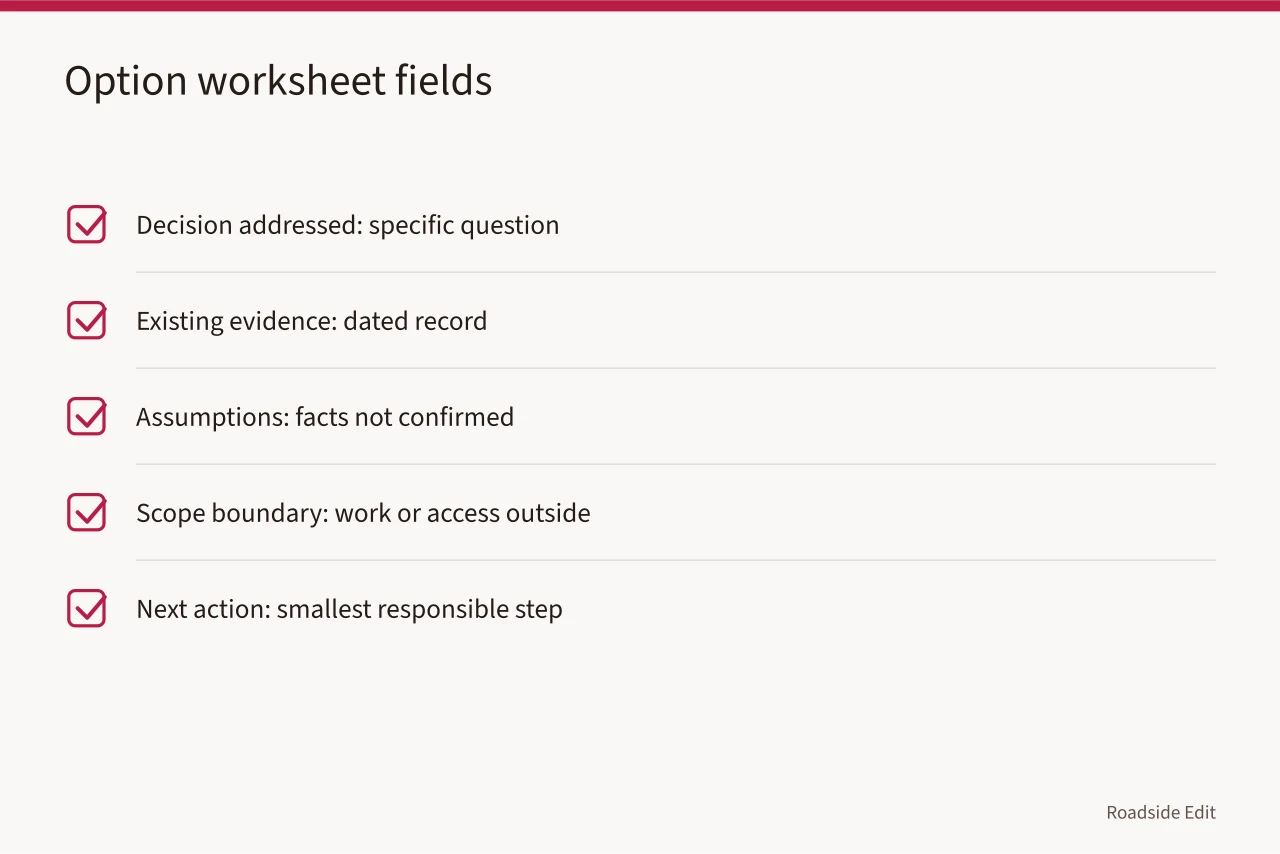
An option is ready to compare only after it addresses the same decision and has an evidence note. Do not compare a detailed provider proposal with an undeveloped idea. First reduce each item to the same worksheet fields.
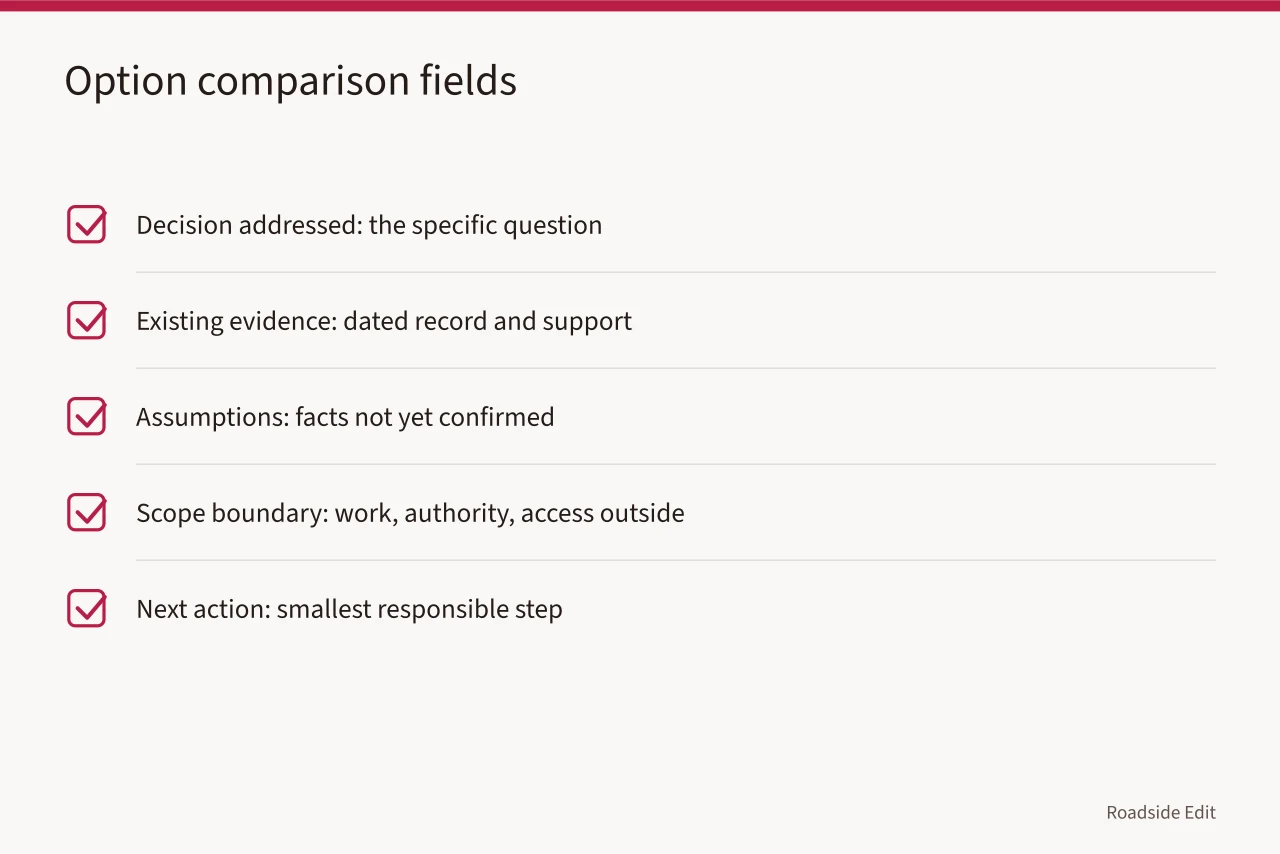
For example, a repaint suggestion may be a research task if the source only shows an older color. A paving change may be premature if drainage, owner approval, or current site conditions are unknown.
Good planning does not reward the longest description. It identifies the option ready for the next decision and the ones needing more evidence.
How should commercial material be used?
A business may submit an image, a service description, a correction, or a paid placement. These materials can be useful if their role is clear. Mark provider-supplied information as such. Mark a paid listing as sponsored. Do not use either as independent confirmation of a condition, performance, access right, code status, or project suitability.
Keep a short decision record when a provider is being considered. It should include the dated scope, evidence received, unanswered questions, who owns the next decision, and what changed after the first discussion. That record helps readers and project teams avoid turning a marketing claim into a permanent public fact.
The image is illustrative. It does not establish the condition, ownership, safety, operating status, or project history of any motel discussed in this guide.
A planning handoff before work begins
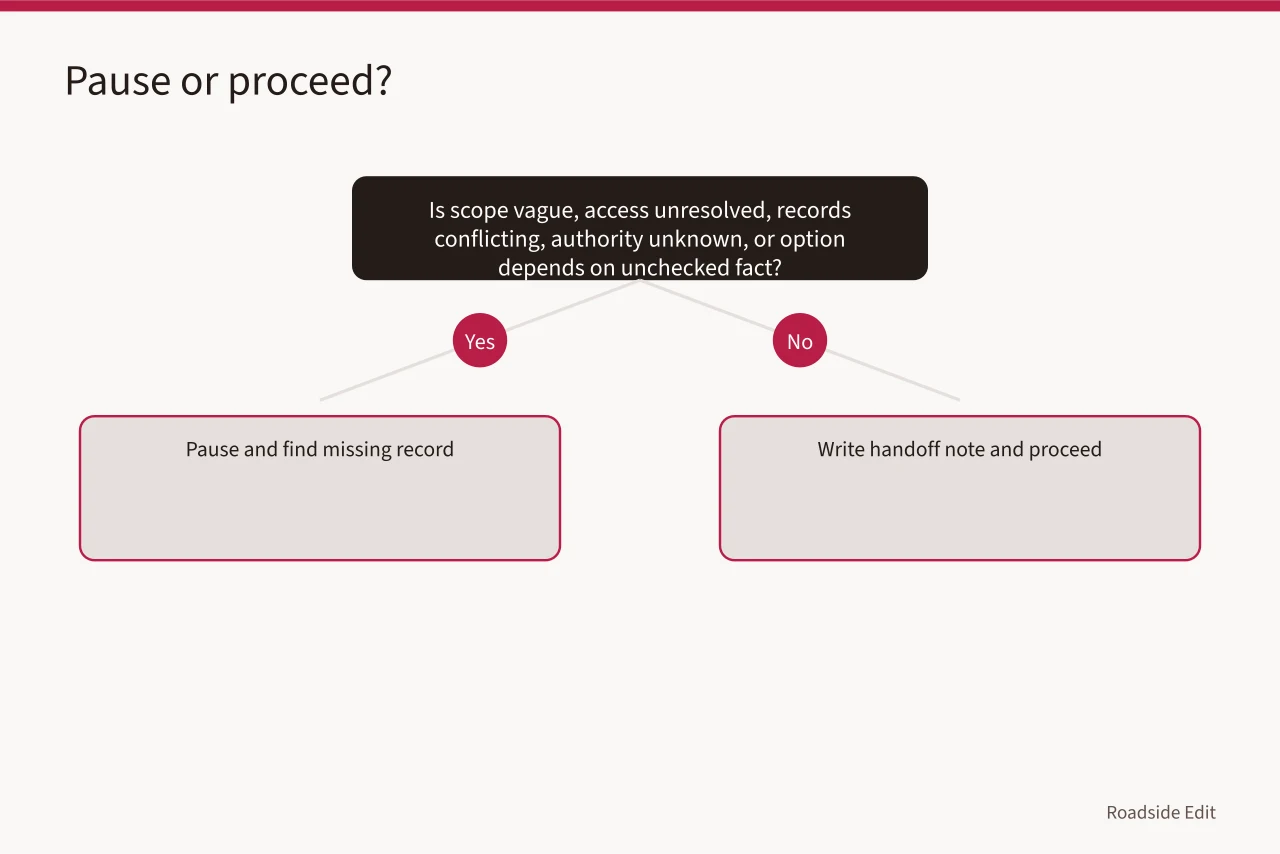
Before moving forward, write a handoff note with the current question, source list, assumptions, decision owner, access status, and unresolved items. This helps a later participant understand what is known without guessing which conversation or image supplied the claim.
Pause if the scope is vague, access is unresolved, records conflict, the authority is unknown, or a proposed option depends on a fact nobody has checked. A pause can be the most responsible outcome. It allows the missing record to be found before a broad exterior idea becomes an expensive or misleading commitment.
Common questions
Should a planning question name a solution?
Usually not. Start with the decision and evidence gap, then determine whether a solution can be compared fairly.
Can an old photograph answer a current-condition question?
It can document an earlier view, but it does not establish present condition without a dated current record.
Who should answer a code question?
Use the responsible local authority or a qualified project professional, not a general editorial article.
Is a provider proposal an approval to begin work?
No. A proposal can describe an approach. The responsible owner and relevant authority control authorization.