Guides
Part of How to build a vintage diner interiors safety checklist without faking an inspection
Vintage diner interior safety checklist: how to check evidence before wording
A vintage diner interior safety checklist for editors: which records to publish, which to attribute, which to omit, and how to log an urgent report.
This vintage diner interior safety checklist covers editorial wording, not site inspection. It sorts a record into publish, attribute or omit, and shows where an urgent report goes. It tells no owner, worker or visitor how to operate or alter a diner.
What to take away
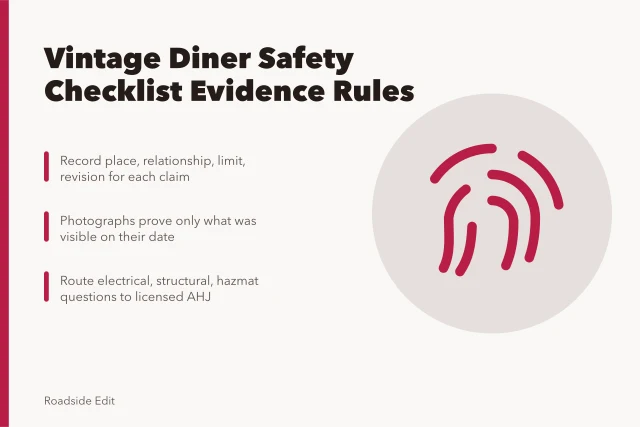
- Publish only what the record states, on its own date.
- Attribute owner updates to a named role and a stated date.
- Omit anything that reads as an instruction to enter, test or avoid.
- Label paid placement where the reader meets it, not in a footer.
- Send urgent concerns to the local authority, never through the article.
The three-way rule
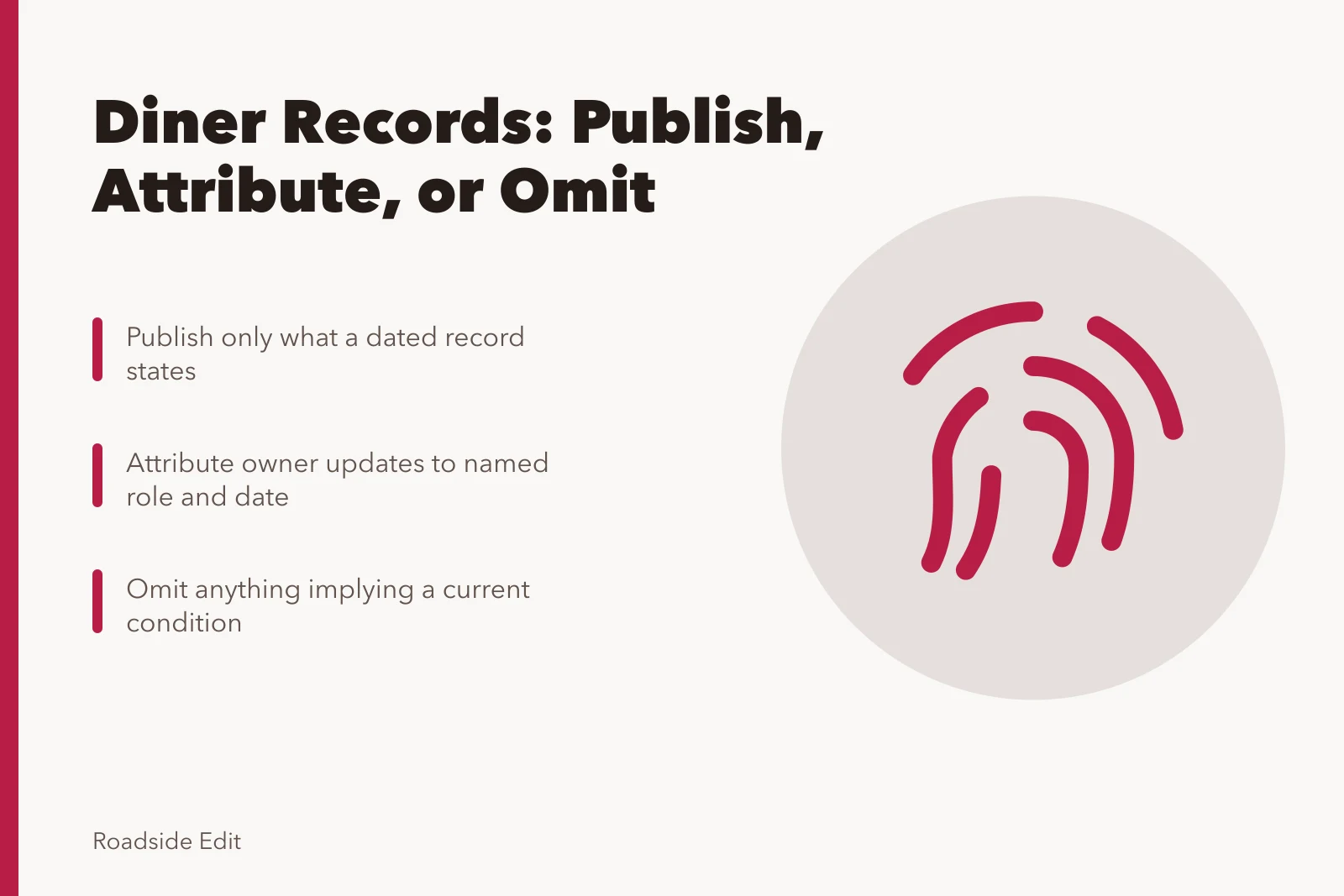
Every claim ends in one of three places. Publish it when a dated record states it. Attribute it when a person supplied it. Omit it when it only implies a current condition.
| Route | Test | Wording |
|---|---|---|
| Publish | Dated record states it | "The 1962 survey lists two exits" |
| Attribute | Named source supplied it | "The owner said in March that..." |
| Omit | Only implies today | Nothing runs |
A 1958 photograph of a lunch counter shows the counter, the stools and the light fixtures on the day it was taken. It cannot show whether the aisle behind those stools is clear this morning.
Name the authority, not the rule
Local fire, building and health requirements vary by municipality. Name the office that holds them and stop there. Do not restate a code you have not read in its adopted form.
The National Park Service fire-prevention guidance treats clear aisles and exits as part of a facility's own emergency planning. That is a point about the source's setting, not a finding about any diner you are writing about.
Worked example: a booth photograph
Say a reader sends a 1971 interior shot of a diner with vinyl booths and a terrazzo floor. Three claims are available.
- Publish: the photograph is dated 1971 and shows booths and a terrazzo floor.
- Attribute: the sender says the booths were reupholstered, if you name the sender and the date.
- Omit: the seating is safe, the floor is intact, the room is in use.
The third line is the one that gets a page corrected or pulled. It converts a dated image into a present-tense verdict.
Log urgent reports separately
An urgent report is not a correction. Keep it out of the article record and out of the comments.
Log five fields: time received, sender contact, the exact concern in the sender's words, the authority or property contact they were pointed to, and who on the desk made the referral. Then leave the page alone.
The correction process handles published factual errors. It is not an emergency channel, and a note in a CMS does not dispatch anyone.
Records that survive an audit
The National Archives records-management overview sets out why a traceable record of source, reviewer and date matters. Keep those three with the claim. A later editor can then see what the source covered without rerunning the research.
The Library of Congress primary-source analysis guide separates what a source shows from what a reader concludes. Apply that split to every image caption before it publishes.
The Federal Trade Commission's endorsement guidance covers disclosure of a material connection between a business and a reviewer. Put the label where the reader meets the recommendation. Disclosure adds context; it does not verify the claim underneath it.
Common questions
Can a photo establish that an exit is clear today?
No. It shows the scene at the moment it was made, nothing after. Publish the date and the visible features, and leave the present tense out.
What should a paid listing disclose?
Disclose the payment, the contributor relationship and the basis for inclusion. Put it next to the recommendation rather than in a footer.
Should a page publish an unverified safety warning?
No. Either find a dated source that states it or omit the claim. An unverified warning invites a reader to act on something nobody checked.
Where does an urgent report go?
To the local emergency, building or property authority, with the sender told which one. The desk logs the referral and keeps the page unchanged.