Guides
Part of How to build a vintage diner interiors safety checklist without faking an inspection
How to write vintage diner interior safety budget notes without projected costs
Budget notes for a vintage diner interior record dated, attributed amounts and label what each one covers, so no reader mistakes a figure for a safety finding.
A vintage diner interior safety budget note records what a source published, on what date, for what scope. It never converts a dollar figure into a finding about condition. A line item is a line item.
What to take away
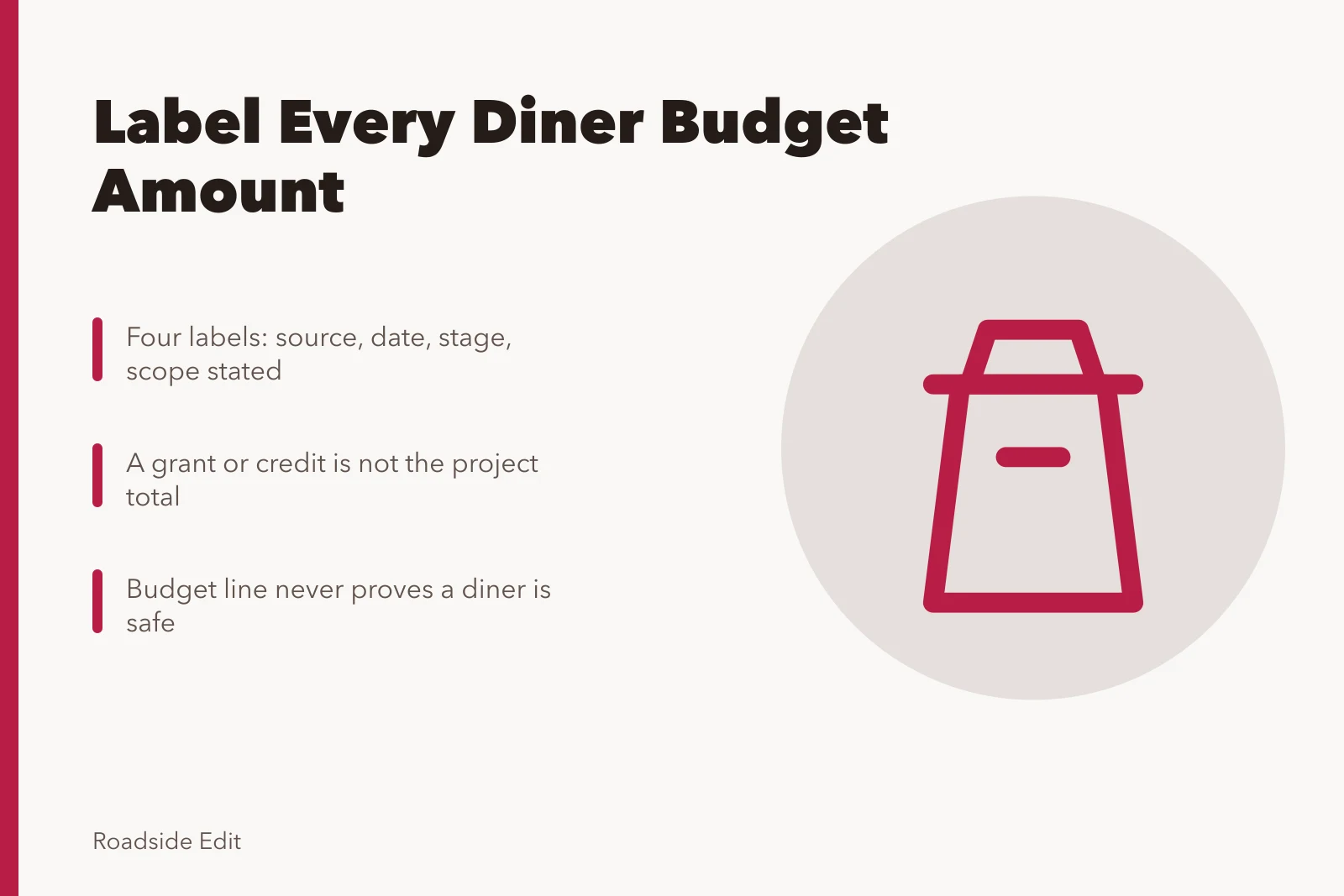
- Every amount carries four labels: source, date, stage of work, and the scope the source itself states.
- A funding record is not a cost record. A grant or credit may not equal the project total.
- A budget line never establishes whether a diner is safe.
- Neon and sign work is usually its own scope, separate from building work.
- When scope is missing, write "scope not stated" instead of estimating.
The Ahwahnee example, and what it does not prove
The National Park Service describes the Ahwahnee rehabilitation as a project addressing building, fire, life-safety, seismic, and accessibility requirements. Its project overview supports one limited point: a historic-building project can carry several requirement categories at once.
That is the whole lesson. The page gives no comparable scope, budget, or safety conclusion for a diner. A diner interior that mixes booth laminate, chrome-edge trim, a dry-stand pipe, and a canopy soffit is a different building type with a different review path.
Split the scope before you split the money
Most diner interior projects arrive as one number covering several trades. Break it into the scopes a preservation reviewer would recognize, and keep neon work visible as its own line.
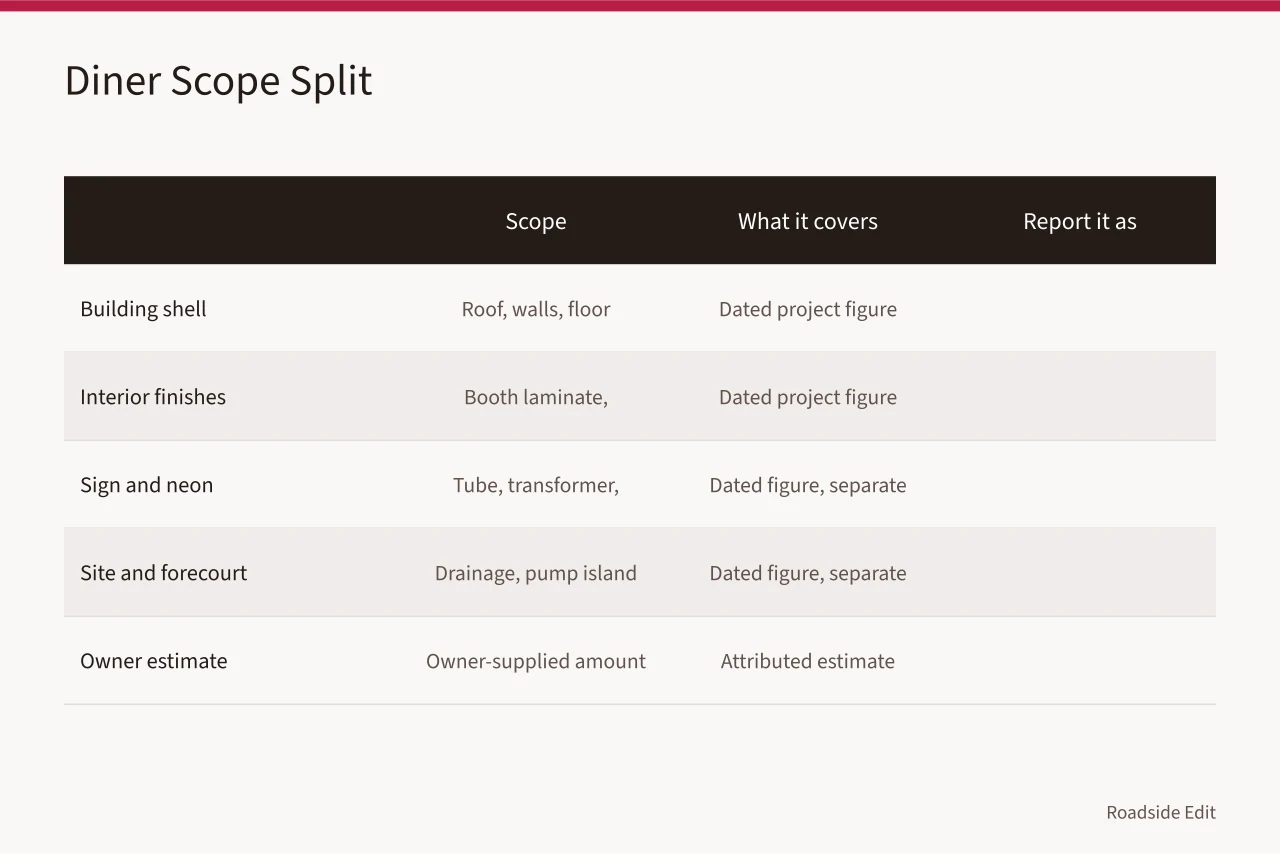
A neon scope is rarely interchangeable with a building scope. Replacing neon with LED, or over-painting original porcelain enamel, changes what the project is, and the note should say which version the figure covers. The neon sign restoration planning workflow walks through how those scopes get separated before money is discussed.
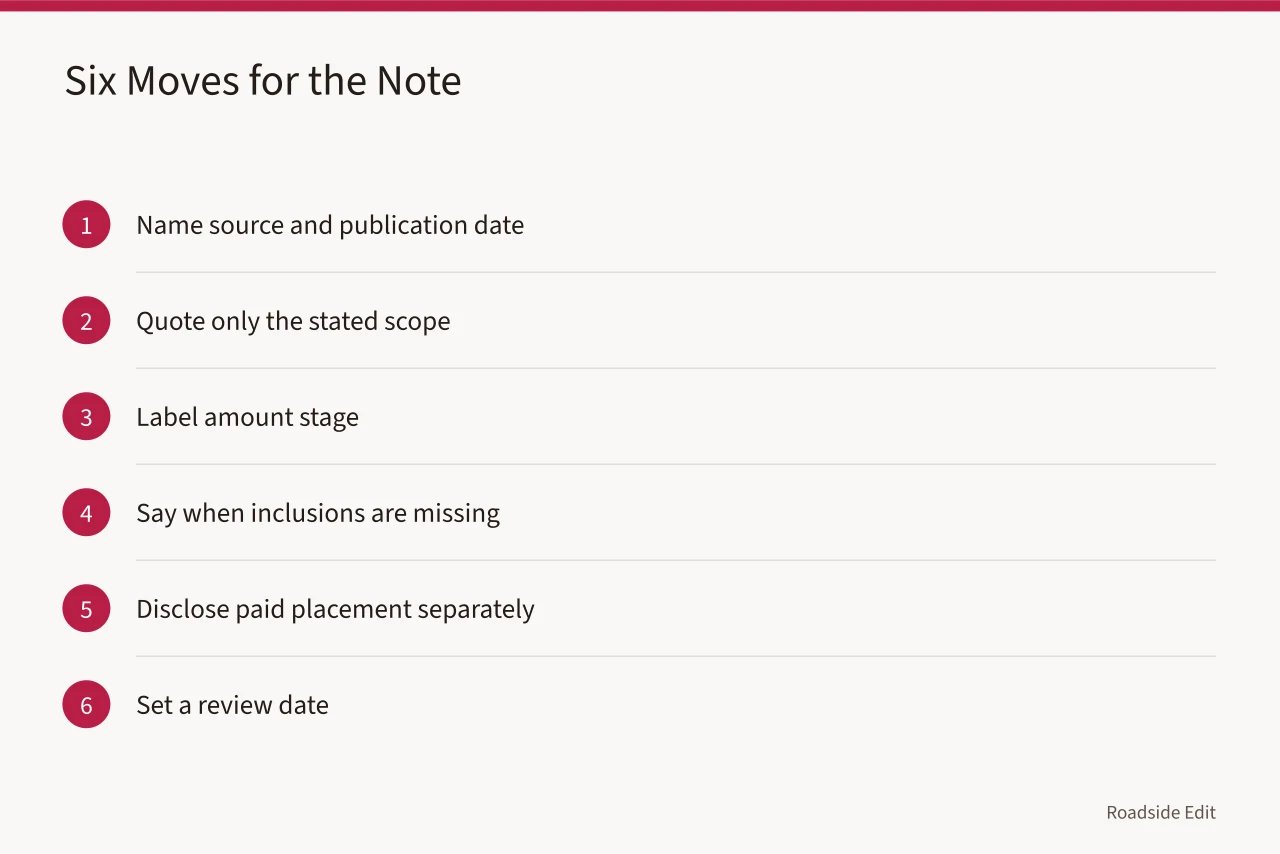
Write the note in six moves
- Name the source and its publication date.
- Quote or summarize only the scope that source states.
- Label the amount as proposed, reported, awarded, completed, or unavailable.
- Say when the record does not show inclusions or exclusions.
- Disclose paid placement separately from editorial evidence.
- Set a review date for figures that go stale.
If the cited record does not separate design, permits, preservation work, or later operations, say so. A missing scope detail limits the story. It is not an invitation to estimate.
Do not infer safety needs from a budget line
This is the rule that matters most, and it is the one readers break. A diner with a large reported rehabilitation figure is not thereby unsafe, and a diner with a small one is not thereby sound. Condition comes from a dated survey by a qualified professional, not from a spreadsheet cell.
The Government Accountability Office's cost-estimating guide describes the value of a defined technical baseline and documented assumptions. That supports the editorial rule that an amount needs stated scope before anyone compares it. The guide does not produce a budget for another diner.
The Internal Revenue Service explains the historic rehabilitation tax credit in terms of qualifying expenses and certified historic structures. Label a tax incentive separately from a project's reported cost. Nothing in that page implies eligibility for a featured diner.
The Federal Trade Commission's endorsement guidance supports clear disclosure when compensation could affect how readers weigh a claim. A paid listing is advertising information, not a measure of safety or project quality.
Keep the label attached
Give each amount a label that travels with it into tables, captions, and summaries. A working label reads: source date, publishing organization, stage of work, and the source's own description of the amount.
Distinguish a cost record from a funding record. An award, grant, loan, credit, or donation may explain how a project was financed without equaling the project total. Say that where a reader could mistake one for the other.
For business submissions, ask for a dated public document or permission to quote an identified representative. Keep an owner-provided estimate in its own attributed sentence. Do not turn it into a ranking, a local average, or a prediction.
Review the note when the source changes, the project completes, or a clearer public record appears. Preserve the original date so readers can tell a historical amount from new information.
Common questions
Can a historic project amount be published?
Yes, when it is dated, attributed, and limited to the scope the source describes. Publish the scope sentence alongside the number, not in a separate paragraph.
Does a project budget show that a diner needs similar work?
No. It cannot establish another property's condition, requirements, or costs. Condition comes from a dated survey, and requirements come from your state historic preservation office or local landmarks commission.
How should a paid listing appear?
Use a conspicuous disclosure and keep payment separate from editorial comparison. The FTC guidance above is the reference for how that disclosure reads.