Reviews
Part of How a 2027 motel exterior maintenance plan keeps records and repairs on track
How to build a motel exterior maintenance plan comparison for 2027
A motel exterior maintenance plan comparison for 2027 sets survey scope, inspection intervals and repair triggers against named programs and standards.
A plan comparison is not a list of repairs. It is a choice about who inspects the exterior, how often, and what evidence lands in the file. For a 1950s court of brick veneer and porcelain-enamel signage, that choice decides whether original material survives the next decade.
What to take away
- Compare plans on inspection interval, who holds the record, and what triggers a repair, not on price alone.
- A named standard gives you the scope language: Secretary of the Interior's Standards for Rehabilitation, NPS Preservation Brief 47, and the 2010 ADA Standards.
- Match the plan to the building fabric: brick veneer, curtain-wall glazing and butterfly roofs fail differently and need different survey skills.
- Keep the plan comparison in one dated file so a later owner inherits the reasoning, not just the invoices.
The five plans worth comparing
Cyclical repaint and sealant program. A fixed cycle, usually tied to a five-year exterior repaint, with caulk joints and window perimeters on the same ticket. Suits stucco and painted brick.
Priced per square foot of wall area plus linear feet of joint. Weakness: it repaints on schedule whether or not the substrate is dry, which is how original enamel and historic trim get buried.
Annual condition survey with a written report. A preservation consultant or architect walks the building each year and issues dated photographs with locations.
Priced as survey days plus travel plus report. Suits any property with original fabric, because the report is the deliverable.
It is what a State Historic Preservation Office or local landmarks commission will ask for during Section 106 review.
Moisture-first envelope program. Inspection concentrates on water paths: roof edge, parapet, sill, flashing and the wall assembly. The Department of Energy explains that moisture moves by several mechanisms and that control depends on climate and construction, so this plan is written per building rather than per brand.
Review the Department of Energy moisture-flow overview. A visible stain is not proof of one cause.
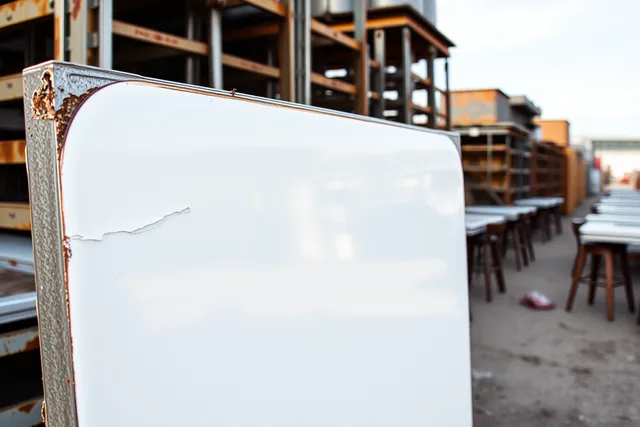
Sign and canopy program. Separate from the building shell. Covers porcelain-enamel panels, plastic-faced box signs, neon tube diameter, transformer housings and canopy soffit. Any electrical work goes to a licensed electrician and the AHJ; this plan only schedules the inspection and records what the electrician reports.
Access and egress review. A plan that checks walkways, curbs, entrances and parking-lot routes against the 2010 ADA Standards for Accessible Design. Consult the ADA Standards for Accessible Design. The standards are technical criteria for covered facilities; they do not decide a particular motel's obligations, which rest with the owner and the enforcing authority.
How to score them side by side
| Criterion | What to write down |
|---|---|
| Inspection interval | Months between visits, and who may call an extra one |
| Record owner | Named person, file location, retention period |
| Trigger for repair | The observation that starts a project scope |
| Fabric competence | Brick veneer, curtain wall, butterfly roof, neon |
| Escalation path | Engineer, electrician, SHPO or landmarks commission |
| Cost structure | Survey days, travel, fabrication, billed separately |
The National Park Service treats regular inspection and prompt attention to deterioration as the core of exterior maintenance in Preservation Brief 47. Read Preservation Brief 47. FEMA's recovery reference draws the same line between routine work such as painting and caulking and larger modernization. Review FEMA's exterior-wall work description.
Worked example: a 1962 court with a butterfly roof
A two-story 1962 motel, brick veneer, curtain-wall glazing at the stair towers, butterfly roof over the office, porcelain-enamel sign on the pole. The owner compares the cyclical repaint program against the annual survey.
The repaint program prices lower in year one. The survey program costs more because it pays for survey days and travel before any work is scoped.
Then the first survey finds the butterfly roof draining toward the office wall, and the repaint schedule would have sealed that wall before anyone checked.
The comparison flips on one observation, which is the point of paying for the survey.
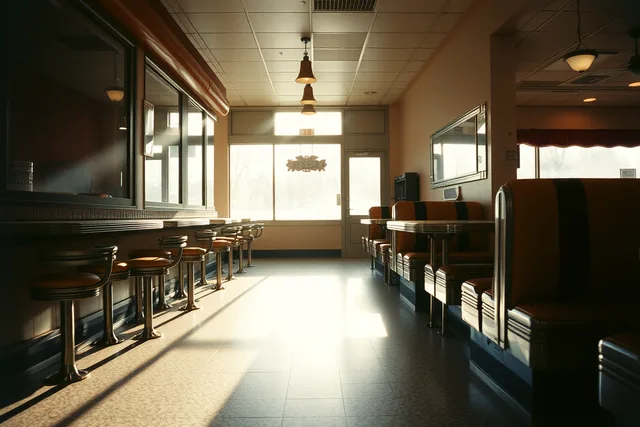
For the interior side of the same property, the questions overlap with vintage diner interior options, where laminate, chrome-edge trim and booth salvage carry their own provenance rules.
Choosing without over-committing
Two plans can run together: the annual survey as the record, the cyclical repaint as the execution. Neither replaces the other, and the survey tells you when to hold the paint back.
Anything structural, electrical or hazardous goes to a licensed engineer, electrician or environmental authority. Easements, historic tax credits and cross-border import duties go to an attorney, accountant or customs broker.
Compliance rulings go to the State Historic Preservation Office or the local landmarks commission under the adopted ordinance.
Property-specific condition claims need dated field evidence from a named survey source.
The wider set of historic motel care questions covers the recurring decisions this comparison feeds into.
Common questions
Does the cheapest plan win?
Only if it produces a dated record someone can act on. A repaint cycle with no written survey has no evidence trail, and the next owner starts from zero.
Can one plan cover the building and the sign?
Rarely. Sign and canopy work involves electrical systems and salvage sourcing that a general exterior program does not scope, so keep them as separate line items.
Who decides which plan is right?
The owner or authorized manager, with a preservation consultant or architect for fabric questions. This article compares scope and structure; it does not rule on a specific property.