Guides
How a 2027 motel exterior maintenance plan keeps records and repairs on track
Motel exterior maintenance plan for 2027 helps U.S. readers organize inspections, records, seasonal tasks, priorities, and responsible escalation paths.
A maintenance plan is a repeatable record of what was observed, what needs attention, who owns the next step, and what was done. It is not a diagnosis, permit, engineering opinion, or universal repair specification. A useful plan prevents routine work from becoming a collection of forgotten observations.
What to take away
- Start with dated baseline photos and a simple exterior inventory.
- Schedule periodic checks and additional checks after severe weather or unusual events.
- Record observations separately from conclusions about cause or treatment.
- Prioritize by visible risk, exposure, and responsible review need.
- Keep submitted commercial information distinct from maintenance evidence.
Build the baseline record
Walk the exterior by elevation and site area. Record the date, viewpoint, feature, visible condition, and source of every image. A photo can show one view at one time. It cannot establish hidden conditions, structural capacity, access rights, code compliance, or a suitable repair. State that limit in the record.
| Area | Record | Do not infer |
|---|---|---|
| Roofline | Visible covering, edge, gutter, and downspout views | Hidden roof condition |
| Walls | Visible staining, cracks, openings, or vegetation | Cause of a condition |
| Sign and lighting | Location and apparent features | Electrical safety or approval |
| Walks and site | Visible drainage routes and obstructions | Property boundary or required treatment |
Create a workable schedule
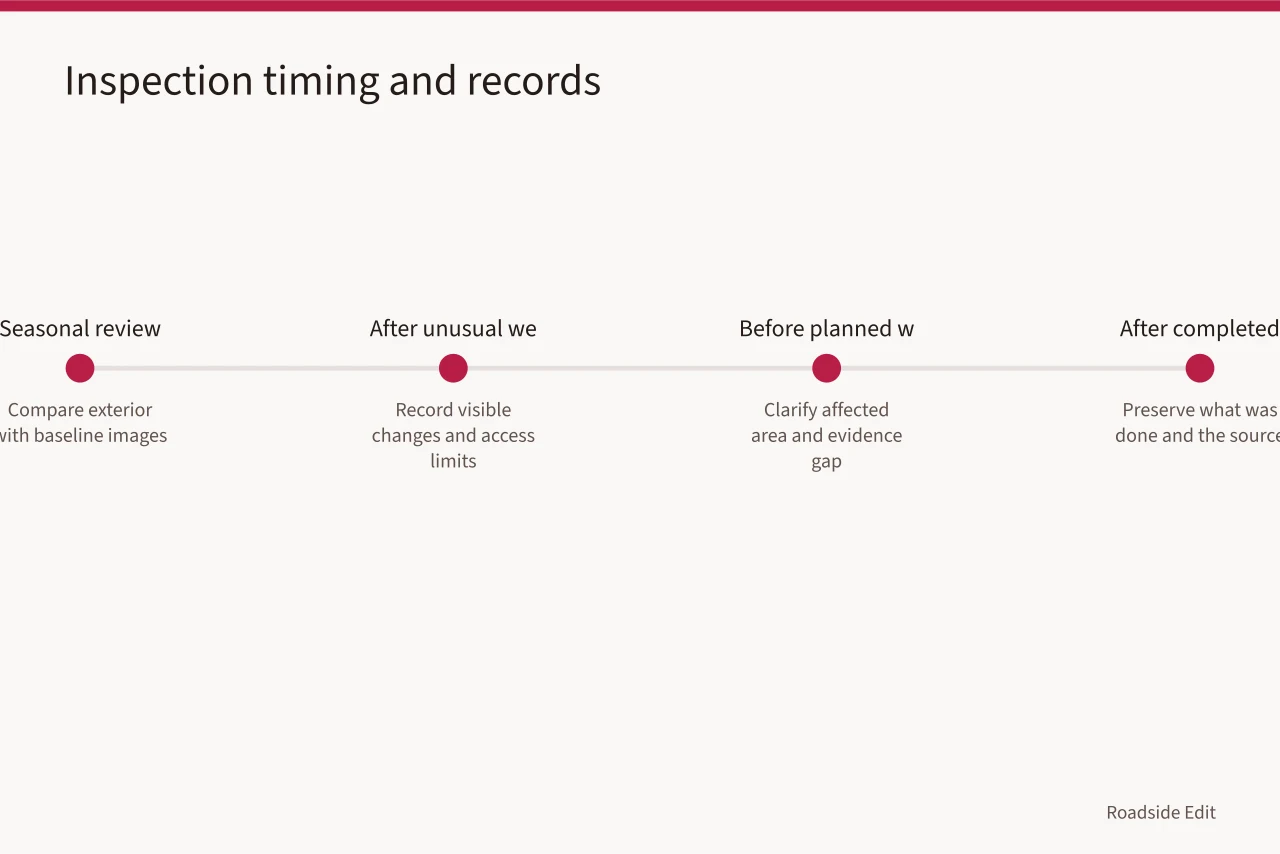
Use periodic inspections based on season, exposure, known site conditions, and manufacturer information where applicable. Add an occasional inspection after a severe weather event, accidental damage, or a new observation. The schedule should identify who records the check and where the record is kept.
| Timing | Purpose | Record |
|---|
NPS routine-maintenance planning identifies exterior work such as painting, roof repairs, masonry, and fencing within a developed footprint. Applicable requirements still govern the work. Read the NPS routine exterior-maintenance planning page.
It applies to a specific NPS program, not every motel. Its useful principle: a maintenance plan needs a defined scope, documented baseline, clear priorities, and periodic review.
Prioritize without guessing
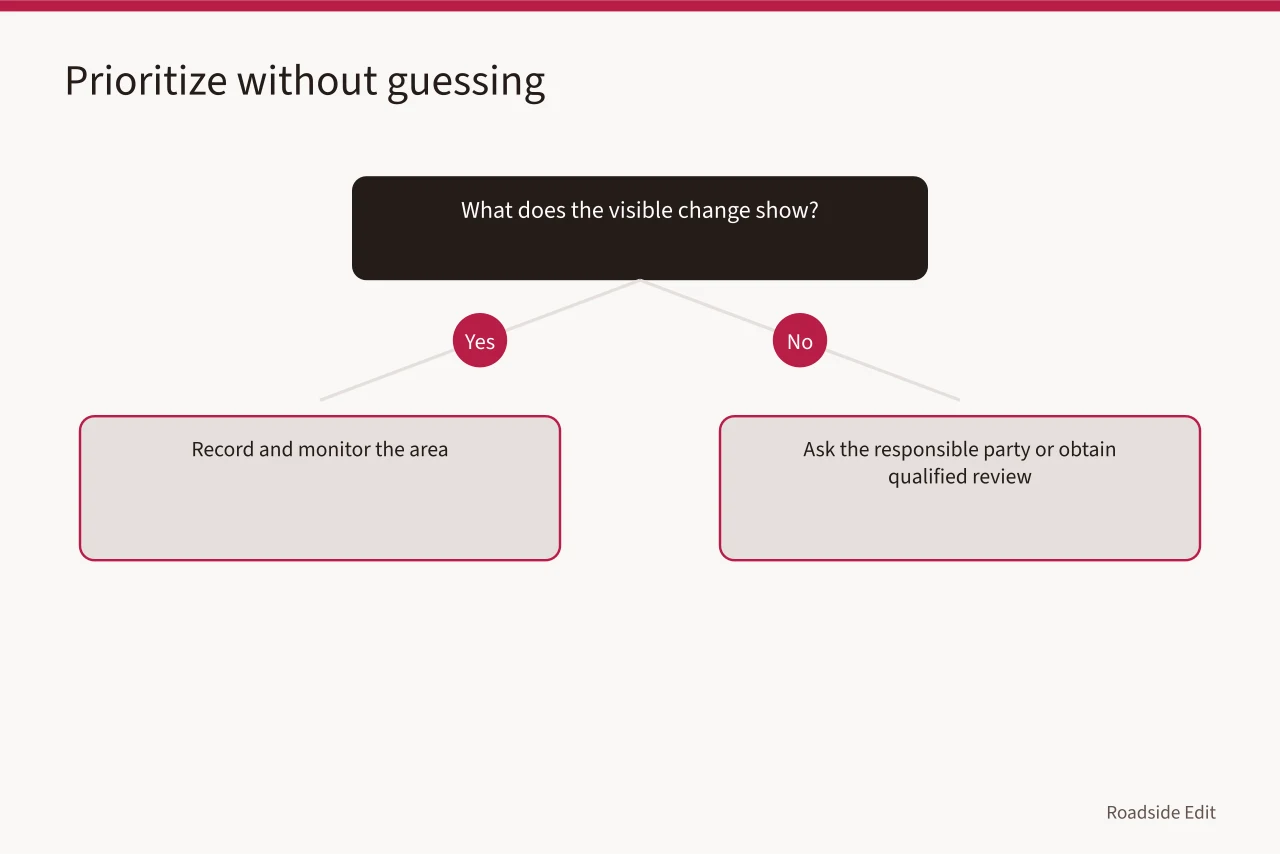
Use plain categories: record, monitor, ask the responsible party, or obtain qualified review. Avoid declaring a cause, safety status, or repair method from an image alone. A visible change can be an important reason to document the area and seek project-specific advice, but it is not a technical conclusion.
Keep a maintenance log
Each entry should state the date, area, observation, source or image, action taken, decision owner, and any open question. If a record is corrected, add a new dated entry rather than silently replacing the earlier one. This creates a useful history for a future owner, editor, or qualified reviewer.
Assign responsibilities before an event
A plan works only when each task has a responsible role. Use roles rather than personal names if turnover is likely: property owner, authorized manager, editor, maintenance contact, local authority contact, or qualified reviewer. The role should know whether it is expected to observe, record, authorize access, obtain a specialist opinion, or confirm a decision.
Do not write a task that nobody can complete. "Inspect upper roof conditions" may require safe access and a qualified person. A routine visual walkaround may be appropriate from a public or authorized viewpoint, but it does not authorize entry or technical diagnosis. Record access limits and the reason an area was not observed.
Use records to distinguish routine care from project work
Routine care can include observation, cleaning records, and simple scheduling where the responsible party has authority. A project-specific change may require additional records, local approval, an owner decision, a specialist review, or all of these. The article should not decide where that line falls for a particular property. Instead, keep the question visible and direct it to the appropriate party.
For example, a visible stain may justify a dated photo and a note to monitor it. It does not by itself establish the cause, the urgency, the material beneath the surface, or a repair method. A maintenance record becomes useful when it separates these steps instead of collapsing them into a recommendation.
Make seasonal reviews comparable
Use the same routes, views, file labels, and condition terms whenever practical. A future comparison is easier when the baseline and later records describe the same exterior feature. If weather, lighting, access, or a changed viewpoint affects an image, note that condition rather than pretending the images are identical.
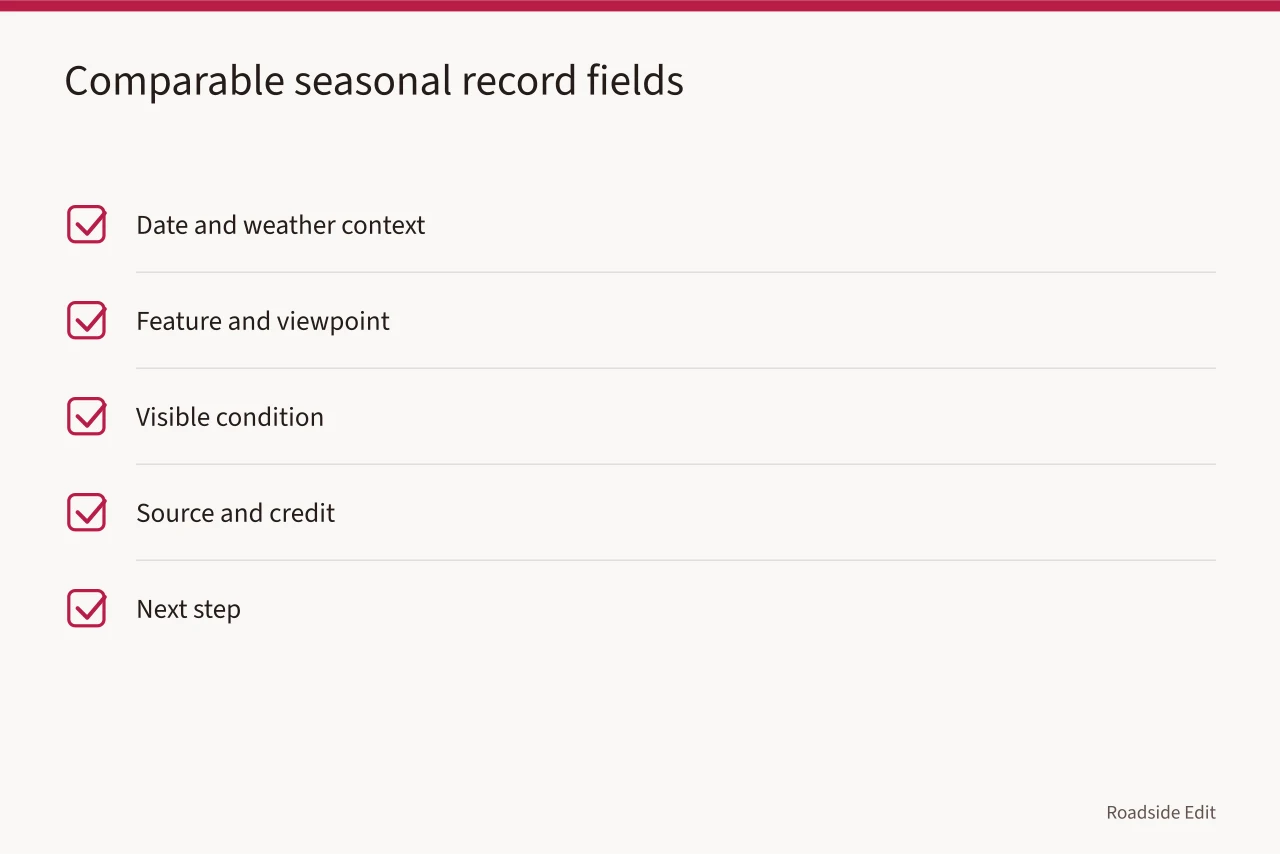
| Record field | Example purpose |
|---|---|
| Date and weather context | Explains the circumstances of an observation. |
| Feature and viewpoint | Lets a later reviewer locate the same area. |
| Visible condition | Describes what can actually be seen. |
| Source and credit | Lets an editor verify the file and its permitted use. |
| Next step | Identifies the owner, authority, or review question. |
Handle urgent observations carefully
An editorial plan cannot assess emergency risk. If a person sees an immediate safety concern, access problem, utility issue, or condition that may require urgent attention, the correct next step is to contact the responsible owner, relevant service, or qualified professional. Preserve the observation and its date, but do not publish a technical conclusion that the available evidence cannot support.
Review the plan itself
At each scheduled review, check whether the list of areas, records, responsibilities, and contacts is still current. Remove outdated contractor or provider claims from editorial materials unless their date and disclosure remain clear. Update the plan when a property boundary, owner role, use pattern, or known site condition changes. The plan is a living record, not a one-time checklist.
Prepare a simple handoff file
When responsibility changes, provide a small handoff file, not a stack of unlabeled images. Include the baseline record, current checklist, last review date, and open questions.
Include contact roles, approved source pages, and most recent change log, but do not include private information unnecessary for the maintenance purpose. A good handoff helps the next person understand what is known without treating old assumptions as confirmed facts.
Make public-facing maintenance content accurate
An article can explain a recordkeeping method and show a disclosed, credited image. Avoid promising a plan prevents damage, reduces a particular cost, satisfies a local rule, or preserves property status.
Those outcomes depend on the property, the work, and the responsible decision-makers. Clear limits make maintenance content more useful to readers and safer for businesses that seek editorial coverage.
Decide what to publish
Publish general checklists, educational explanations, and clearly sourced historic context. Keep property-specific observations private unless their source, permission, date, and relevance have been confirmed. For a directory or paid placement, describe the selection basis and material relationship. Do not present an advertiser as a maintenance authority solely because it appears on the site.
Finally, retain the plan's limitations beside the plan itself. A checklist makes recurring observation easier; it does not remove the need for responsible judgment when a new, unclear, or property-specific condition appears.
It also makes later communication clearer because readers can see where editorial education ends and a responsible owner or qualified professional must begin.
That boundary should remain explicit and current.
Separate listings from evidence
A business may later submit a service description or buy a placement. Label it as submitted or sponsored content. It is not independent proof that a property condition exists or that a service is appropriate. Keep the original submission, date, and disclosure separately from the maintenance log.
When to stop and escalate
Stop routine editorial guidance when the question involves access, permits, utilities, structural performance, hazardous conditions, or a property-specific treatment. Identify the responsible owner, local authority, or qualified professional instead. A general article should clarify the next question, not impersonate the person who must answer it.
Source checks for a maintenance plan
The National Park Service discusses inspection and prompt attention to deterioration in its exterior-maintenance guidance. Review Preservation Brief 47. The brief does not give a motel-specific repair direction. It supports recording features and materials before selecting a response.
The Department of Energy explains that moisture moves by several mechanisms and that control methods depend on climate and construction. Read the Department of Energy moisture-flow overview. It does not diagnose a specific property. It explains why a damp-looking surface should be recorded and investigated through the responsible process rather than treated as proof of one cause.
FEMA's National Flood Hazard Layer provides federal flood hazard information for mapped areas. Check FEMA's National Flood Hazard Layer information. It does not decide whether a motel is safe, damaged, or subject to a project requirement. It gives a maintenance record a defined source to consult when mapped flood information is relevant.
Common maintenance-plan mistakes
Recording a conclusion instead of an observation
Write what is visible, where it is visible, and when it was recorded. Do not convert that record into a diagnosis without appropriate evidence.
Leaving photos without a source or date
An unlabeled image is hard to compare later. Preserve the original page, date, and narrow caption.
Treating a proposal as completed work
Use "proposed," "submitted," or "for review" until the responsible decision and record exist.
Letting old notes remain current by accident
Add a dated change log whenever a new record alters the understanding of the area.
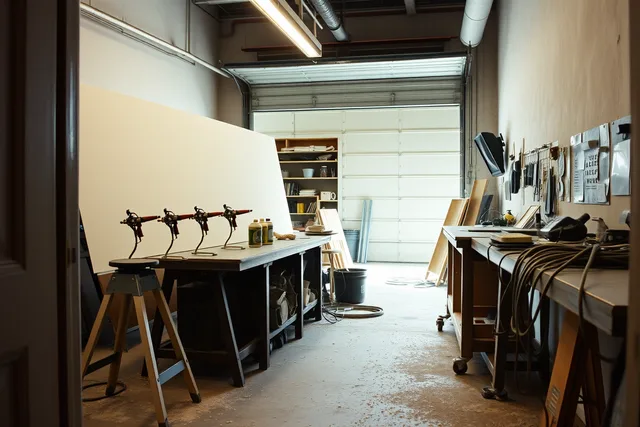
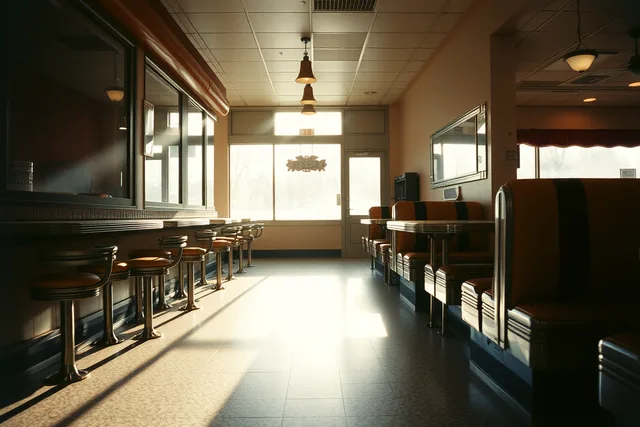
The image is illustrative. It does not establish a motel's current condition, ownership, safety, maintenance need, or project status.
Common questions
Can a maintenance plan replace a building assessment?
No. It preserves observations and tasks; project-specific assessment needs appropriate evidence and review.
How often should the plan be reviewed?
Set periodic reviews appropriate to the property and add event-driven reviews after unusual conditions.
What should the first record include?
A dated exterior inventory, baseline images, the limits of those images, and a list of open questions.
In this guide
- Motel exterior maintenance checklist: how to build your 2027 care fileMotel exterior care checklist for 2027 gives U.S. owners a clear routine for inspections, service notes, safe escalation, seasonal work, and record reviews.
- How to build a motel exterior maintenance plan comparison for 2027A motel exterior maintenance plan comparison for 2027 sets survey scope, inspection intervals and repair triggers against named programs and standards.
- How to keep motel exterior maintenance records that hold up all yearMotel exterior maintenance records hold up all year when each observation, decision and correction stays dated, sourced and separate from the work itself.