Guides
Part of How to build a neon sign restoration case study: a 2027 method guide
How to keep neon sign restoration case study records without losing the paper trail
Neon sign restoration case study records: log each source, its claim limit, image credit, and correction, so the next editor can retrace the work.
A neon case study rests on its file. The file has to let the next editor find the question, the source of every claim, and the reason a sentence changed.
What to take away
- Log the source page and the exact sentence it supports in one record.
- Keep public records, supplied material, and your own field notes in separate fields.
- Store credit and context with each image file, not in a separate list.
- Write down what a source does not prove before you draft from it.
- Date every correction and name the record that forced it.
Run the file as a numbered sequence
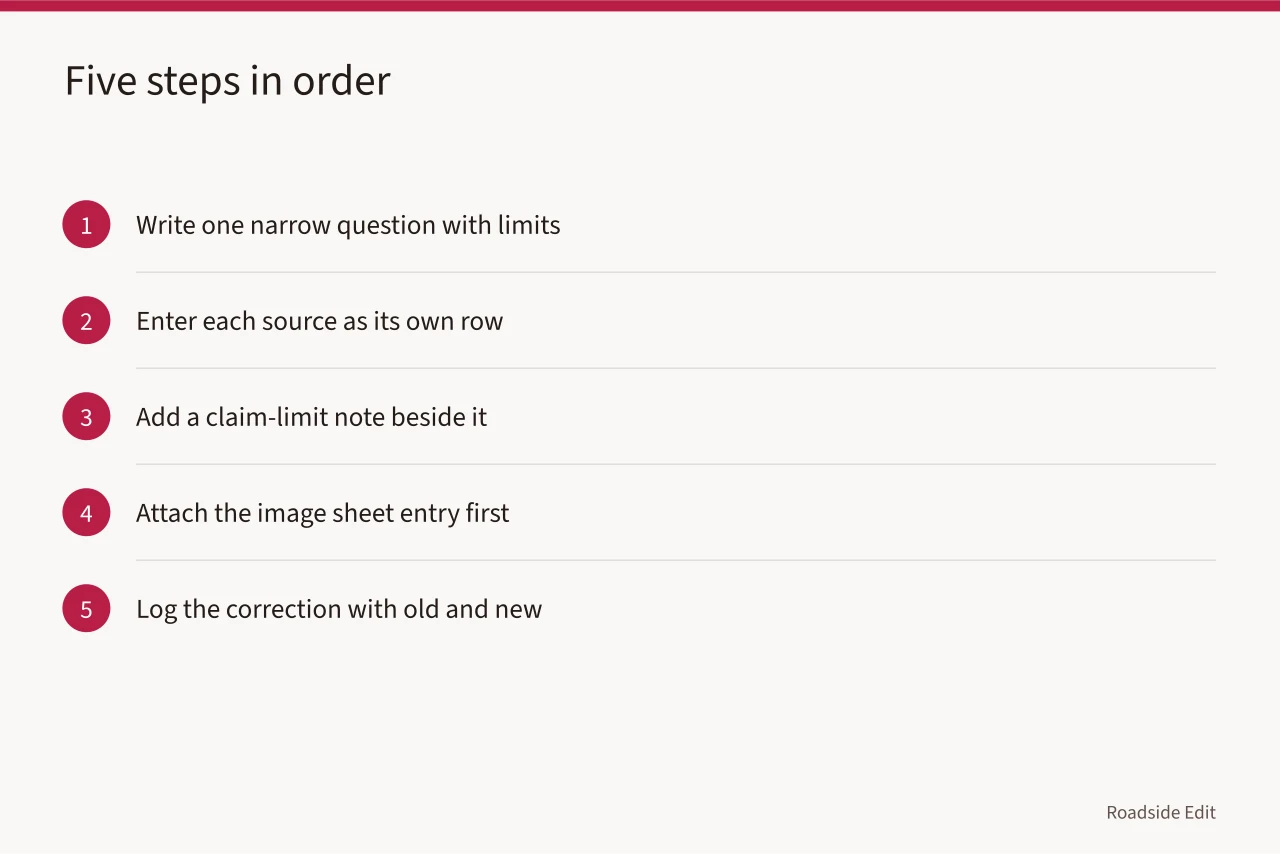
Open one folder per article, named for the article ID rather than "final research." Then work the steps in order, because each one depends on the last.
The National Park Service documentation guidelines ask that goals and methods be stated, then the information kept for later research. A sign survey is not an excavation. The editorial habit transfers: write down what the record was meant to establish.
| Section | What goes in | Why |
|---|---|---|
| Question | One narrow question and its limits | Keeps the draft off unsupported conclusions |
| Source log | Direct address or repository, creator, date, access date | Lets an editor revisit the exact record |
| Claim note | The supported sentence and its ceiling | Stops a source being stretched later |
| Image sheet | Filename, source page, credit, caption, date | Keeps a photograph from becoming anonymous evidence |
| Contributor material | Sender, relationship, receipt date, original wording | Preserves attribution and disclosure context |
| Revision record | Old wording, new wording, source, date | Makes factual changes traceable |
Worked example: the 1984 photograph
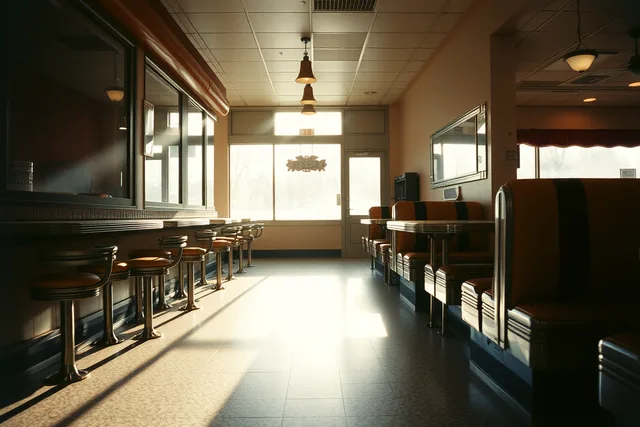
Say a 1984 photograph shows a cafe sign with its neon intact, and the draft wants to say the sign still lights. Split the claim.
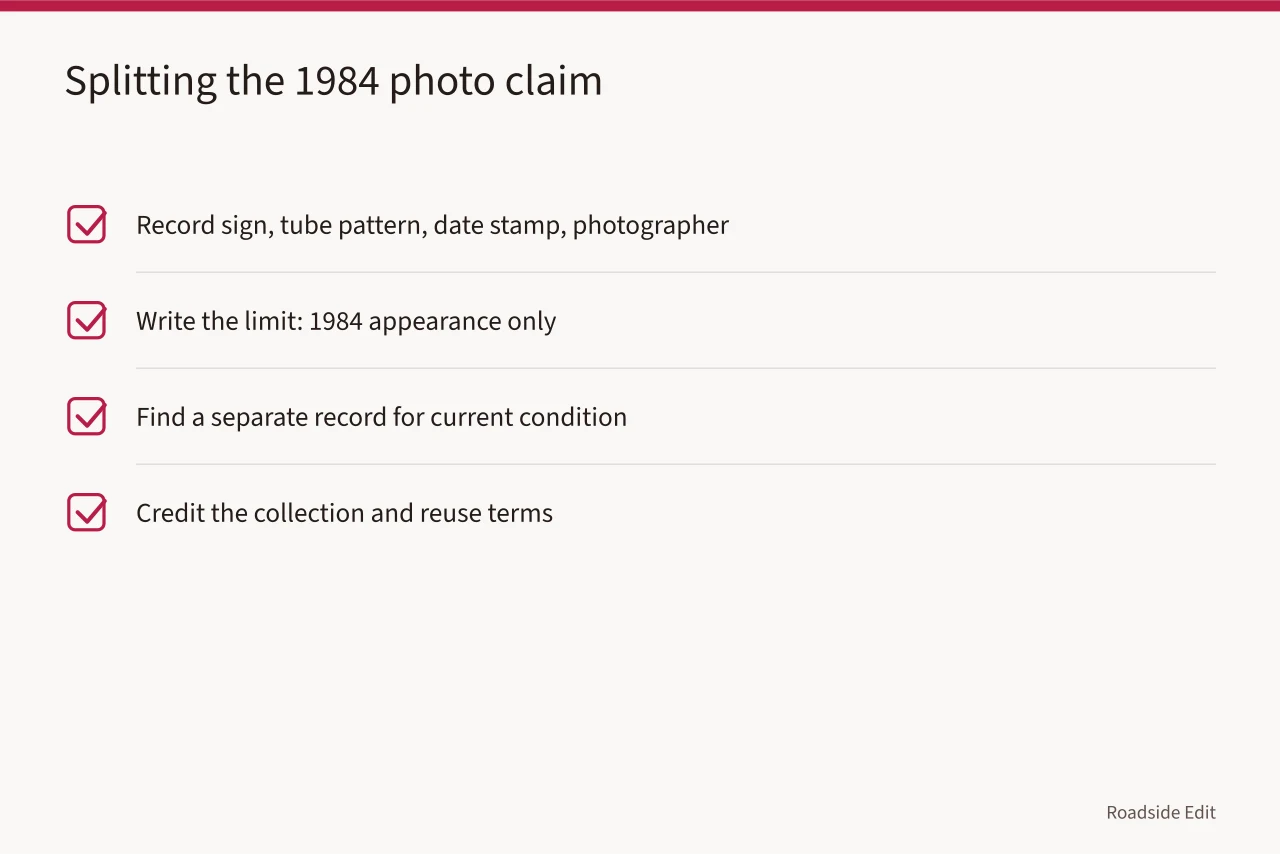
The Library of Congress primary-source analysis guide puts observation before reflection and investigation. Apply that order to the frame. First record what it shows. Then decide whether the article has another source for the wider reading.
If a contributor sends a photograph with no reliable date or credit, do not use it as proof of a past event. It can run as supplied illustration if the article says so and the contributor holds the rights. Otherwise leave it out. A missing image costs less than a confident caption built on unknown provenance.
Keep the source log usable after handoff
"City archive" and "owner email" are not records. For a webpage, save the following:
- the direct address
- page title
- publisher
- date if shown
- your access date For an interview, note who spoke, their relationship to the sign, and what you asked.
The National Archives records-management overview sets out how records are created and kept. The editorial lesson is narrow: a label is not a record. Someone else has to be able to find the same item again.
Add a "supports" and "does not support" pair to every entry. A contractor statement supports the fact that the contractor described its own work. It does not verify the result. A public listing supports the wording and date on that listing. It may not capture later changes to the property.
Separate corrections from promotion
A correction request should name the sentence, state the asserted error, and supply a record or a contact. Save the request, the evidence reviewed, the decision, and the final wording. The public page needs a short dated note only when a material fact changed.
Promotional material is a different file. A business may send a project description, images, or a figure, so attribute it and disclose any paid or free relationship that could affect how a reader weighs a recommendation.
The Federal Trade Commission's endorsement guidance requires that material connections be disclosed clearly and conspicuously. That gives the reader context.
It does not turn supplied copy into independent reporting.
Write the handoff note
Before publication, answer four questions in a short private note. Which source carries the central claim? Which details are attributed rather than verified?
Which question is still open? What should an editor check before updating the page?
Save the publication date and the disclosure wording alongside it, so a later reader sees the original context before anyone edits the text.
Common questions
Should every source appear in the public article?
Publish the sources behind public claims. Keep the wider working log so a future editor can follow the reporting path and judge a correction.
What is a claim limit?
It is the note stating the narrow point a source supports and the conclusions it does not reach. It protects readers and later editors from overstatement.
Can a business request a factual correction?
Yes. Ask for the exact wording at issue, supporting material, and a contact who can clarify the record. Weigh that material as evidence, not as a request for promotional wording.