Guides
Part of How to build a neon sign restoration case study: a 2027 method guide
Neon sign case study warning signs editors should catch before 2027
Neon sign case study warning signs for 2027 help editors catch undated images, unsupported claims, stale context, hidden promotion, and weak corrections.
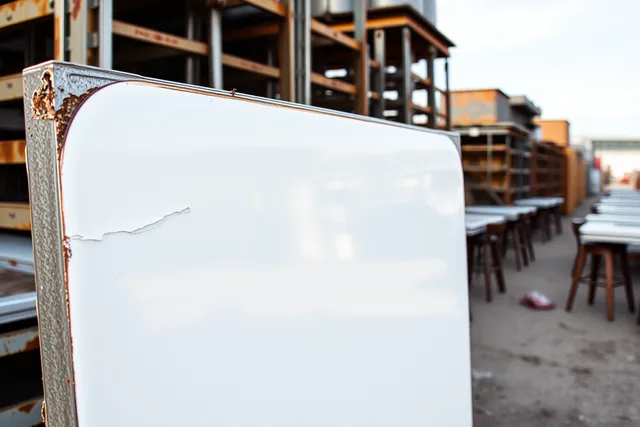
A neon case study fails in the caption before it fails in the copy. The photograph shows a tube, a transformer can, or a porcelain sign face. The draft asks that image to carry an electrical diagnosis, a budget, or a claim. That claim concerns a part nobody photographed.
What to take away
- A tube diameter in a photo does not establish transformer load; that comes from the nameplate or the electrician's field notes.
- A budget line in a case study needs a survey day count, a travel figure, and a fabrication figure, or it is not a budget.
- Unpictured parts (transformer, GTO cable, electrode receptacles, secondary wiring) are the usual source of false "unchanged" claims.
- Blue lettering and other colored tubing discolor at different rates, so a color match needs a dated reference, not a fresh eye.
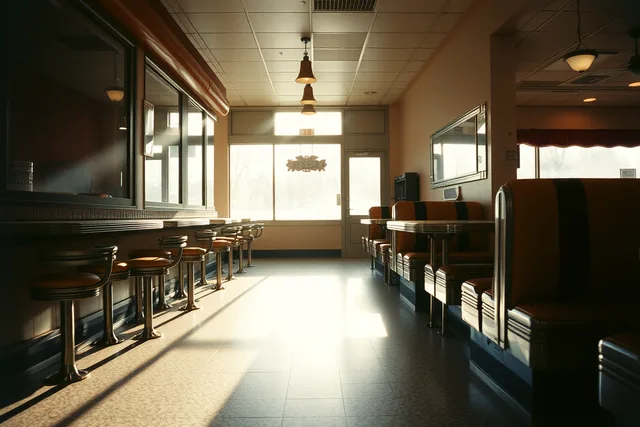
- A diner sign in a photo is context, not a finding about the project under review.
Triage the draft by what the sign can prove
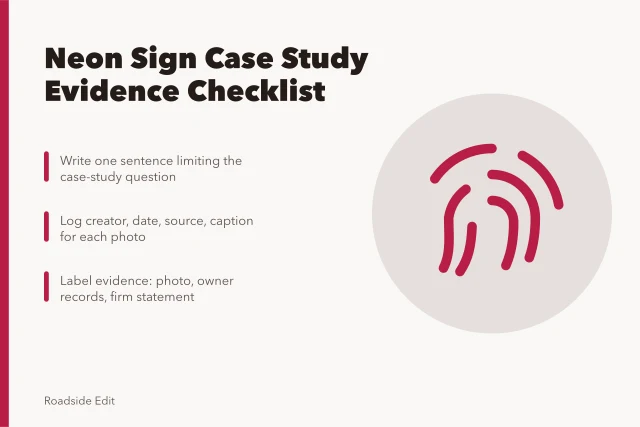
Read once and mark every claim as documented fact, attributed account, or editorial description. A sentence that fits none of the three needs reporting or removal.
The National Park Service inquiry-method resource treats photographs, maps, drawings, and documents as material to analyze. A photograph of a sign face can support a visible, dated detail. It cannot diagnose an electrical issue, establish a project budget, or prove an unpictured part is unchanged.
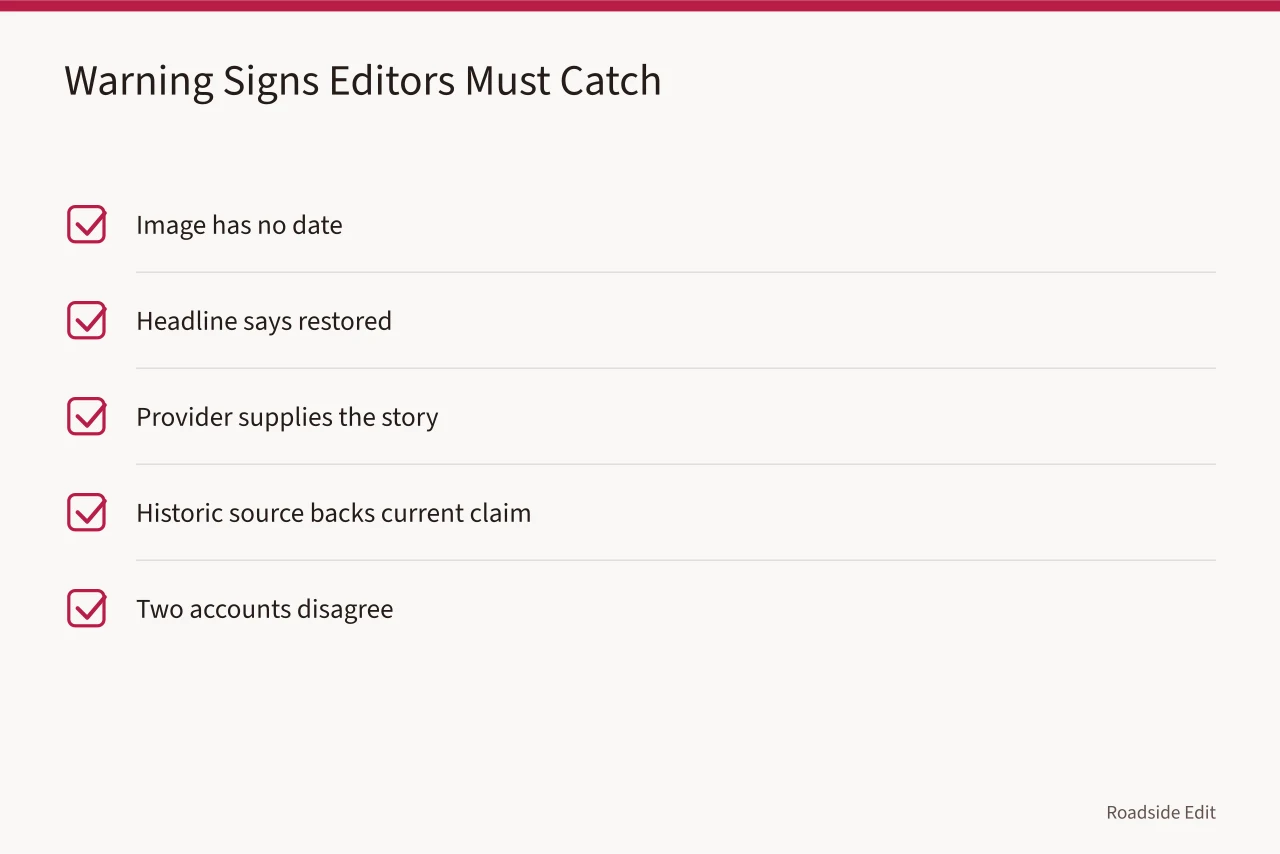
| Warning sign | Why it matters | Editorial response |
|---|---|---|
| Image has no date | It may not describe the stated period | Find a dated source or label it undated context |
| Headline says "restored" | The article may show only a later photo | Cite the work record or attribute the phrase |
| Provider supplies the story | The account has a stake in the result | Attribute it and disclose the relationship |
| Historic source backs a current claim | Ownership, access, and load can change | Find a current source or state the limit |
| Two accounts disagree | A smooth narrative hides the conflict | Name the difference and leave it unresolved |
Electrical claims need a nameplate, not a photograph
A glowing tube in a night shot tells you the sign ran that night. It does not tell you tube diameter, transformer secondary voltage, or whether the load sits within the can's rating. Those come from the nameplate, the service record, or a licensed electrician's measurements.
Refer electrical questions to a licensed electrician and to the authority having jurisdiction for the adopted code. Do not print a wiring instruction, a transformer sizing rule, or a load figure as if it were universal.
The Library of Congress primary-source analysis guide asks readers to observe before interpreting. Hold the draft to that order. "The 2019 image shows blue lettering" is an observation. "The letters were restored in 2019" needs a work record from that year.
A budget is three numbers, not one
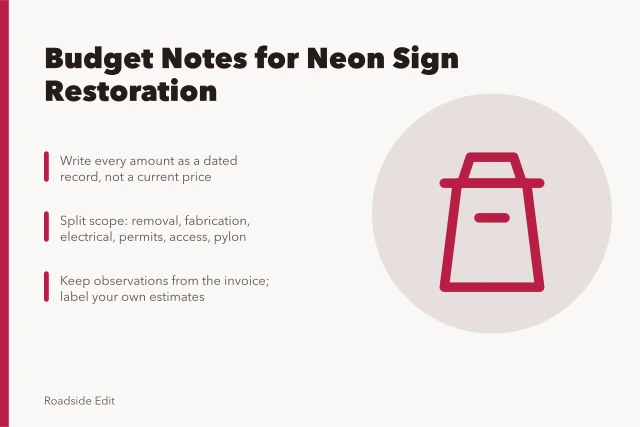
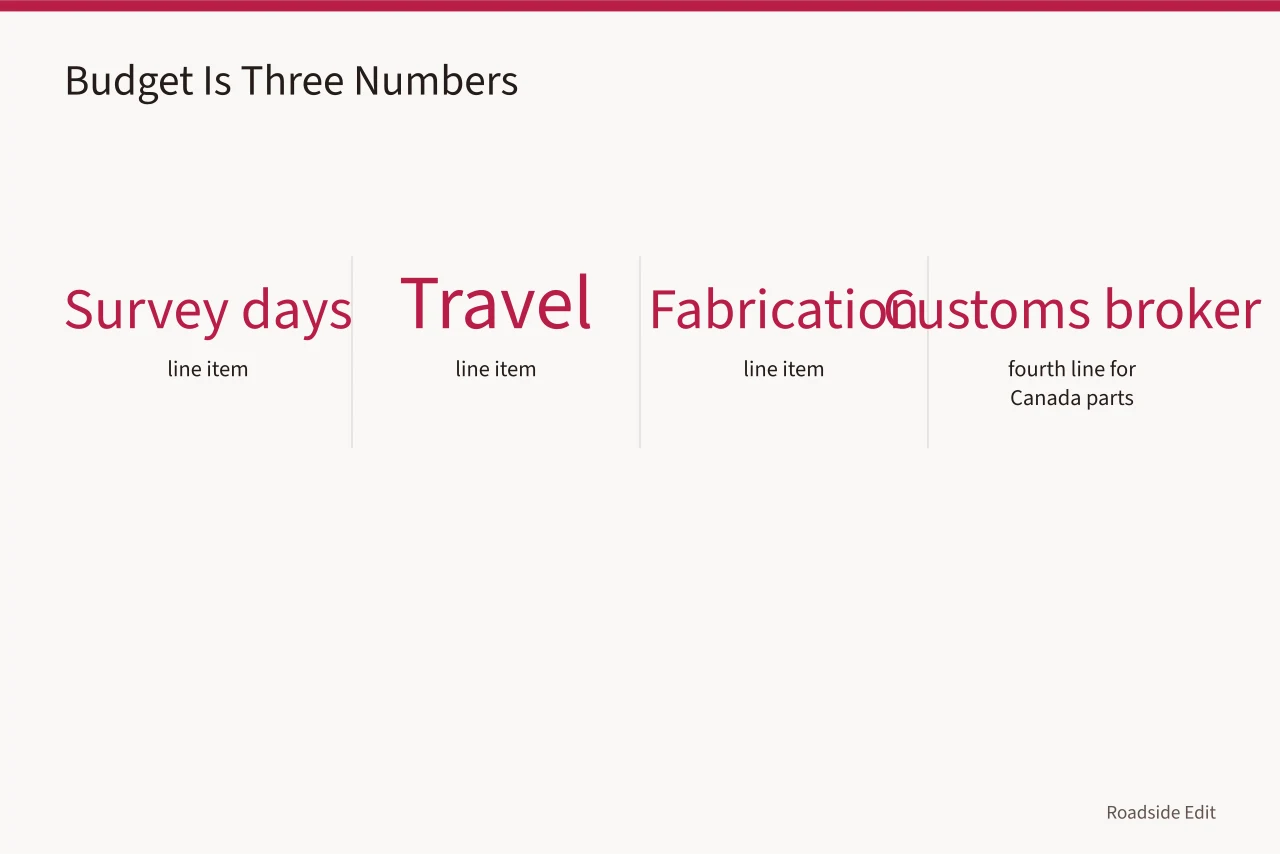
Case-study budgets go wrong when a single total hides its parts. Split the figure into survey days, travel, and fabrication. Let the reader substitute their own rates. The total equals survey days times day rate, plus travel, plus fabrication.
For a worked example, the neon sign case study budget notes show how those lines separate when a project spans two states. Where you lack a current figure, say where it is published rather than estimating.
Customs paperwork for neon parts and booths sourced from Canada adds a fourth line. Name the customs broker and refer to the applicable agency; do not print a duty rate.
Unpictured parts carry the false claims
Most "original condition" statements rest on what the camera framed. The transformer, GTO cable, electrode receptacles, and secondary wiring sit behind the face or above the canopy and rarely appear.
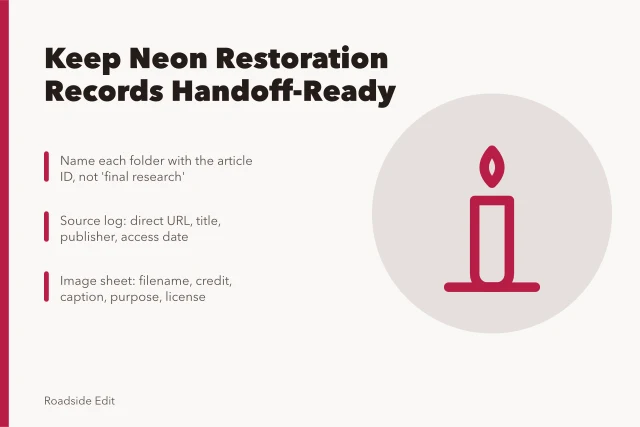
Ask the contributor for a parts list, a salvage inventory, or a dated survey before the draft claims a component survived. If none exists, narrow the sentence to what the image shows.
Colored tubing: the blue lettering case
Blue tubing fades and shifts toward green at a different rate than red or gold, so a color match judged by eye against a fresh photograph will not hold. A blue lettering restoration needs a dated reference (a period photo, a paint chip, a manufacturer's sample card) plus the fabricator's stated match method.
State the reference and its date. Leave the match judgment to the fabricator and the client, and record what they chose.
Stale context and promotional pressure
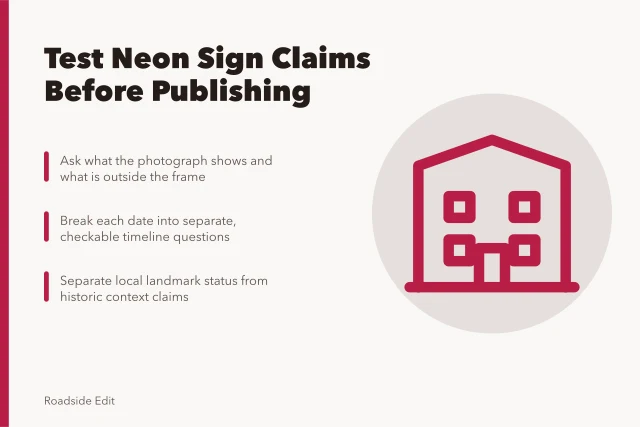
An accurate old newspaper item or nomination form improves a story until the draft makes it carry present-day details. Address, ownership, business hours, and access change. Split the story into time periods instead of blending them.
Ask of every time-sensitive sentence: what is the source date, and does it support this claim date? The National Archives' guidance on primary sources makes the point that a source's value depends on the question. A 1950 photograph is strong evidence for its own scene and date, and nothing about a 2027 operating status.
An owner, installer, or sign supplier may tell its story. Say so: "the owner said," "according to the contractor," "records supplied by the business." Keep paid placement labeled in plain words near the claim it affects.
The Federal Trade Commission's endorsement guidance requires material connections to be disclosed clearly and conspicuously. That is transparency, not a verdict on the contributor.
Corrections, and what a photo is for
When a correction arrives, compare it with the source record and revise if the evidence supports it. Add a dated note saying what changed. Never silently swap a caption or a date when the earlier version shaped the article's meaning.
The diner sign above is context. It shows a type, a period, a mounting habit. It is not evidence about any project discussed here, and the caption should say so.
Common questions
Is a historical caption enough to prove present condition?
No. It supports the limited historical description of that image or record, not a present-day conclusion about a sign, a part, or a business.
What should a sponsorship label say?
Use plain language such as "Paid placement" and identify the relationship near the content it affects, so a reader can weigh the claim.
Can an article say that sources conflict?
Yes. Identify the records and dates, describe the difference precisely, and leave it unresolved unless evidence settles it.