Guides
Part of How to build a neon sign restoration case study: a 2027 method guide
Neon sign restoration case study checklist: how to scope evidence and claims for 2027
Neon sign case study checklist for 2027: record evidence, set claim limits, credit images, disclose relationships, and publish corrections clearly.
A useful neon sign case study does not need to pretend it is a technical inspection. Its job is narrower: tell readers what was documented, who provided each detail, and what the record cannot prove. This checklist helps an editor turn a restoration story into a clear, honest article.
What to take away
- Start with a question the available records can answer.
- Keep observation, owner statements, and editorial interpretation separate.
- Credit images at their actual source page and label illustrative images.
- Put any paid or supplied relationship where a reader will see it.
- Preserve a correction path before publication, not after a complaint.
Set the case-study question first
Write one sentence that limits the story. Good examples include: "What documentation describes the sign before work began?" or "Which public records identify the building's historic context?" Avoid questions that promise a diagnosis, a valuation, or a result you cannot document.
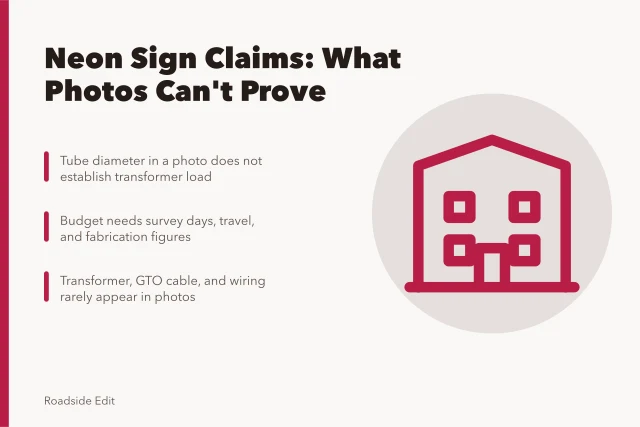
That limit keeps the article from becoming a sales pitch with a few dates attached. A photo of cracked tubing, for example, can support the sentence that cracked tubing appears in the image. It cannot, by itself, establish why the damage occurred, who caused it, or how much a repair should cost.
The Library of Congress primary-source analysis guide uses an observe, reflect, question, and investigate sequence. For an editorial case study, it offers a practical order: describe the item first, identify the source of the description, then list the questions that still need evidence.
Build an evidence log
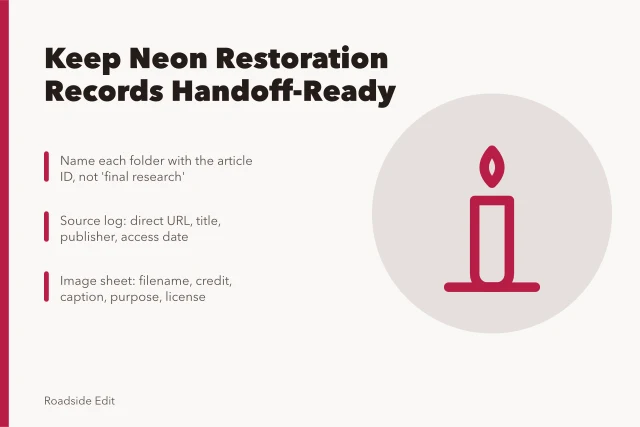
Create the log before drafting. It can live in a spreadsheet, a research note, or a project folder. What matters is that another editor can understand it without asking the original writer what happened.
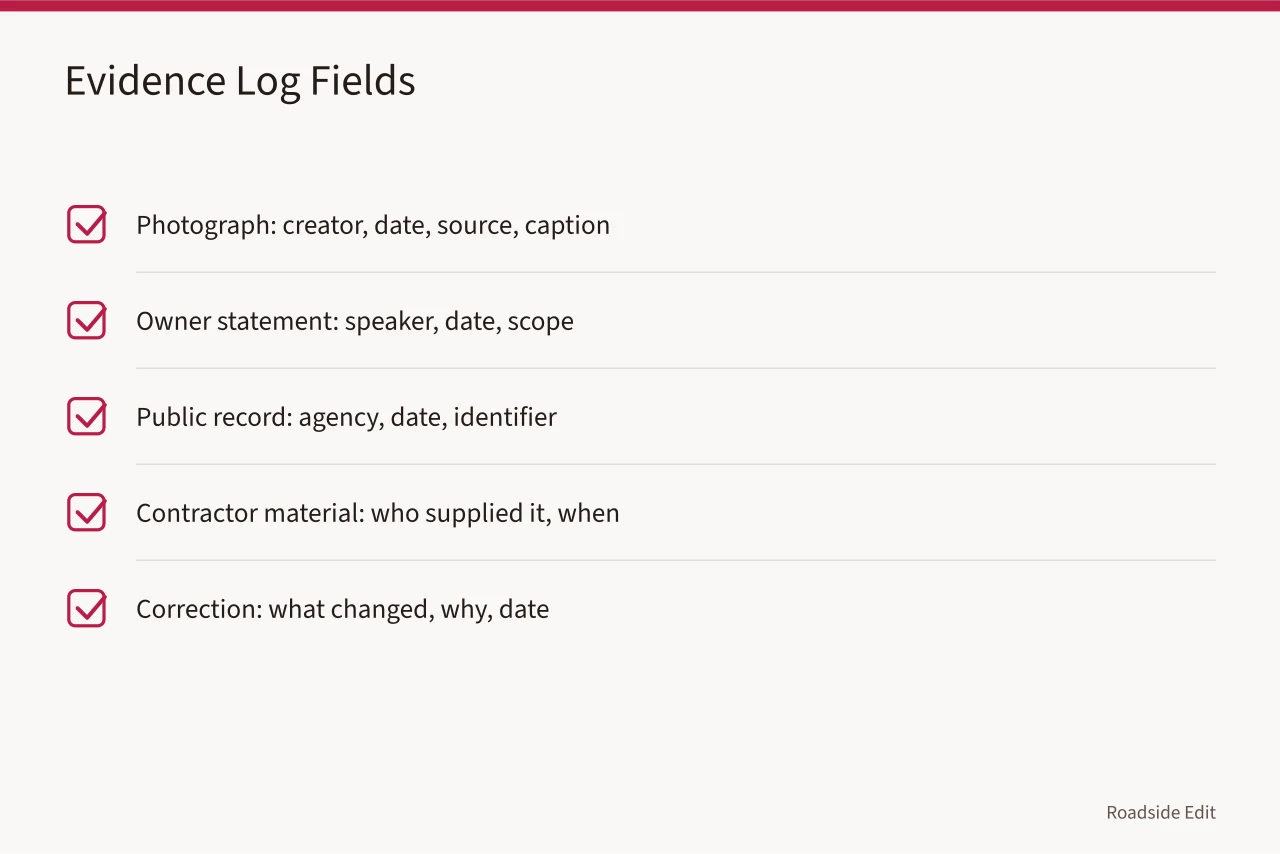
| Item | Record in the log | Do not infer |
|---|---|---|
| Photograph | Creator, date, source page, caption, and whether it is contextual | Material condition outside the frame |
| Owner statement | Speaker, date, exact scope of the statement | A fact the speaker did not claim |
| Public record | Agency or repository, date, identifier, and relevant passage | A current condition from an old record |
| Contractor material | Who supplied it and when | Independent verification of a marketing claim |
| Correction | What changed, why, and the update date | That an earlier version never existed |
The National Archives explains what makes a primary source: its value depends on the relationship between the material and the question being asked. A dated permit can be strong evidence for a filing date. It may be poor evidence for what a sign looks like today. Put that limit in the log, then carry it into the article when needed.
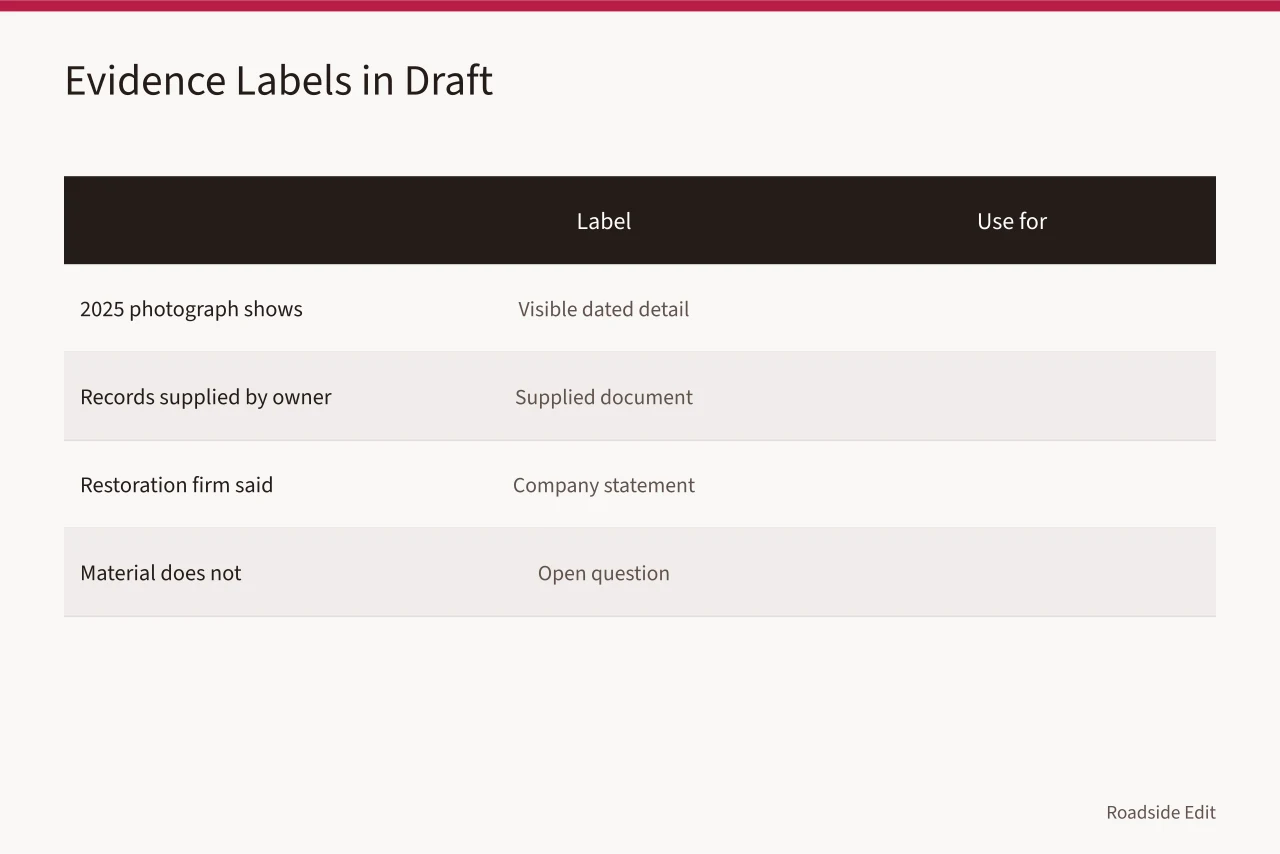
Mark evidence levels in the draft
Readers should not have to guess whether a sentence comes from a document, an interview, or a writer's own observation. Use plain labels in the working copy, then edit them into natural prose:
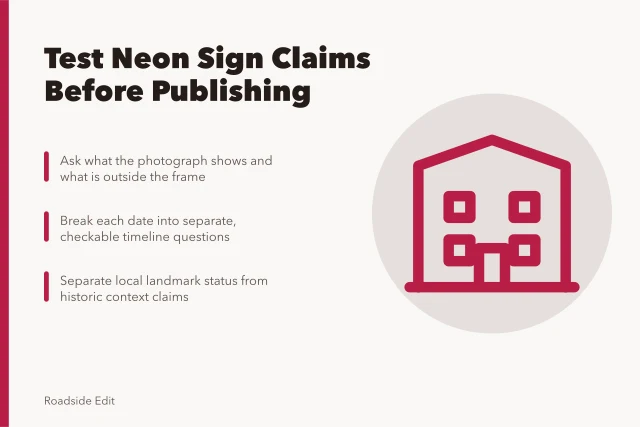
This approach is especially useful with historic properties. The National Park Service's historic preservation resources describe preservation as a public program with distinct laws, grants, and technical guidance. A local sign story should identify the specific rule, designation, or record that applies rather than treating the word "historic" as proof of any formal status.
Check relationships and promotional claims
Case studies can fairly include a sponsor, installer, owner, or product company. The relationship must be obvious before a reader reaches the positive claims. Place a short disclosure near the affected section, such as: "The owner provided photographs and project dates. Roadside Edit did not inspect the sign."
If an article recommends a business, describes a free service, or repeats a company's result, treat it like any endorsement. The Federal Trade Commission's endorsement guidance says any relationship that could change how people weigh a recommendation should be disclosed clearly and conspicuously.
That does not make every mention advertising. Readers still deserve context when material or payment could influence the account.
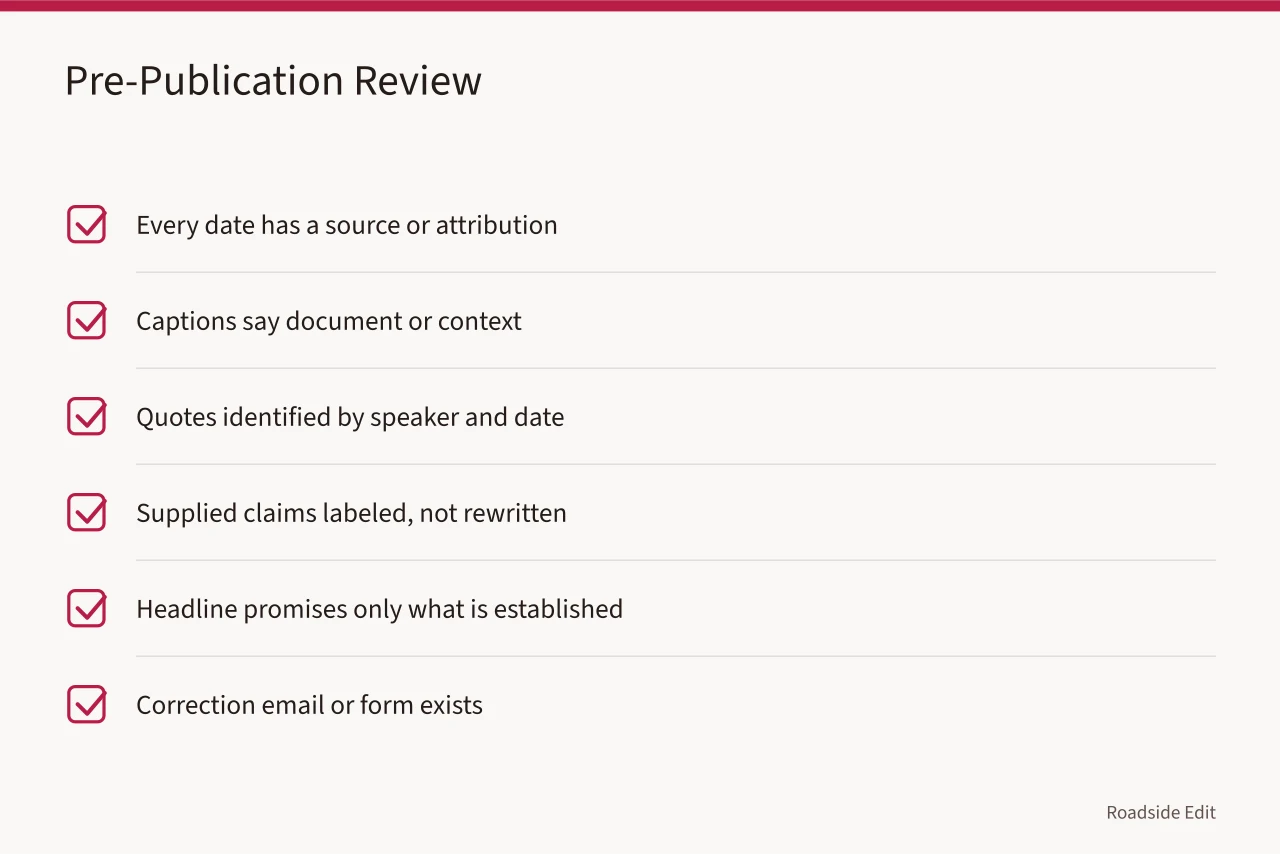
Use this final review before publication:
- Does every date have a source or an attribution?
- Does each photo caption say whether it documents the case or only provides context?
- Are quotes identified by speaker and date?
- Are supplied claims labeled rather than rewritten as independent findings?
- Does the headline promise only what the article can establish?
- Is there an email address or form for factual corrections?
Use images without overstating them
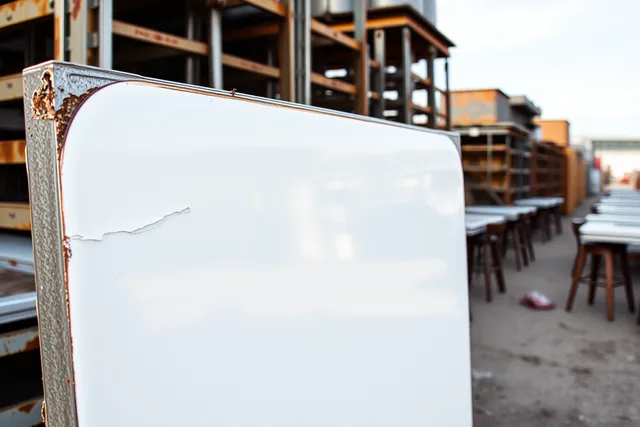
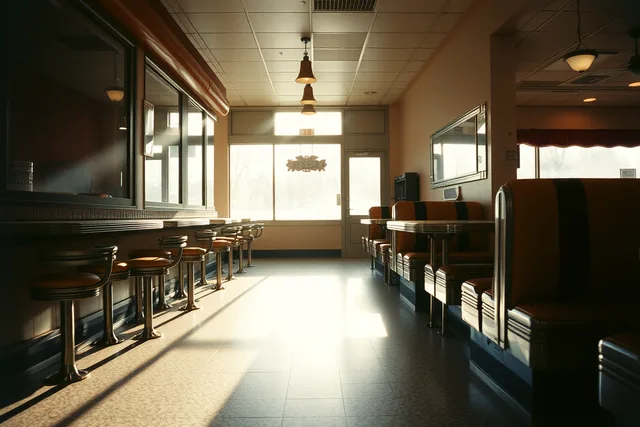
An image can make a case study readable, but it needs a factual caption and a source page that a reader can inspect. If the image is illustrative, say so. Never use a contextual neon photograph to imply that it depicts the business, owner, condition, or work described in the story.
Save the publication record
Keep the evidence log with the final draft, publication date, image credit, and disclosure language. When an owner requests a correction, compare the request with the original record. If the article changes, add a dated note that states the factual revision without rewriting history.
That routine also protects readers. A future editor can see what was known at publication, what came later, and which detail belongs to which source. The result is a case study that is useful to people researching roadside signs without claiming more than the evidence allows.
Common questions
Is one photograph enough for a case study?
It can support a limited visual observation when its date and source are known. It cannot prove ownership, a repair method, or the cause of damage beyond what the image shows.
What should be labeled as supplied material?
Label any photograph, timeline, quotation, record, or result provided by an owner, contractor, business, or project participant. Attribution explains the origin of the information; it does not accuse the source of being unreliable.
Can a case study be updated?
Yes. Keep the original research record and add a dated correction note that identifies the factual change. Do not silently replace a material claim.