Guides
Roadside building fundamentals: how to date claims and credit images
Roadside building fundamentals for 2027 help U.S. readers identify property records, date claims, credit images, and separate history from present facts.
Roadside buildings carry many stories at once. A former filling station may now be a restaurant. A motel sign may survive after the rooms change ownership or use. A roadside museum may display objects from several places and years. Good reporting begins by separating those stories rather than forcing them into one broad claim about a property.
This guide offers a practical method for articles about roadside buildings in the United States. It is for publishers and researchers, not for building diagnosis, code interpretation, or property-specific repair advice. The aim is to make every published sentence easy to trace to the record that supports it.
What to take away
- Identify the building, its source date, and the subject of the article before writing historical or current claims.
- Keep catalog facts, visual observations, owner statements, and project records in separate sections of the file.
- Use an old record for the period it describes and a current record for current operations or project status.
- Credit every image with the direct page that supplies its catalog details.
- Label commercial material as submitted or sponsored content and disclose its relationship to the publisher.
Define the subject before describing it
The phrase roadside building can include lodging, dining, vehicle service, retail, attractions, museums, and other places associated with travel by road. It is useful as a broad category, but it is not a historical designation and it does not tell a reader the building's original use, age, owner, or present condition.
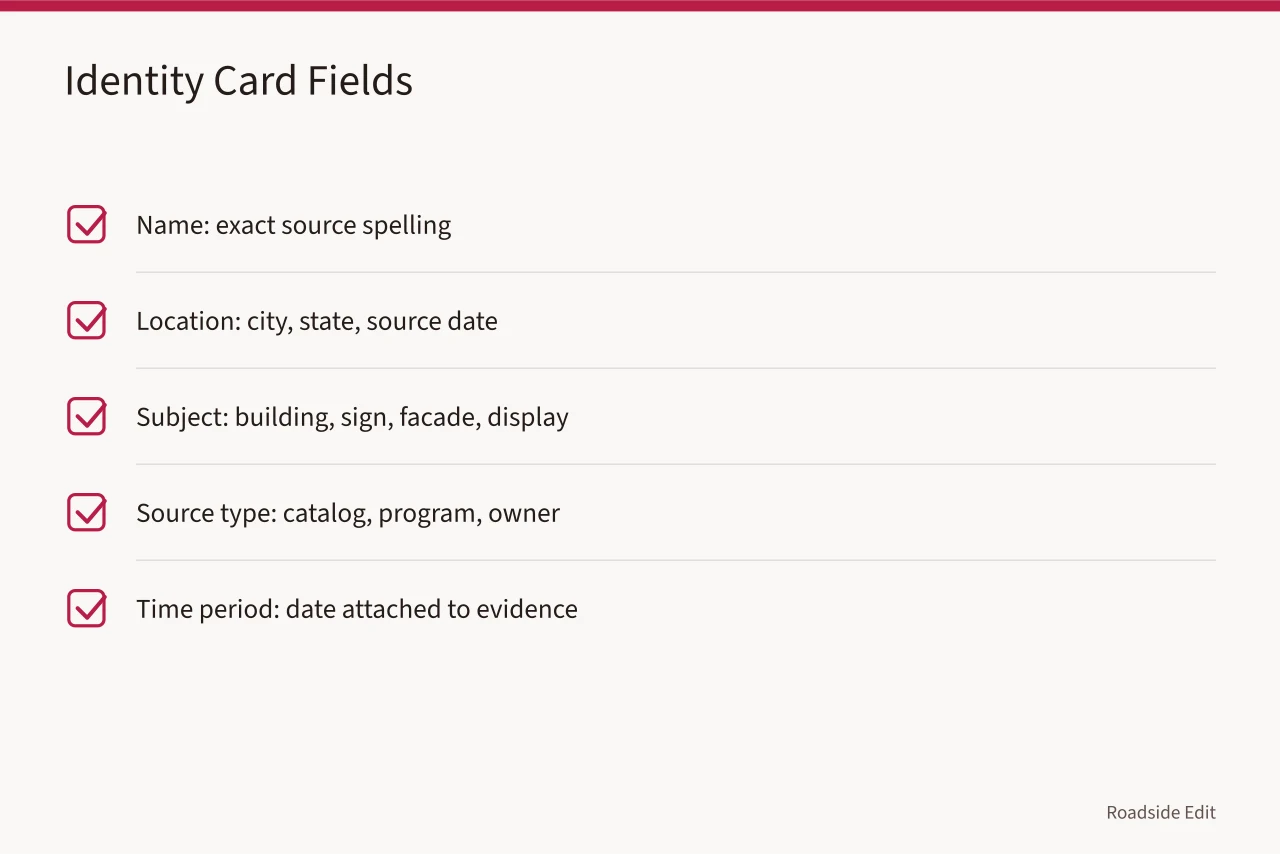
Start every file with an identity card. Use the source's own terms wherever possible. If a catalog calls a place a former station, do not shorten that to "station" in a way that implies it is operating now. If a record identifies a sign but not the structure behind it, make the article about the sign.
| Identity field | Record it this way | Avoid |
|---|---|---|
| Name | Exact name and spelling from the source | A nickname supplied with no source |
| Location | City, state, and source date | Exact boundaries not provided by the record |
| Subject | Building, sign, facade, display, or project | A broad property claim from a narrow image |
| Source type | Catalog, program page, owner statement, or provider submission | Calling all material "research" |
| Time period | Date attached to the evidence | Treating a past record as present fact |
The National Park Service's Route 66 special resource study discusses a wide range of roadside resources and their relationship to travel, commerce, and development. It does not classify every property near the corridor. It supports the basic editorial rule that a building's use and significance must be established for that specific place, not borrowed from the road around it.
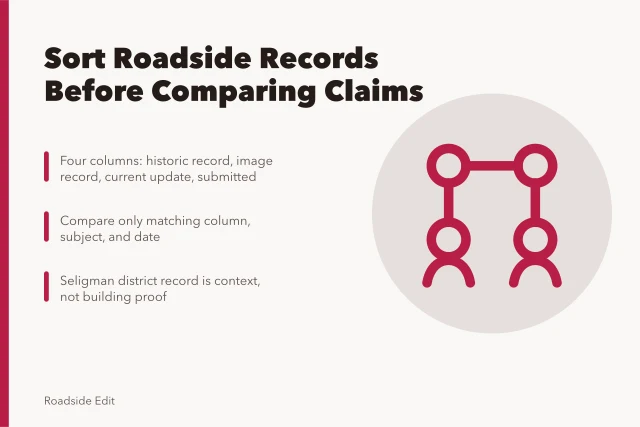
Create four separate evidence folders
The easiest way to avoid mixed claims is to organize records by what they can prove. A clean article may use all four folders, but it should not use one folder's evidence to make another folder's claim.
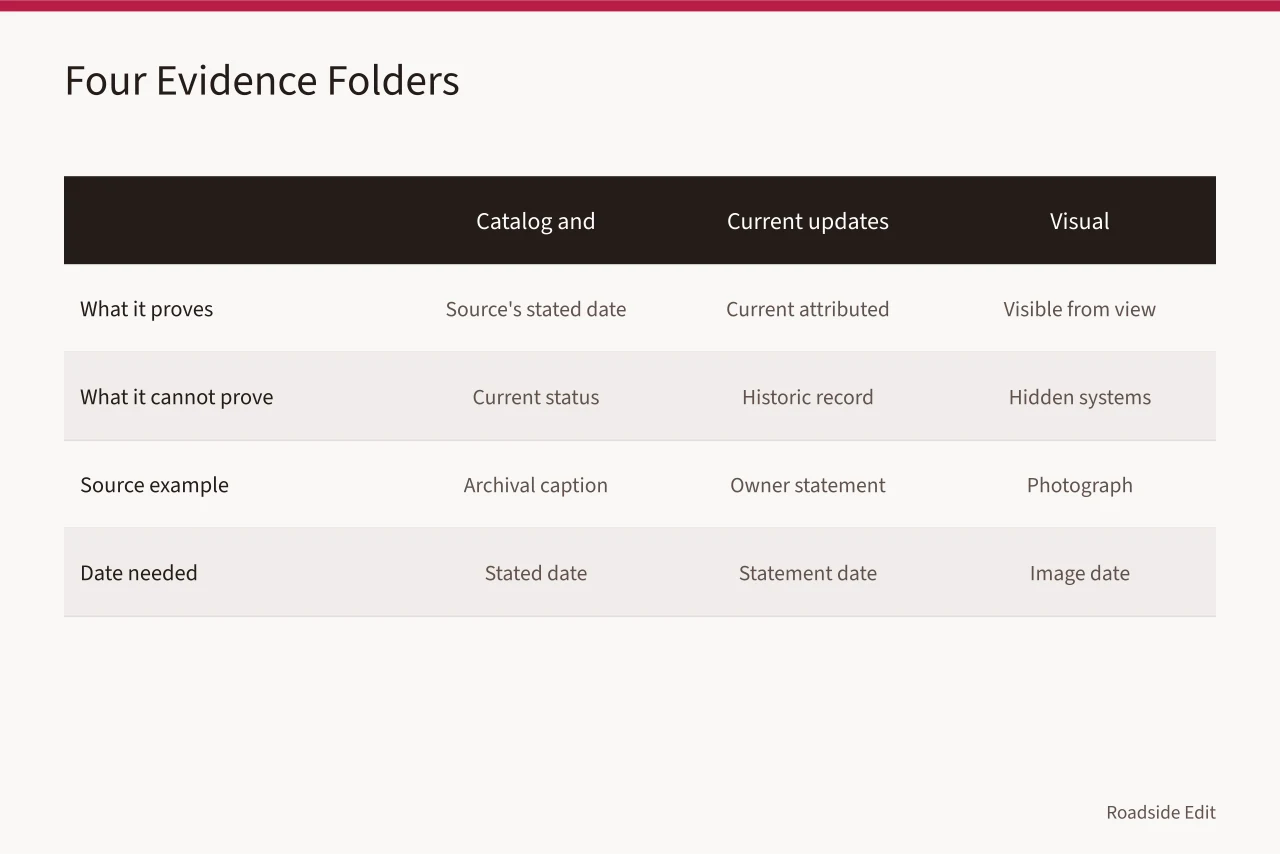
1. Catalog and historic records
These include archival captions, inventory forms, institutional histories, historic photographs, and public program pages. They can establish what the source says about its stated date and subject. They do not automatically establish current business status or present physical condition.
2. Current updates
Current information needs a current, attributed source. An owner, operator, agency, or official organization may supply it. Record when the statement was made and who supplied it. A current update should not overwrite an earlier historic record. It should sit beside it with its own date.
3. Visual observations
An image may show a sign, roofline, row of rooms, storefront, or display. Describe what is visible from that view. Do not turn a photograph into a conclusion about hidden materials, electrical systems, safety, accessibility, or a repair need.
4. Commercial submissions
Provider profiles, advertising offers, paid placements, and business descriptions belong in a labeled commercial folder. They can be published when properly attributed. They do not become independent evidence merely because they appear beside a historical article.
The National Park Service's Researching Route 66 guide points researchers toward records, assistance information, and documentary sources for the corridor. It is a guide to finding and using source material, not proof of a particular property's facts. Use it to find direct evidence, then cite the direct page that supports the final article claim.
Date every claim where readers can see it
Dates prevent an article from making quiet claims about the present. A cataloged photo from 2020 proves that the source identifies a photographed scene in 2020. A 2019 grant announcement proves that the announcement described a project at that time. Neither record shows what is open, intact, funded, or complete today unless a newer source says so.
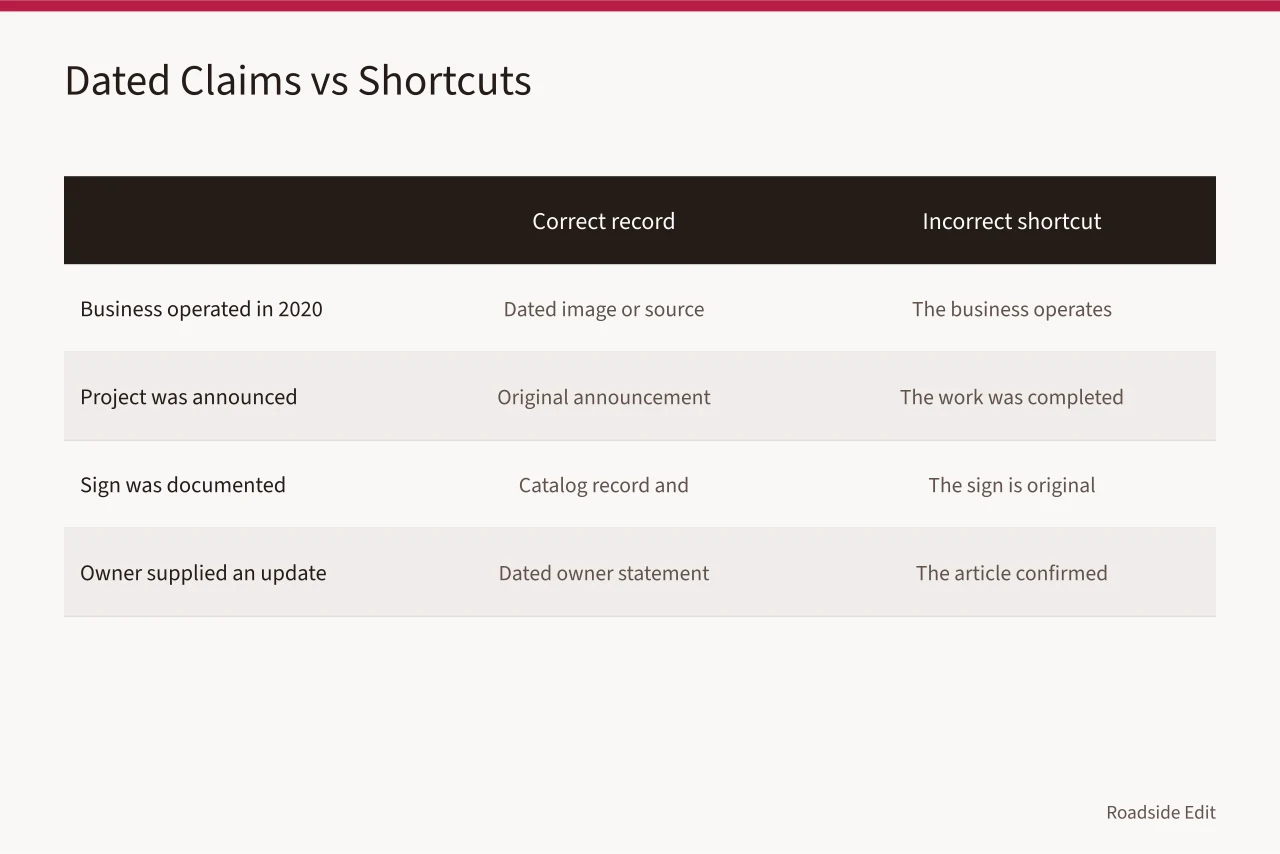
Use the date in the sentence, table, or nearby label. It does not need to interrupt the writing. "A 2020 Library of Congress photograph identifies..." tells a reader exactly what sort of fact follows. When new evidence arrives, add it as a later record. Do not revise the older sentence until it appears to be current.
| Claim | Correct record | Incorrect shortcut |
|---|---|---|
| A business operated in 2020 | Dated image or source from 2020 | "The business operates today" |
| A project was announced | Original announcement | "The work was completed" |
| A sign was documented | Catalog record and caption | "The sign is original" |
| An owner supplied an update | Dated owner statement | "The article confirmed" |
Let the record set preserve context
Related records matter more when a building's story changes over time. Keep the original photo, caption, public record, submitted update, and correction entry together. That way a future editor can see the basis for the article without sorting through an old email chain or guessing which image was used.
The National Archives agency recordkeeping requirements state that related records should be kept together when their relationship provides context. The policy applies to federal records. A roadside-building publication can use the same habit by storing material related to one property or feature as a dated set, not as disconnected files.
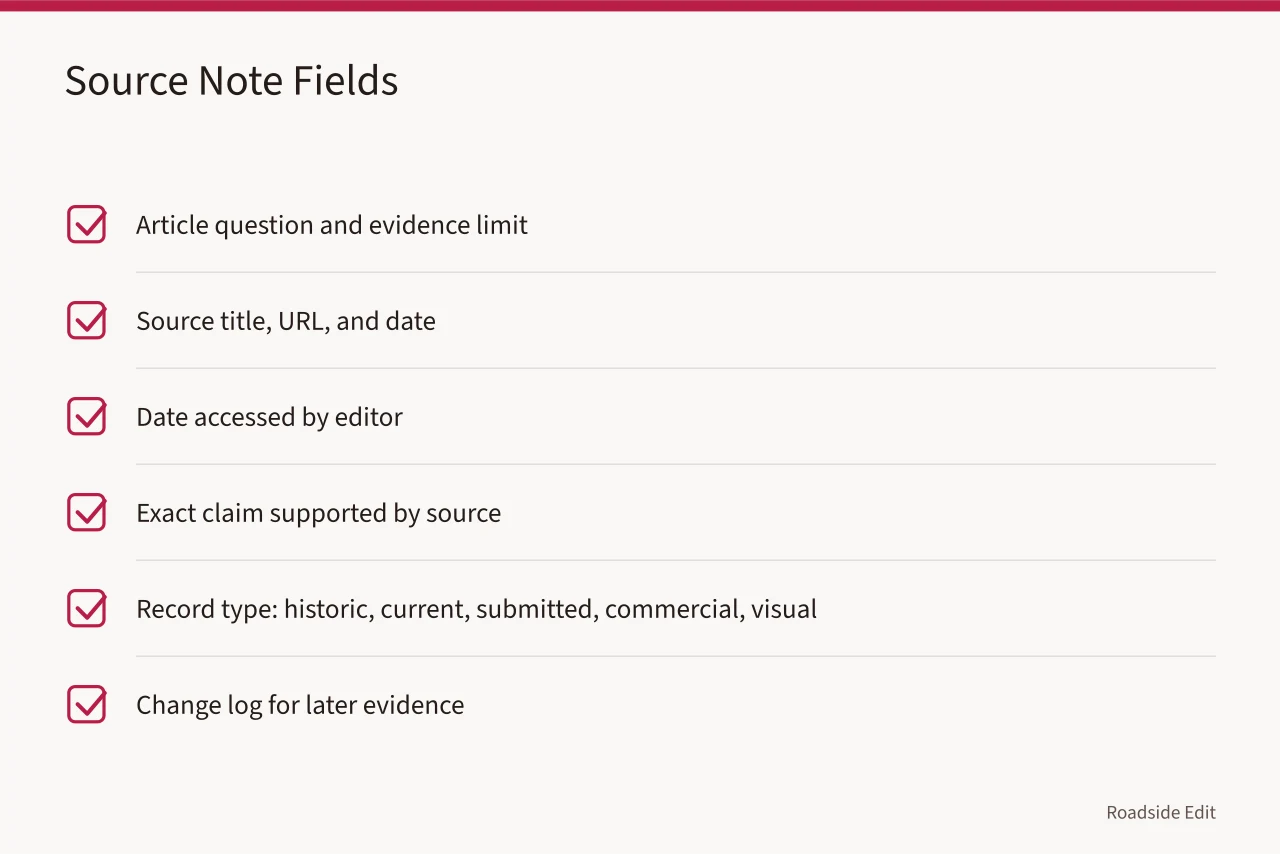
For each article, create a short source note with these fields:
- Article question and evidence limit.
- Source title, direct URL, and date shown on the source if available.
- Date accessed by the editor.
- Exact claim supported by the source.
- Whether the record is historic, current, submitted, commercial, or visual.
- Change log when later evidence revises the story.
This file makes corrections straightforward. It also stops a common content mistake: using a later business description to rewrite a historical account of the same building.
Write image captions that do not overreach
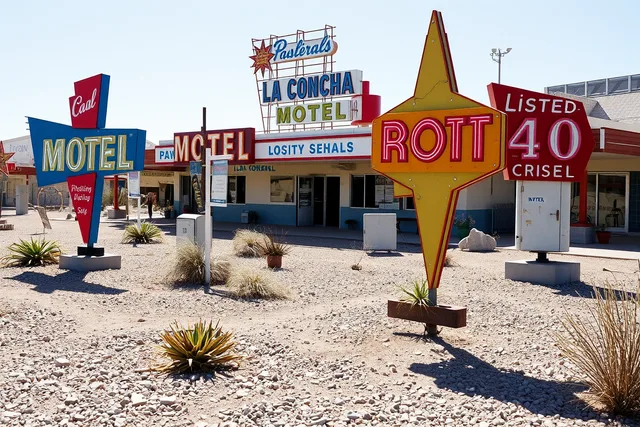
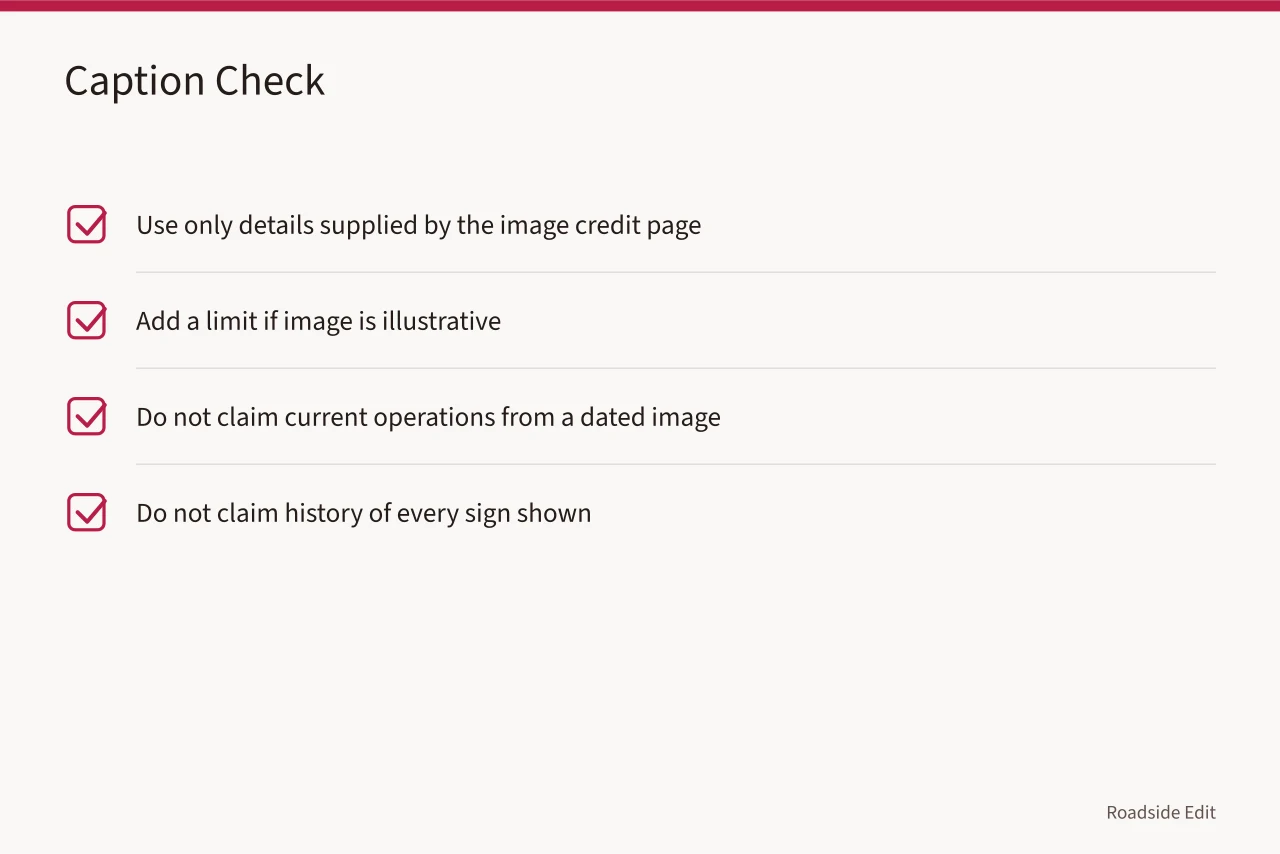
The image credit page is part of the article's evidence. Check the page before using an image. It may describe the location, photographer, date, collection, and title. Use those details in the caption only when the page supplies them. Then add a limit when the image is illustrative rather than documentary proof of the article's main subject.
The figure above is a dated source record. Its credit supports the image identification and collection context. It does not establish the condition of every object in the scene, current diner operations, or the history of each sign shown.
Handle commercial information in plain view
Roadside properties can attract paid listings and business updates. Those messages may add useful detail for readers, especially when an owner or provider wants to announce services or access information. The article should make the source and relationship clear.
The Federal Trade Commission's endorsement guidance addresses clear disclosures when a material connection could affect how people evaluate an endorsement. Put disclosure next to the statement that needs it. A reader should not have to infer that a provider paid for a placement or has another relationship with the site.
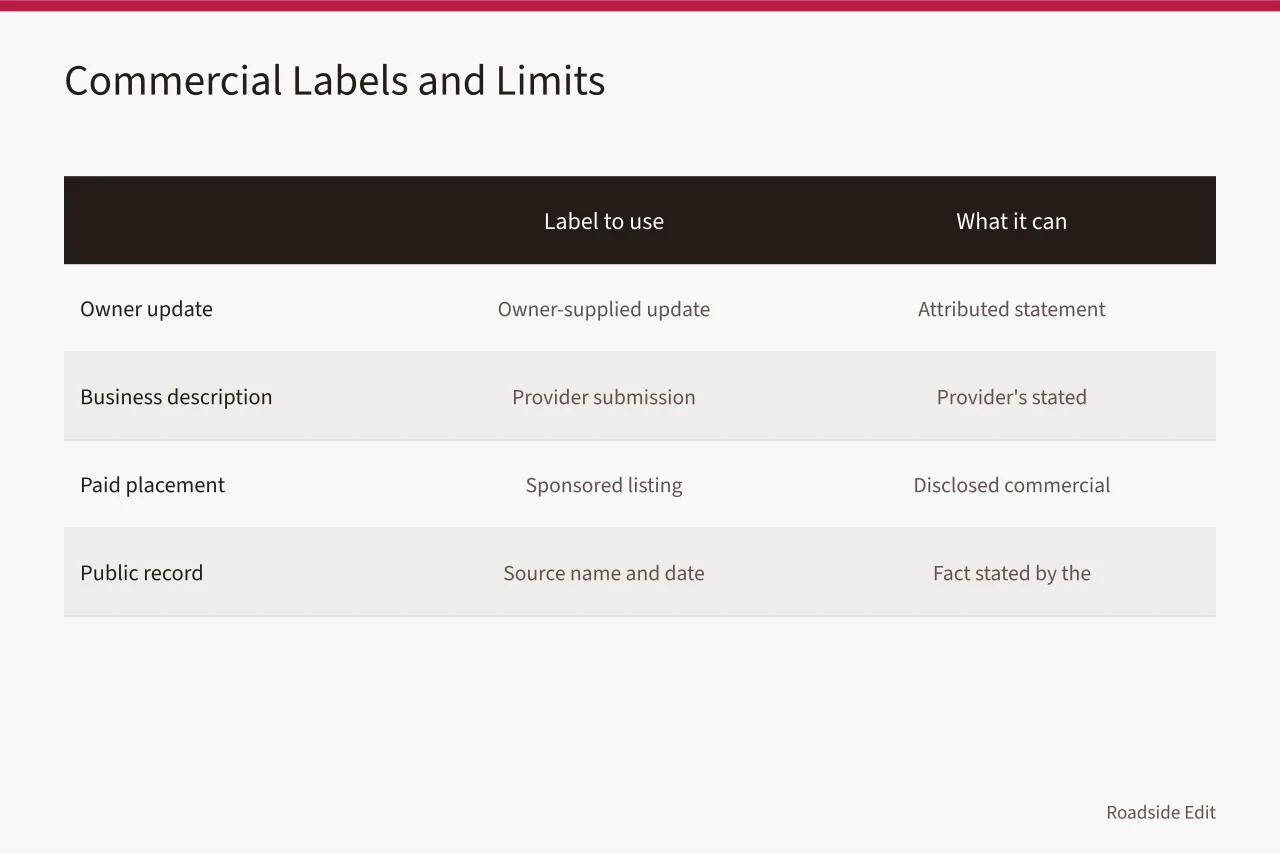
Use direct labels:
| Material | Label to use | What it can support |
|---|---|---|
| Owner update | "Owner-supplied update" | An attributed statement with date |
| Business description | "Provider submission" | The provider's stated service |
| Paid placement | "Sponsored listing" | The disclosed commercial message |
| Public record | Source name and date | The fact stated by the record |
Keep business copy out of the historical narrative unless a separate source supports the same factual claim. Do not imply that the publication inspected a building, selected a provider, or compared prices unless it actually did so.
Set a correction routine before publishing
Roadside records often improve over time. A local historian may identify a date. An owner may send an official update. An archive may correct a catalog description. The correction routine should add information without deleting the evidence trail.
When correcting an article:
- Save the new record and its direct source page.
- Write what changed and why.
- Add the date of the correction.
- Preserve the old claim in the internal record.
- Add a public correction note when the change affects the article's central fact or status.
Do not declare a project complete merely because a later source is hard to find. Do not treat the absence of an update as proof that nothing happened. State the latest documented stage and invite source-based corrections.
A simple fundamentals review
Before publishing, ask these questions:
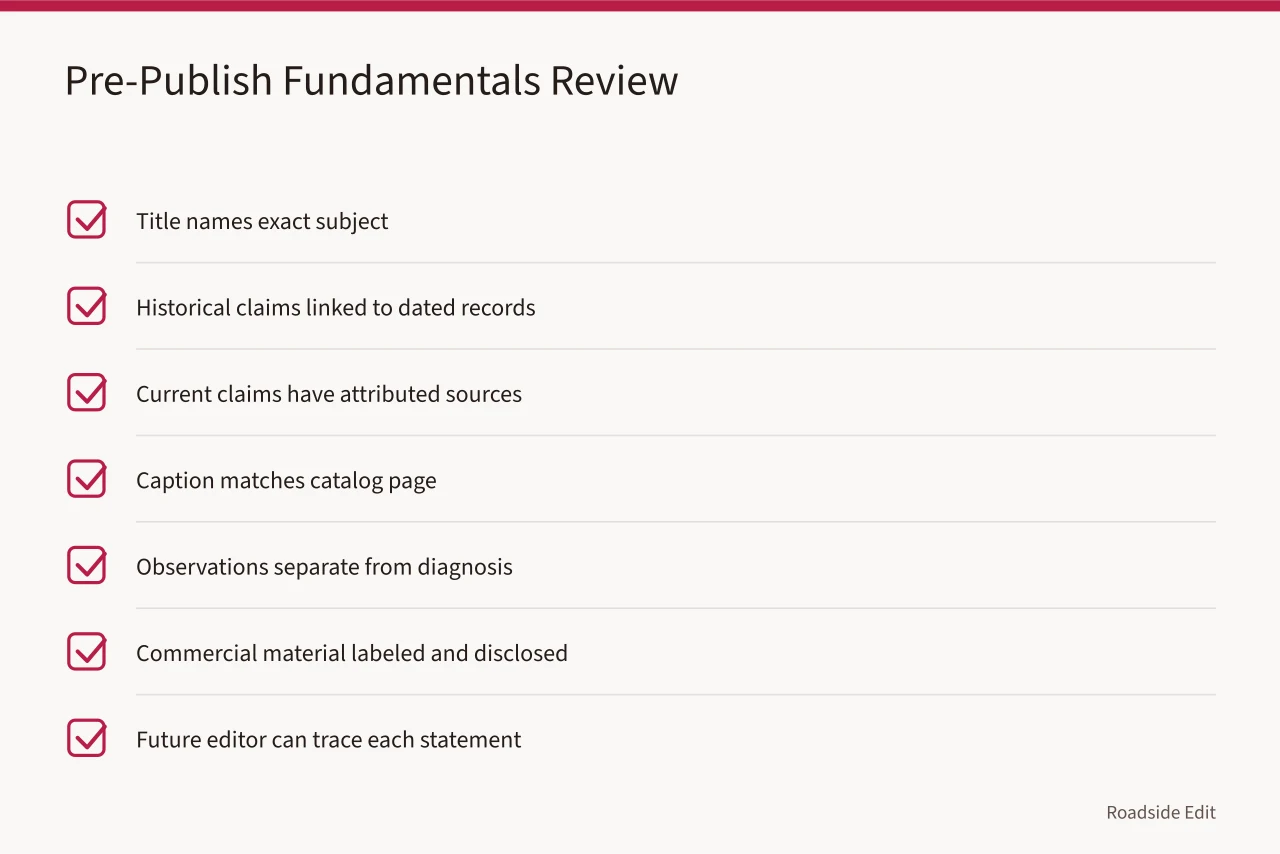
- Does the title describe the exact subject rather than a broad roadside category?
- Is every historical claim linked to a dated historical record?
- Does every current claim have a current, attributed source?
- Does the image caption match its catalog page exactly enough to be checked?
- Are visible observations kept separate from diagnosis and repair claims?
- Is commercial material clearly labeled and disclosed?
- Could a future editor understand why each statement is in the article?
The best roadside-building article does not solve every question. It makes the known parts clear, protects the unknown parts from speculation, and gives the next editor a record they can build on.
Common questions
Is a roadside location enough to establish historic status?
No. A location near a named road does not prove a building's age, use, or historic designation. Use a source that identifies the specific property.
Can a historic photograph prove a building is still open?
No. The photograph supports the scene and date in its own record. Current operations need a separate current source.
Can a sponsor add a correction to a historical article?
Yes, but the statement should be attributed, any paid relationship disclosed, and factual changes supported by a source that the article can identify.
In this guide
- Roadside building basics checklist: verify facts before you publishRoadside building basics checklist for 2027 helps U.S. readers verify identity, source dates, image credits, historical context, and current-claim limits.
- Roadside building fundamentals: comparison questions to ask before you trust a historic recordComparing roadside records by date, subject and scope keeps a Seligman, Missouri storefront listing from being read as proof of a 1933 building.
- Roadside building basics budget notes: what to record before you spendRoadside building basics budget notes for 2027 help U.S. readers match spending records to a source, scope, status, limit, and responsible decision.
- How to keep roadside building basics records straight and citableRoadside building basics records guide for 2027 helps U.S. readers retain identity sources, image credits, current claims, submitted updates, and correction history.