Guides
Part of Roadside architecture case study method: how to build a claim map before you draft
Roadside architecture case study warning signs: how editors catch mixed time periods
Roadside architecture case study warning signs for 2027 help editors spot mixed time periods, unclear photos, unsupported condition claims, and blurred work records.
Case studies become unreliable when they blend historical description, current observations, proposed work, and completed work into one smooth story. These warning signs help an editor catch the blend before it reaches readers.
What to take away
- Date every observation and record.
- Keep existing-condition material separate from future or completed work.
- Identify the source for each caption and claim.
- Remove a conclusion when its record type does not support it.
Check which part of the record you have
The National Park Service registration guidelines say an accurate property description covers current and historical physical appearance, condition, and relevant property type. Review the NPS registration guidelines.
That guidance is not a finding about a roadside property. It is a useful editorial check, keeping a current observation from becoming an undisputed historical description.
NPS documentation standards require reliable sources and clear limitations that let another reader check the information. See the NPS documentation quality standard. In a case study, a date is part of that limit. A source can be accurate about 1955 and still say nothing about a building in 2027.
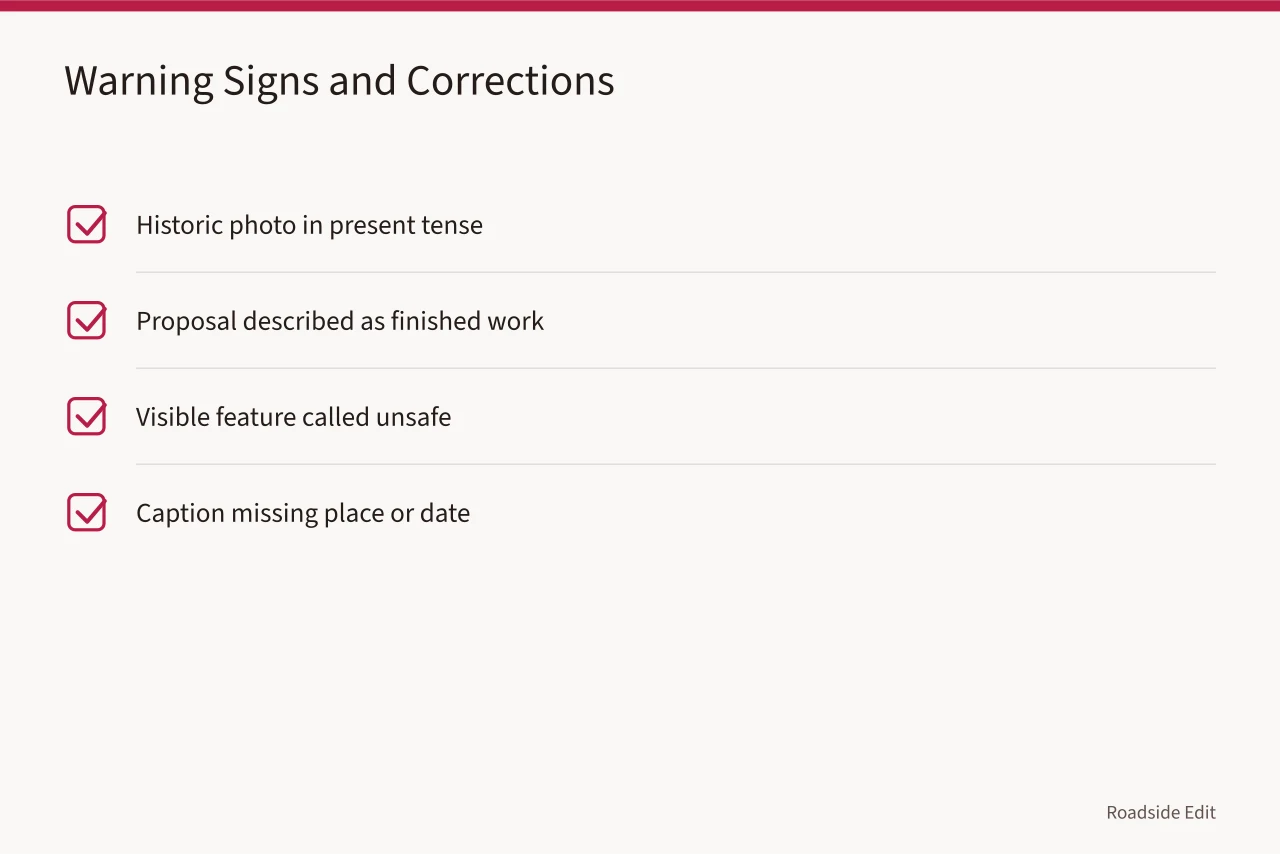
| Warning sign | Editorial correction |
|---|---|
| A historic photo is described in present tense | Add the image date and distinguish past from current |
| A proposal is described as finished work | Attribute the proposal and remove the completion claim |
| A visible feature is called unsafe | Describe the appearance unless an appropriate assessment says more |
| A caption identifies no place or date | Use a narrower caption or omit the claim |
Run a time-bound review
- Mark each sentence as historic record, current observation, proposed work, or completed work.
- Check that the verb tense matches that category.
- Review all image captions separately from the main text.
- Remove claims that join facts from different dates without a linking record.
- State the remaining gap instead of implying a continuous timeline.
| Draft phrase | Safer alternative |
|---|---|
| "The motel was restored." | "The cited source describes a proposed or completed scope only if it says which." |
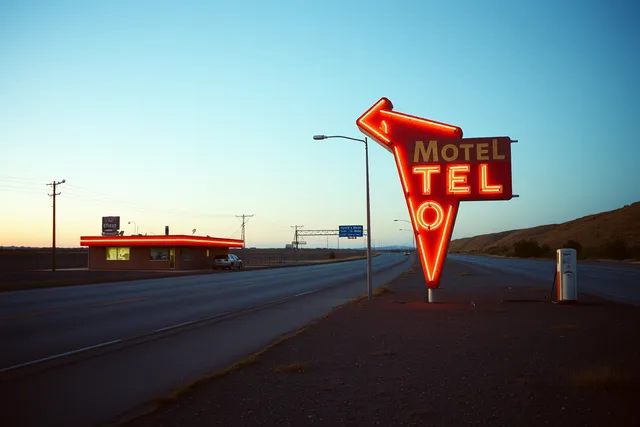
| "The sign is deteriorating." | "The dated image shows a visible surface change." |
| "The building has always been..." | "The available record identifies the building on the stated date." |
Separate work records from results
A notice, application, or proposal records an intent or planned scope. It does not show that work began or ended. NPS project-completion guidance calls for tracking work, decisions, discoveries, and changes during construction. Read NPS project-completion record guidance. Use that distinction when editing: state that a document proposes work unless a later record documents the result.
This prevents a common time error. A draft might pair an old photo with a current proposal and say a motel "was restored." The two records may be useful, but they do not establish completion. Keep each record in its own sentence and explain the date.
Review the strongest verb
The Library of Congress primary-source guide recommends examining a record before making a conclusion from it. Use the Library of Congress primary-source analysis guide. During final editing, underline the strongest verb in every caption and opening paragraph. Words such as restored, closed, failed, relocated, and rebuilt need a matching record.
If the source only supports a visible fact, use a visible verb: shows, appears, identifies, or records. The article remains clear and the reader can see where certainty ends.
Run a time-reference audit
Read every year, date, and tense word in the finished draft. A historical photograph can support a past statement. A current project notice can support a planned action.
Do not combine them into a present condition sentence unless a record links them. If a source date is missing, remove any time-sensitive claim that depends on it. This review catches many errors that make case studies sound polished but unreliable.
Apply the same check to metadata and social copy. A short description that says a project "is restored" may contradict a body article that only reports a proposal. Keep the narrowest accurate wording wherever the article appears.
Common questions
Can a proposed project be mentioned in a case study?
Yes. Name the document, date, and stated scope. Do not imply that a proposal was completed.
Is a current image a condition report?
No. It is a dated visual record. Describe only what the frame shows unless a suitable assessment supports more.
What is the fastest warning sign to find?
Look for undated verbs such as "is," "was," and "became" in sentences that combine old and new records.