Guides
Part of Roadside architecture case study method: how to build a claim map before you draft
How to write a roadside architecture case study budget note without false cost claims
Roadside architecture case study budget notes for 2027 help publishers plan source review, image records, and scope changes without false cost claims.
A case-study budget is a research plan, not a price for repairing a roadside property. It helps a publisher decide how much effort to spend locating records, checking images, verifying a place name, and documenting source limits before publication.
What to take away
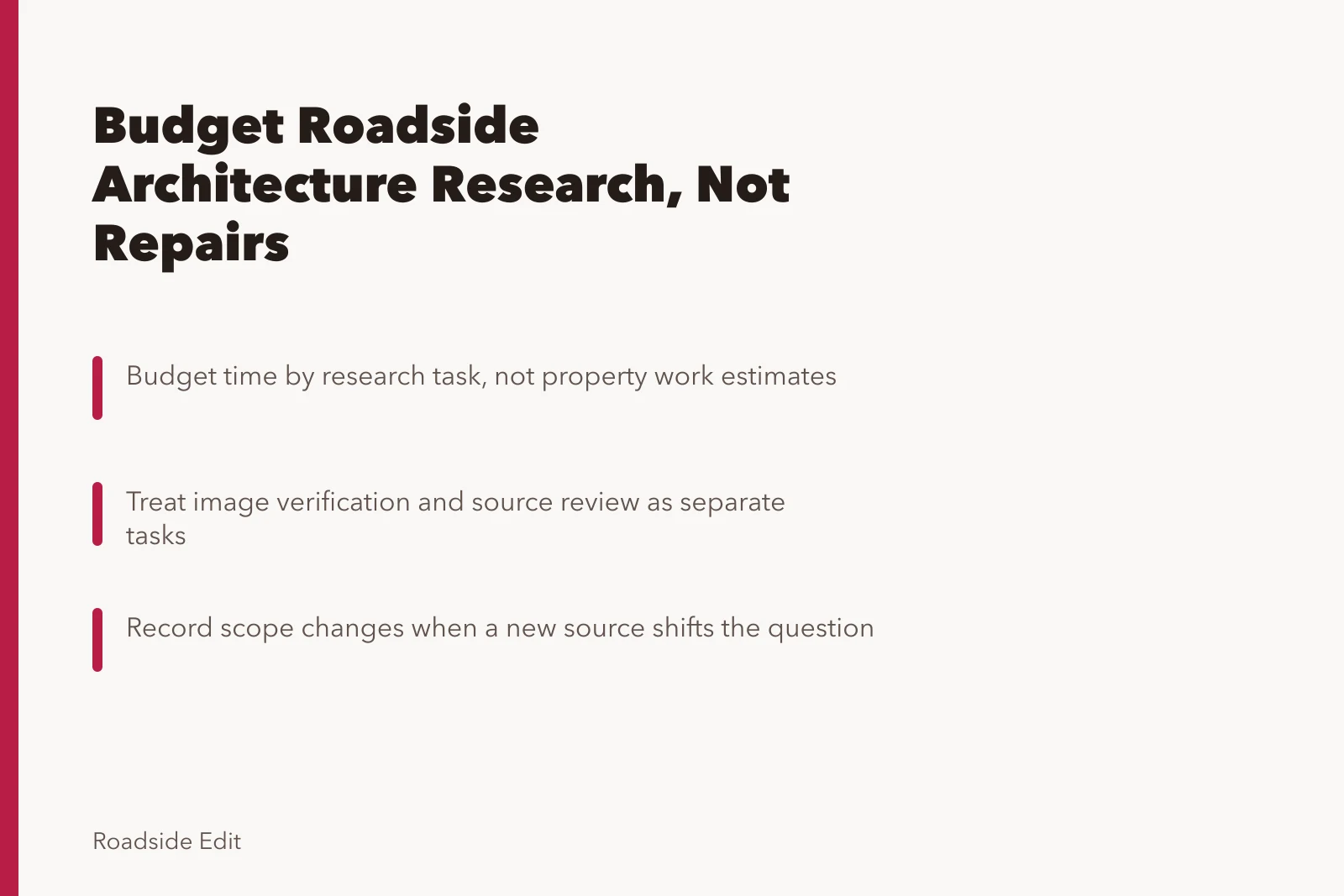
- Budget time by research task rather than a property-level work estimate.
- Treat image verification and source review as separate tasks.
- Record scope changes when a new source changes the article question.
- Do not turn research effort into a construction cost claim.
Plan by evidence type
The National Archives describes document analysis as a foundation for using primary sources as historical evidence and provides different worksheets for different record types. Review the National Archives document-analysis guidance. This supports a research plan that allocates time for the record at hand. It does not provide a cost estimate for a property or a preservation project.
The NPS Historic Property Project Documentation tool connects property information to the scope and design decisions of a project. Read the NPS project-documentation overview. For an article, use the same separation: a research task may improve the record, but it does not by itself create a work scope or an estimate.
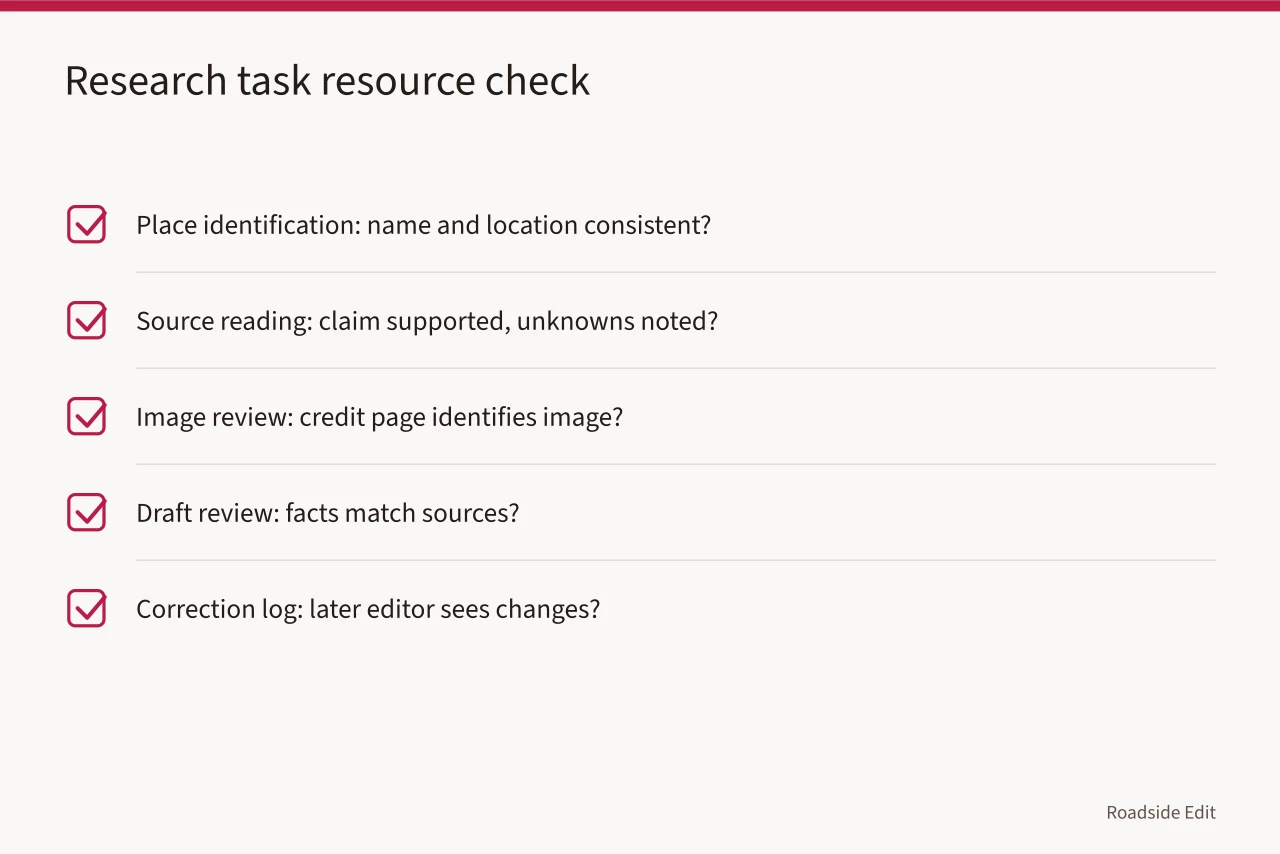
| Research task | Resource question |
|---|---|
| Place identification | Is the name and location consistent across available sources? |
| Source reading | What claim does this record support, and what does it leave unknown? |
| Image review | Does the credit page identify the exact image and caption boundary? |
| Draft review | Does each factual sentence match a source or an observation note? |
| Correction log | Can a later editor see what changed and why? |
Use a scope-change note
- Write the initial research question.
- List the records expected to answer it.
- Add a note when a source creates a new question or rules out the old one.
- Decide whether the article should narrow, pause, or seek a new record.
- Do not publish a larger claim merely because more time was spent looking for it.
| Weak budget statement | Better research statement |
|---|---|
| "This project will cost..." | "The article does not estimate work at the property." |
| "The article took one hour to prove..." | "The cited records support this limited claim." |
| "More research confirms the story." | "The added source changes or narrows the documented record." |
Track effort without making a price claim
Research takes time, and sources may require repeat review when new dates, captions, or property identifications appear; record it in an editorial planning note, not in a statement about what a building repair should cost.
The General Services Administration explains that cost estimates change as project scope and information become clearer. See GSA's cost-estimate guidance. That principle helps publishers label a research plan as a plan rather than a promise.
| Editorial change | Record in the article file |
|---|---|
| A source is unavailable | The source sought, date checked, and claim removed |
| An image credit is corrected | Old page, new page, and changed caption |
| A place is misidentified | The conflicting names and the evidence reviewed |
| The question narrows | The prior question and the reason for the revised scope |
Give image research its own line item
Image verification requires more than adding a photo at the end of a draft. National Archives guidance for digital photographic records calls for identifiers, descriptive metadata, and captions that make an image understandable and retrievable. Review National Archives digital photo records guidance. Keep the source page and date in the article file, then make sure the caption reflects that source.
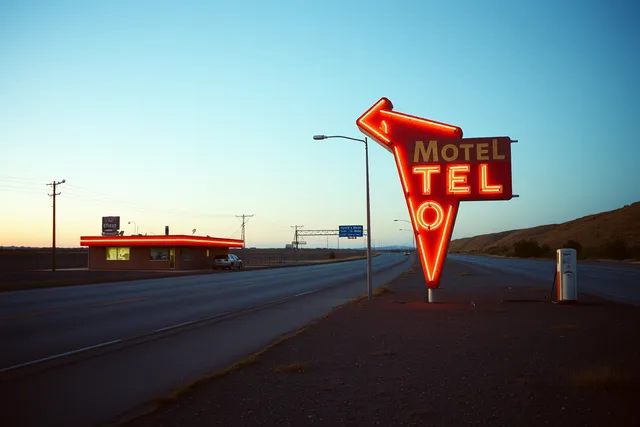
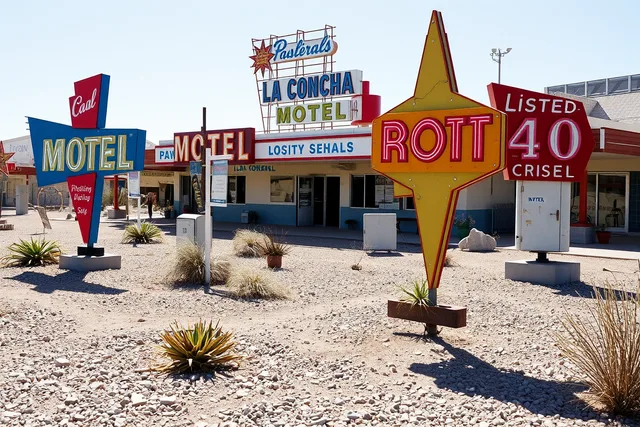
If the image only illustrates a type of roadside place, say so. Do not spend research effort on an image and then use it to imply a property-specific history that the image page does not support.
Before the draft is assigned, review the source list with the planned headline. If the headline promises a price, repair result, or project decision that the records do not establish, narrow it before writing begins.
Common questions
Should a case study publish its research budget?
It may explain the research scope, but it should not present editorial effort as a property-specific cost or a quote for future work.
What usually changes a case-study scope?
A new source, a disputed identification, an unavailable record, or a conflict between dated materials can all require a narrower question.
Why separate image review from writing time?
An image needs its own identification and credit check. A visually strong image should not carry an unsupported historical claim.