Reviews
Part of Roadside building options comparison: preservation, rehabilitation, restoration and reconstruction
Roadside building options comparison: questions to ask before you publish a claim
Roadside building option questions for 2027 help U.S. readers compare project goals, evidence, use, and authority before publishing a treatment claim.
Roadside building option questions for 2027 help an editor decide whether two project descriptions are genuinely comparable. The question is not which label sounds strongest. It is whether the records describe the same project goal, the same evidence, and the same stage of work.
What to take away
- Compare project goals before comparing services, records, or costs.
- A new use and a past appearance are different editorial questions.
- A treatment label needs evidence that matches its scope.
- When sources differ, publish separate descriptions rather than forcing a comparison.
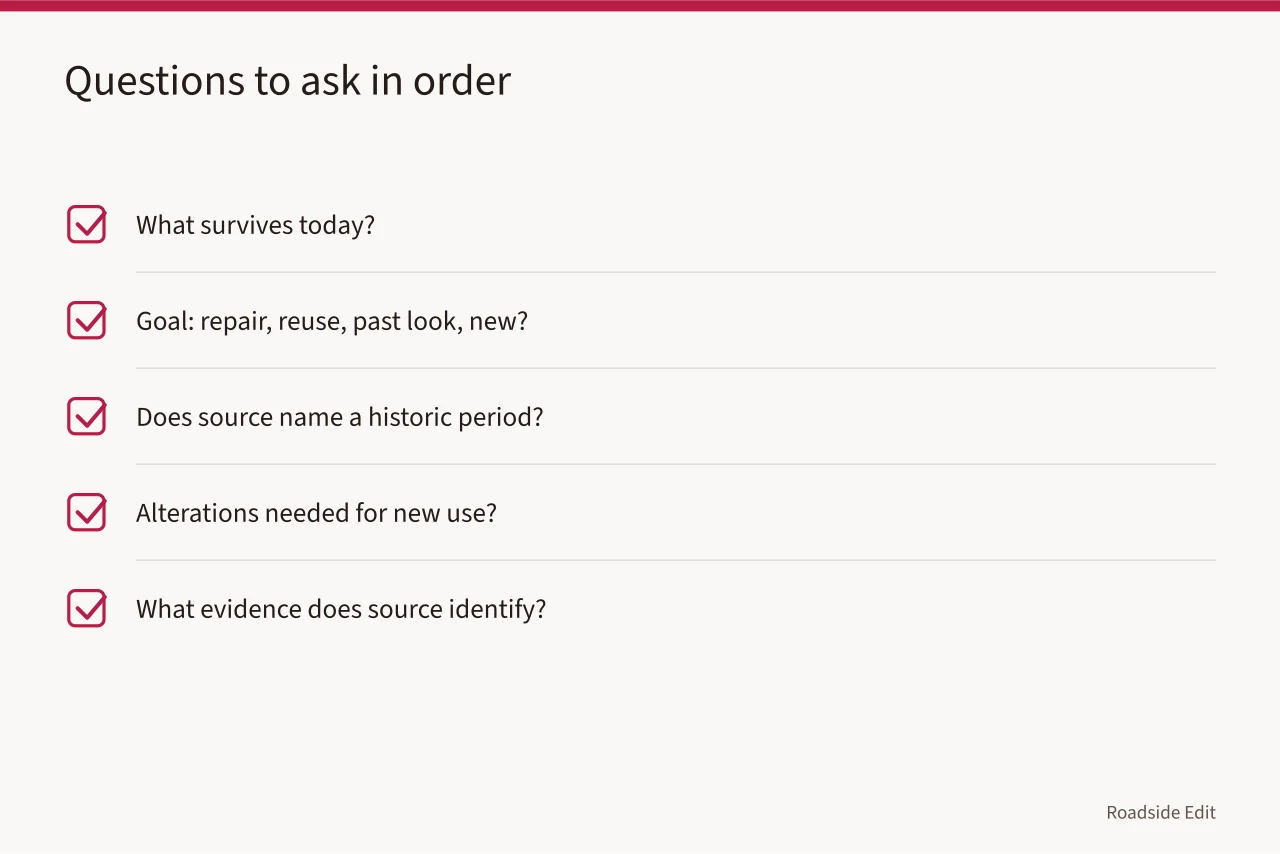
Ask these questions in order
| Question | Why it changes the comparison |
|---|---|
| What does the source say survives today? | Existing material affects how a project can be described |
| Is the goal repair, compatible reuse, a past appearance, or new construction? | These are not interchangeable outcomes |
| Does the source name a historic period? | A period matters when writing about restoration |
| Does the project require alterations for a new use? | This may make a reuse question more relevant than a past-appearance claim |
| What evidence does the source identify? | Plans, surveys, photographs, or project documents limit the wording |
The National Park Service's standards-training page points readers to guidance on applying rehabilitation standards to practical issues, including new additions, materials, damaged buildings, and documentation. Explore NPS training on the rehabilitation standards. It supports asking project-specific questions before summarizing a treatment. It does not decide a treatment for any particular roadside place.
Do not compare labels without their evidence
Two projects may both use the word "restoration," but one source may identify a documented period while the other only announces repair work. A comparison should say that the records differ. It should not imply that both projects have the same historical basis or project outcome.
Likewise, a service provider may advertise work on historic properties, while a public source describes a particular building's planning phase. Keep those claims separate. A provider listing can state its submitted services and location. It cannot prove that the provider completed the work described in a public project record.
Test each option against the actual project record
Write an option card per description. Name the building or feature, project goal, available evidence, known period if any, and current use. Include the authority that owns the next decision and facts that remain unknown.
An option may be a research task, a repair proposal, a new-use idea, or a treatment in a public record. Do not rank until they answer the same question.
The National Park Service provides the Secretary of the Interior's Standards for the Treatment of Historic Properties. Review the NPS treatment standards. They do not determine a project outcome for a particular roadside building. They support distinguishing among preservation, rehabilitation, restoration, and reconstruction rather than treating the terms as interchangeable labels.
For an entrance, route, curb, or ramp, a visual concept cannot establish compliance. The ADA Standards for Accessible Design are technical standards for covered facilities. Consult the ADA Standards for Accessible Design. They do not decide obligations at a specific property. They show why an options article should direct compliance questions to the right authority or qualified reviewer.
When an option uses historic images or plans, keep the source and permission question visible. The U.S. Copyright Office says fair use is assessed case by case. Read the Copyright Office fair-use overview. It does not decide whether a particular image can be republished. It supports checking a stated license or permission before using media to illustrate an option.
Publish the limitation as part of the option
If one option relies on an owner statement and another relies on a public planning document, say so. Do not call a concept feasible when current condition is unknown, and do not call a proposed project completed.
A clear limitation is not a weak article; it shows the reader where evidence ends and which question must be answered next.
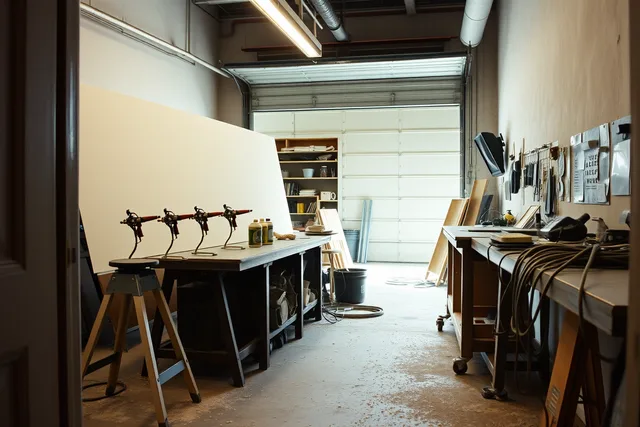
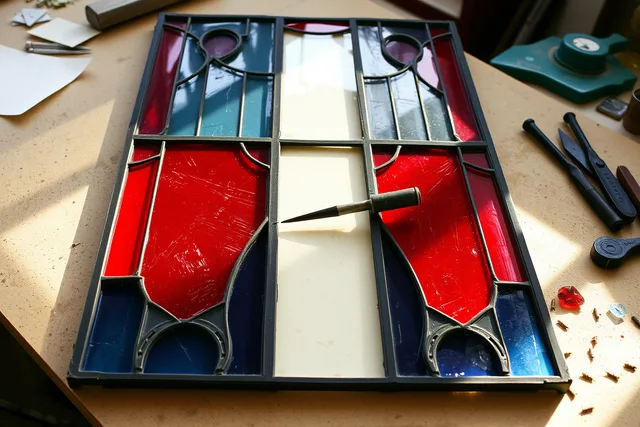
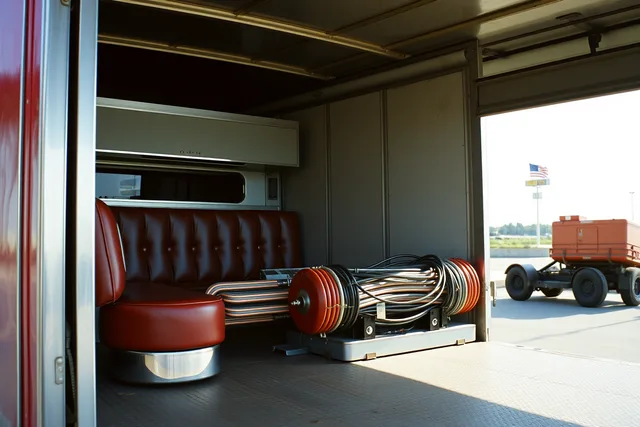
The image is illustrative. It does not establish a building's current condition, ownership, safety, or project result.
Common questions
Can two projects be compared because both involve a roadside sign?
Only if their documented scope and project stage are alike. Otherwise, describe each record separately.
Is a proposed use proof of completed rehabilitation?
No. A proposal is a project stage, not an outcome.
What should an editor do when documentation is limited?
Use narrower wording or omit the treatment label until a reliable source supports it.