Guides
Roadside renovation fundamentals: how to plan with evidence, scope and reuse in mind
Plan roadside renovation in 2027 with a practical sequence for evidence, conditions, scope, reuse goals, responsible claims, and safe next decisions.
Roadside renovation starts with an often skipped question: what is known about this property today? A faded diner, service station, motel, store, or roadside structure can invite a quick makeover story.
But an old exterior photo does not establish current condition. A proposed tenant does not establish approved use. A new sign does not establish accessibility, safety, environmental status, or a completed renovation.
The practical approach is to sequence the work: collect the record, identify existing conditions and constraints, then define a small decision-ready scope.
Only after that should a project team compare options, announce a reuse vision, or commission work. This guide is for planning and clear editorial communication. It is not a building assessment, permit review, code interpretation, or engineering recommendation for a particular property.
What to take away
- Separate documented history, current conditions, proposed reuse, and completed work.
- Begin with the next decision, not an undefined promise to renovate everything.
- Treat access, environmental, structural, code, and property-right questions as separate work streams.
- Use source dates and limitations in public descriptions.
- Keep paid-placement copy attributed and do not let it replace the project record.
Build a starting record
Create one folder for the property before commissioning a plan or publishing a feature. Include the address or parcel reference, ownership contact where appropriate, known past uses, historic photographs, permits or public notices, available reports, recent authorized photographs, and a statement of the intended next decision. Label each item by source and date.
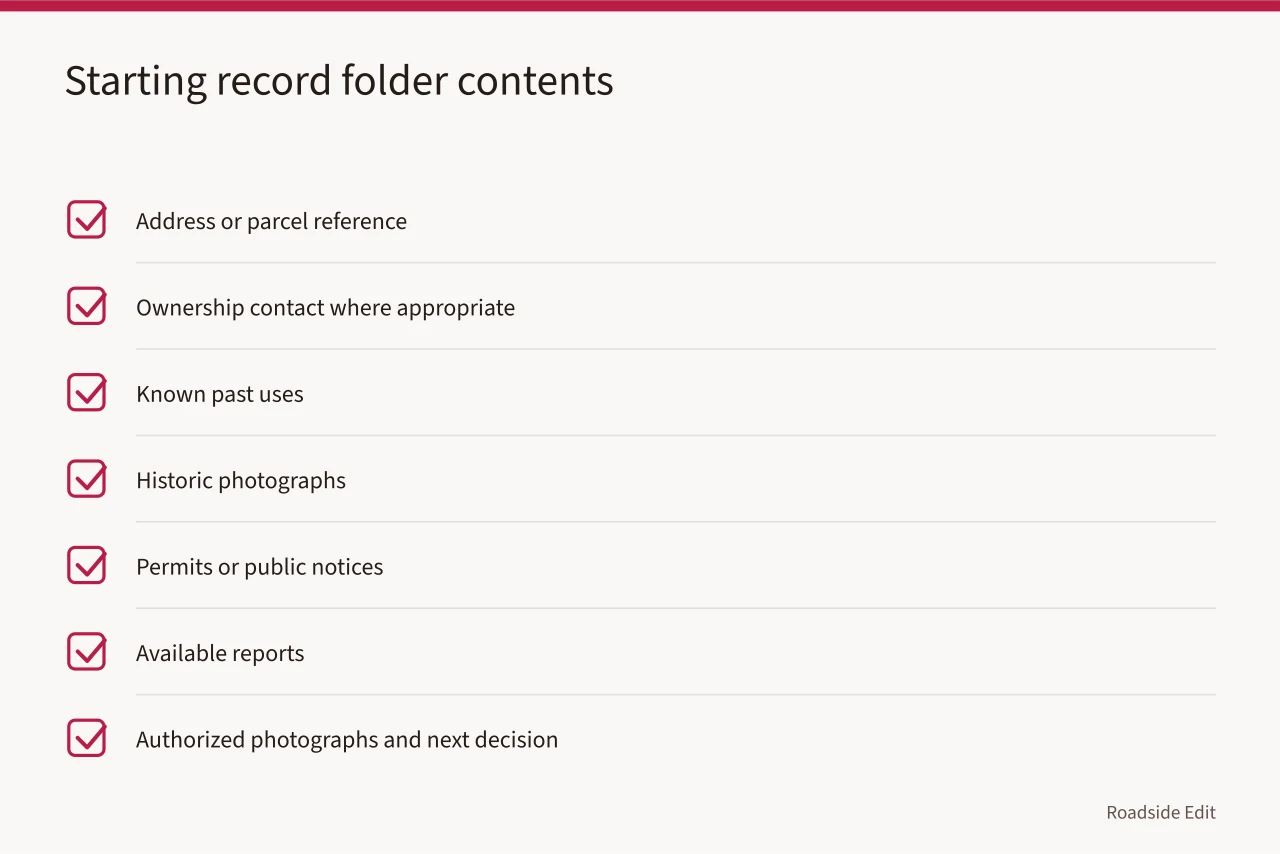
The record need not answer every question immediately; its purpose is to show what is known and where gaps remain.
A 1950s photograph may depict an earlier storefront arrangement, but it does not prove the roof is sound today. An owner announcement may describe a desired tenant, but it does not prove permits, financing, accessibility, or construction are settled.
Identify existing conditions without guessing
Write a short conditions list that separates visible observations from professional conclusions. For example, an article may report that exterior paint is peeling in a dated, authorized image. It should not call a building structurally unsafe or environmentally clean based on the same image. Use the appropriate current, property-specific record for consequential claims.
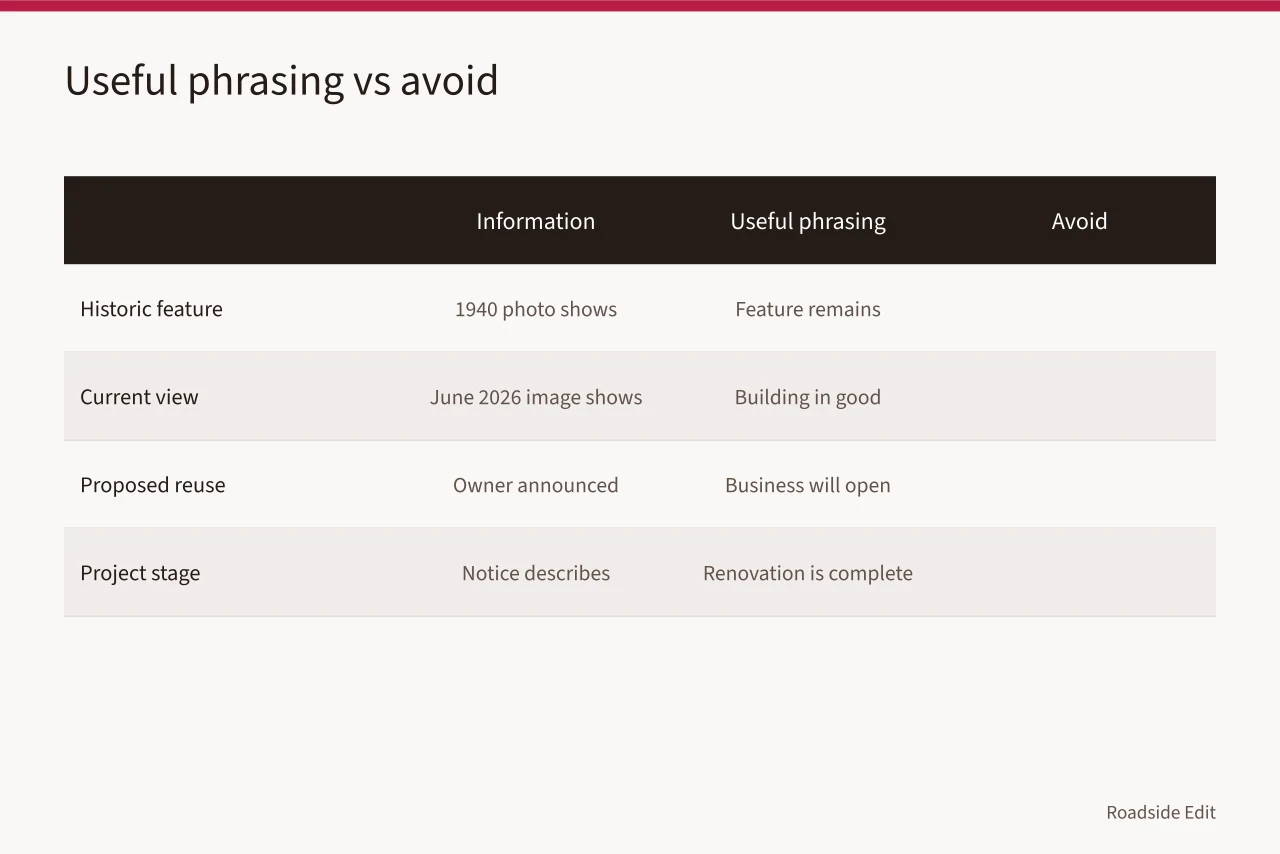
| Information | Useful phrasing | Avoid |
|---|---|---|
| Historic feature | "A 1940 photograph shows..." | "The feature remains original" |
| Current view | "A June 2026 exterior image shows..." | "The building is in good condition" |
| Proposed reuse | "The owner announced a proposed..." | "The business will open" |
| Project stage | "A public notice describes planning work..." | "The renovation is complete" |
Define the next decision
An effective first scope is modest. It might ask for a records review, a current-condition assessment by the appropriate professional, a reuse concept, a code path review, a cost-planning exercise, or a documented treatment question. It should name the area covered, deliverable, limits, access conditions, expected decision maker, and stop-work triggers.
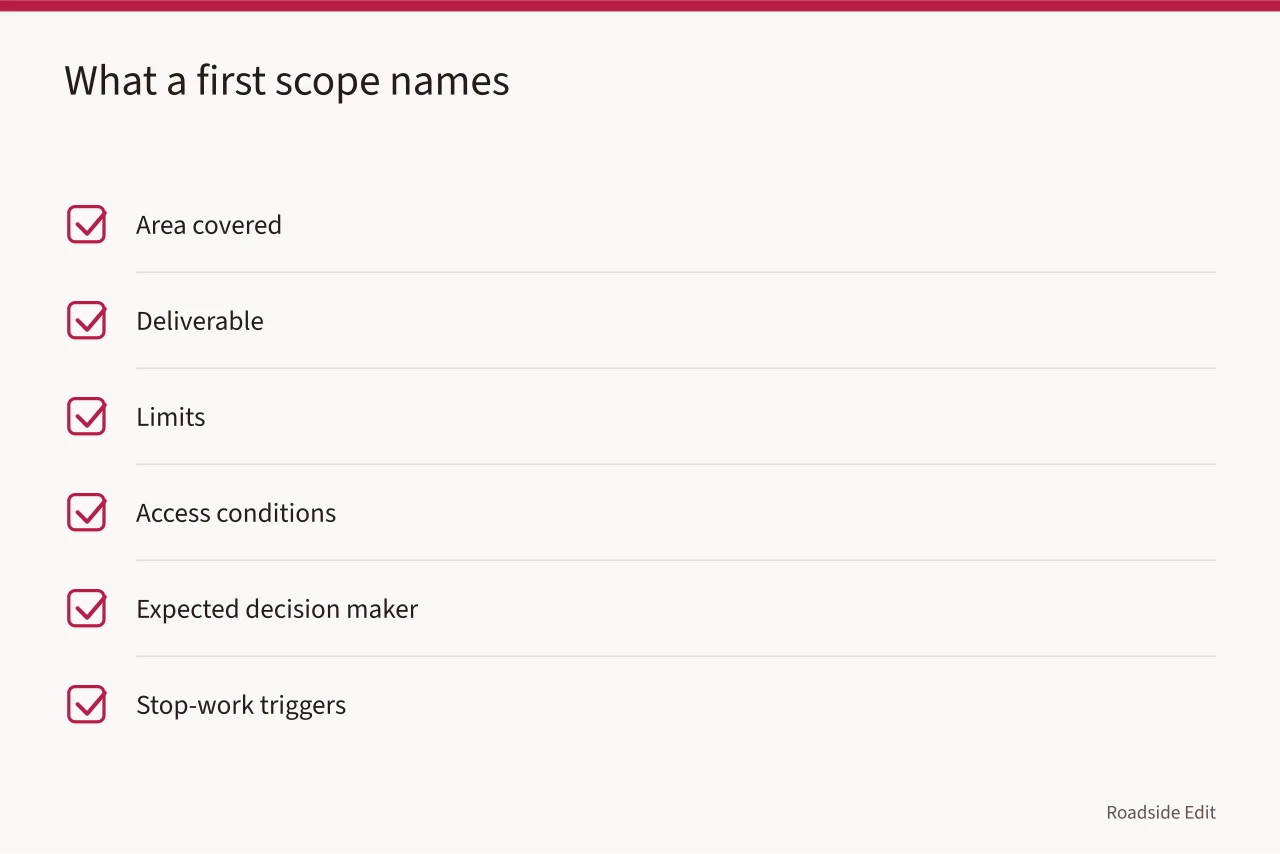
Do not use "renovation" as a catchall. Repairing a canopy, developing a restaurant concept, evaluating a former fuel site, adding an entrance feature, and creating a historic interpretation plan are different questions. They may need different expertise, evidence, approvals, and budgets.
Test reuse ideas against constraints
An appealing use is only a scenario until tested against the property, neighborhood, existing systems, rights, and applicable requirements. EPA's reuse-plan guidance covers existing buildings, potential reuses, market drivers, property conditions, and development constraints. Review EPA's Revitalization-Ready reuse-plan guide.
That page concerns the planning process, not a conclusion about an individual roadside property, so the transferable lesson is to make constraints visible before turning a vision into a certainty.
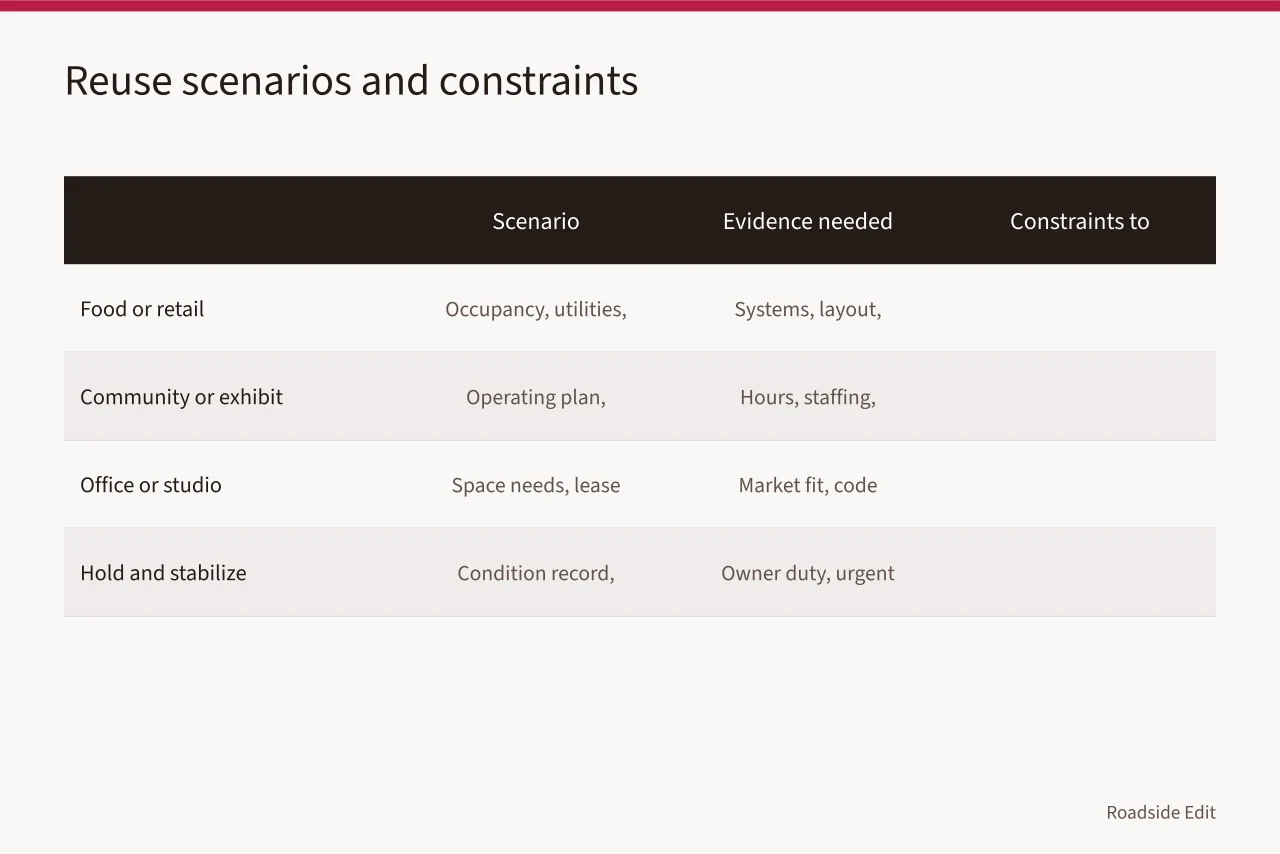
Use a scenario table:
| Scenario | Evidence needed next | Likely constraints to investigate |
|---|---|---|
| Food or retail use | Occupancy needs, utilities, access, local approvals | Existing systems, site layout, permitted use |
| Community or exhibit use | Operating plan, visitor access, supervision | Hours, staffing, safety, accessibility |
| Office or studio use | Space needs, lease or ownership terms, building systems | Market fit, code pathway, renovation extent |
| Hold and stabilize | Condition record, weather protection, maintenance plan | Owner responsibility, urgent repairs, security |
The table does not select a use. It keeps a project from describing a concept as if it were already an operating fact.
Keep scopes, costs, and claims aligned
When discussing a budget, identify what the number pays for. A planning fee, assessment award, construction contract, grant, and total development cost are different categories. A figure from another property becomes useful only when readers can see its source, date, scope, and limitations. Do not turn one project into a market-rate claim.
Apply the same precision to sponsored material. A local business can provide a description of its service, event, or opening plan. The publisher should attribute it, date it, and correct it when supported information changes. Payment should not transform a proposal into an approval, a rendering into a completed building, or a marketing statement into an assessment.
Protect existing character while planning change
Older roadside properties may hold features of historical, local, or future-design value; document visible materials, signs, canopies, windows, and service bays. Record room layouts and site relationships before calling a feature disposable.
This does not mean calling every old element historic; it gives the owner and project team a record before an irreversible choice becomes public.
Use the words preservation, rehabilitation, restoration, and reconstruction carefully. Each carries a different meaning in professional preservation contexts. If the responsible project record has not selected a treatment approach, say what is actually planned: research, repair planning, an exterior update, a reuse concept, or a proposed alteration.
The National Park Service presents the Secretary of the Interior's Standards for Rehabilitation as standards for rehabilitation of historic properties. The standards do not determine the scope of an individual roadside project. They do support asking which features will be retained, what will be altered, and what evidence supports the project description before an article applies a treatment label.
The National Archives' records-management overview explains managing records so they can be retrieved and used. Keep the source page, date, scope, and exact sentence it supports. This allows a future editor to update a public statement when a plan changes without treating an old rendering, announcement, or image as current evidence.
Disclose a paid relationship where a business supplies a profile, event notice, or renovation update. The Federal Trade Commission's endorsement guidance addresses material connections that can affect how readers assess an endorsement. It provides a clear boundary between supplied copy and independently sourced reporting.
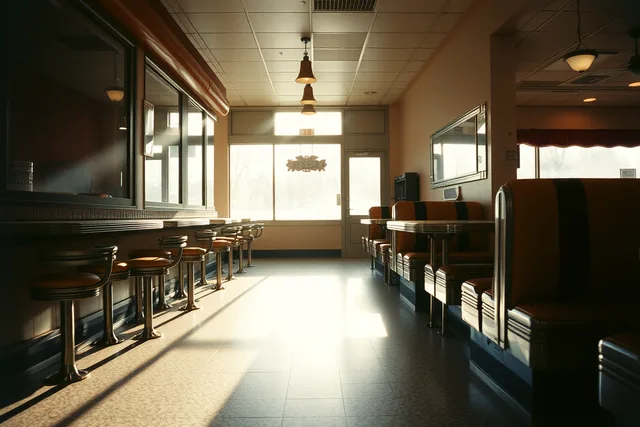
The image is illustrative only and does not document another property's condition, access, ownership, or renovation status.
Create a responsible public update
A useful update gives a clear stage: "records are being gathered," "a site-reuse concept is under review," or "owner announced a proposed tenant." It names the source.
It avoids conclusions on matters still with an owner, agency, or qualified professional. Include a correction contact and review volatile facts near publication.
Before publishing, ask whether the wording would still be true if a permit, lease, environmental record, or construction schedule changed tomorrow. If not, make it narrower. This protects readers and makes a project profile more valuable to potential customers who want to be represented accurately.
Use a staged decision log
Keep a short decision log from the first walkthrough through publication. Each entry should state the question, source, date, responsible party, next action, and limit. The log is not a substitute for a contract file or formal report. It is a disciplined way to stop a project conversation from drifting into facts that nobody has verified.
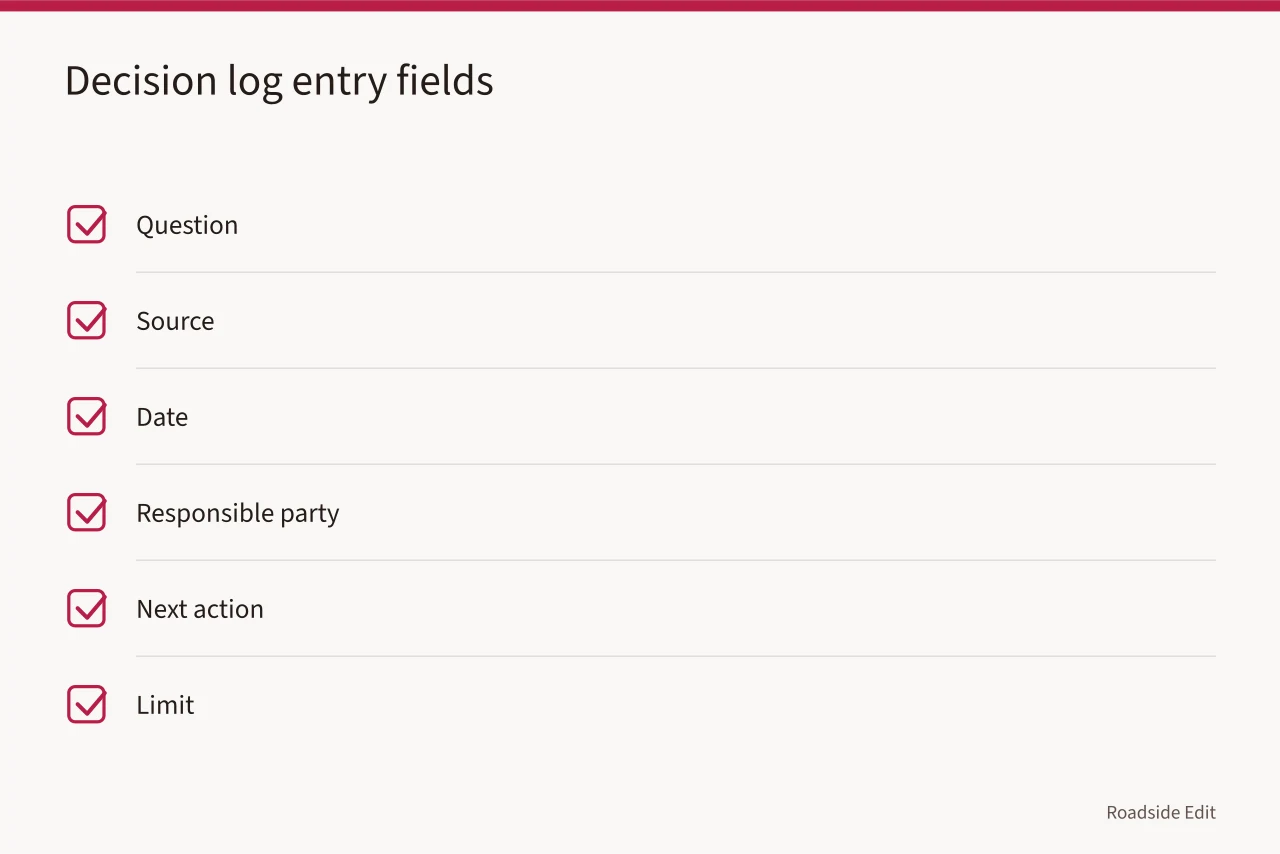
For example, a first entry may say: "Question: Can the former service bay support a retail concept? Source: exterior photo and owner-supplied floor plan, dated June 2026. Limit: no current systems or code review is represented. Next action: define the appropriate professional review."
A later entry may record a stakeholder discussion of a reuse scenario. It should not silently become a claim that a tenant signed or a permit issued.
This approach keeps scope changes manageable: when a new document, access limitation, deterioration finding, or financing condition appears, record the change and revisit only the affected statements.
Do not revise older text to suggest the new information was always known.
Readers can follow a project's evolution when the article states its stage honestly.
Know when to pause
Pause a casual content or planning task if access, disturbance, safety, environmental, or legal questions arise. Pause for permit questions too.
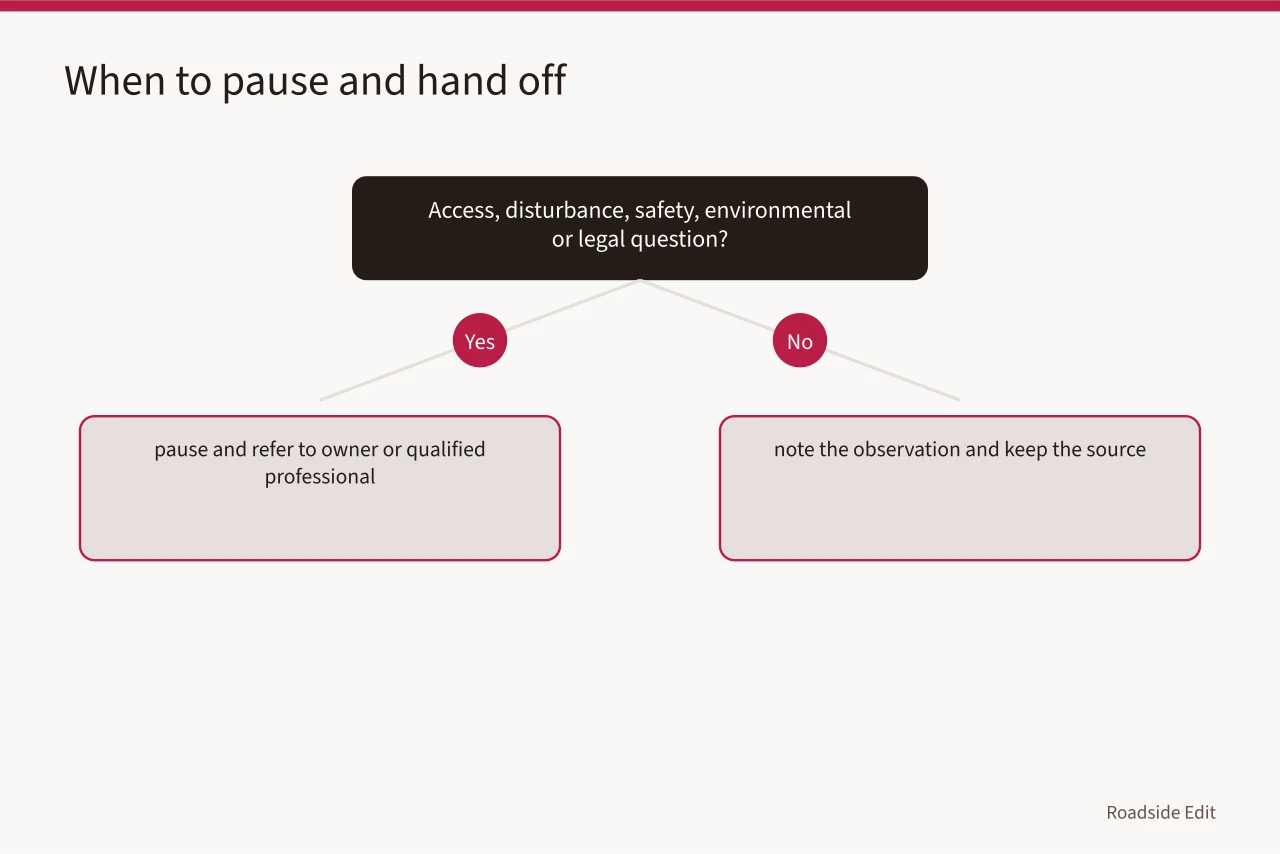
Do not enter closed structures, climb signs or canopies, move loose material, open equipment, or run unapproved tests to improve a story. Note the observation, keep the source, and refer the question to the responsible owner or qualified professional. A careful handoff beats an impressive conclusion with no defensible basis.
The same boundary applies to editorial deadlines. A publication date is never a reason to write beyond the record. Update later when a responsible source confirms the next stage.
Keep the original wording and source date in the internal record when you revise a material statement. That simple version history makes corrections transparent and protects against accidental inflation of a project timeline.
Common questions
Is a renovation plan the same as approval to begin work?
No. A plan can be a concept or a planning step. Identify any approval, permit, funding, or access status separately and only when current records support it.
Can a public photograph establish whether a building is safe?
No. A photograph can show visible conditions at a date and vantage point. It does not replace a project-specific professional assessment.
Can an advertiser describe a planned roadside business?
Yes, with attribution and a date. The publisher should not convert the statement into a guarantee that the business is approved or open.
In this guide
- Roadside renovation fundamentals: a scope checklist before you decideRoadside renovation basics for 2027: a practical checklist for records, scope, site limits, public updates, and the next responsible decision.
- Roadside renovation questions to ask before you compare plansAsk these 2027 roadside renovation questions before describing scope, accessibility, existing conditions, reuse plans, budgets, approvals, or opening claims.
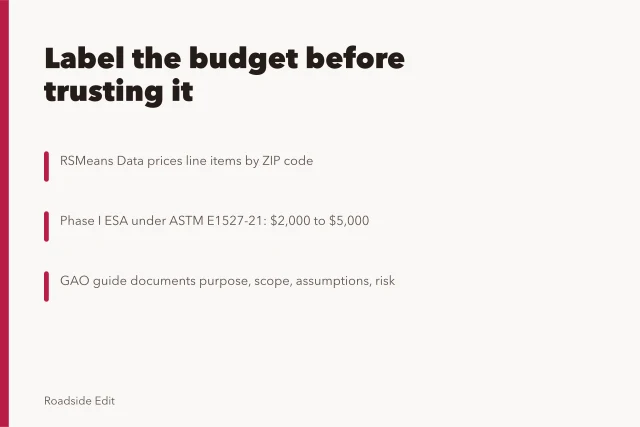
- Roadside renovation budget notes: how to read the numbers and costs before you commitRoadside renovation budgets need a scope, a date and a source before the number means anything, and public cost guides never replace a local bid.
- Owner records for a roadside renovation: what to keep and how to log claimsKeep better 2027 roadside renovation records with dated sources, conditions, scope, decisions, image credits, public claims, and correction history.