Guides
Part of Roadside renovation mistake prevention: how to keep assumptions out of scope
Roadside renovation mistake prevention checklist for newsrooms
Roadside renovation mistakes checklist for 2027: catch unsupported claims, vague scopes, missing records, unclear sponsorships, and premature project updates.
Most weak roadside-renovation articles fail before the writing begins. A planning note becomes a completed-project claim. A historic image is treated as a current record. A sponsor's preference is written as an independent finding. This checklist catches those errors while the source file can still be checked and the language can still be corrected.
What to take away
- Every public claim needs a source, a date, and a scope that match the sentence.
- A proposal, permit request, approval, contract, and completed job are different facts.
- Use historic-treatment labels only when the proposed work and evidence support them.
- Sponsored material needs clear attribution and a disclosure that readers can notice.
Stop the source-free status claim
The most common error: a sentence sounding current with no current record.
Phrases like "renovation is underway," "the site will reopen," "funding is secured," or "the building is safe" each need a specific source.
Do not let a copied social post, an old newspaper account, or an unattributed conversation replace an approval, contract, inspection, or owner statement.
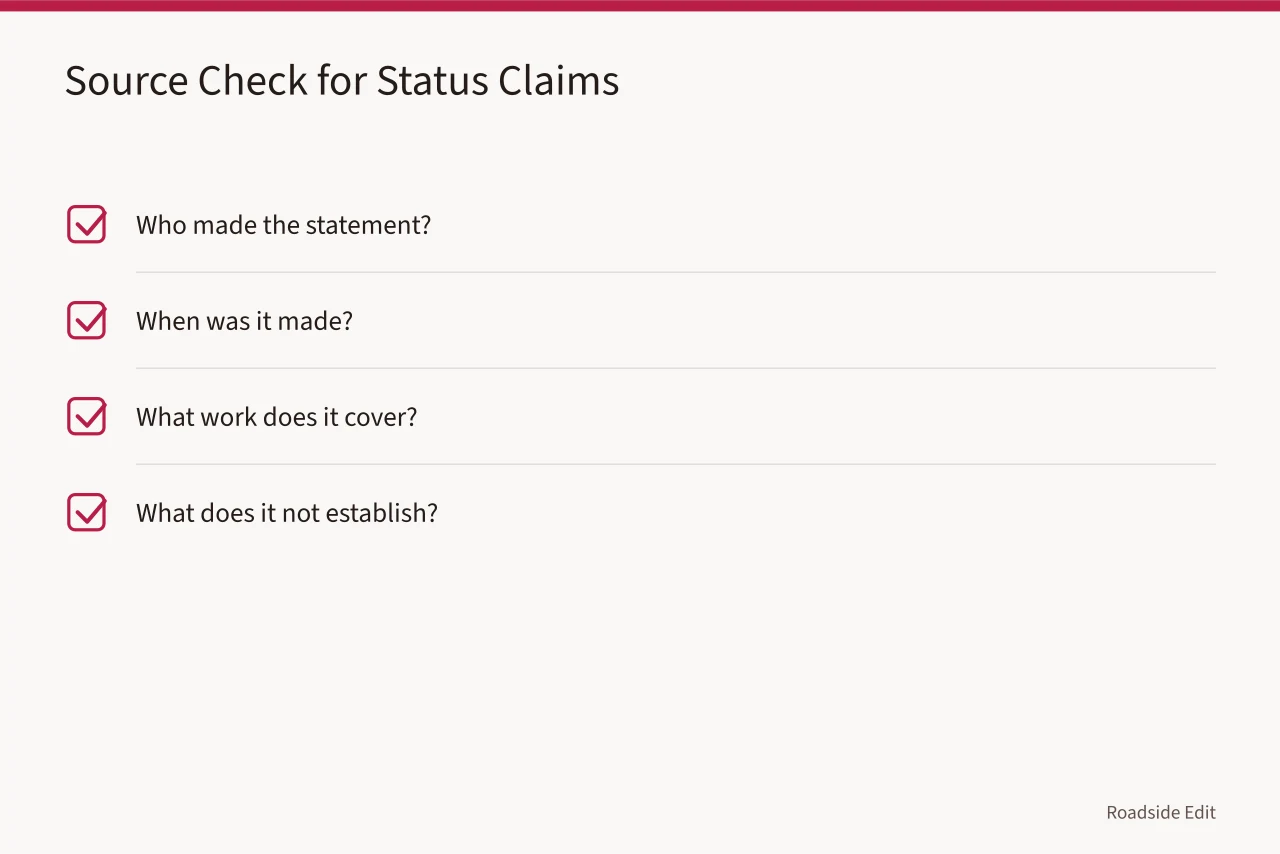
| Check | Evidence that belongs in the file |
|---|---|
| Who made the statement? | Named owner, agency, contractor, or document issuer |
| When was it made? | Issue, publication, or update date |
| What work does it cover? | Defined feature, area, and work stage |
| What does it not establish? | Exclusions, open reviews, or unconfirmed next steps |
If the source is only a concept image or draft plan, write "a concept was published," not "the work will happen."
If the source is a dated approval, name the approval instead of claiming every remaining project step is finished.
Do not turn a treatment label into decoration
Words such as preservation, rehabilitation, restoration, reconstruction, and replacement carry different meanings. Calling ordinary modernization "restoration" can mislead readers. So can describing a proposed replica as historic when the available records do not show that the feature existed.
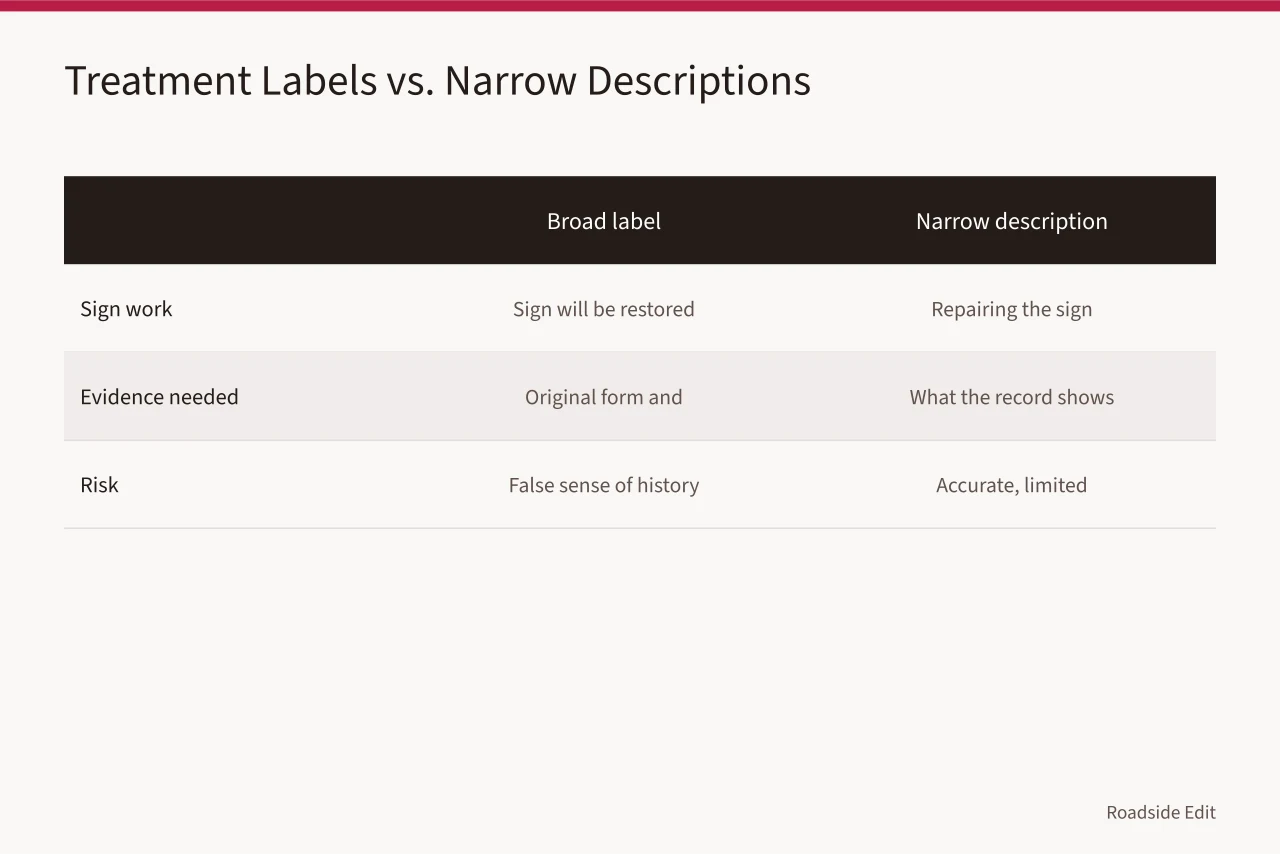
The National Park Service says restoration should rely on substantial physical and documentary evidence. It should not create a false sense of history by adding conjectural features or features from other properties. Read the NPS restoration standards.
Those standards are not a diagnosis or permit for every roadside building. They provide a useful editorial guardrail: do not call something restoration unless the documentation and proposed work support that word.
Use a narrow description instead. "The proposal calls for repairing the sign face" says what the record shows. "The sign will be restored to its original form" makes a stronger claim that needs evidence about the original form and the proposed method.
Preserve the record behind each sentence
An article becomes hard to correct when its sources are scattered across inboxes, shared drives, image folders, and personal notes. Keep documents tied to the claim they support. Include the source title, date, location, and any relevant version number. For an image, retain the original page or record and a note about what the image can and cannot establish.
National Archives guidance says complete, accurate records keep context when documents tied to a project, study, transaction, or subject stay together. Review NARA's recordkeeping requirements.
Federal guidance does not dictate a private publisher's filing system. It backs the practical habit of keeping source material with the claim it supports, so a later editor can check, update, or remove that claim.
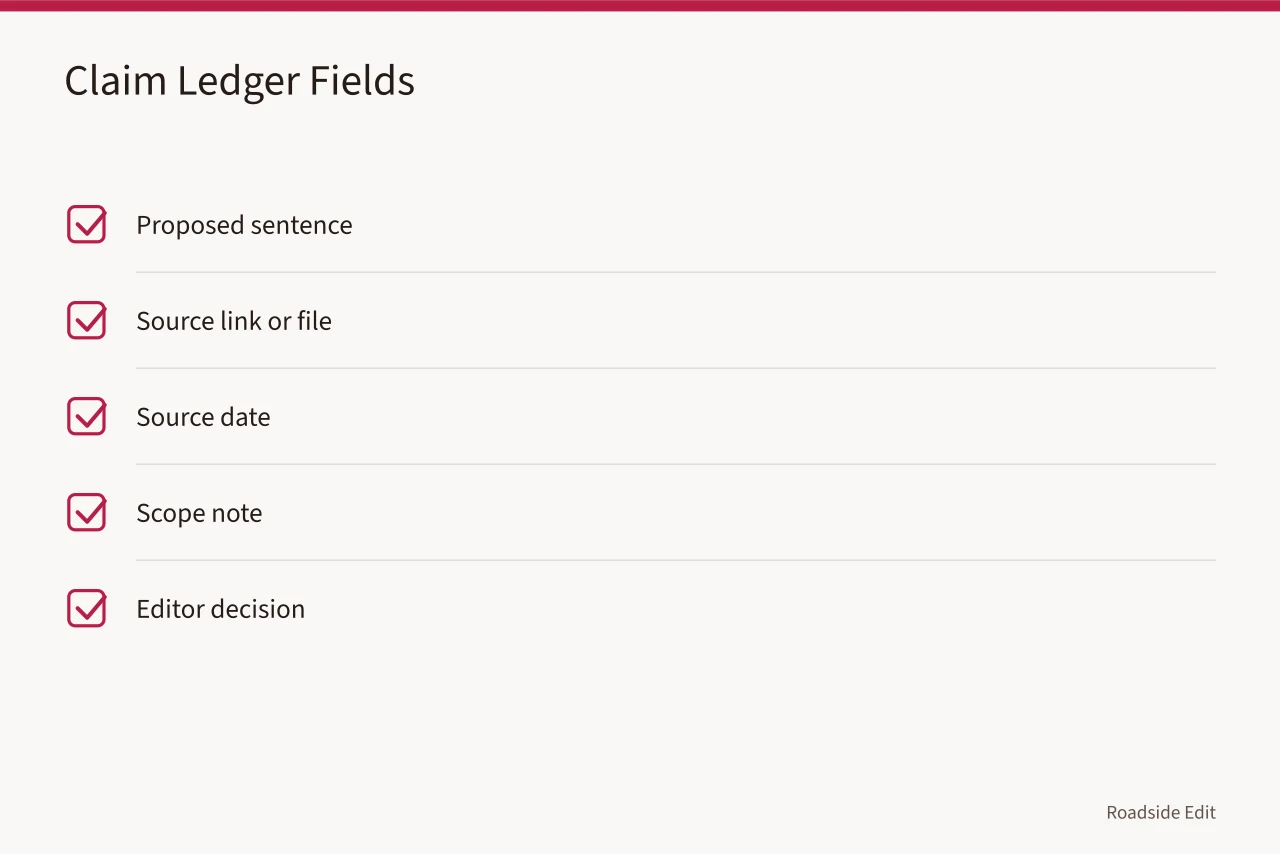
Use a claim ledger with five fields: proposed sentence, source link or file, source date, scope note, and editor decision. A source that is too old, too broad, or about a different property should be marked unusable for the current statement, not forced into a citation.
Avoid guessing about regulated work
Another mistake is to describe renovation as ordinary cosmetic work before the project scope and material questions are known. Some programs and requirements apply only in particular contexts. That is a reason to identify the question and the responsible contact, not a reason to guess that a rule either applies or does not apply.
EPA's Renovation, Repair and Painting program resources cover compliance information, pre-renovation notices, test documentation, and a sample recordkeeping checklist for covered work. See EPA's RRP resources.
The resource does not establish every roadside property falls under the program. It shows why an article should not make casual claims about materials or work procedures before the project record identifies the applicable context.
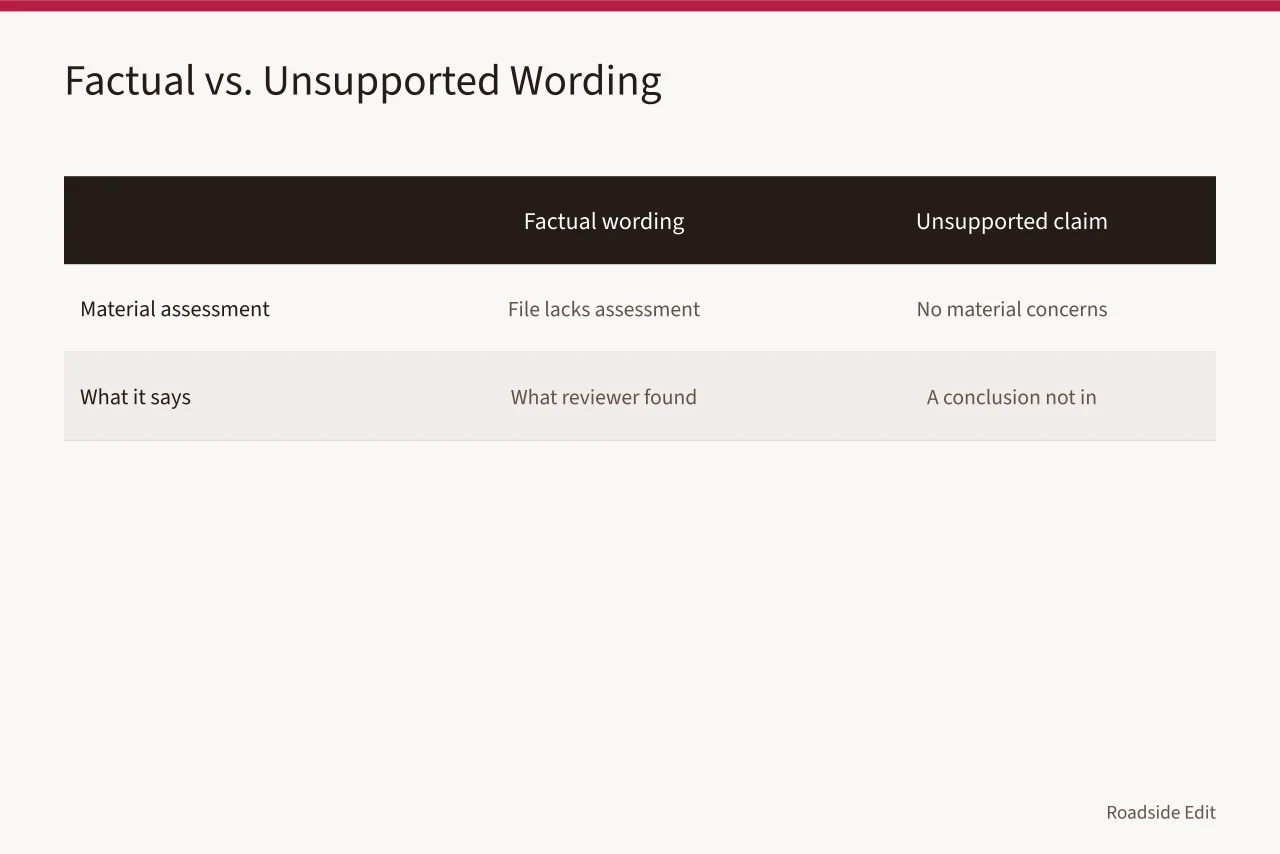
Keep the wording factual: "The project file does not include a material assessment" is different from "the property has no material concerns." The first says what the reviewer has found. The second claims a conclusion that the record may not support.
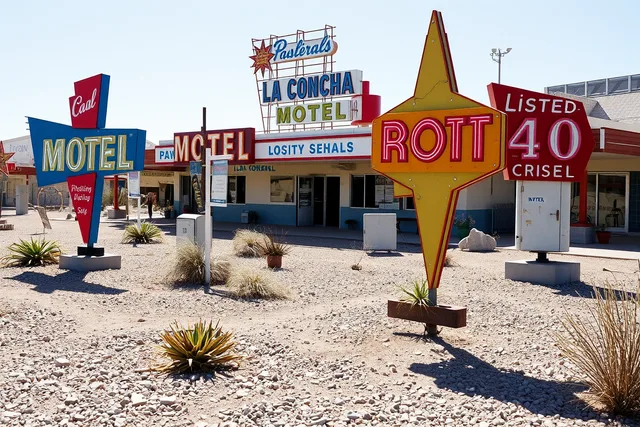
The photograph is historical context only. It does not establish the present condition, ownership, work status, or treatment of any other roadside property.
Separate paid placement from independent reporting
A paid placement can inform, but its source and relationship must be clear. Do not let a sponsor give a broad claim the article repeats without attribution.
If a sponsor says its product was installed, its service was used, or a project achieved a result, identify that as the sponsor's statement. Seek the record supporting the part you publish.
The Federal Trade Commission says endorsements must be honest, not misleading. A material connection between endorser and marketer should be clearly and conspicuously disclosed when consumers would not expect it. Read the FTC endorsement guidance.
That guidance matters especially when a paid placement, review, product mention, or partner statement could be mistaken for independent reporting.
Put the disclosure near the paid message. Use plain words such as "Paid placement from [name]" or "[Name] provided compensation for this feature," when those statements are accurate. Do not hide the relationship in a footer, a vague label, or a separate page that readers may never see.
Correct the record instead of quietly rewriting it
When a source changes or a published sentence turns out to be too broad, make a dated correction. State what changed without making up a reason. Preserve the original source note, the current source, and the revised wording. This gives future editors a way to understand the decision rather than repeat the error.
Use this correction path:
- Locate the sentence and the source it relied on.
- Compare the sentence with the current record.
- Narrow, correct, or remove the sentence when the source does not support it.
- Add the new source date and a brief correction note.
- Check nearby headlines, captions, tables, and promotional copy for the same error.
The goal is not to make a project look flawless. It is to make the article reliable enough that readers can see the difference between confirmed facts, attributed proposals, and questions still under review.
Common questions
Can a historic photograph prove that a feature should be rebuilt?
No. A photograph may document a past appearance, but a rebuild claim can require more evidence about the feature, property, scope, and responsible review.
Should an owner statement be removed from an article?
Not necessarily. Attribute it, date it, and do not present it as an independent finding or completed fact unless another record confirms that status.
What should happen when a sponsor cannot support a claim?
Leave the claim out, replace it with the source-supported fact, or label the statement as an attributed proposal if that is what the record shows.