Guides
Roadside renovation mistake prevention: how to keep assumptions out of scope
Avoid 2027 roadside renovation mistakes by separating evidence from assumptions, defining scope, documenting changes, assigning reviews, and limiting public claims.
Roadside renovation stories often fail before construction begins. An old image becomes a condition report, a proposed change becomes an approved project, an attractive budget number becomes a total cost, or a writer turns a visitor's observation into a safety finding.
These are avoidable evidence mistakes that can undermine a project long before a reader sees the finished page.
This guide is for editorial and planning work around existing U.S. roadside properties. It is not a property assessment, code interpretation, work instruction, or approval to enter, alter, or market a particular location. Specific decisions belong with the responsible owner, agency, and qualified project team.
What to take away
- Treat every source as evidence with a date, purpose, and limit.
- Define the scope before estimating costs, writing a headline, or accepting a sponsor claim.
- Keep an unresolved question open instead of filling the gap with an appealing conclusion.
- Record changes and corrections so the public story can be traced to its source.
- Do not use photographs, maps, or generic guidance as substitutes for a property-specific review.
Mistake 1: Starting with a solution instead of a question
A roadside building may seem to need a new sign, exterior paint, an accessible entrance, a roof repair, or a complete restoration. Those are possible ideas, not established facts.
Starting with a solution encourages the team to select only evidence that supports it. Start with a question: what is documented, what does the owner propose, what is the exact project boundary, and what information is missing?
The question-first approach also improves content. Instead of claiming that an old service station "will be restored," an article can say that an owner has described a proposed scope or that the team is collecting records. That is still a useful story. It is simply more honest about the stage of work.
Mistake 2: Letting one record do too much work
A historic photograph can establish earlier appearance. An invoice can establish the billed work listed on it. An owner statement can establish what the owner reported. None of those records independently establish current condition, safety, compliance, permit status, or all-project completion.
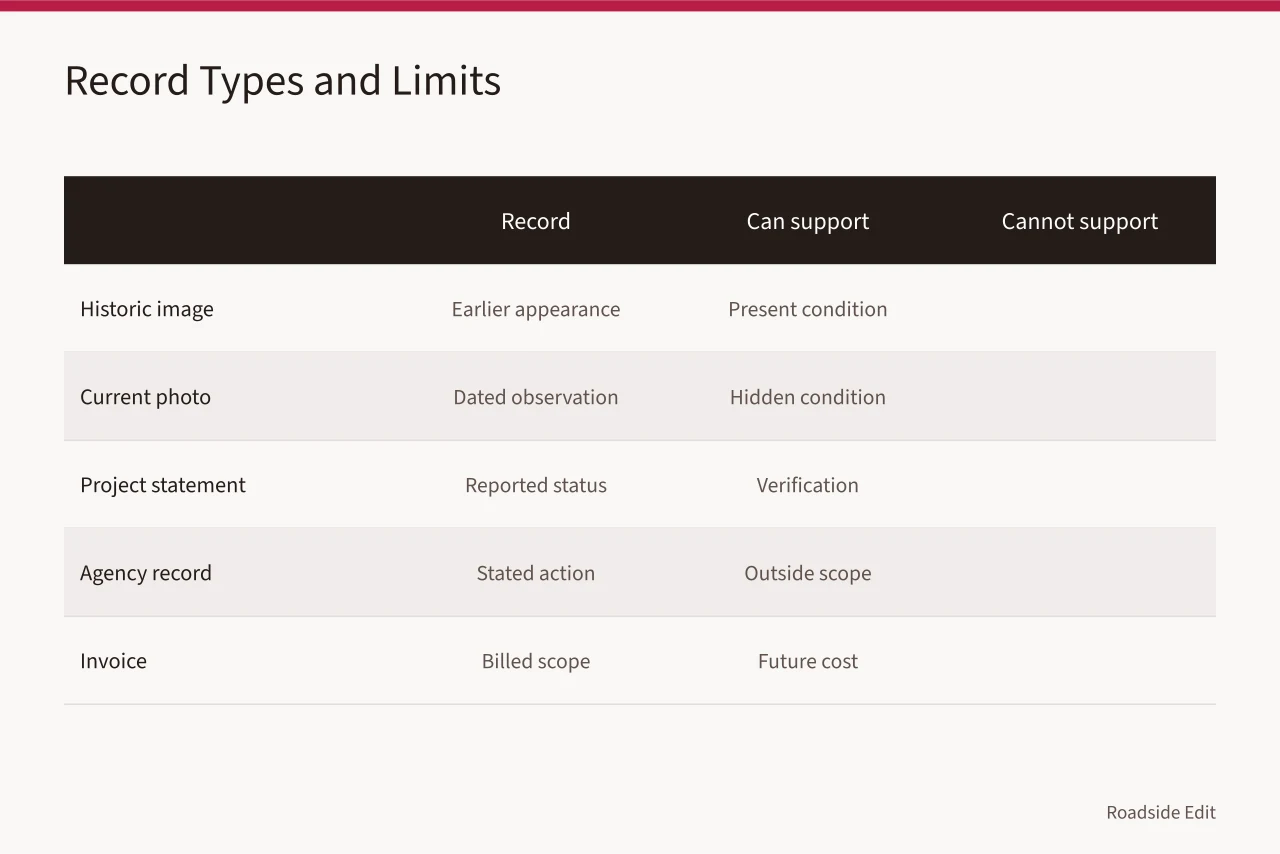
Write the article sentence to match the source. A small source limit is not a weakness. It is what keeps a project narrative from drifting into false certainty.
Mistake 3: Leaving scope as a slogan
"Renovation," "revitalization," and "safety upgrade" do not identify the work. A scope should describe the feature or area, the purpose, inclusions, exclusions, stage, and responsible decision-maker. This protects the budget, public copy, and schedule from becoming a wish list.
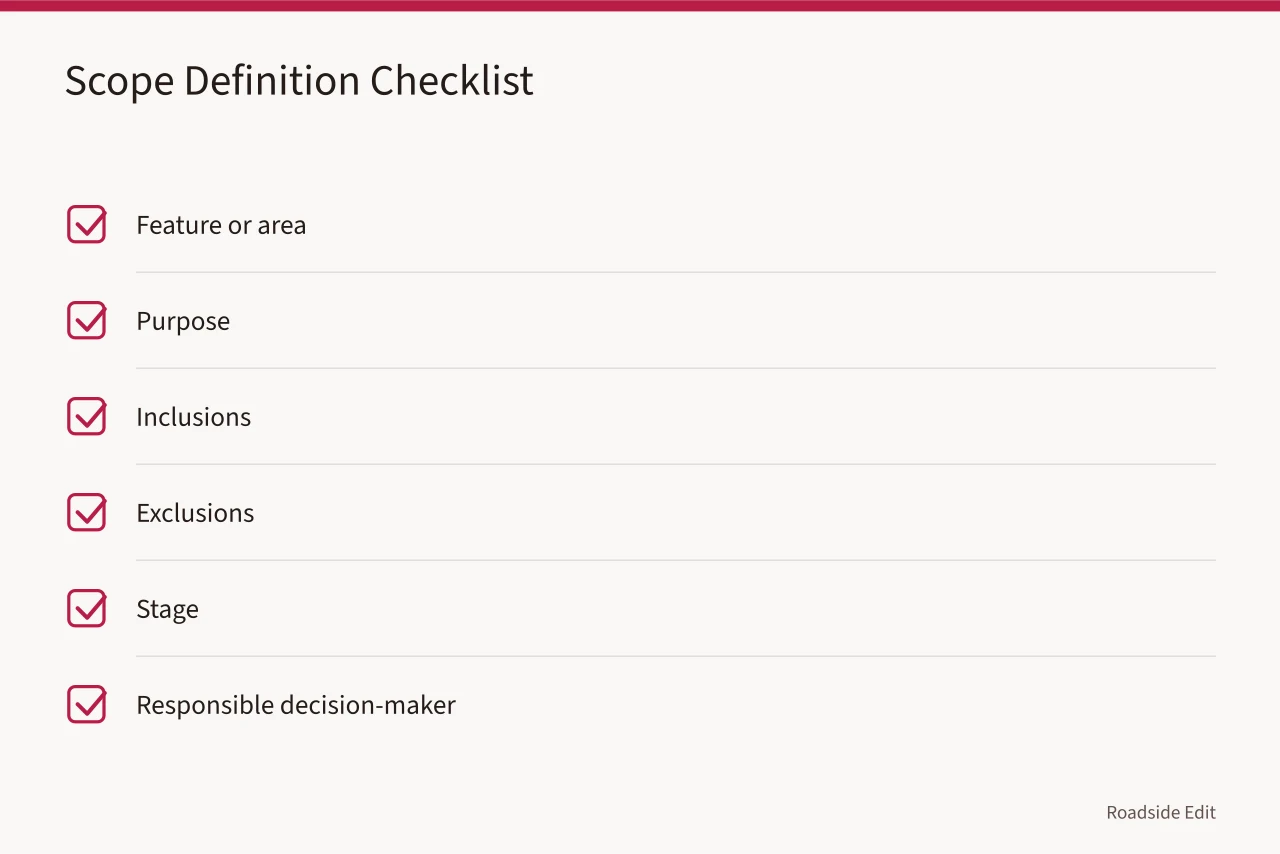
The National Park Service says historic structure reports support preservation decisions. They can guide budget and schedule planning and record research, investigation, and completed work. Review the NPS historic-structure-report overview.
Not every roadside property needs this format. The lesson: a trustworthy project record ties evidence, decisions, and later work together. It does not treat them as unrelated files.
Mistake 4: Treating a public update as a technical conclusion
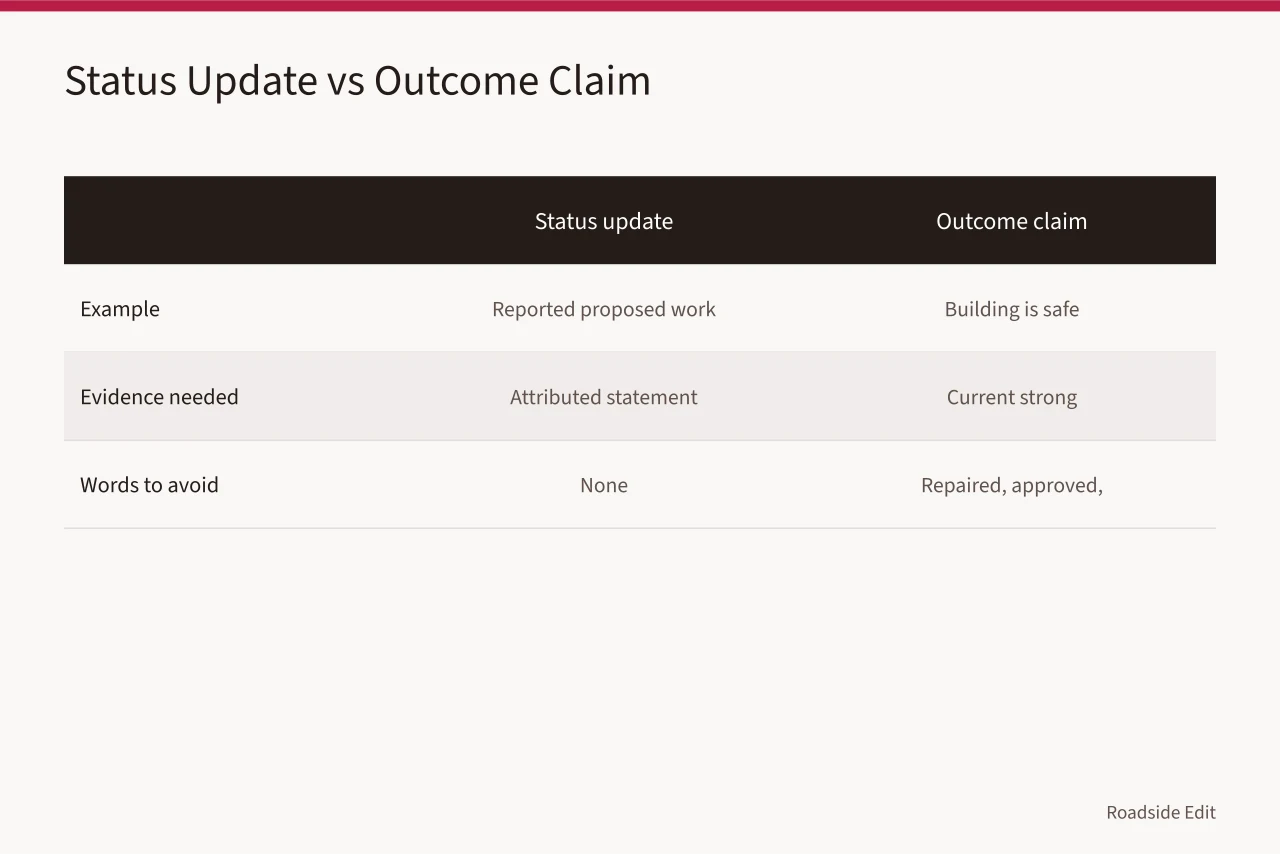
Public statements should explain stage, source, and limit. "A project representative reported a proposed exterior work package" is a status update, while "The building is safe and ready" is an outcome claim that requires much stronger, current evidence.
Paid placements follow the same rule. A sponsor can describe a confirmed offer, hour, opening, or project statement, but keep it attributed and no broader than its source.
Avoid words that silently convert a plan into an outcome: repaired, approved, protected, compliant, accessible, completed, restored, and safe. Use them only when a current source supports the exact result and the article identifies that source.
Mistake 5: Hiding uncertainty in the budget
A number without its scope is usually a misunderstanding waiting to happen. Keep source date, inclusions, exclusions, decision purpose, and revision trigger beside every figure. Separate defined work, review allowances, contingency, and completed invoices. A contingency is a planning device, not a diagnosis.
If the scope is not defined, say so. An honest budget note can identify the next question without assigning a speculative total. This is better for readers and for prospective advertisers who need to know whether a number refers to their service, a proposal, or an entire property.
Mistake 6: Overwriting the trail
Project knowledge changes. That is normal. The mistake is silently replacing an old statement when a newer record changes the story. Preserve the original, add the new source and date, identify what changed, and update the public copy. A correction log protects both the publication and the responsible project team.
Use a small claims register for content: exact sentence, source record, source date, editor, published date, and correction date. It makes it possible to identify an unsupported claim before it reaches a CMS and to correct a claim without inventing a new explanation.
Mistake 7: Asking a writer or visitor to fill a specialist role
An editor can compare documents, attribute a statement, and identify a gap. An editor cannot determine a building's structural condition, materials, fire safety, access compliance, or site hazard from a photograph or a casual visit. Record the observation, respect the site's access rules, and refer the question. That boundary is good journalism and good project discipline.
Mistake 8: Confusing preservation context with project authority
Historic roadside places tell powerful stories. Writers find a preservation brief, archive image, museum mention, or community-history page and assume it authorizes a treatment.
It does not; such sources explain why a building, sign, route, or setting matters. They generally don't decide ownership, permissions, local code, or materials, and don't settle present condition or whether a proposed design is appropriate.
Keep context and authority in separate folders. Context tells the reader why the subject is interesting. Authority tells the team who can confirm a current project claim. If those folders are mixed, a well-researched historical article can accidentally make a strong current assertion with no supporting source.
Mistake 9: Using the same story angle for every article
A pillar guide, checklist, and question guide need distinct jobs. A budget note, warning-signs article, and records guide also need distinct jobs, and none of them should repeat material with a new title.
The pillar explains the overall prevention system, the checklist sequences checks, the questions article spots decisions needing evidence, and the budget article separates financial records. The warning-signs article catches pre-release failures, and the records article explains trail preservation.
This separation helps readers choose the right piece and helps a publication avoid near-duplicate content. It also makes the site more useful to potential contributors or advertisers, because each page has a defined editorial purpose instead of competing for the same vague query.
Mistake 10: Treating publication as the end of review
An article can become stale even if every sentence was accurate on publishing day. The owner changes, a proposed date slips, a new scope is announced, or a local source changes. Add a review date to each article. Recheck time-sensitive claims before scheduled release, after a material project update, and before accepting a later sponsored addition.
The review should be surgical. Confirm the source, update only the sentence affected, add the correction date, and retain the original record internally. Do not rewrite history or make the article sound more certain because time has passed. A visible, modest correction is more trustworthy than a polished but unsupported narrative.
The National Archives records-management guide supports preserving source records and changes. The EPA RRP work-practices page describes the program practices it covers, not a site finding. The FTC endorsement guidance supports clear treatment of paid relationships. Together, they support a simple editorial rule: keep records, state limits, and attribute claims.
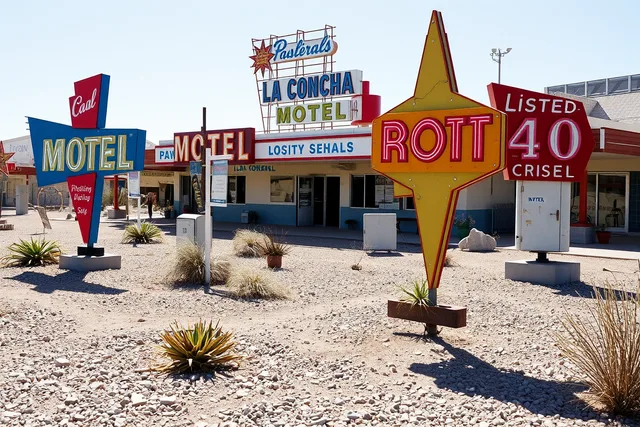
The image is illustrative only and does not document a separate property's condition, ownership, work, or safety status.
Build a simple prevention routine
Before publishing, run five checks: Does each important claim have a current source; does the title describe a real stage, not a promise; does the budget label its scope?
Does the article separate observation from conclusion; does the image caption describe the actual image and credit its source? If any answer is no, narrow the copy or ask for the missing record.
This routine does not make a renovation simple. It makes the public account of the renovation more accurate, which is the foundation for credible long-term coverage.
Common questions
Can an old photo prove that a roadside building needs renovation?
No. It can document an earlier appearance. Current condition and project need require current, appropriate evidence.
Is a project estimate the same as an approved budget?
No. An estimate, approval, invoice, and contingency serve different purposes and should be labeled separately.
What should an article say when information is missing?
State the confirmed source and its limit, then identify the question that remains open without guessing at the answer.
In this guide
- Roadside renovation mistake prevention checklist for newsroomsRoadside renovation mistakes checklist for 2027: catch unsupported claims, vague scopes, missing records, unclear sponsorships, and premature project updates.
- Roadside renovation mistake prevention questions to ask before you fileAsk these 2027 roadside renovation mistake-prevention questions about project scope, access, records, evidence, status, and public claims before publishing.
- Before you publish roadside renovation budget notes, fix these six mistakesAvoid roadside renovation budget mistakes in 2027 by separating scopes, requests, proposals, invoices, contingencies, source dates, and public financial claims.
- Roadside renovation mistake prevention records: what to keep and whyRoadside renovation mistake prevention records catch a small survey assumption before it hardens into a published claim about a property boundary line.