Guides
Part of How a roadside renovation planning workflow keeps budgets and approvals honest
How to build roadside renovation planning records that separate claims from facts
Sort roadside renovation records into five folders, attach a source card to every material claim, and keep a correction trail that shows what changed.
A roadside file that mixes a 1958 postcard, a Tuesday field note, and a redevelopment sketch is not a record. It is a pile. The fix is not more discipline. It is five folders with fixed meanings, so a reader can tell a claim from a fact at a glance.
What to take away
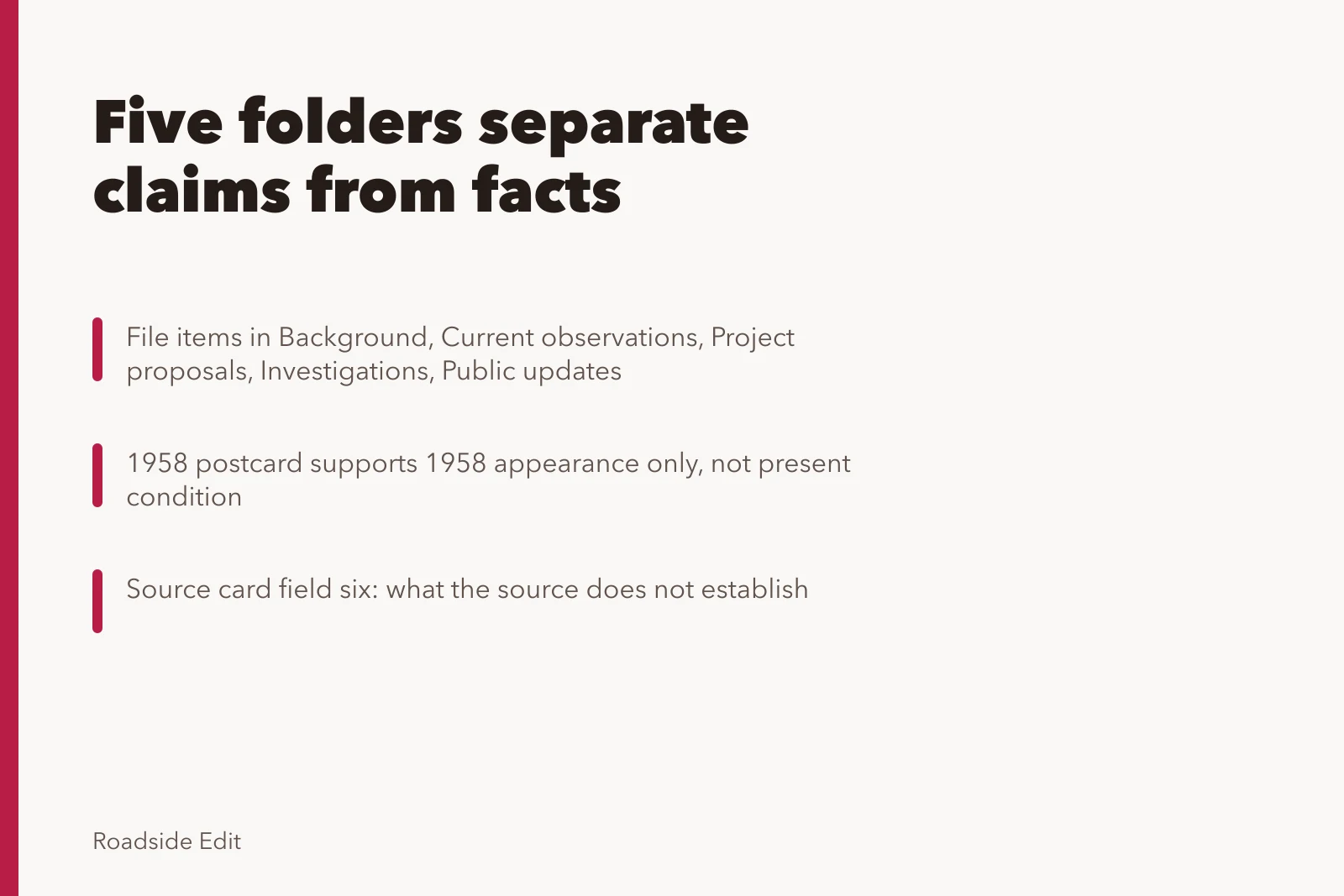
- File every item in one of five folders: Background, Current observations, Project proposals, Investigations, Public updates.
- Each folder supports one kind of statement and nothing else. A postcard supports past appearance, never present condition.
- Attach a source card to any claim about ownership, condition, approvals, funding, or historic status.
- Keep the old wording when a fact changes. Note the new source and date beside it.
- Give every open question a named internal owner and a due date.
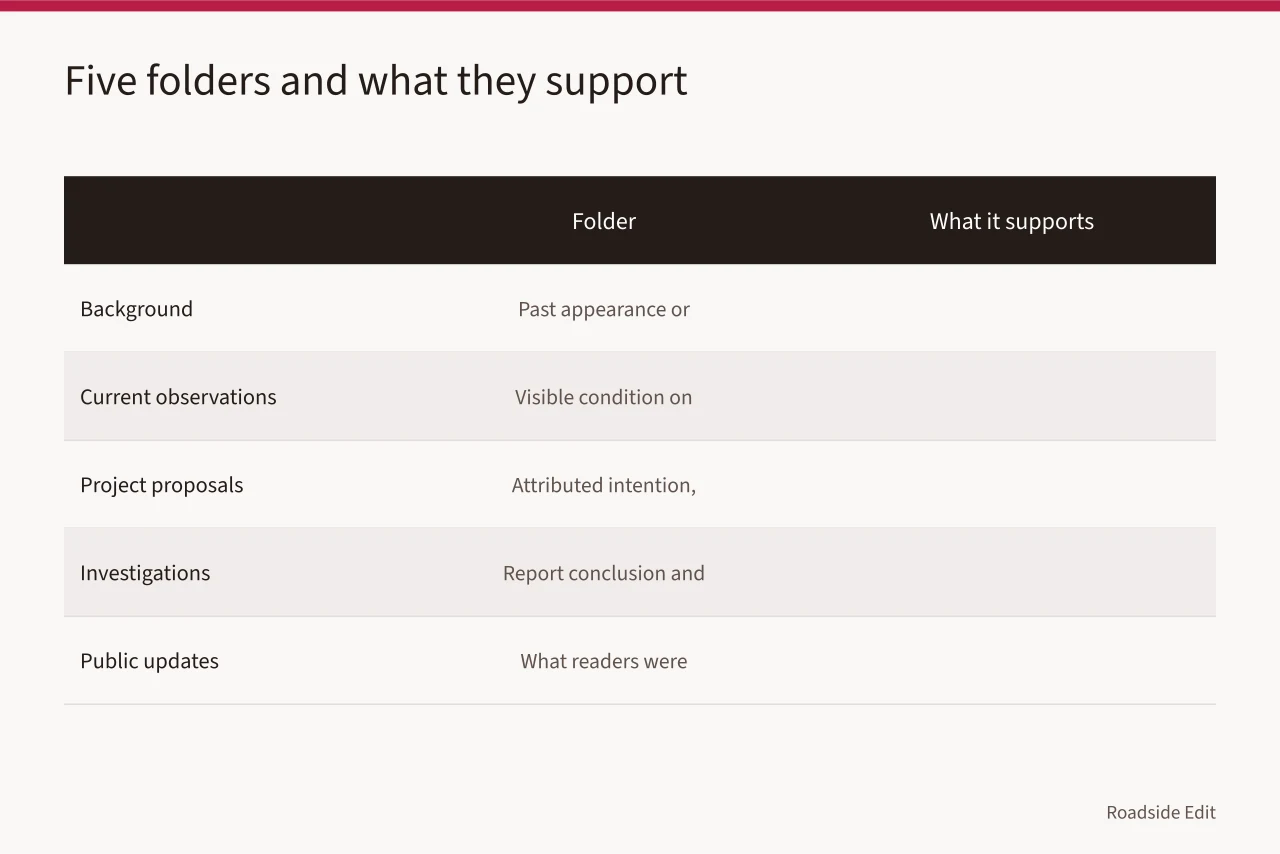
The five folders and what each can support
The folder decides the sentence. If a claim will not fit the folder it came from, the claim is wrong, not the folder.
EPA's site-assessment quality-assurance guidance separates background information, field activities, and investigation information when a site assessment is planned. Read EPA's site-assessment guidance. It is not a finding about your property. It is the argument for keeping context and method attached to each item instead of flattening everything into one fact file.
Worked example: the neon fascia claim
A draft page said the 1954 canopy fascia "retains its original neon." The file held three items. A 1958 postcard showed the sign lit. A 2026 photograph showed the empty channel letters. An owner email said he planned to "put the neon back."
Filed correctly, none of them supports that sentence. The postcard is Background and speaks only to 1958. The photograph is a Current observation and shows an empty raceway on the day it was taken. The email is a Project proposal, a stated intention.
The fix was to rewrite the sentence as three: what the postcard shows, what the 2026 photograph shows, and what the owner proposes. The replacement then needed a real source, so the file was sent for a tube-diameter and transformer survey.
That survey is an Investigation, and it can support only what its report concludes.
The same split applies to enamel. A porcelain-enamel station sign and a 1960s plastic-faced box sign photograph alike but age differently, and a repaint over original enamel destroys the evidence a materials report would have used. If the record does not say which surface was photographed, the photograph cannot carry the claim.
The source card, seven fields
One card per material claim. Short is fine; vague is not.
- Title of the publication or record.
- Author or issuing body.
- Date of the source, and the date you checked it.
- Direct location: page, plate, frame, or call number.
- The exact wording or visible detail the source supports.
- What the source does not establish.
- The folder it is filed in.
Field six is the one people skip, and it is the one that prevents a postcard from becoming a condition report. The National Archives' records-management overview describes keeping records organized and usable over time. A source card is that principle applied to a single sentence.
The National Archives also explains how primary sources work. A primary source can be direct evidence for one question without answering later ones. A dated photograph can support what was visible then. It cannot establish present occupancy, access, or the outcome of a later renovation.
Paid and submitted material
Keep paid submissions in their own disclosed record. The Federal Trade Commission's endorsement guidance covers material connections that shape how a reader weighs a recommendation. A sponsor's project update can be useful. Attribute it and file it under Project proposals, where it stays an intention rather than a finding.
Open questions need an owner and a date
Every unresolved item gets a named internal owner: a project contact, editor, or researcher. The record states who will request the next document and by what date. This assigns no technical responsibility. It stops a question from sitting on the page because nobody knows who should answer it.
When a fact changes, do not overwrite the old text. Add the new source and date, say what changed, and keep the prior wording in the file. A correction trail that shows its own history is the difference between a record and a rewrite.
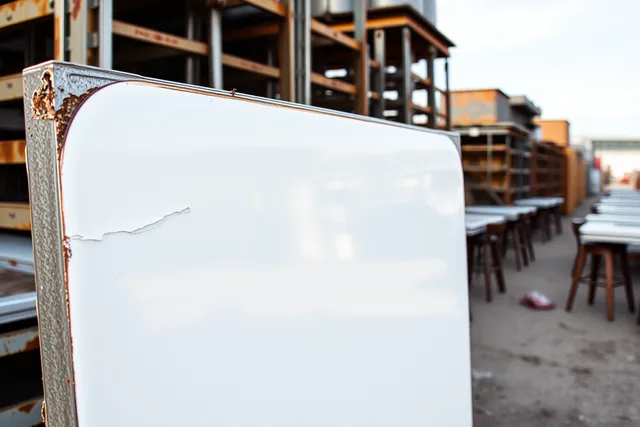
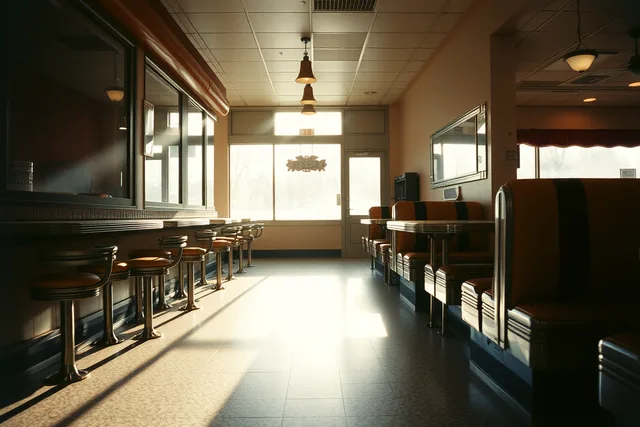
The image is illustrative only and does not serve as a project record for another location.
Common questions
Should every file be made public?
No. Publish only what the owner, the source, and the applicable rules allow. The internal folders can be complete while the public page stays narrow.
How long should a source card be?
Long enough to show what the source supports and what it does not. Seven short fields beat a bookmark with no date on it.
Can a media image be used as a property record?
Only if it depicts the property and its source, date, and permission are clear. Otherwise label it illustrative, as above, and keep it out of the Current observations folder.