Guides
How a roadside renovation planning workflow keeps budgets and approvals honest
Use a clear roadside renovation planning workflow in 2027 to separate evidence, options, budgets, approvals, records, and truthful public updates.
A roadside renovation gets hard when every question is one. A former motel can need weather protection, a market study, a current-condition review.
It can also need an access plan, a financing strategy, a public explanation. None of those steps proves the others, but planning works best when it shows the next decision, the evidence that will inform it, and what is outside the record.
This workflow is for owners, local organizations, and editors describing existing roadside properties in the United States. It does not determine permits, code compliance, environmental condition, property rights, or construction safety for a particular location. Those decisions belong with the responsible owner, agency, and qualified professionals.
What to take away
- Start with a decision question, not a promise to renovate everything.
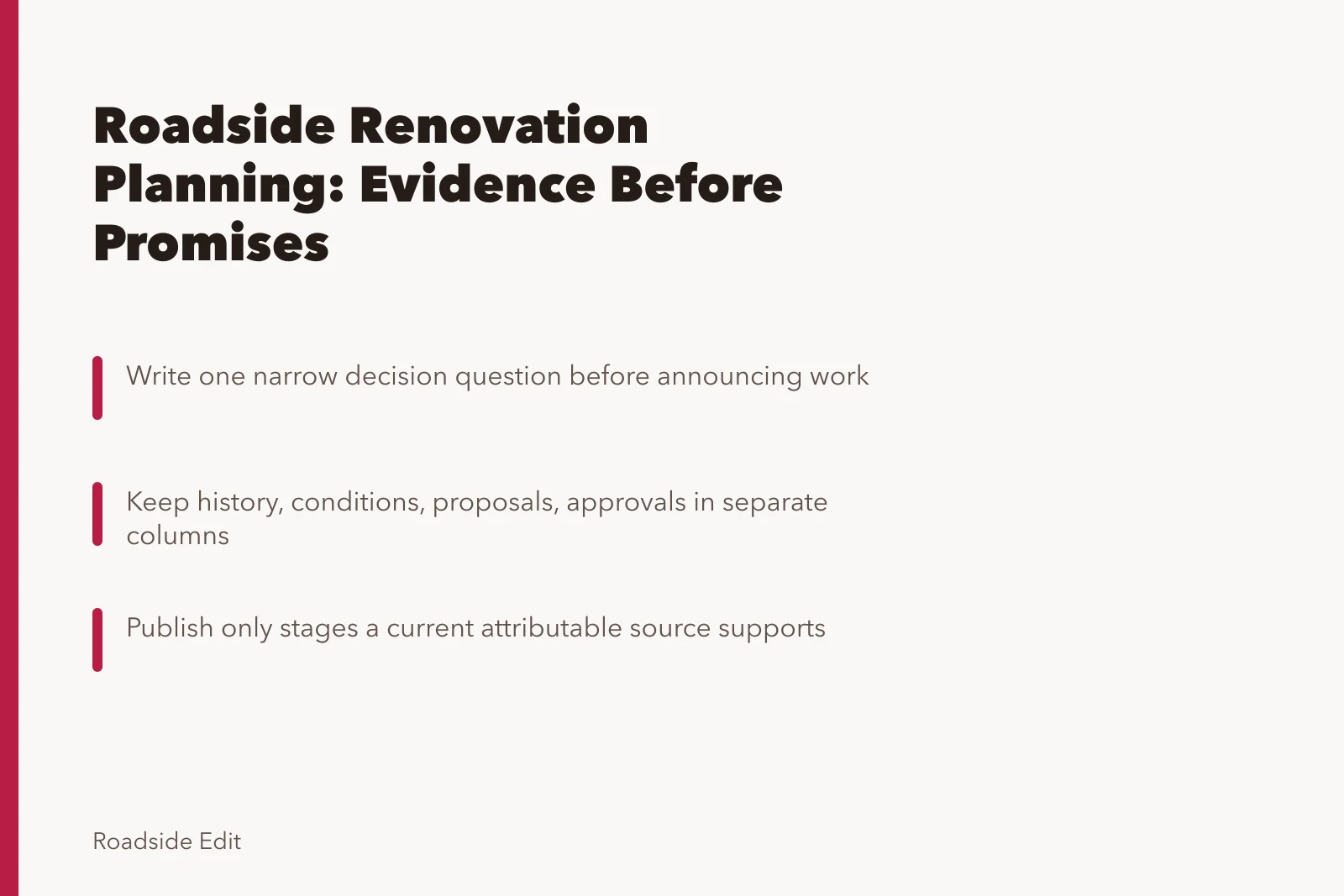
- Keep history, visible conditions, proposed use, approvals, and completed work in separate columns.
- Build a short sequence of evidence, scope, option testing, budget planning, and recordkeeping.
- Publish only the project stage a current, attributable source supports.
- Treat a sponsored description as attributed information, never as proof of approval or completion.
Frame the planning question
Write one sentence that identifies the decision a team needs to make. Good questions are narrow: Should the property be stabilized while reuse options are studied? Which portions need a current-condition review? Is a food-service concept plausible enough to investigate? Does a proposed change need a code or access-path review before it is announced?
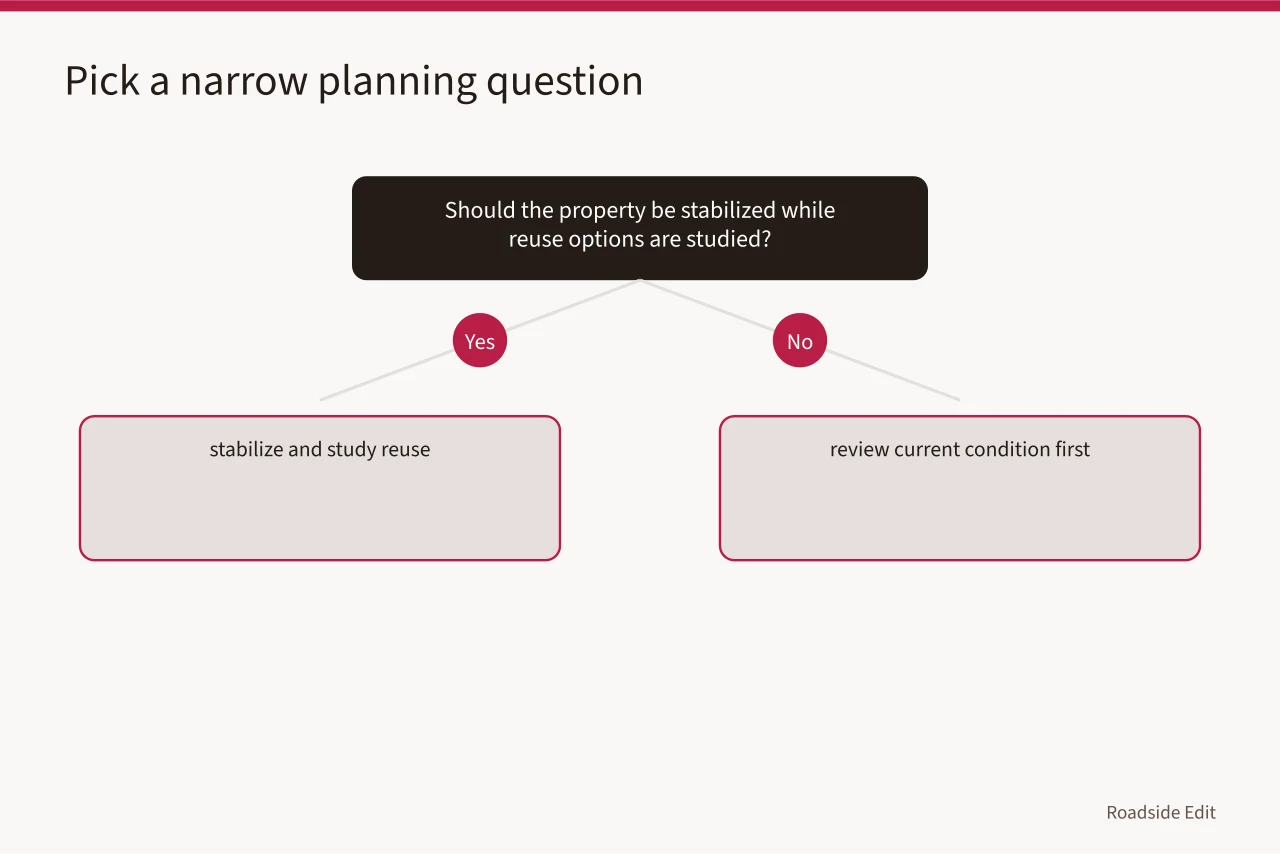
Avoid opening with a result. "Restore the landmark diner" is a hope, not a usable planning question. "Identify the records, observed conditions, and feasibility questions needed before a reuse concept is selected" gives the team a task it can complete and document.
| Planning question | Useful first output | Do not imply |
|---|---|---|
| What is known about the site? | Source-indexed property record | A full assessment is complete |
| What needs attention first? | Triage list with limits | A repair scope has been approved |
| Which reuse ideas deserve study? | Scenario matrix | A tenant or use is confirmed |
| What may the project cost? | Phase-based planning range | A final construction price |
Build an evidence map before a concept
Create a folder that preserves the source, date, and limitation of each item. Useful entries include authorized exterior photographs, historic images, maps, publicly available notices, prior reports supplied by the owner, utility information where available, and notes from permitted access. Each item should identify whether it describes a past condition, a present observation, or a proposed future action.
An old postcard can establish that a canopy once existed. It cannot establish that the canopy is safe. A developer presentation can explain an aspiration. It cannot establish a signed lease, permit, or funding award. This distinction makes an article more credible because readers can see what the source actually proves.
Put work in an order that can change
Planning need not follow a straight line, but it needs handoffs. EPA's land-revitalization toolkit lays out a broad process: reuse planning, pre-development, development, operations.
See EPA's land-revitalization project stages. It is a general framework, not a prescription or approval for a single roadside property, and its value is making the current stage explicit.
Use a working sequence like this:
- Define the decision and the property boundary.
- Assemble records and label evidence gaps.
- Identify current-condition, access, environmental, ownership, and use questions that need the right review.
- Compare a small number of reuse or stabilization scenarios.
- Break the preferred direction into planning components and stop-work triggers.
- Publish an update that names the stage and source without overstating it.
The order can loop. A new title record, field observation, funding condition, or local requirement may send the team back to an earlier question. Record the change rather than rewriting the story as if it had always been known.
Separate condition work from reuse ideas
Condition work asks what exists. Reuse work asks what could happen. Keeping them apart prevents an attractive use from being presented as an answer to unresolved building questions.
For example, a team might observe peeling paint in a dated exterior image, document a closed service bay, and note the owner discussed retail reuse. Those are three different facts.
The article should not infer structural soundness, environmental status, public access, or retail approval. The next step is to define an appropriately qualified review, not choose fixtures or announce an opening date.
| Work stream | Main question | Evidence that belongs there |
|---|---|---|
| Existing conditions | What can be documented now? | Dated records, authorized observations, relevant reports |
| Reuse concept | What role could the property play? | Space needs, operating assumptions, market context |
| Compliance path | What review may be needed? | Applicable agency or professional guidance |
| Cost planning | What must be funded by phase? | Defined components, estimates with scope and date |
| Public communication | What can readers safely rely on? | Attributed, current project information |
Scope the next deliverable
A planning scope should state the exact output, what it covers, what it excludes, who supplies records, who decides, and what would stop the work. "Assess the property" is too vague. "Organize the known records and prepare a question list for a current-condition review of the exterior and site access" is bounded enough to manage.
Keep the scope proportional to the decision. A team deciding whether to seek a reuse partner may need a record inventory and scenario worksheet. A team preparing a construction package will need substantially more defined inputs. Do not present preliminary planning as construction documentation.
Compare scenarios without declaring a winner too early
Use a short table to make tradeoffs visible. Possible scenarios can include hold and stabilize, seasonal public use, small retail, exhibit space, office or studio use, or demolition after a documented review. The purpose is not to make a recommendation from a distance. It is to reveal the next evidence each path needs.
| Scenario | Next question | Potential constraint |
|---|---|---|
| Hold and stabilize | What needs prompt weather protection? | Access, security, ownership responsibility |
| Visitor use | Can the site support operations and access? | Staffing, circulation, local review |
| Retail or food use | What systems and approvals must be examined? | Utilities, sanitation, parking, permitted use |
| Interpretive display | What can be documented accurately? | Copyright, object care, visitor safety |
Do not convert a scenario list into a list of future tenants, opening dates, or approvals. Those facts require their own current sources.
Plan money by component, not by a headline number
An early budget should identify what a figure includes. Records research, secure access, temporary protection, testing, design, permit preparation, construction, and operations are different components. A grant announcement may apply to one component only. A vendor quote may cover a narrower task than readers assume.
For each number, preserve the source date, author, scope, exclusions, tax treatment, contingency assumption, and expiration if known. Say "planning estimate for a defined exterior repair package" rather than "the renovation will cost." A careful label makes revision possible when the scope changes.
Make public descriptions auditable
A responsible public update uses a source and a stage word: "records are being assembled," "a reuse concept is under review," "the owner has proposed," or "a permit record dated [date] states."
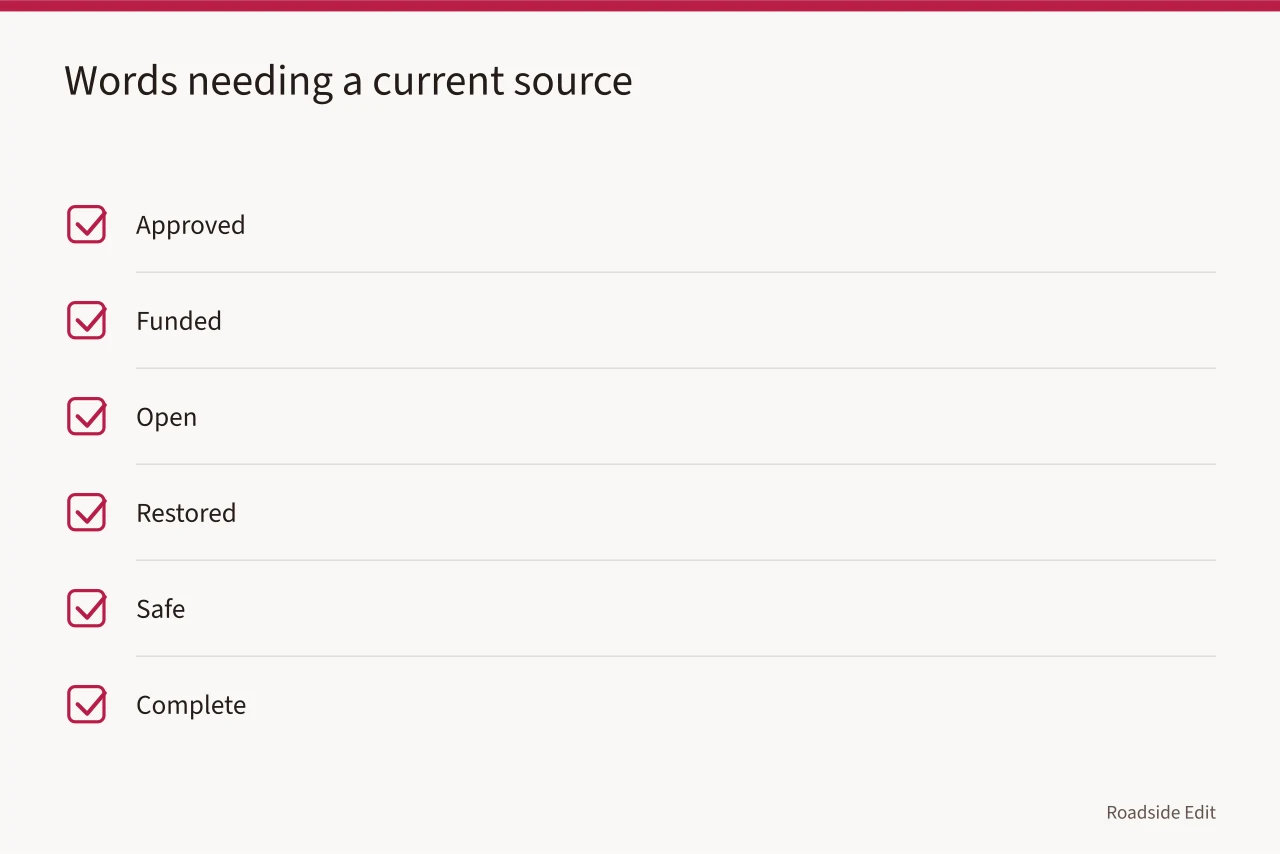
Avoid approved, funded, open, restored, or safe without a current source that directly supports the exact claim. Avoid complete too.
The same rule applies to paid placements. A business may provide a statement about a proposed opening or service. Attribute it, date it, and distinguish it from the property record. Payment does not change a proposal into an established fact.
The National Park Service presents the Secretary of the Interior's Standards for Rehabilitation as standards for rehabilitation of historic properties. They do not select a scope for a roadside project. They support a planning question about which features, proposed changes, and documentation are actually available before an article uses a treatment label.
The National Archives' records-management overview explains organizing records so they can be retrieved and used. Retain the source page, date, scope, and exact public sentence it supports. When a concept changes, that file allows the editor to correct the affected claim without presenting an old planning image as a current project fact.
If a business pays for placement or supplies project information, state the relationship in plain language. The Federal Trade Commission's endorsement guidance addresses material connections that can affect how readers evaluate an endorsement. A disclosure is not evidence of a project's status; it lets readers identify supplied information.
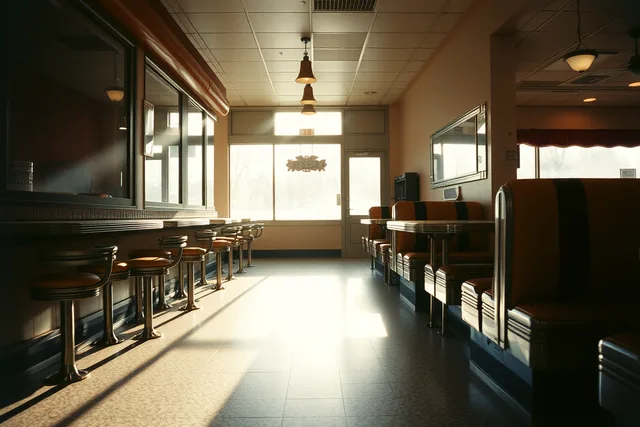
The image is illustrative only and does not establish the condition, ownership, or status of another site.
Keep a decision log
A short decision log prevents silent drift. For each entry, record the question, source, date, limit, responsible party, next action, and revision trigger. A trigger might be a new report, access restriction, funding decision, permit notice, or material change in condition.
The log can be simple. What matters is that a claim has a trail back to its source and that a later fact does not get inserted into an earlier stage without context. This is particularly useful for a long-running roadside project, where a public article may be revised several times before work begins.
Know when editorial work must pause
Pause when a content request turns into a safety, access, environmental, property-right, or technical question. Do not enter a closed building, climb a sign, move material, or conduct an unapproved test to improve a story. Describe the evidence boundary, retain the source, and refer the issue to the responsible party.
Editorial precision is not timid. It gives prospective visitors, collaborators, advertisers, and local partners a record they can trust. A smaller true statement is more useful than a grand update that has to be corrected later.
Common questions
Is a reuse idea the same as a renovation plan?
No. A reuse idea is a scenario. A plan should identify its source, scope, stage, decision maker, and limitations.
Can a historic photograph prove present condition?
No. It can document an earlier appearance. Use current, property-specific evidence for current-condition claims.
Should a planning article include an opening date?
Only when a current, attributable source supports it. If the date depends on approvals, construction, or financing, identify it as a proposal or leave it out.
In this guide
- Roadside renovation planning checklist: scope the work before you collect anythingRoadside renovation planning checklist for 2027: organize site evidence, limits, review questions, and the next honest decision for a U.S. property.
- Roadside renovation planning questions to compare before you commission workCompare the key roadside renovation planning questions for 2027, from project scope and reuse ideas to access, approvals, budgets, and public claims.
- Roadside renovation planning: how to build a budget you can defendRoadside renovation budget planning in 2027 starts with a clear scope, dated assumptions, a cost baseline, and honest treatment of funding limits.
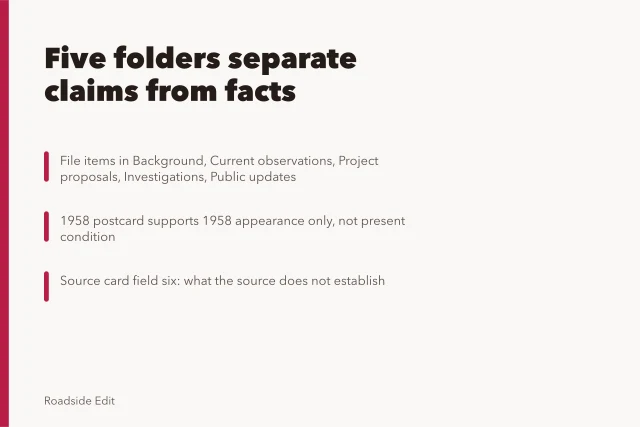
- How to build roadside renovation planning records that separate claims from factsSort roadside renovation records into five folders, attach a source card to every material claim, and keep a correction trail that shows what changed.