Costs
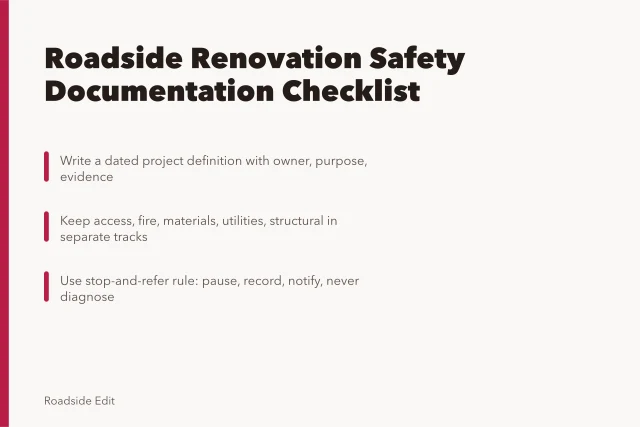
Part of Roadside renovation safety checklist: what to document before work starts
Roadside renovation safety budget notes: map compliance before you price it
Roadside renovation safety budget notes for 2027 separate permit research, compliance review, scoped work, and uncertain costs from public project claims.
Permit and compliance costs are easy to misstate because they are often discovered in stages. A project may first need a code review, then drawings, then an application, then inspection coordination, then a revision after an agency question. Calling all of that "permit fees" tells a reader very little.
This guide is a recordkeeping method for a roadside renovation article. It is not legal, engineering, code, or permitting advice. Local authorities decide their own requirements. The goal is to write about compliance-related spending without implying that an application has been approved, that a work scope meets every requirement, or that a preliminary allowance pays for every later step.
What to take away
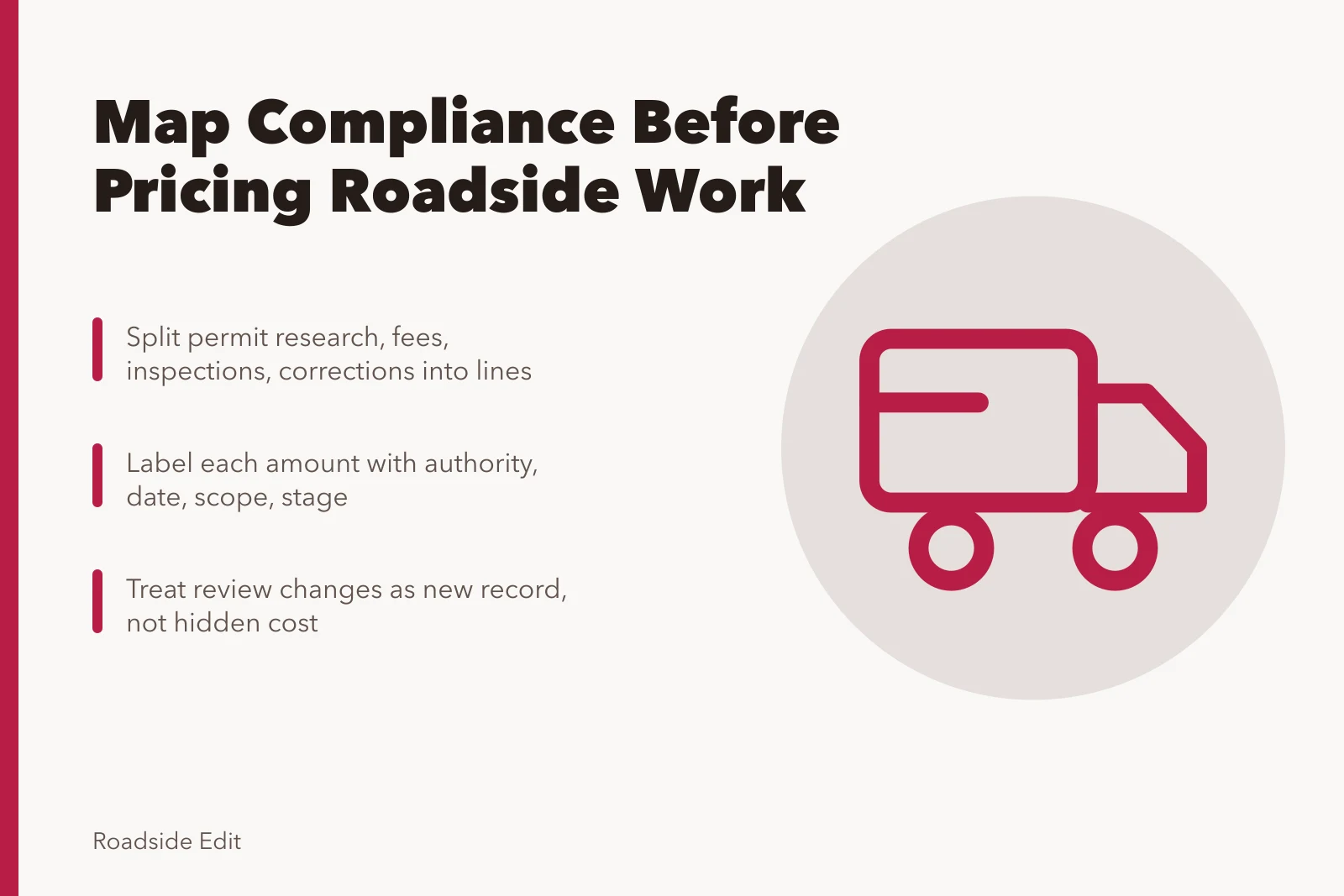
- Divide permit research, technical review, application fees, inspections, and corrective work into separate lines.
- Put the authority, date, scope, and project stage beside each amount.
- Do not call a code review an approval or a fee estimate a permit.
- Treat changes requested during review as a new record, not a hidden addition to the total.
Map the compliance path before pricing it
The first budget decision is not "How much are permits?" It is "Which question is this amount meant to answer?" A proposal for code research is different from an application fee. A fee receipt is different from inspection work. A correction requested after a review is different from the original design package.
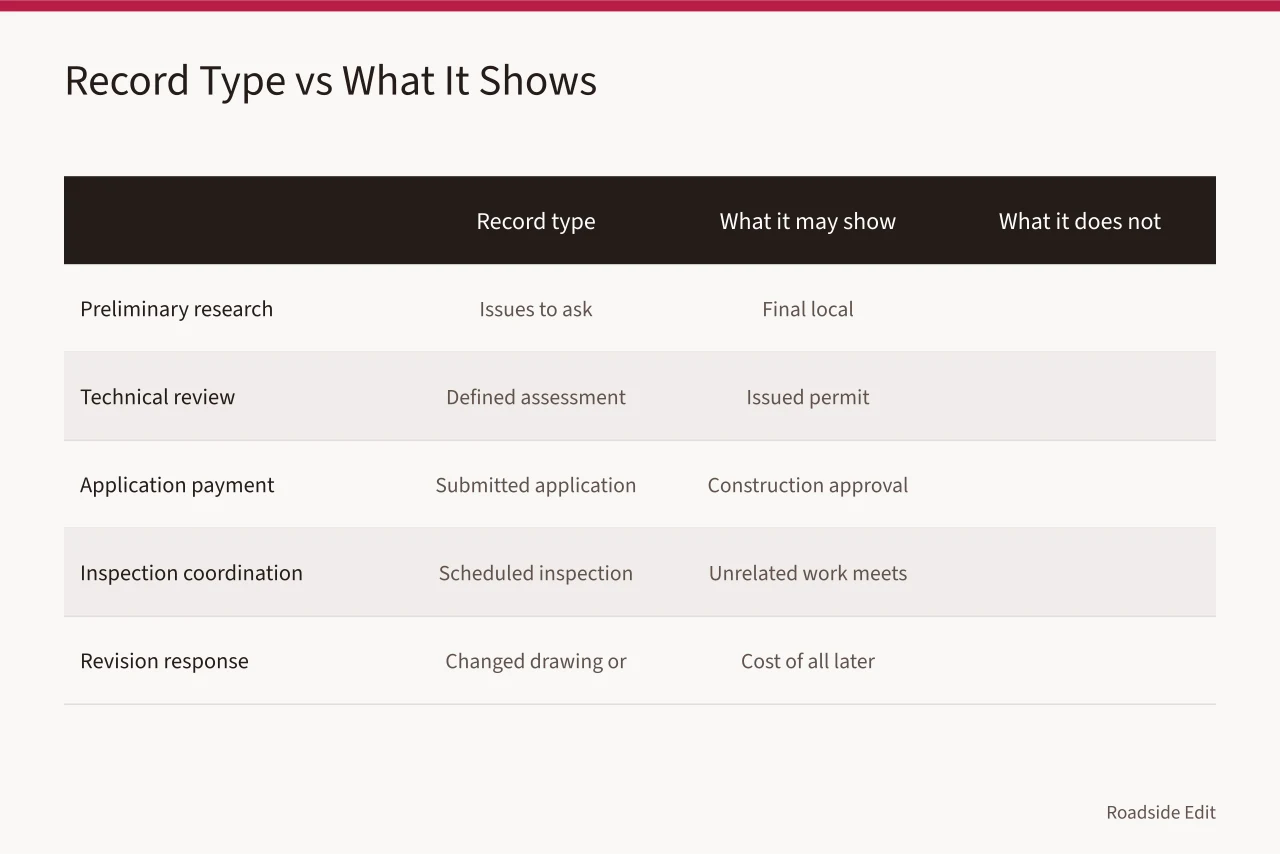
Start every line with an action: "Accessibility design review for the proposed entrance" is one, while "ADA compliance" is too broad for a budget note.
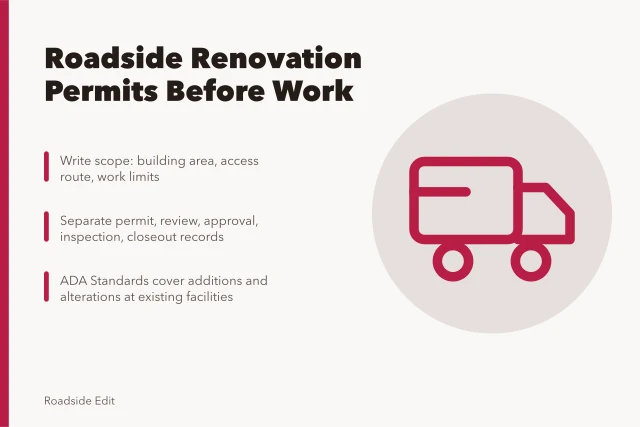
The 2010 ADA Standards for Accessible Design set federal design standards for covered situations. They do not tell a reader whether a particular roadside project is approved, or provide a local permit price. The link helps distinguish a standards question from a claim of completed compliance.
That distinction becomes especially useful when a place has an existing entrance, restrooms, parking, counter, sign, or change of use under discussion. An article can report that a design task considers a stated accessibility question. It should not say the property "is ADA compliant" unless a current, responsible source directly supports that conclusion.
Use budget entries that reveal their stage
Every compliance-related figure should have a label that tells readers what happened and what might still happen. A short form can prevent a misleading public total.
| Field | Example entry |
|---|
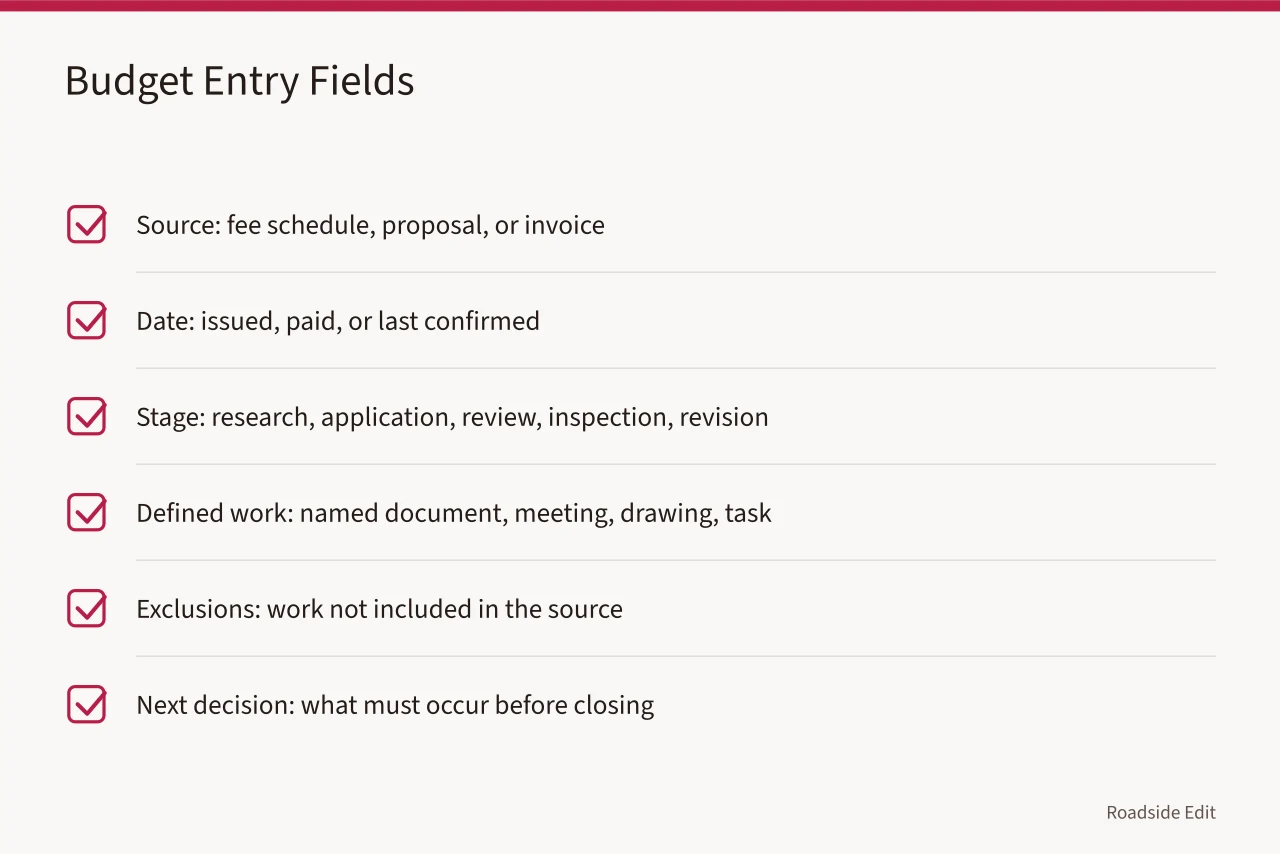
The GAO Cost Estimating and Assessment Guide explains that estimates need a stated purpose, scope, assumptions, data, methods, and updates. The guide covers government estimates rather than a specific roadside renovation. Its practical editorial lesson is that an amount has no stable meaning if its stage and assumptions are missing.
An owner may have a $4,000 allowance for drawings to discuss a project with the local building department. That is evidence for a defined drawing task, but not that the authority will accept the drawings.
It is also not evidence the permit fee is $4,000 or construction is ready to begin. Keep those statements separate in both the article and the budget file.
Keep hazard-specific duties from becoming generic claims
Some projects require review of a particular hazard or regulated material. The article should not guess which rules apply. Instead, it can explain the source and boundary of a documented question.
EPA's Renovation, Repair and Painting Program page describes requirements for certain renovation work that disturbs lead-based paint in covered pre-1978 homes and child-occupied facilities. A roadside commercial building is not automatically covered.
For a potentially covered project, the source supports careful wording. Cite the applicable property and work facts, then describe the documented review, rather than declare a broad lead-compliance outcome.
The same approach applies to construction safety. OSHA's construction standards page contains federal construction standards. It does not issue local building permits or set a project budget. When a source identifies a safety planning task, an article can describe that task and its source. It should not treat a permit line as proof that every construction duty has been satisfied.
Record agency questions and revisions plainly
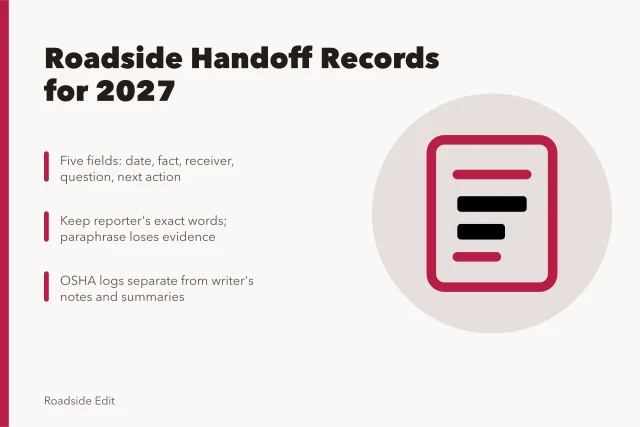
An agency question, plan-review comment, or request for additional information is part of the project record. It may lead to a new technical task, a corrected drawing, or a decision to change the work. Do not fold that cost into the original estimate without showing the reason.
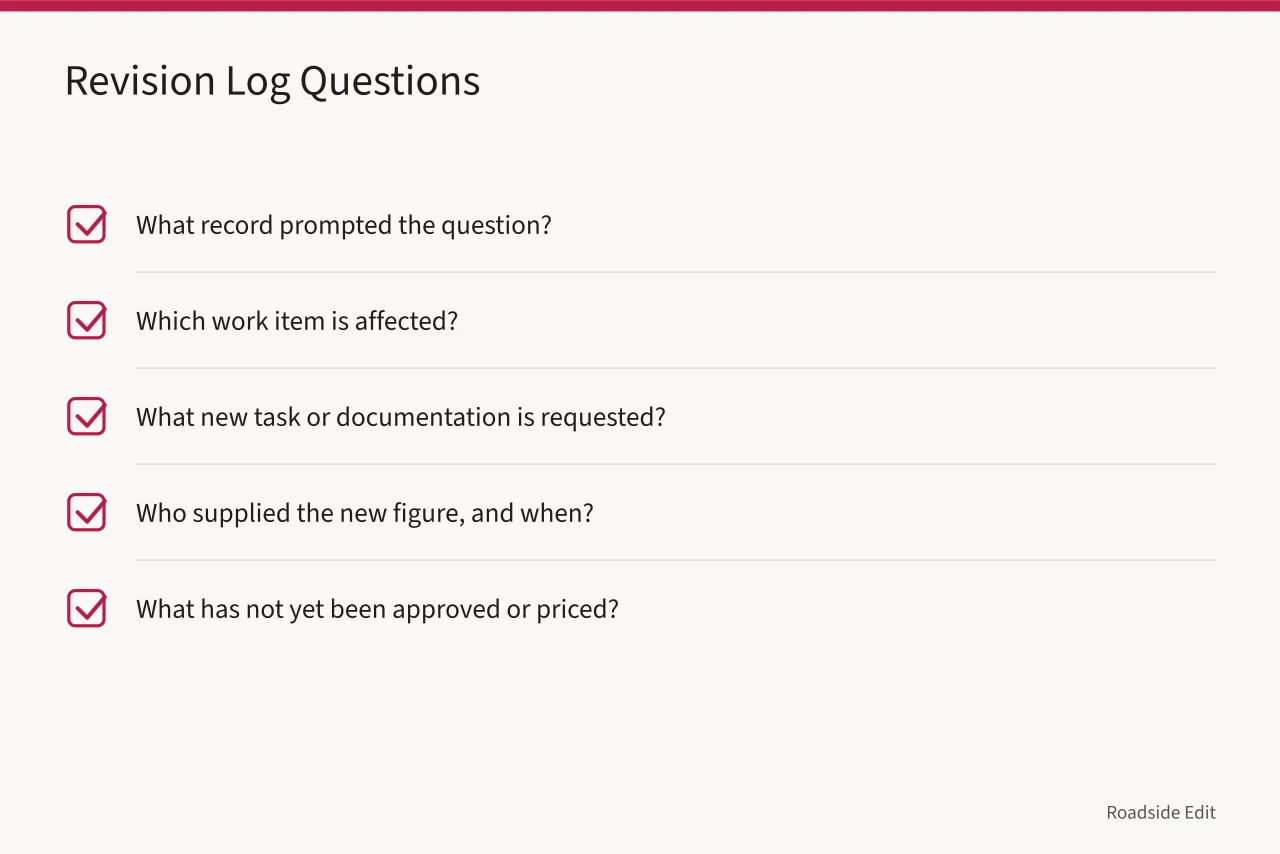
A concise public update can say: "The budget was updated after a review question added the stated documentation task."
It should not say the question means the project failed, that the response will be accepted, or that every future revision cost is known. Keep the record close to what the document says.
Protect public statements about readiness
The phrases "permitted," "approved," "safe," and "ready to build" carry more meaning than an early budget note can usually support. Editors should reserve them for clear, current records from the appropriate authority or responsible professional. If the article only has an application or proposal, say application or proposal.
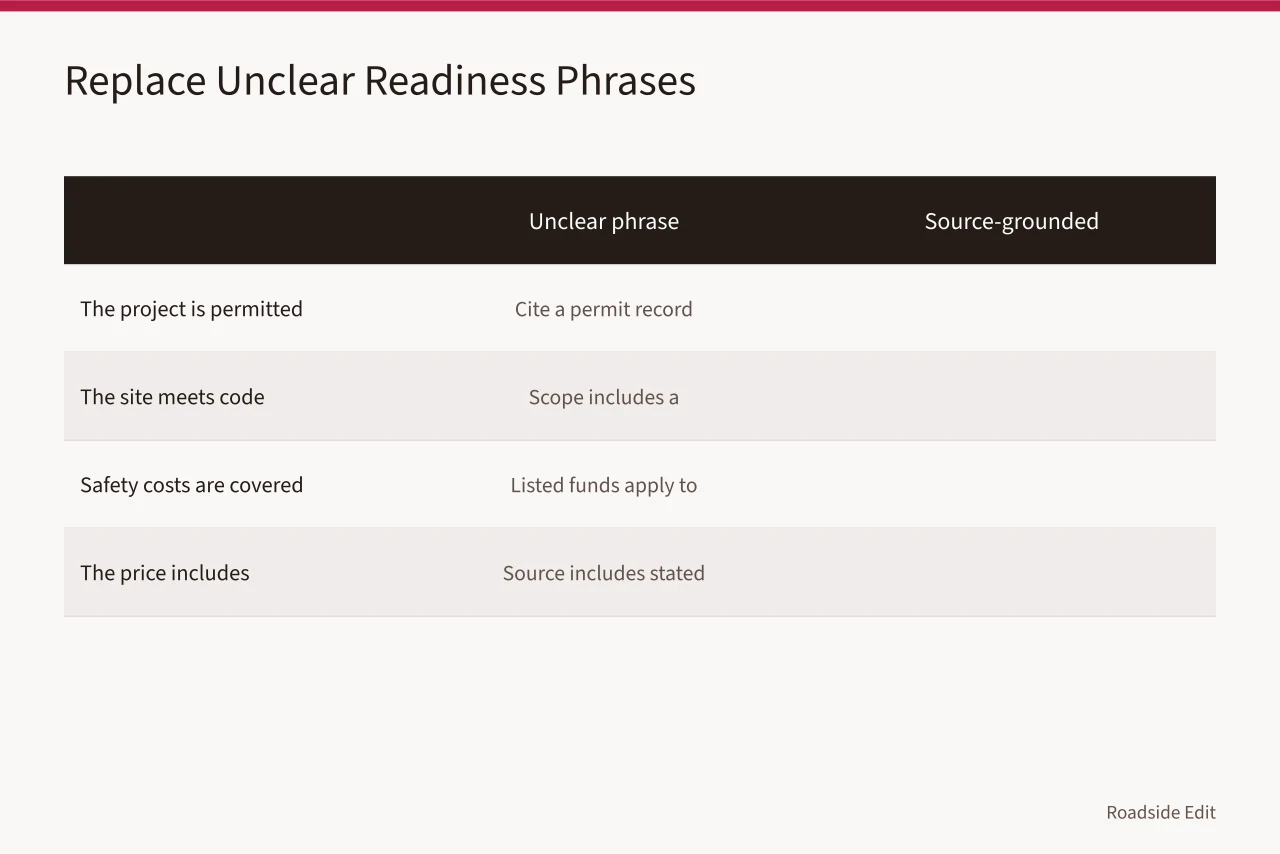
Use these replacements:
| Unclear phrase | Source-grounded alternative |
|---|---|
| "The project is permitted" | "The article cites a permit record dated [date] for the stated work." |
| "The site meets code" | "The scope includes a review of the stated code question." |
| "Safety costs are covered" | "The listed funds apply to the named planning or work item." |
| "The price includes compliance" | "The source includes the stated review or document, with listed exclusions." |
If a contractor, sponsor, or paid placement supplies a claim about a compliance service, make the relationship clear and attribute the statement. A paid source may be useful, but it is not independent confirmation. This keeps readers from treating a promotional description as an agency determination.
Prepublication check for permit budget notes
Before publishing, ask whether the article distinguishes the record stage from the result a reader may hope for.
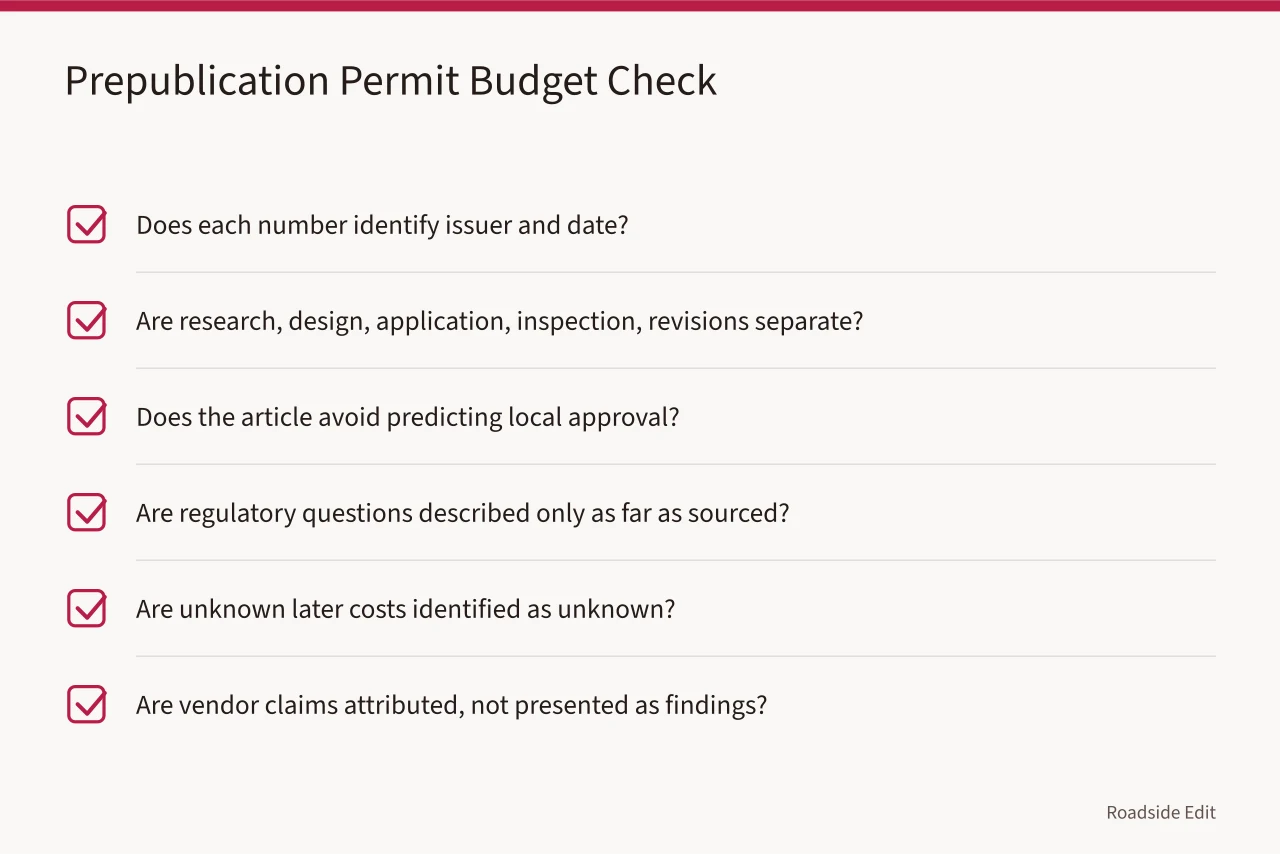
The best permit budget note does not imitate a final approval. It gives readers a clear trail from the stated question to the current document, expense, and next decision.
Common questions
Is a permit application fee the same as an approved permit?
No. A fee or receipt may document an application-related payment. It does not by itself show that construction approval has been issued.
Can a budget article say a building meets code?
Only if a current, responsible source supports that exact conclusion. A review allowance or consultant proposal is not the same thing.
What should be added after a plan-review question?
Add a dated revision entry that identifies the question, affected work, new task, source, and remaining unknowns.