Reviews
Part of Roadside renovation safety checklist: what to document before work starts
Roadside renovation safety questions to ask before any update
Ask the right 2027 roadside renovation safety questions about project scope, access, records, public claims, and specialist reviews before publishing updates.
The right compliance question is often more useful than a premature answer. A permit, an inspection, an accessibility question, and a safety rule may involve different agencies, project stages, and records. This guide helps readers describe the next question without claiming that a project has approval.
What to take away
- Identify the work before guessing which review could apply.
- Separate permits, inspections, accessibility, and construction safety questions.
- Publish only the stage supported by a current source.
What is the project actually doing?
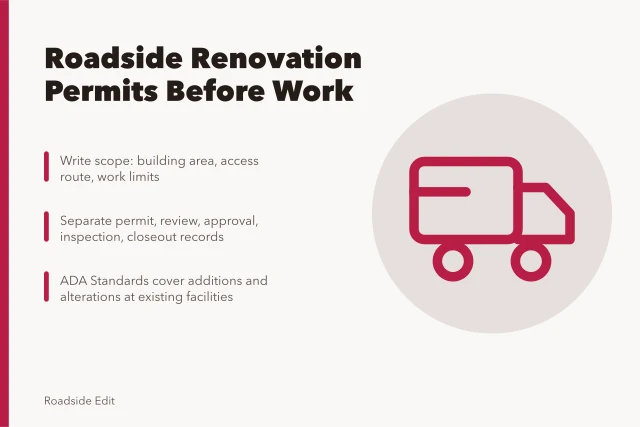
Start with the stated scope. Is the work limited to painting or repair? Does it add a door, alter a public route, disturb soil, replace utilities, change occupancy, or affect a building with historic status? A phrase such as "renovation work" is too broad to answer a compliance question on its own.
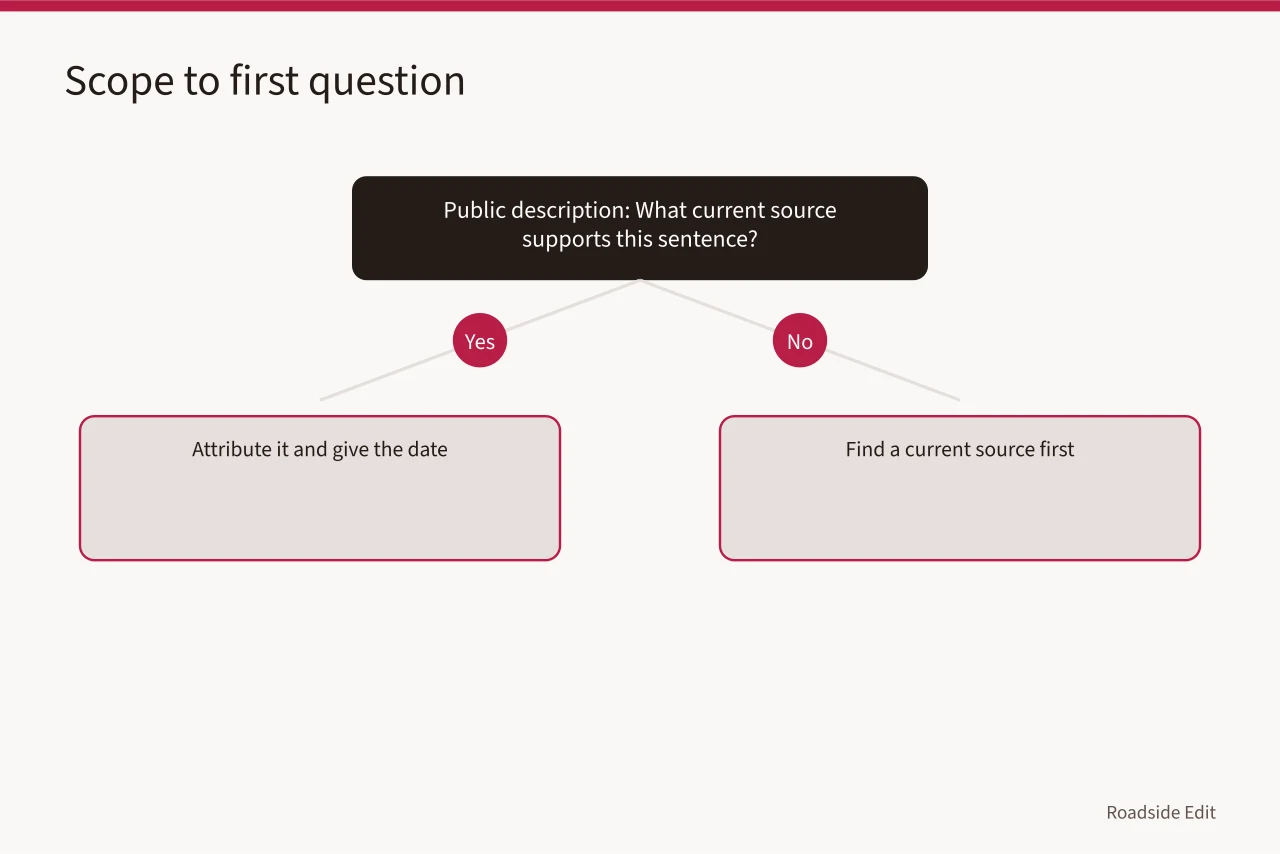
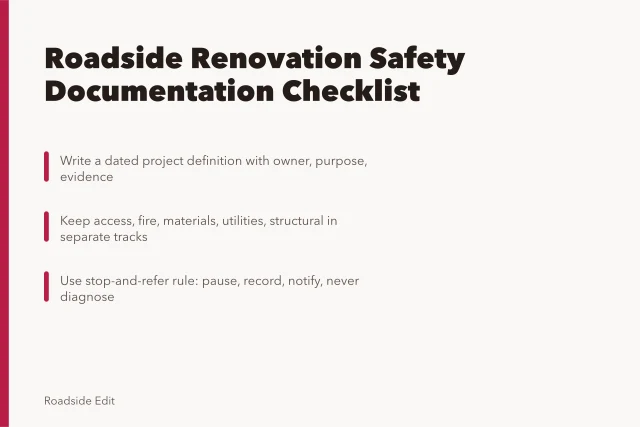
The article record should retain the source describing the scope and its date. If an owner has only announced an intention, call the work proposed. If a contractor has a signed scope, treat it as a different stage.
If an agency has issued a permit, name the permit and issuing authority instead of writing that the entire project is approved.
| Decision | First question | Useful next step |
|---|---|---|
| Public description | What current source supports this sentence? | Attribute it and give the date |
| Work scope | What exactly is being changed? | Record inclusions, exclusions, and location |
| Local permit | Which local office has authority over this work? | Check the local project record or permit office |
| Access | Could the change affect a public route or usable feature? | Refer it through the responsible process |
| Construction safety | Who controls the work site and its safety plan? | Route it to the responsible employer or contractor |
| Environmental review | Does the scope include a regulated discharge or federal action? | Identify the governing program before making a claim |
What should you ask about permits?
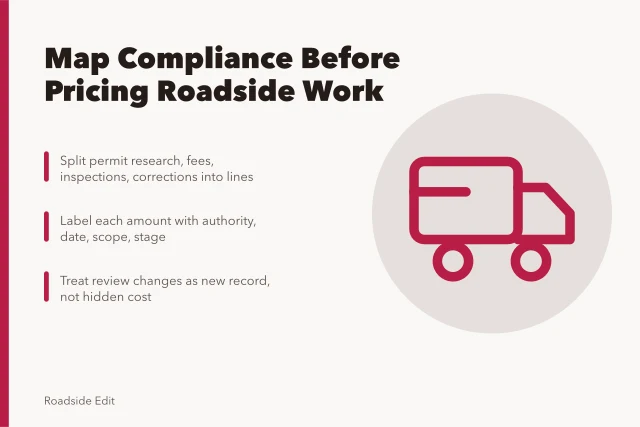
Local permit systems vary by state, county, city, and project type. A general article should not list a permit as required unless the relevant local authority or project record says so.
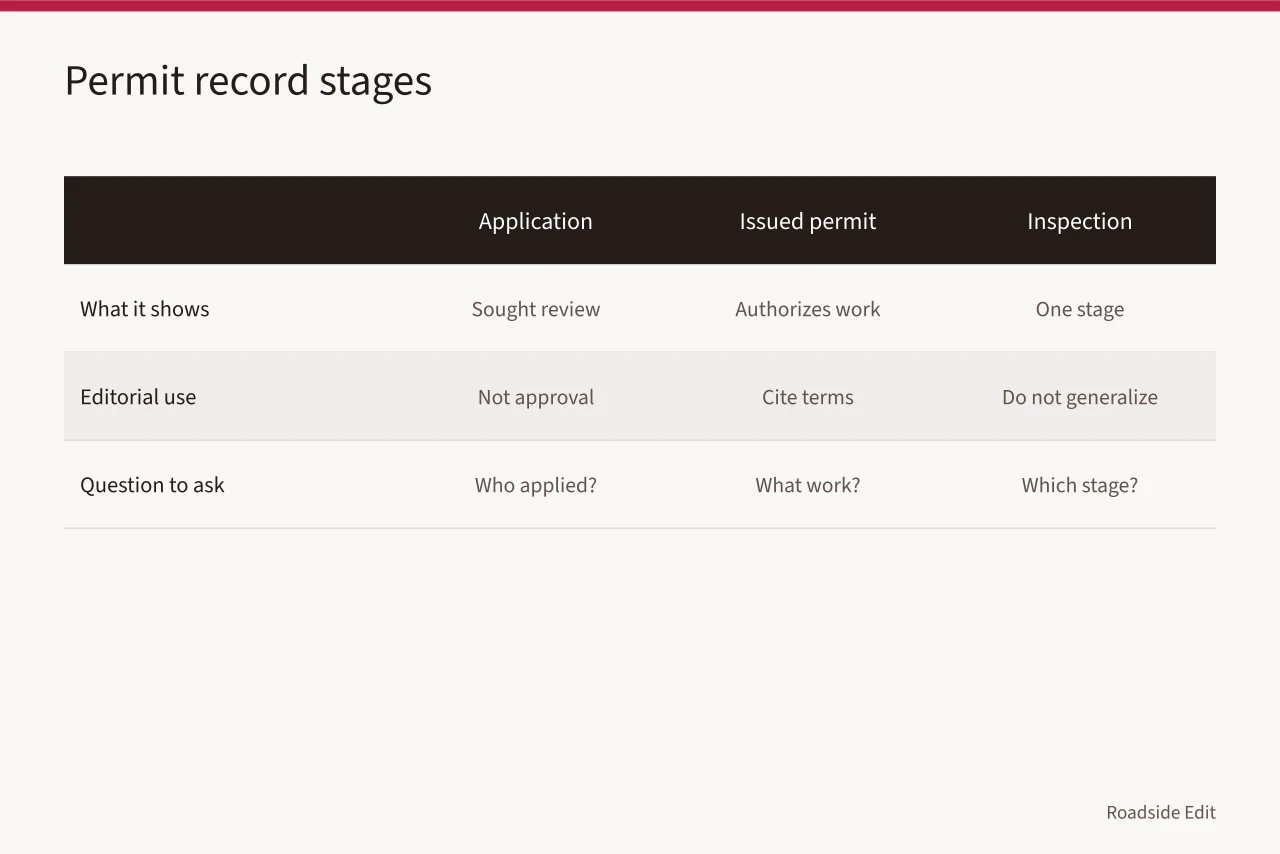
Ask who owns the property, where the work is located, what is being changed, and which local office has jurisdiction. Then ask whether the record identifies an application, issued permit, inspection, correction notice, or final approval.
Those words are not interchangeable. An application shows someone sought review. An issued permit authorizes work within its terms. An inspection may address a particular stage.
A final approval can have a narrower meaning than a general claim that the building is ready for every use. Keep the source language in the update and avoid adding a conclusion that the source does not state.
What should you ask about accessible use?
Changes to an entrance, restroom, parking area, counter, or route can raise accessibility questions. Other public-facing features can too.
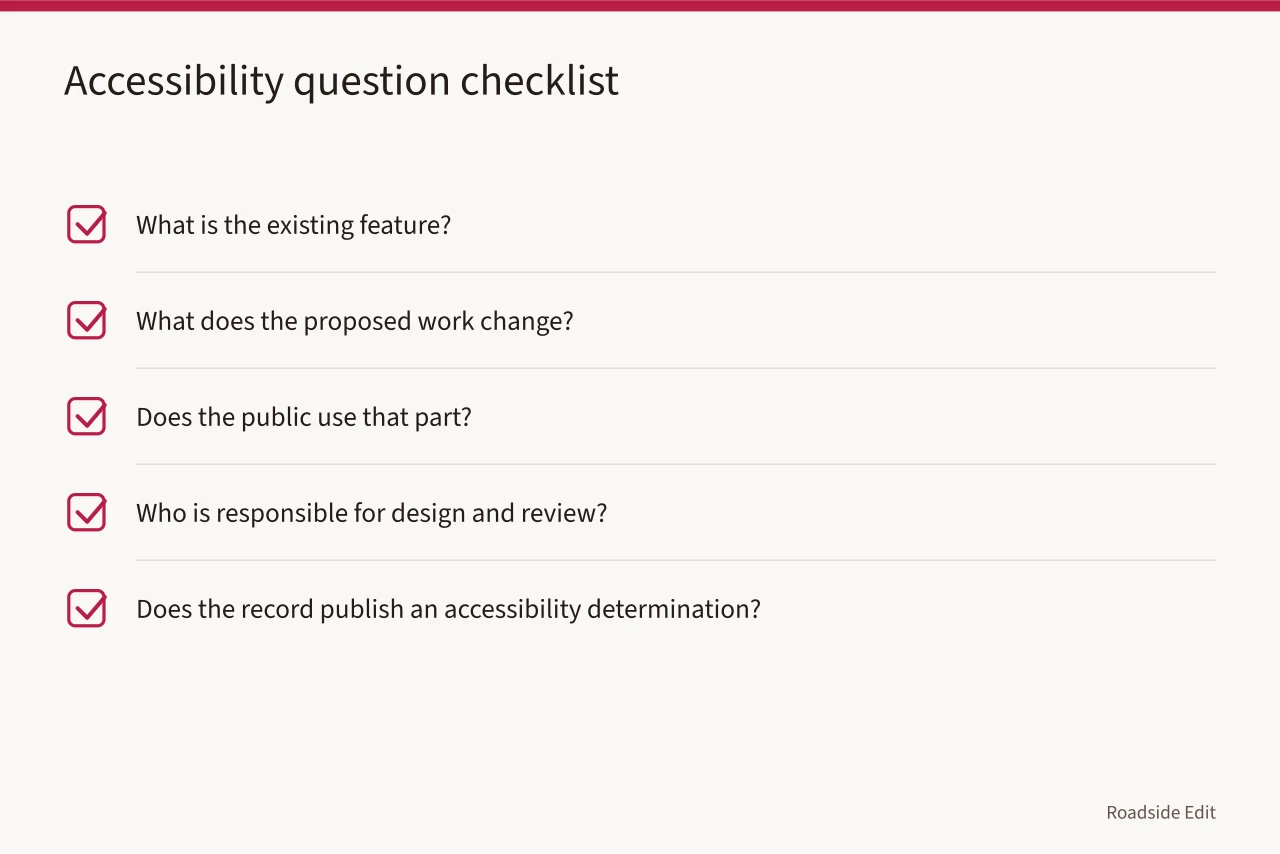
Ask what the existing feature is, what the proposed work changes, whether the public uses that part of the site, and who is responsible for design and review. Do not infer an access result from a rendering, fresh paint, or an announcement.
The U.S. Access Board explains an alteration is a change that affects or could affect a facility's usability. Accessibility requirements can apply in alteration contexts. Read the Uniform Federal Accessibility Standards introduction.
This federal source does not determine an individual private project's requirements. It supports treating a public-facing change as a question for proper review, not a design assumption.
An accurate article can state, "The available project update describes an entrance change but does not publish an accessibility determination." That sentence tells readers what the record contains. It does not guess at compliance, an exemption, or a final inspection outcome.
What should you ask about work-site safety?
Work-site safety and public access are related but distinct. A closed work area may have worker controls, but that does not tell whether a future visitor route will be usable. Ask who controls the site, whether the source identifies a temporary closure or detour, and whether a qualified person documented a safety finding.
Refer hazards rather than inviting writers or visitors to inspect unsafe areas.
OSHA's construction standards set federal safety requirements for covered construction work. Consult OSHA's construction standards. The standards do not provide a project-specific safety conclusion for a roadside renovation. They are a reason to avoid calling a work site safe unless the responsible party has supplied a current, appropriate record.
What should you ask about soil and water?
Exterior renovation can include site work that raises a separate set of questions. Ask whether it will disturb soil, change drainage, involve demolition debris, or create potential stormwater discharge.
Then ask whether an applicable program record identifies permit coverage, a plan, or another review. Do not state a project has environmental approval because it uses a general phrase like "site improvement."
EPA's Construction General Permit program addresses certain stormwater discharges from construction activity. Review EPA's construction general permit resources. Coverage and obligations depend on the project and applicable jurisdiction. The source supports asking a specific stormwater question when the scope includes relevant construction activity, not assuming that the permit covers every project.
Does federal involvement change the question?
It can. If an undertaking has federal funding, a federal permit, federal land, or another federal connection, the project record may involve an additional review process. The first editorial question is whether that connection is documented. The next is whether the relevant agency has identified historic-property review, consultation, or another procedural step.
The Advisory Council on Historic Preservation explains that Section 106 requires federal agencies to consider effects on historic properties and give the Council an opportunity to comment. See the Advisory Council's Section 106 regulations. This process is not a universal local-permit rule. Mention it only when the project record supports a federal connection.
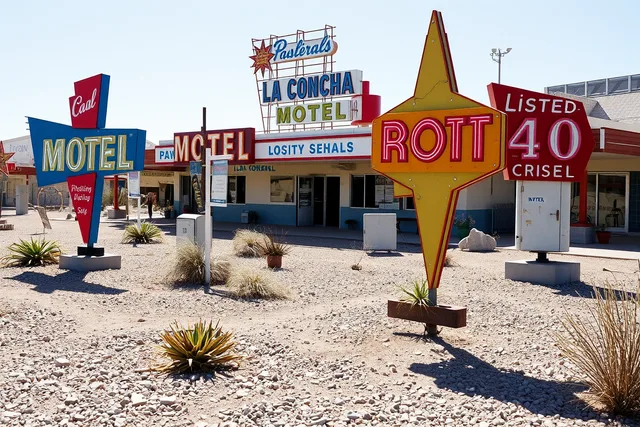
The image is illustrative only. It does not establish any property's safety, access status, permit history, or approval status.
Questions that keep a story accurate
Ask these before publishing a feature or accepting a sponsored update:
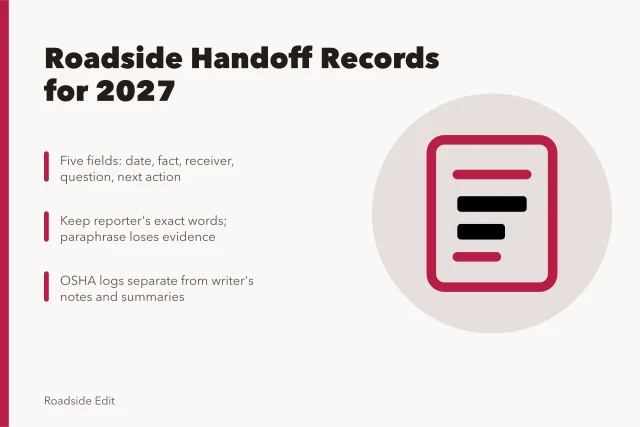
- Who supplied the project statement, and when?
- Does the source call the work proposed, underway, paused, or complete?
- Does it name an issuing authority or only describe a future request?
- Is a visible detail being used to imply a technical, legal, or safety conclusion?
- Would a reader interpret "open," "safe," or "accessible" more broadly than the record allows?
The strongest answer is sometimes "not yet established." That phrase is more useful than filling a compliance gap with general knowledge or a similar project's record.
Common questions
Does a public announcement prove that permits are issued?
No. An announcement may describe intent, funding, or a proposed schedule. Look for the issuing authority and the specific permit or approval record.
Can an editor say a route is accessible after an entrance renovation?
Only if a current, appropriate source supports that exact statement. A visible change does not establish compliance.
Are compliance questions the same as legal advice?
No. They help readers identify what the current project record does and does not establish. Project-specific legal or code questions belong with the responsible authority or qualified professional.