Guides
Roadside renovation safety checklist: what to document before work starts
Use a 2027 roadside renovation safety checklist to document hazards, set project boundaries, coordinate reviews, protect access, and communicate responsibly.
An older roadside building may suggest an appealing renovation story, but a good story is not a safety plan.
Before design, new tenants, heritage value, or a reopening date, the project team needs a simple method. Separate visible facts from assumptions, define what remains unverified, and route each technical question to its owner.
This 2027 checklist is for planning and editorial work around existing roadside properties in the United States. It is not a site inspection, an instruction to enter a building, a contractor scope, a code interpretation, or a finding that any property is safe. Use authorized records and qualified local review for decisions about a specific place.
What to take away
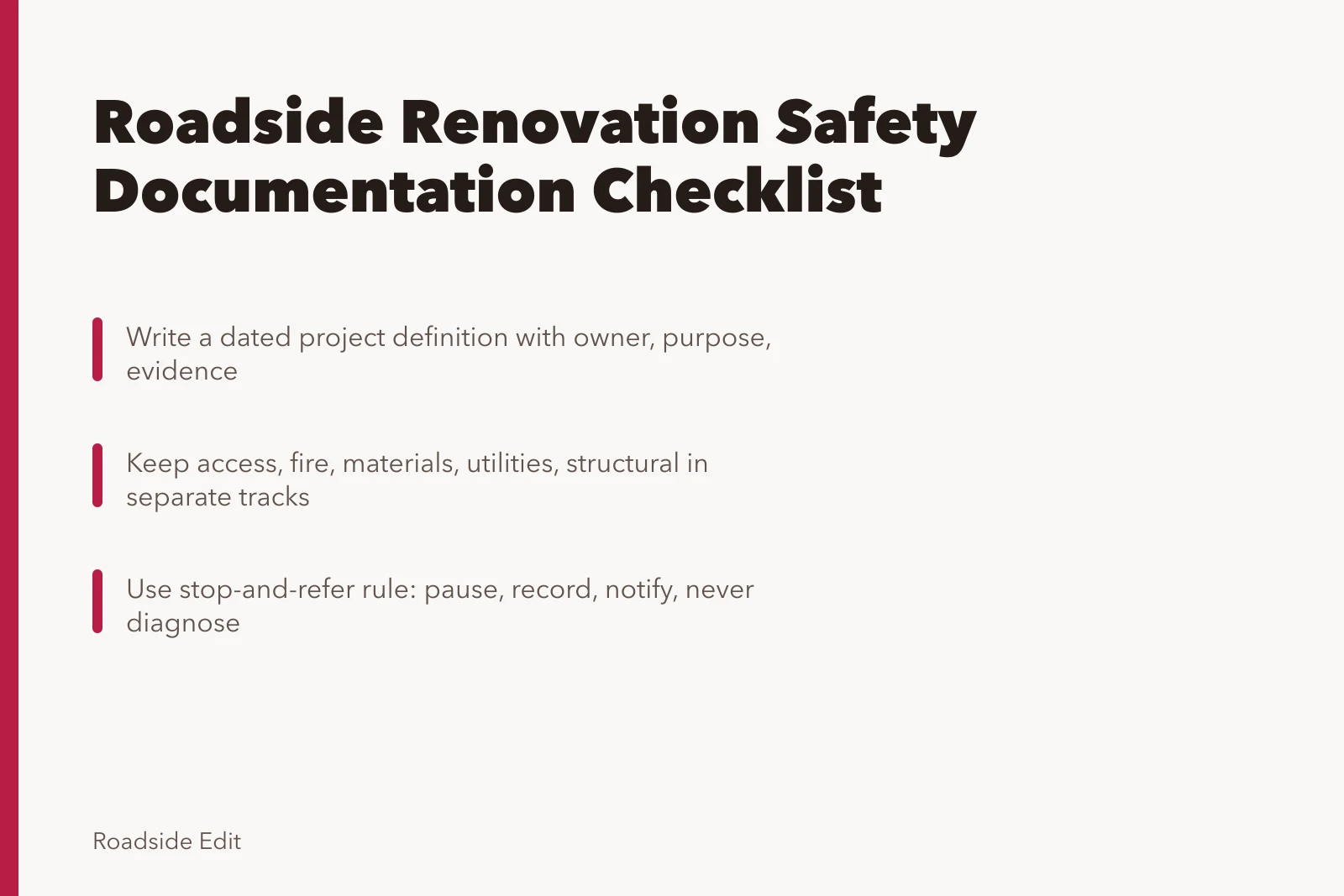
- Start with a dated record and clear project boundaries, not a promise to restore a building.
- Keep access, fire and life safety, materials, utilities, and structural questions in separate review tracks.
- Treat a new observation as a reason to pause and refer, never as a diagnosis made from a photo.
- Make public updates describe the known stage of work and identify the source of every claim.
- Keep the full project record more detailed than the public article.
Define the project before discussing work
Write a one-paragraph project definition. It should state the property or feature under discussion, the known owner or responsible contact, the intended editorial purpose, the evidence on hand, the date range of that evidence, and the questions that remain open. This prevents a broad phrase such as "roadside renovation" from hiding several different kinds of work.
For example, an exterior paint proposal, a change to a customer entrance, a new sign, a roof repair, and a change of use may each involve different people and requirements. Combining them in one headline can make an ordinary planning update sound like a completed rehabilitation. Separate them in the record before combining them in a public narrative.
Use language that describes evidence. "An owner-provided plan dated May 2027 describes a proposed exterior repair" is different from "the building is being made safe." The first tells readers what the record contains. The second claims an outcome that needs site-specific evidence.
Build a facts-only baseline
Create a baseline folder before publishing a project profile. Put original documents, authorized photographs, dated news reports, contact notes, and known approvals in separate subfolders. Record the source, date, location or view, and limitations of every image. A historic photograph can show a past appearance. It cannot prove present material condition, structural performance, or safety.
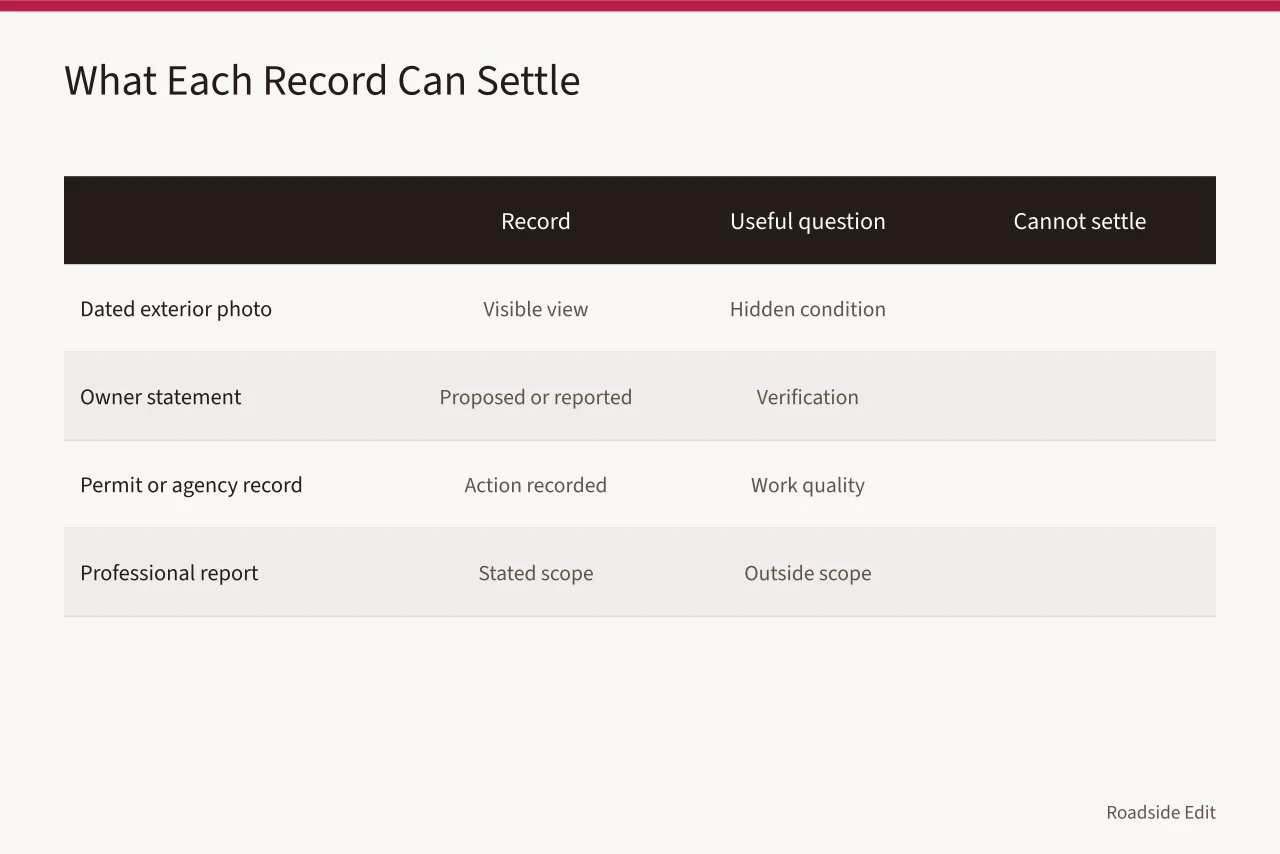
Give the baseline a revision date. If a photograph, report, or project statement changes, add the later item rather than overwriting the earlier one. A reliable chronology is especially helpful for paid placements, where a business may want a stronger claim than the evidence supports.
Screen the work by safety category
Do not turn a general safety checklist into a technical inspection form. Instead, use it to make sure the right questions are visible early enough for the right review. A practical screen includes these categories:
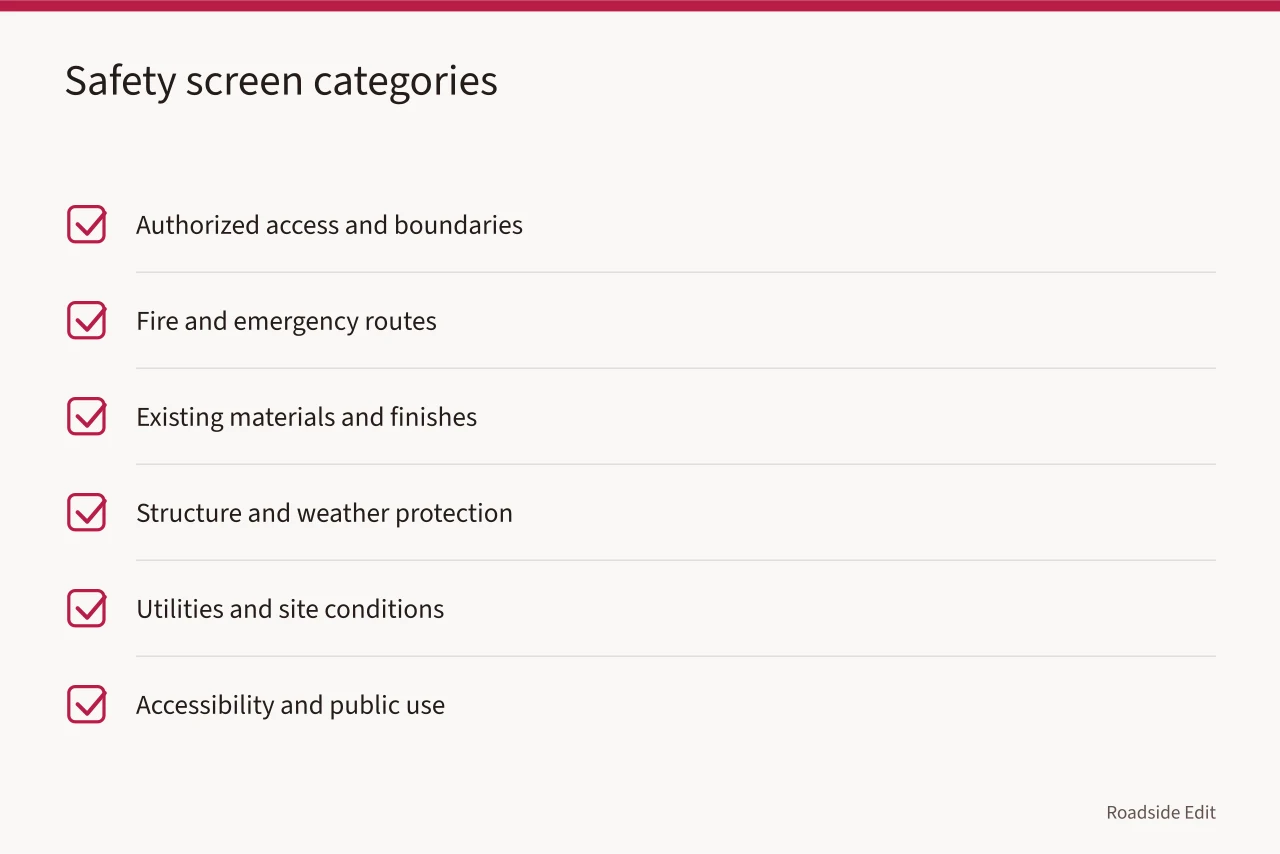
The National Park Service notes historic rehabilitation can involve building codes for accessibility, fire and life safety, hazardous materials, seismic upgrades, and other requirements, and code adoption varies by jurisdiction. Read the NPS overview of codes and regulatory requirements.
That page does not settle any local requirement for a particular roadside property. It supports a disciplined approach: list the category, record the applicable question, and obtain project-specific direction.
For accessibility context, the U.S. Access Board's alterations guidance explains that alterations can trigger accessibility requirements. For materials, the EPA asbestos page explains the agency's public information role. These are starting points for a responsible question, not an answer for a particular project.
Use a stop-and-refer rule
The most useful checklist item is a pause rule. It tells staff, writers, visitors, and vendors what to do when an observation exceeds their role. The rule can be short:
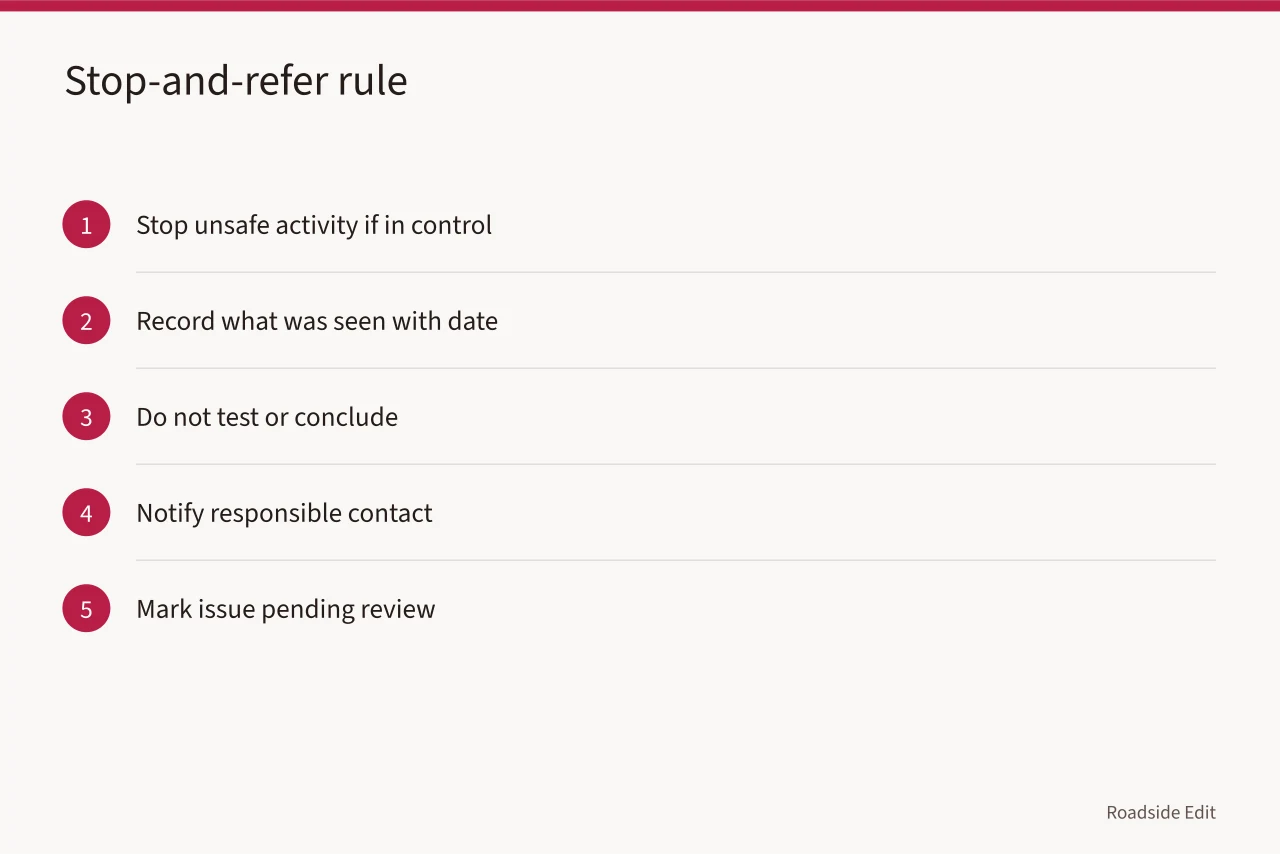
This is not an emergency response protocol. In an immediate emergency, use the responsible local emergency process. The purpose here is to stop editorial enthusiasm or routine coordination from becoming an unsafe substitute for technical judgment.
Plan for occupied and public-facing areas
Roadside properties often face a special communication challenge. A traveler may see a sign, fenced parking area, partial storefront, or social post and assume the project is open, accessible, or complete.
Project updates should identify what is actually known. State if an area is public-facing, if a published date is proposed or confirmed, and which source supplied the information.
If work affects a path, entrance, or area used by the public, do not describe an access result until the responsible project record supports it. A writer can say that a project team is reviewing a route. A writer should not say that the route complies, is safe, or is open unless a current source supports that exact statement.
Give every task an owner and limit
Safety projects become vague when the task is only "check the building." Make every task a complete sentence: who is responsible, what is being documented, when it is due, what it excludes, and where an unresolved question goes next.
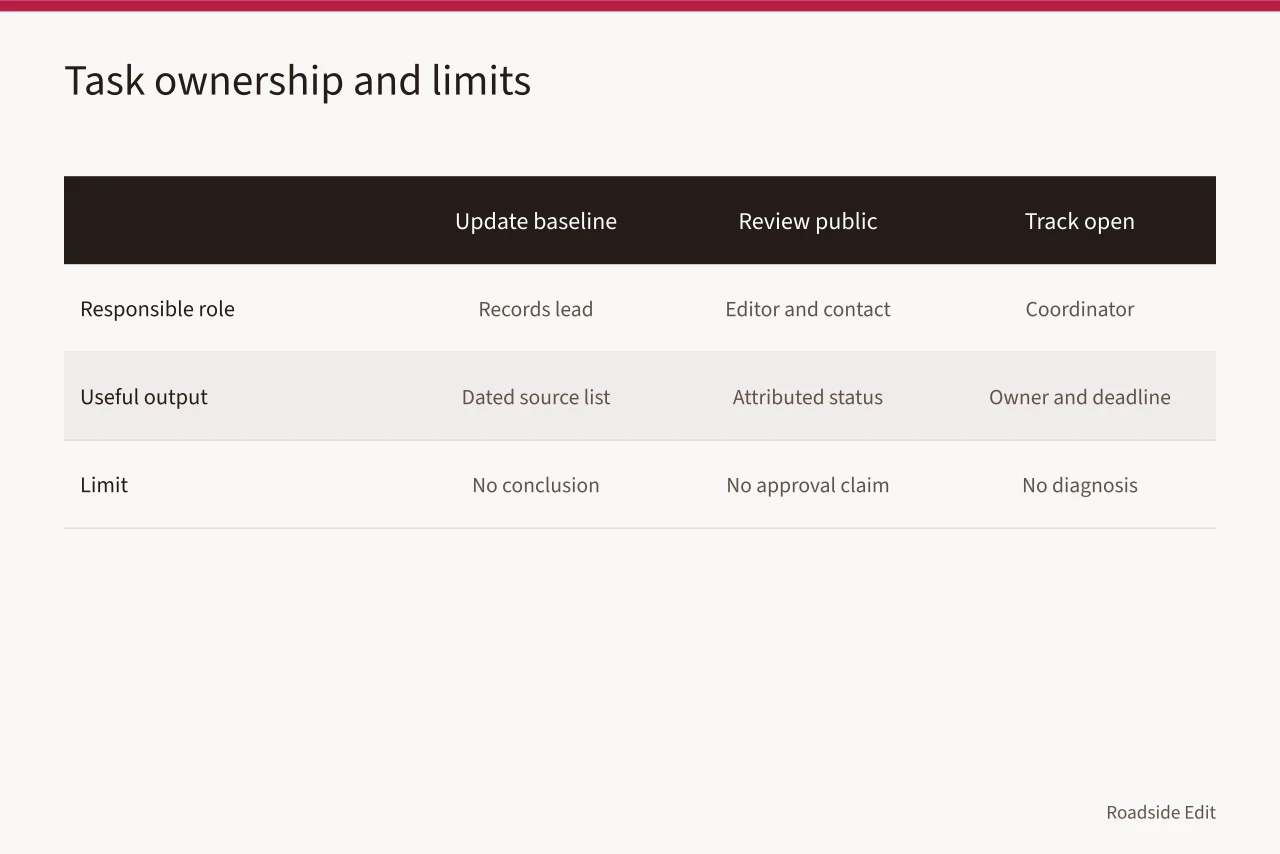
| Task | Responsible role | Useful output | Limit |
|---|---|---|---|
| Update baseline | Project records lead | Dated source list | No technical conclusion |
| Review public wording | Editor and project contact | Attributed status update | No approval claim without a record |
| Track open question | Designated coordinator | Owner, deadline, handoff | No diagnosis by coordinator |
| Preserve change log | Records lead | Original and revised entries | No deletion of prior evidence |
Avoid assigning safety judgment to a person whose role is only communications, photography, content management, or visitor service. The owner column tells everyone when a question has left the editorial workflow.
Keep the construction story separate from the safety record
Dramatic language like "rescue," "revival," "saved," or "made safe" is hard to support and may mislead readers, customers, or future advertisers.
A better story can still interest them. Explain the roadside history, visible design details, stated goal, review stage, and records that will confirm the next step.
Use a small claims log while drafting. For each significant sentence, retain the supporting source, the date it applies, and the exact limit. If a claim cannot be supported, narrow it. "The project has a planned exterior work package" is often accurate where "the renovation will protect the building" is not.
The Occupational Safety and Health Administration construction page is another useful reference for distinguishing workplace safety responsibilities from editorial claims.
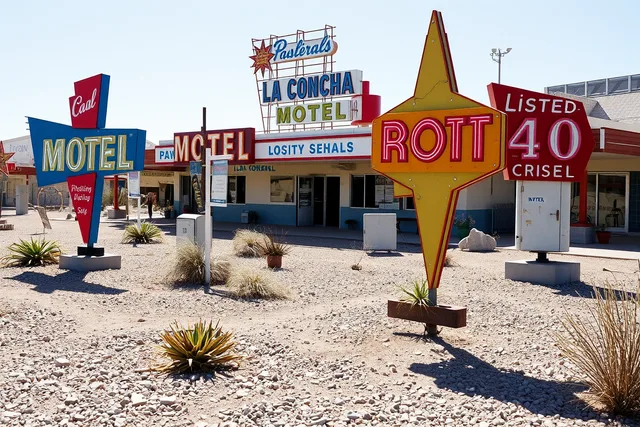
The image is illustrative only and does not document a project's condition, ownership, or safety status.
Review the checklist at decision points
Review the checklist before a public announcement, before a new scope is described, after a reported event, before publishing a paid placement, and whenever a technical review changes what can be stated. At each review, ask three questions: what is documented, what is still unknown, and who can resolve it?
The checklist is working when a later reader can follow the decision trail without guessing. It should show why an article used restrained language, why a proposed opening date was labeled as proposed, and why a visible issue was referred instead of explained away.
Common questions
Does this checklist tell a property owner what work to perform?
No. It organizes questions and records. A specific property needs its own authorized review, decisions, and any required local process.
Can an old photograph show that a building is safe now?
No. It can document an earlier appearance. Present condition and safety conclusions require current, project-specific evidence.
What is the safest wording for an unverified condition?
Describe the source and date, state the limit, and say the item has been referred for appropriate review. Do not infer the cause or outcome.
In this guide
- Roadside renovation permit and safety checklist: what to settle before work startsRoadside renovation safety and permit checklist for 2027: map the scope, agencies, records, review stages, and public claims before work begins.
- Roadside renovation safety questions to ask before any updateAsk the right 2027 roadside renovation safety questions about project scope, access, records, public claims, and specialist reviews before publishing updates.
- Roadside renovation safety budget notes: map compliance before you price itRoadside renovation safety budget notes for 2027 separate permit research, compliance review, scoped work, and uncertain costs from public project claims.
- Roadside Renovation Safety Records for 2027Safety records for 2027 roadside work keep the referral visible, so a reported condition reaches a licensed trade instead of becoming a published conclusion.