Rules
Part of Gas Station Preservation: How It Works
Gas station preservation access: what to ask before you go
Gas station preservation access for travelers with limited mobility: what to ask a site before you go, what to see from the car, and how to plan stops.
What to take away
- A great deal of this subject can be seen properly from the roadside without leaving the car.
- Adapted stations now in commercial use are the reliable stops, because they had to meet current requirements to open.
- Closed sites are the oppositeno surface, no facilities, nothing maintained.
- Plan restrooms deliberately. Former filling stations do not have any, and that is the whole problem with the corridor.
Gas station preservation has an unusual accessibility profile. The buildings are single story and the sites are open, which helps. The surfaces are cracked concrete and gravel, and many sites are derelict, which does not.
Planned properly it is one of the more workable roadside subjects.
What you can do from the car
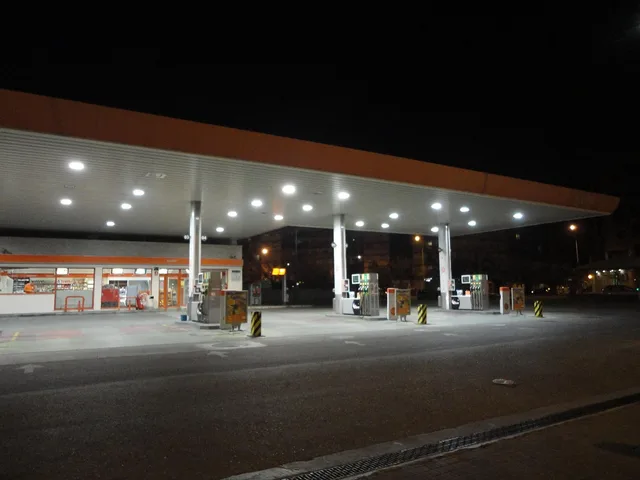
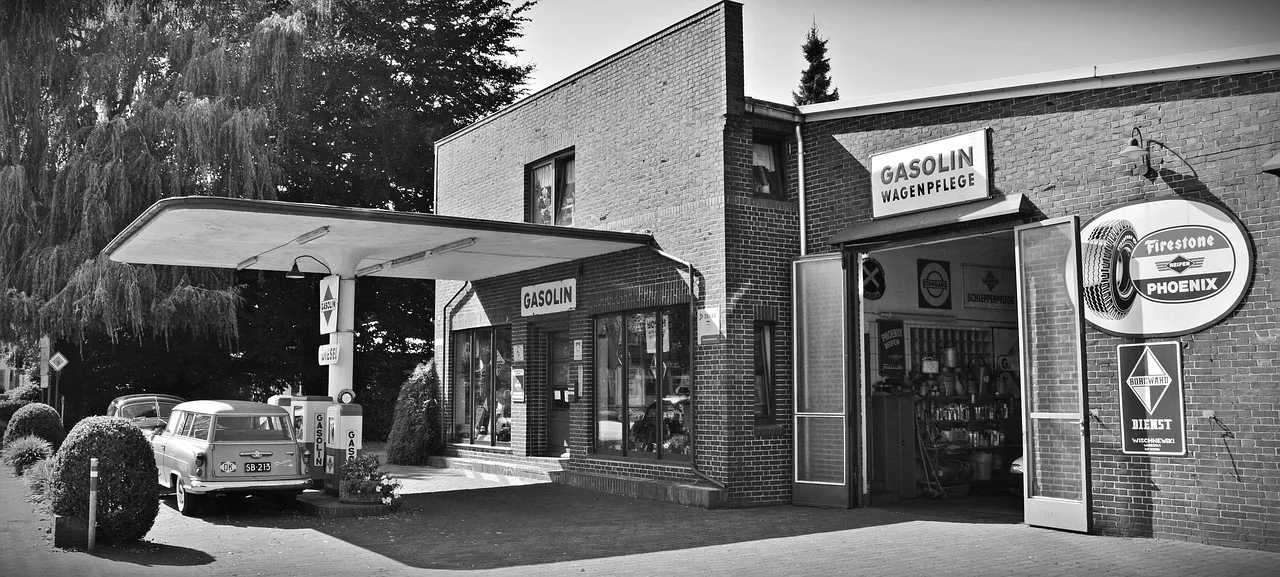
More than with any other subject on this site. Stations were designed to be understood from a vehicle: the canopy, the island layout, the sign, the office window and the bay doors are all legible from the roadside.
Route 66 in Illinois is a good example of the kind of corridor that works this way: Ryburn Place at Sprague's Super Service in Normal is owned by the Town of Normal and listed on the National Register of Historic Places, and the Skelly Oil Gas Station in Moline has been found eligible for the National Register as an important example of the cottage gas station building type.
For a group where walking distance is limited, a corridor drive with short stops at the roadside is a genuinely good day rather than a compromise. Bring a long lens and choose the parking carefully.
Adapted stations are the reliable stops
Before you set off, the Society for Commercial Archeology, a nonprofit founded in 1977 to advocate for and preserve 20th century roadside architecture in North America, is a useful starting point for finding stations along a corridor.
A former station now working as a coffee shop, a workshop or an office has been through a change of use, which usually means the entrance, the surface and the facilities were brought up to current requirements.
The Access Board's overview of the ADA accessibility standards explains what those requirements cover in places of public accommodation, and it is worth knowing roughly what applies so you can ask a business a precise question rather than a general one.
Where a site is federally owned or federally funded, a separate framework applies, and the same body's material on the Architectural Barriers Act covers it. Visitor centers and museums along historic corridors frequently fall under this, and they tend to be the best-documented stops on any route.
Closed sites: expect nothing
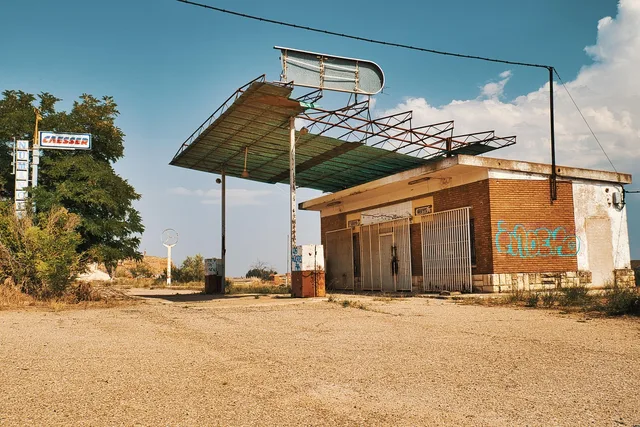
A derelict station has no maintained surface, no marked route, no lighting and no facilities. It is also not somewhere anybody should be walking around, for reasons that have nothing to do with mobility.
Treat these as things you look at from the pavement or the car. That is the correct way to visit them anyway.
The restroom problem
This deserves its own paragraph because it decides the shape of the day.
Historic filling stations do not have working restrooms, and the corridors they sit on can run twenty or thirty miles between reliable facilities. Plan the day around known stops: an operating business, a museum, a park with facilities.
Ask when you telephone ahead. A small adapted station may have one accessible restroom or none at all.
Questions worth asking a business
- Is there a level entrance, and if there is a step, how high?
- What is the surface from the parking area to the door?
- Is there seating inside, and is any of it not fixed?
- Is the restroom accessible, and is it in service?
- Is the forecourt shared with vehicle movements?
That last one is specific to this building type. Some adapted stations still have traffic crossing the forecourt, which changes how a group moves around the site.
Building the day
Three or four roadside stops, one adapted station with facilities in the middle, and a museum or visitor center as the anchor. That shape works for most groups and is honest about where the gaps are.
The route logic is the same one set out in how the preservation process works, and the costs barely change, since almost nothing here charges admission.