Guides
Gas Station Preservation: How It Works
Gas station preservation how it works: assess tanks, check historic status and review rules, then stabilize, remediate, repair, and adapt the station.
What to take away
- The tanks come first. Until you know what is under the forecourt, you do not know what the project is.
- Before buying one of these sites, get an environmental assessment. Environmental obligations can follow the property.
- The building and site need separate scopes; condition and contamination determine the work.
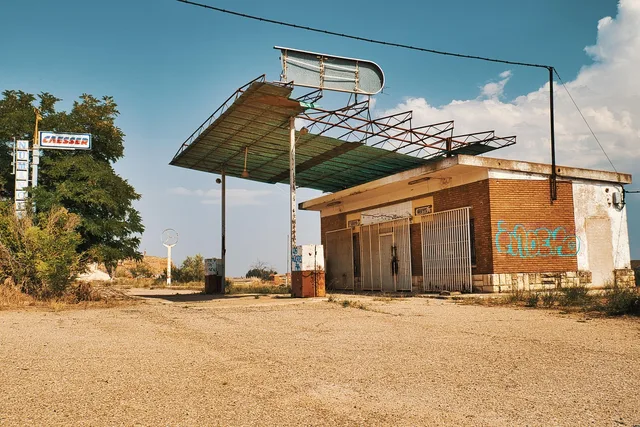
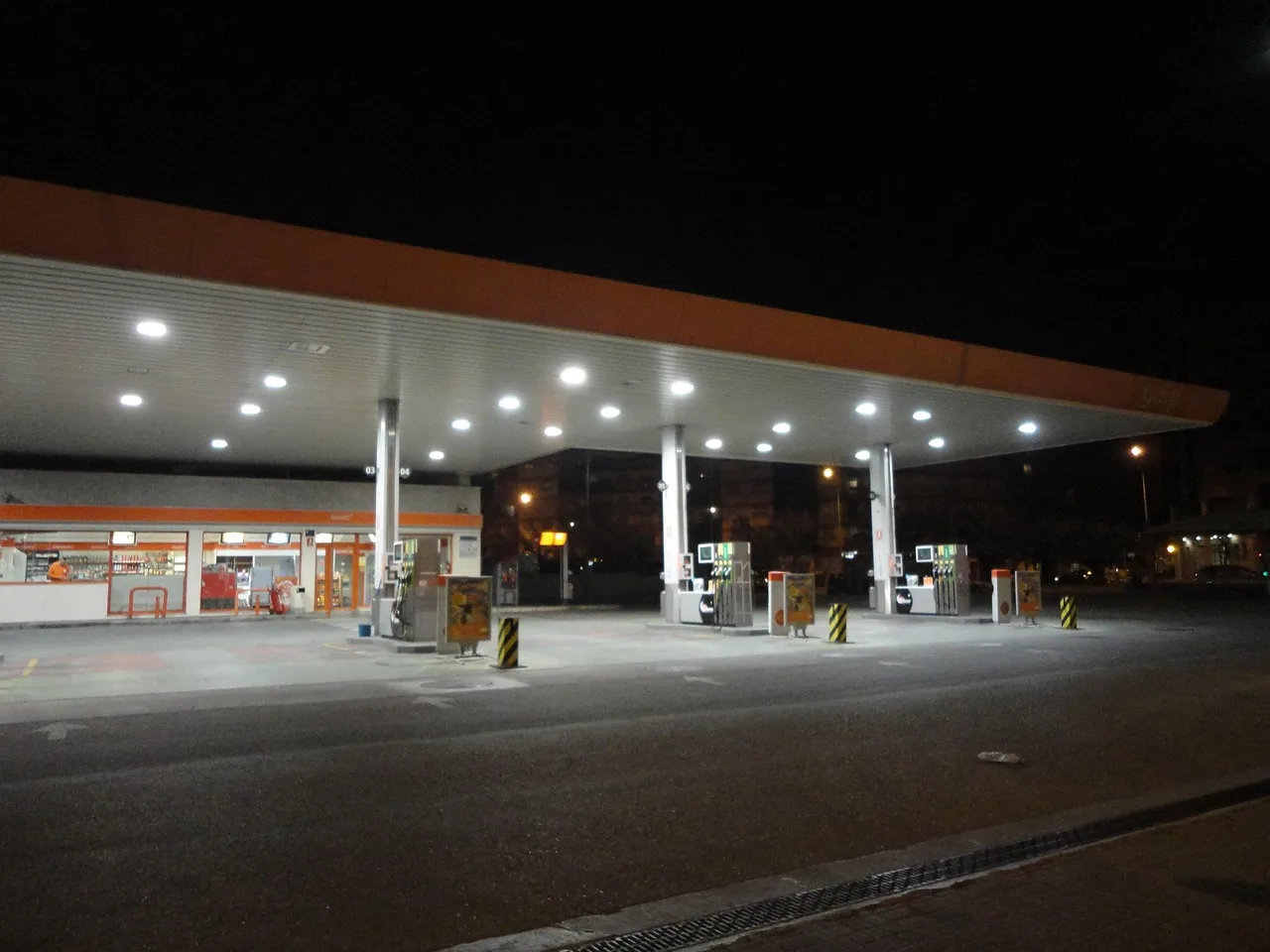
- Canopy, pumps and forecourt are the character. Losing the canopy loses the building type.
Gas station preservation—how it works—is easiest to understand as two projects wearing one coat. Above ground is a roadside building whose repair needs depend on its condition and character-defining features. Below ground may be steel tanks, product lines and contaminated soil.
Everyone who gets into trouble with these buildings got into it by treating the second half as a detail.
Start underground
Old stations had underground storage tanks, and what happened to them varies enormously. Some were removed decades ago with paperwork. Some were filled with sand and left. Some are still there, forgotten, rusting.
The Environmental Protection Agency's underground storage tank program sets out the federal framework for these tanks and how they are regulated under Subtitle I of the Resource Conservation and Recovery Act (RCRA) and 40 CFR Part 280, with most of the enforcement running through state programs. What matters for an owner is simple: find out what is there, in writing, before committing.
The practical steps are an environmental site assessment, a records search with the state agency, and where necessary soil and groundwater testing. A Phase I environmental site assessment commonly follows ASTM E1527; if its findings warrant sampling, a Phase II assessment commonly follows ASTM E1903. Ask the consultant to identify the standard and scope of work and provide findings in writing; use the results to decide whether more sampling or agency coordination is needed.
Then work out what you are allowed to do
Contamination changes the whole shape of a project. A clean site is an ordinary small commercial rehabilitation. A contaminated one involves an agency, a remediation plan and a timetable that is not yours.
Historic review is a parallel track to tank assessment and cleanup. Check whether the station is listed in or eligible for the National Register of Historic Places, and contact the State Historic Preservation Officer (SHPO) for its status and the nomination process. Nominations generally go through the SHPO and state review board for National Park Service consideration. National Register listing alone does not usually restrict a private owner's work.
Federal funding, permits or other federal action can bring Section 106 of the National Historic Preservation Act into play. The responsible federal agency consults with the SHPO and other parties about effects on historic properties.
For rehabilitation work, use the Secretary of the Interior's Standards for Rehabilitation to retain historic character while accommodating a new use. Qualifying income-producing historic properties may also be eligible for the federal rehabilitation tax credit through the Federal Historic Preservation Tax Incentives program; the National Park Service reviews rehabilitation certification with the SHPO. Ask the SHPO whether state incentives also apply.
Neither is a reason to walk away. Plenty of these sites are cleaned and reused every year. It is a reason to know which one you have before you sign.
Now the building
Once the site question is settled, the structure is usually the easy part.
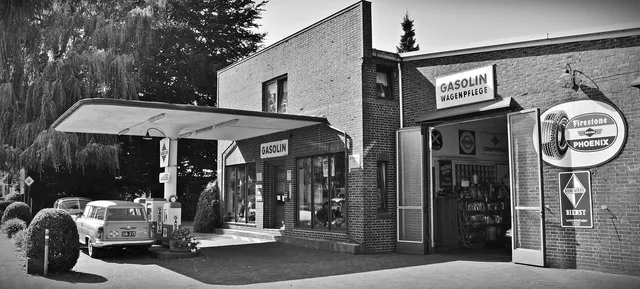
Most surviving stations are small, single story, and built from a limited palette: concrete, stucco, brick, porcelain enamel panels, steel canopy structure.
The National Park Service's Preservation Brief 46, The Preservation and Reuse of Historic Gas Stations covers common station forms, what makes each significant, and how they are adapted to new uses.
Read it before deciding anything is expendable. Cracking in a forecourt slab is normal, spalling around reinforcement is a repair, and neither is a reason to replace concrete that has been there since 1937.
The parts that make it a filling station
Strip these and you have a small commercial building with an odd plan:
The canopy. The single most important element and the first to be removed for looking unnecessary.
The islands. Even without pumps, the raised concrete bases record how the site worked.
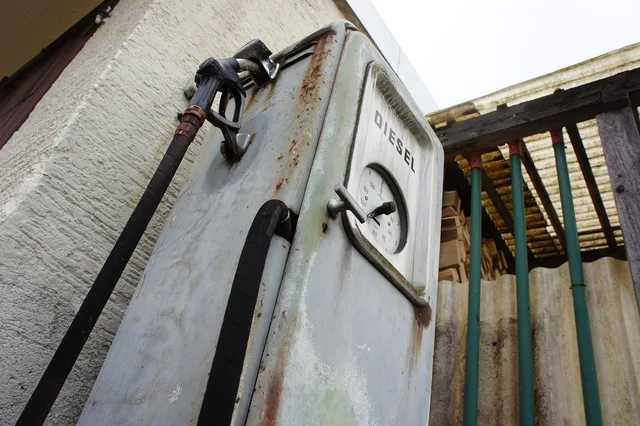
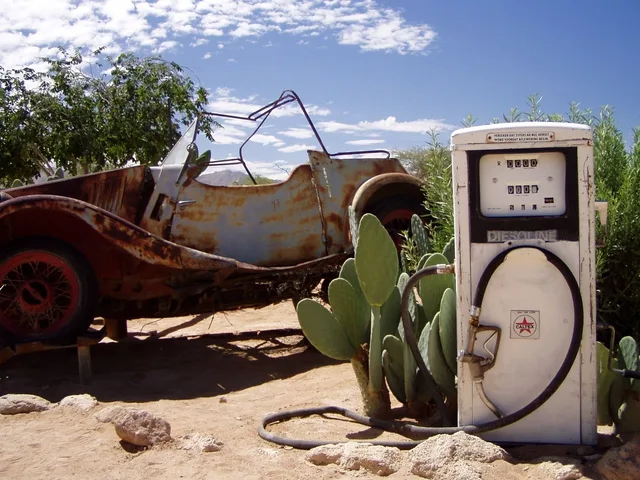
The pumps, where any survive. Rare and worth extraordinary effort to keep.
The service bay and its door. The tall opening is the whole reason the building has the shape it has.
The office window. Stations were built to watch the forecourt.
The sequence that works
| Stage | Work | Why here |
|---|---|---|
| 1 | Environmental assessment | Everything depends on the answer |
| 2 | Records, ownership, agency contact | Establishes obligations before spending |
| 3 | Stabilize roof and canopy | Stops the losses while other things are decided |
| 4 | Site remediation if required | Runs on the agency's timetable, not yours |
| 5 | Building repair | Straightforward once the site is settled |
| 6 | Adaptation for new use | Coffee, workshop, office, museum |
What they become
Filling stations adapt well, because a small building with a big canopy and good visibility is useful for many things. Coffee shops, bike workshops, small offices, tasting rooms and visitor centers are all common outcomes.
The successful conversions keep the canopy and the forecourt reading as a forecourt. The failed ones fill in the bays, remove the canopy and end up with a shed set back from the road for no reason anybody can see.
The U-Drop Inn in Shamrock, Texas, is a preserved former gas station and cafe reused as a visitor center, an example of keeping a roadside building in public use.
The wider question of new work beside old is covered in 11 Thoughtful Approaches to Modern Roadside Design, and the same treatment vocabulary applies here as in Planning Historic Motel Restoration: The Steps That Matter.
Common questions
Can I buy a station with tanks still in the ground?
Who pays for cleanup?
Is the canopy structurally sound?
What is the most common mistake?
In this guide
- Gas station preservation packing list: 6 essentialsA gas station preservation packing list with six essentials to photograph roadside stations safely: lenses, boots, water, sun protection, and field notes.
- Who to Contact About Reusing Old Filling StationsRather than looking for gas station preservation companies, start with tank programs, redevelopment offices and owners when researching old filling stations.
- Gas station preservation access: what to ask before you goGas station preservation access for travelers with limited mobility: what to ask a site before you go, what to see from the car, and how to plan stops.
- Gas station preservation itinerary: a two-day field methodA gas station preservation itinerary for a 40–80-mile corridor: count and classify stations on day one, then revisit three on day two.