Guides
Part of How to compare modern roadside design options before you decide
How to compare modern roadside design options in a 2027 budget
Comparing modern roadside design options for 2027 means keeping each option's scope, exclusions and care questions separate until one direction is chosen.
A comparison note is not a price and not an approval. It sets two roadside options side by side so a team can see which one it is actually choosing.
What to take away
- Give each option its own scope boundary and its own total. Never merge two options into one figure before a direction is selected.
- List the same cost categories for both options: investigation, design, materials, installation, access, utility work, maintenance, later review.
- Mark every unknown as an unknown. A missing exclusion is not a saving.
- Keep opening work separate from later care, and state the care question instead of pricing it.
- Date every revision and name the assumption, condition or scope item that changed.
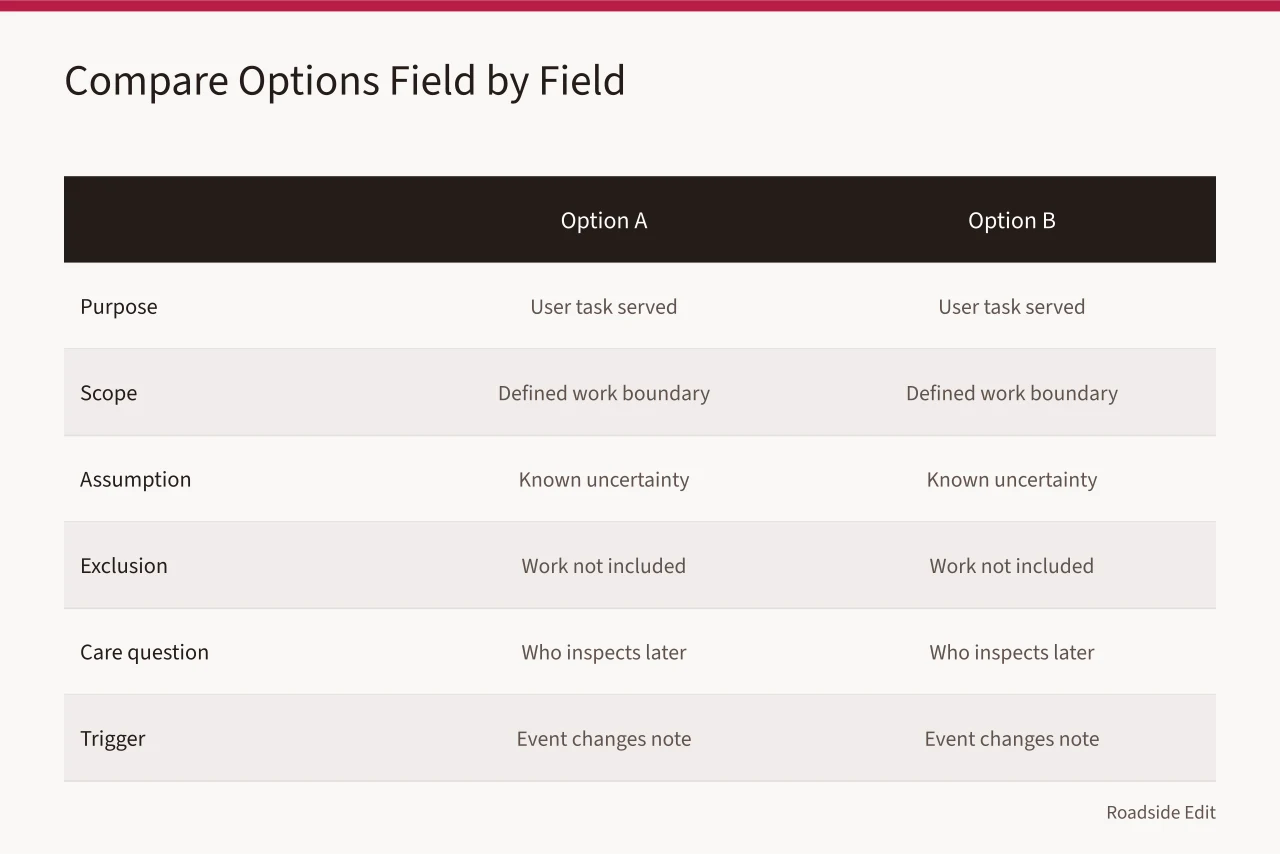
Compare the two options field by field
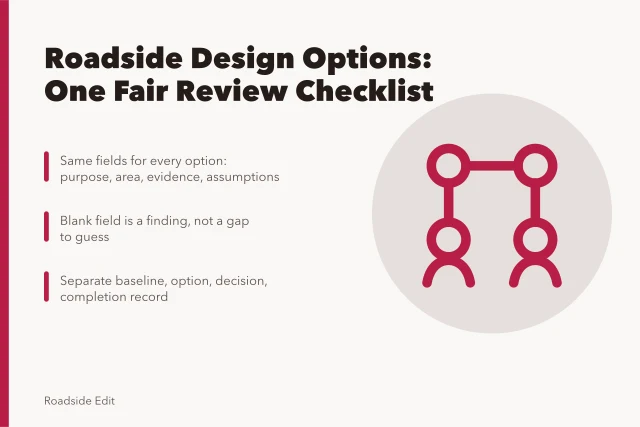
Use the same rows for both options. If a row cannot be filled for one option, write the question that would fill it.
Keep the two options apart until one is chosen
Do not add Option A and Option B into one planning total. The sum describes neither option, and it hides the difference the note exists to show. Hold a planning allowance apart from a vendor offer, an authorization and a reported expense.
If an option depends on a utility, water, ownership or maintenance question, write the condition next to the figure. A number without a source, a date and a status cannot be compared with anything.
When a team sets an option aside, keep its note and the reason. That record explains later decisions and stops the same incomplete comparison from being run twice.
Supplier claims belong in their own field. A supplier's product price is not a project estimate, and marketing material is not decision evidence.
Put scope beside every figure
GSA guidance on managing project costs describes costs developing as scope becomes clearer. Keep the source, date, scope version, inclusions, exclusions and status beside every figure. Label a number private or supplied by a participant rather than publishing it bare.
A visible option can touch water, pavement, planting, routes and maintenance at once. EPA's green infrastructure approaches cover practices in medians and at parking-lot edges, which shows the categories to list. It does not establish feasibility or cost at your site.
The NPS documentation standards call for limitations that let a later reader verify the work. Do not calculate a result the source does not show. The NPS preservation planning overview treats documentation as an input to later scope and design, not as approval or completion.
Where the comparison usually breaks
Three failures account for most bad roadside comparisons.
- Unequal exclusions. One option looks cheaper because its care, access or utility work was never written down. List the same categories for both, then mark the unknowns.
- Care folded into opening work. A note may record that a canopy, sign face or planting bed will need inspection or replacement later. State the care question and the record that would answer it. Do not invent a cost to make the table look finished.
- Reused lines. A line prepared for one sign, route or planting task gets copied into the other option without a new source. Keep the project purpose on every page so the reuse is visible.
Review the file before each decision meeting. It should show what changed, which record supports the change, and whether both options still use equivalent scope boundaries.
Common questions
Is the lower opening amount the better option?
Not by itself. A lower figure often means care, investigation or coordination was left out. Compare the two options only after both carry the same categories and the same set of stated unknowns.
What is an allowance trigger?
It is the event or condition that activates, revises or removes an early planning placeholder. Write it beside the figure so the next reviewer knows what would change the number.
Can a public list show price comparisons?
Only with the source, date, scope, disclosure status and limit of each entry. Where the amount is still unknown, keep the question and name the record that would make a useful estimate.
How does this differ from a restoration options note?
A restoration options note weighs treatment choices for a historic structure. This note weighs planning boundaries for a modern roadside project, and the two are compared on different rows. See historic motel restoration options for the treatment side, and modern roadside planning budget notes for the planning side.