Guides
How to compare modern roadside design options before you decide
Modern roadside design options compared for 2027 help U.S. teams define a shared problem, compare evidence and limits, record tradeoffs, and retain decisions.
Comparing roadside design options is not a contest between images. It decides which proposal, if any, addresses a documented user task within known limits.
A useful comparison starts with one shared problem and gives every option the same fields for purpose, evidence, and assumptions. It also covers effect on operations, care needs, and next review, making differences visible without declaring an option approved, compliant, safe, or suitable for a particular site.
This guide is for a U.S. reader organizing an early comparison. It does not select a treatment, determine access, interpret a local permit, give engineering advice, or guarantee a project outcome. The street context, property boundary, drainage, utilities, historic evidence, ownership, public process, and actual users may change the appropriate option.
What to take away
- Compare options that solve the same stated problem.
- Keep the baseline condition separate from a preferred concept.
- Give each option an evidence source and an assumption list.
- Record why an option advanced, paused, or was set aside.
- Treat business and sponsor content as a separate editorial category.
Start with a neutral baseline
The baseline is the condition against which each option is tested. It might describe an entrance visitors cannot identify from a public approach, a parking edge with unclear circulation, an outdoor waiting area with no documented purpose, or a historic feature whose condition needs a better record.
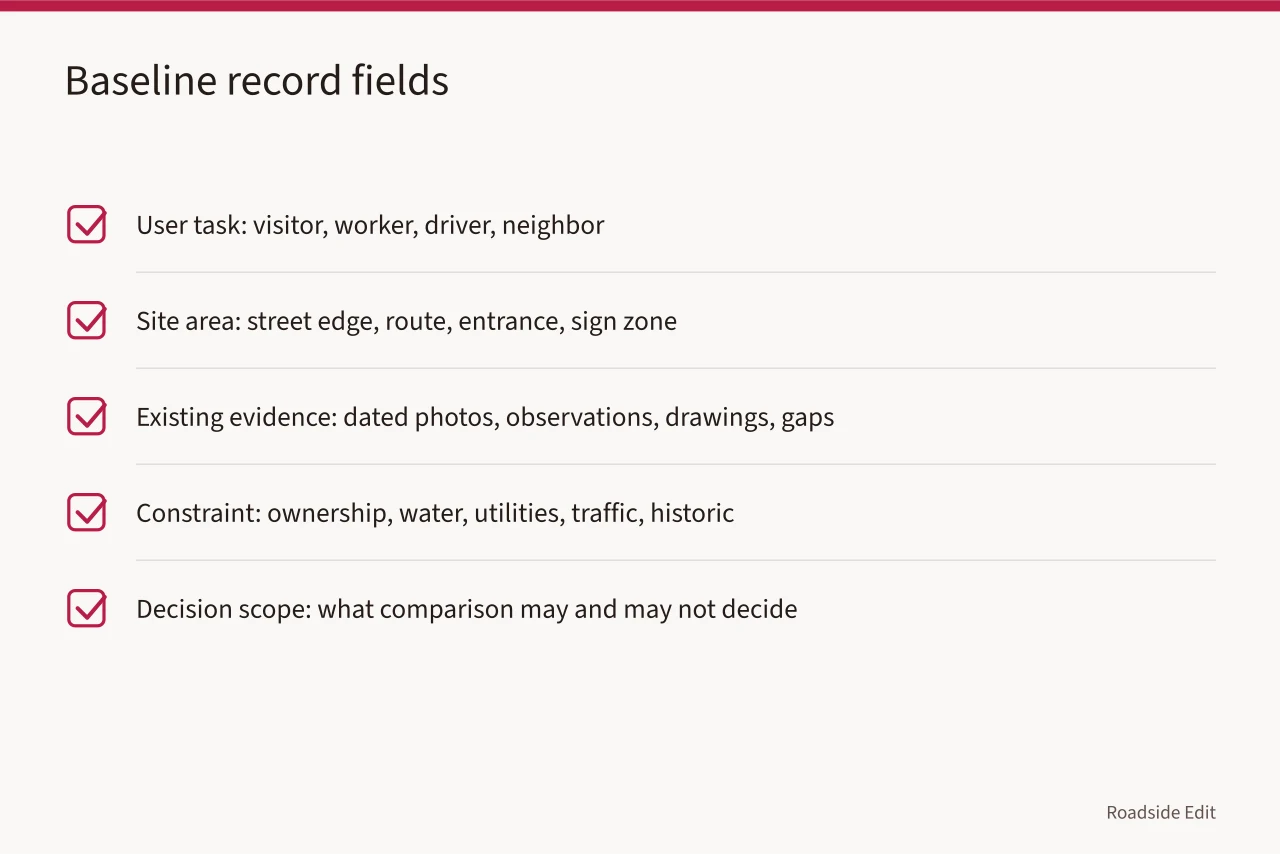
A baseline should describe what is known and what is not. It is not a diagnosis or an accusation.
FHWA's alternatives-analysis guidance covers documenting assumptions and procedures, creating a baseline, generating alternatives, and selecting measures. Read FHWA's alternatives-analysis process.
That guidance concerns transportation analysis, not design approval for an individual roadside property. An option cannot be compared fairly without a common reference point and a record of how it was evaluated.
| Baseline field | Useful record |
|---|---|
| User task | What a visitor, worker, delivery driver, or neighbor is trying to do |
| Site area | A described street edge, route, entrance, sign zone, or outdoor area |
| Existing evidence | Dated photos, observations, drawings, and documented gaps |
| Constraint | Ownership, water, utilities, traffic, historic context, or maintenance question |
| Decision scope | What the comparison may decide and what it cannot decide |
Avoid phrases such as "the existing design fails" when the file only contains a photo or a subjective impression. A clearer baseline might say, "Available material shows two possible driveways; the current record does not identify the intended public entrance." It points to a decision need without inventing a condition.
Create equal option cards
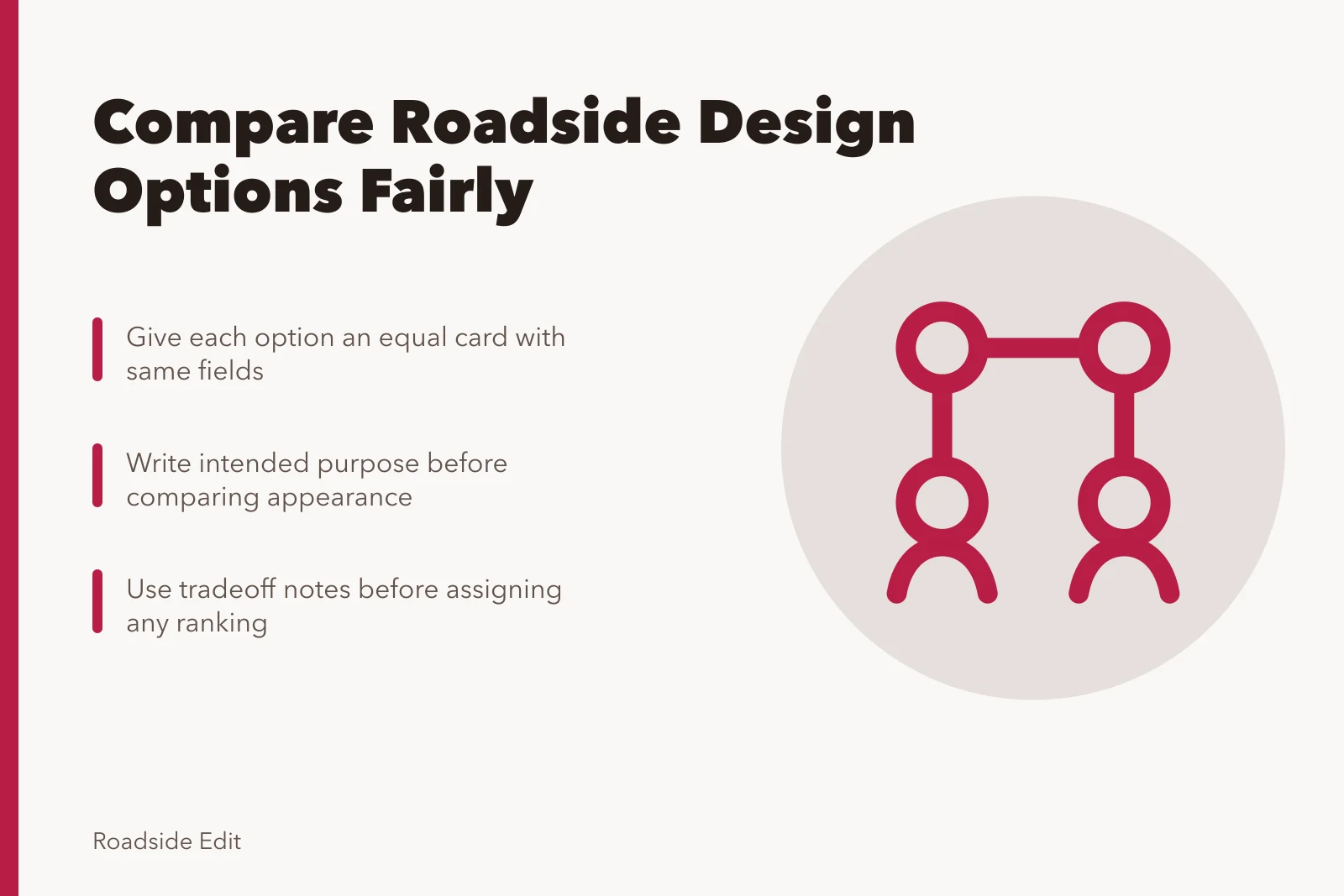
Every option should answer the same questions. A detailed rendering and a one-line idea cannot be compared honestly. Give each alternative an equal card, even if one card remains incomplete because evidence is missing.
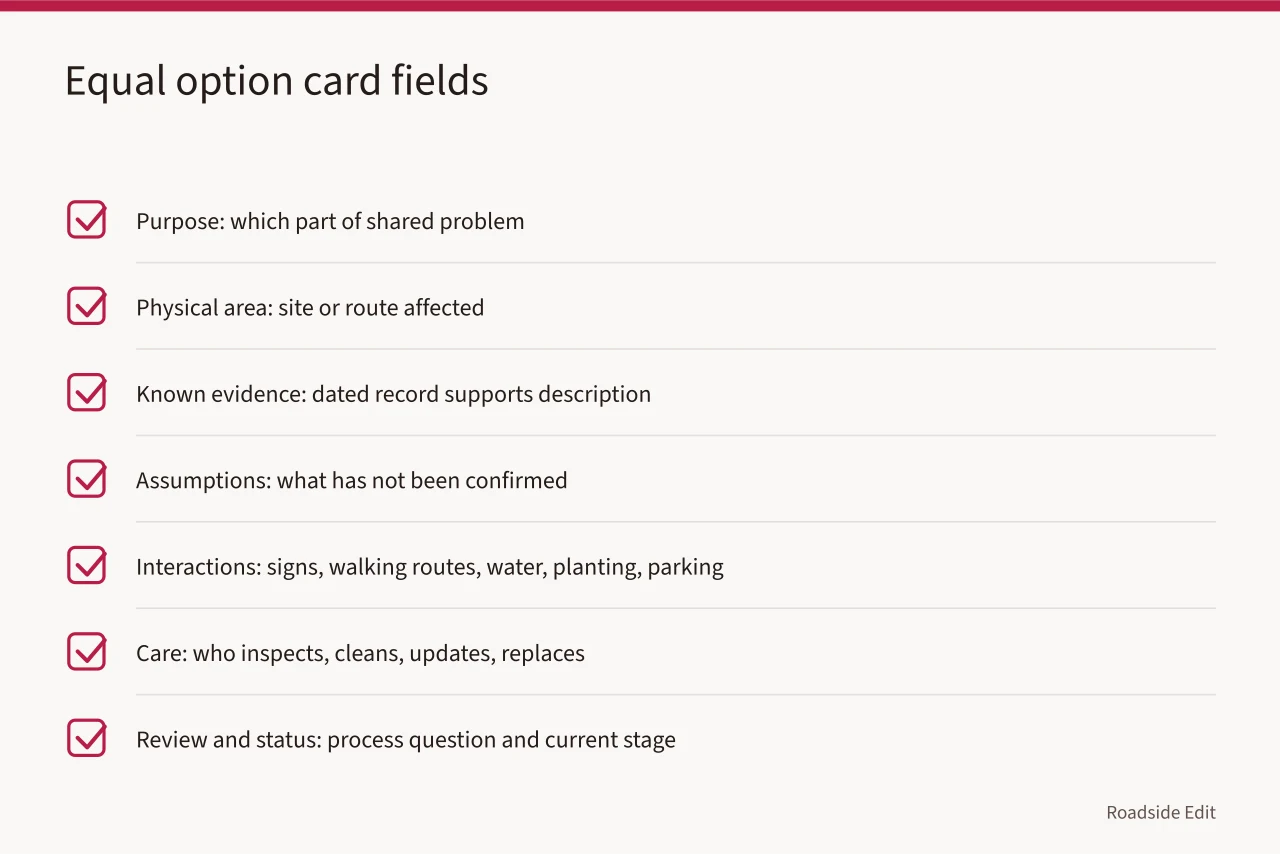
| Field | Question |
|---|---|
| Purpose | Which part of the shared problem does the option address? |
| Physical area | What part of the site or route could be affected? |
| Known evidence | What dated record supports the description? |
| Assumptions | What has not been confirmed? |
| Interactions | What could connect to signs, walking routes, water, planting, parking, or maintenance? |
| Care | Who would inspect, clean, update, or replace the feature? |
| Review | What local, owner, or technical question still needs the right process? |
| Status | Observed, proposed, referred, advanced, or set aside |
An option card may reveal that an idea cannot be evaluated yet. That is not a weak result. It tells the team which record must be obtained before a visual choice is treated as a project decision.
Compare the purpose before the appearance
Two concepts can look alike but serve different purposes: a canopy might define an entrance, provide weather transition, or create a visual focal point. A sign might orient, identify a business, carry required information, or advertise.
A planting area might direct movement, frame a view, provide shade, or meet a site-management goal. Write the intended purpose first, then compare alternatives against it.
Do not let a label such as modern, historic, sustainable, low-maintenance, or safe do the work of evidence. Those words need a source, a stated condition, and an applicable decision context. A general article can show readers how to ask the question. It cannot resolve it for a particular location.
Use tradeoff notes, not scores alone
A score can make a comparison look decisive while concealing why it was assigned. Start with tradeoff notes. For each option, list the useful role, the evidence boundary, the expected coordination question, and the maintenance or update responsibility. Then, if a team needs a ranking, state the ranking method and the person responsible for it.
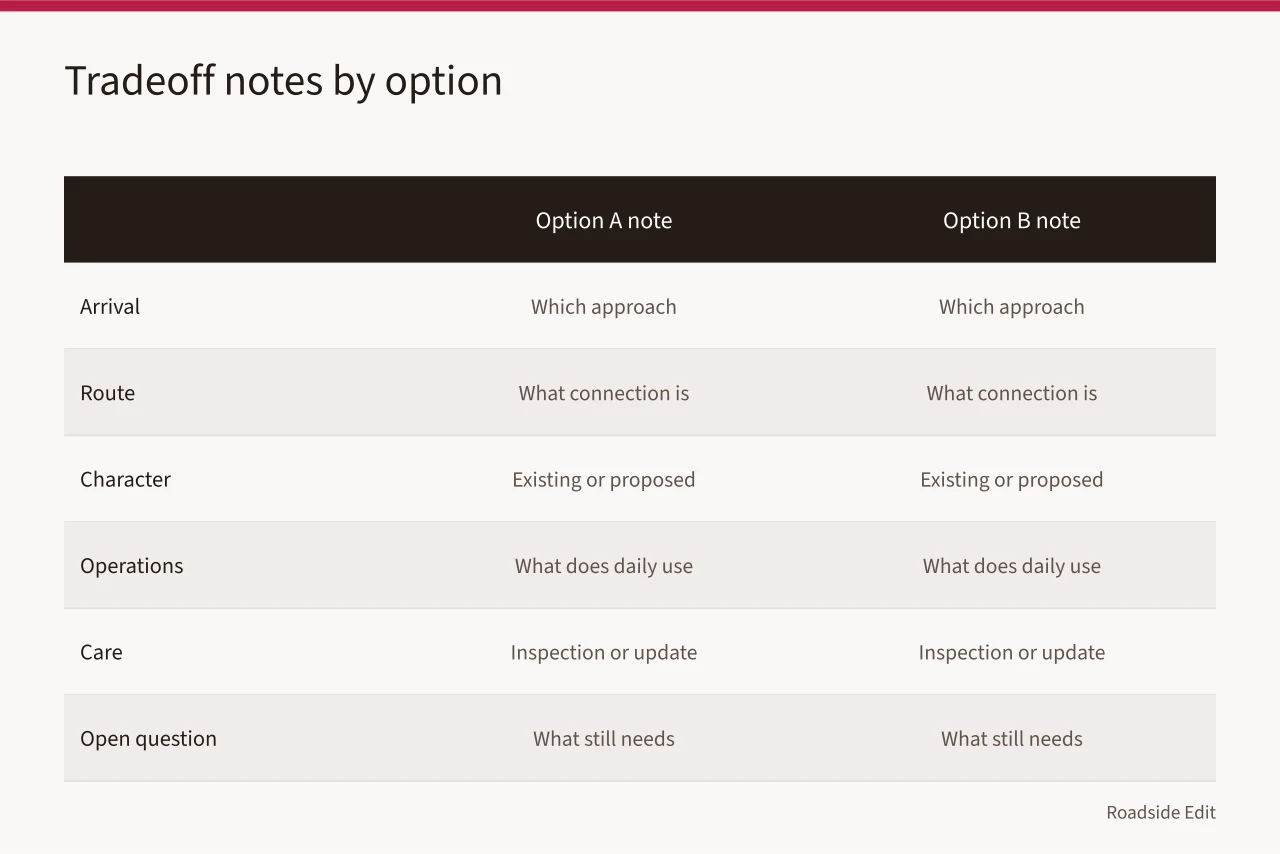
| Comparison topic | Option A note | Option B note |
|---|---|---|
| Arrival | Which approach receives the cue? | Which approach receives the cue? |
| Route | What connection is documented? | What connection is documented? |
| Character | Which feature is existing or proposed? | Which feature is existing or proposed? |
| Operations | What does daily use require? | What does daily use require? |
| Care | What inspection or update role is expected? | What inspection or update role is expected? |
| Open question | What still requires confirmation? | What still requires confirmation? |
This approach makes uncertainty useful. It prevents an attractive option from winning merely because it has more detailed imagery or stronger marketing language.
Keep commercial content outside the test
A future article may include providers, project examples, sponsored placements, or a product list, and those entries can help if their role is explicit.
A provider's description is evidence of what the provider says it offers. It is not evidence that the option has been approved, installed, or achieved a result on a named site. Keep paid-placement disclosure and site comparison in separate fields.
If a list includes a price, state the date, source, scope, and exclusions. A quoted price does not prove the cost of a different property, and it should not be used to rank unrelated options without context.
Decide and preserve the reason
After a comparison, a team may advance one option, combine elements, request more information, or set all options aside, and each result needs a dated decision note.
Record the baseline, the options considered, the evidence used, the open questions, and the person or role that owns the next action. Do not erase a discarded option. It may explain why a later approach changed.
Before publishing, make a public version that removes personal contacts, access instructions, confidential terms, and unsupported claims. The article can explain the decision process without exposing a private project file.
Test an option against everyday use
An option that seems clear in a site image may create a different question during ordinary use, so consider arrival at different times, people on foot or in vehicles, deliveries, maintenance access, and seasonal change. Consider future updates to information.
Do not claim these conditions are resolved unless the appropriate record supports that conclusion. Use them to build the next review list.
For each option, write an operational note: who notices it first, who uses it, who maintains it, and what happens when the feature is unavailable or outdated.
A sign may be obscured. A planting edge may change, a route may be occupied during service, and a visible element may require an update after the original project team is gone.
These are planning questions, not predictions.
Define a fair decision rule
Before choosing a preferred direction, define sufficient evidence. The rule may be simple: an option advances only with a dated baseline, stated purpose, source for its key condition, owner for the next action, and no unresolved issue that belongs to another review.
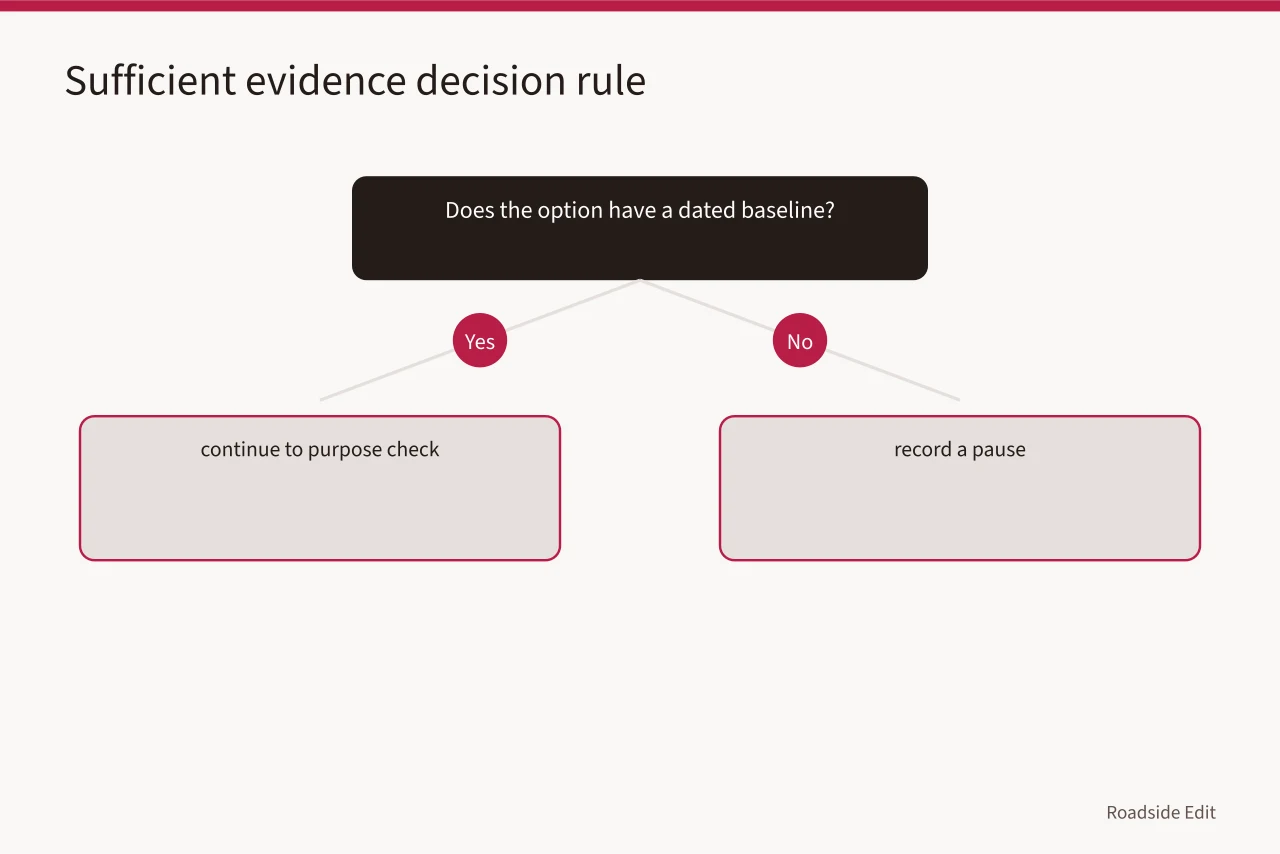
This rule does not make a technical finding; it prevents a recommendation from outrunning the record.
If the rule cannot be met, record a pause. A pause is different from rejection. It tells the reader that the option remains possible but cannot be described responsibly as the current choice.
Make the decision note usable beyond the current meeting. It should identify the date, participants or responsible roles, source materials reviewed, the stated reason for the result, and the next question. If an article later mentions the decision, it should use that dated record rather than recollection or a vendor summary.
This discipline creates a comparison that can be corrected, explained, and responsibly updated after publication.
It also protects readers from an unverified choice being presented as a finished site result.
Keep this note with the active project record.
Keep evidence and decisions separate
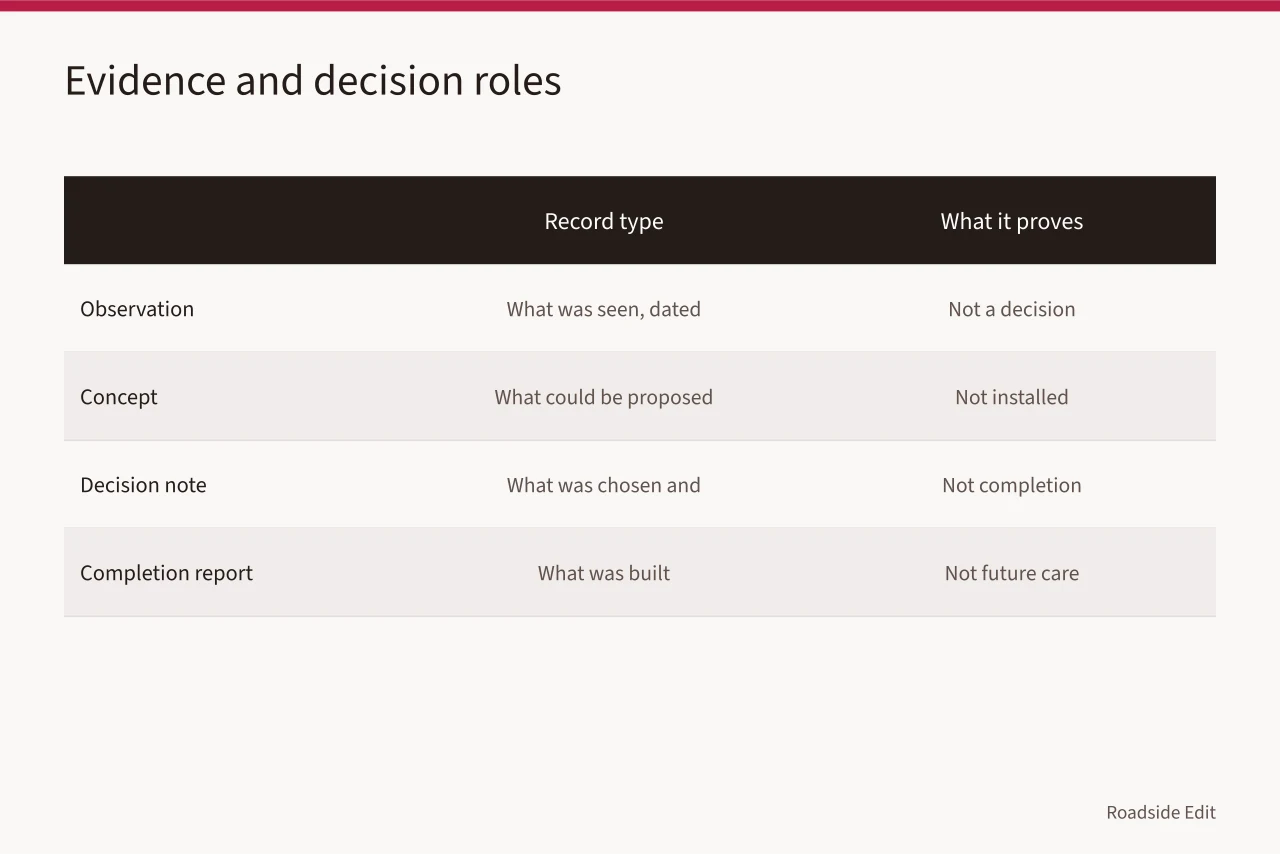
The NPS documentation standards require reliable sources and clear limits for later verification. An observation, concept, decision note, and completion report have different roles. Do not write them as though each proves the next.
The National Archives guidance for digital photographic records explains the value of identifiers and descriptive information with photographs. Retain the source page, date, location, and caption in the comparison file. A media credit identifies origin but does not support a broad property claim.
The Access Board guide to accessible routes can help identify route connections that need documentation. It does not decide whether a particular site meets applicable requirements.
Common questions
Should every comparison end with a winner?
No. A valid result may be that the available information does not support advancing an option yet.
Can a rendering prove that an option works?
No. It can communicate an idea but does not establish actual site conditions, approval, construction, or performance.
What makes options comparable?
They address the same stated problem and use the same fields for evidence, limits, responsibilities, and next review.