Costs
Part of Motel exterior fundamentals: how to document what you can see in 2027
How to write motel exterior budget notes that hold up in 2027
Motel exterior budget notes for 2027 helps U.S. readers label project figures, compare scope, explain unknowns, and avoid turning estimates into promises.
An exterior project figure is useful only when readers can see what it covers. A historic cost, rough estimate, contract amount, grant award, and payment record are different kinds of information. This guide helps an editor describe them without presenting a partial number as a promise.
What to take away
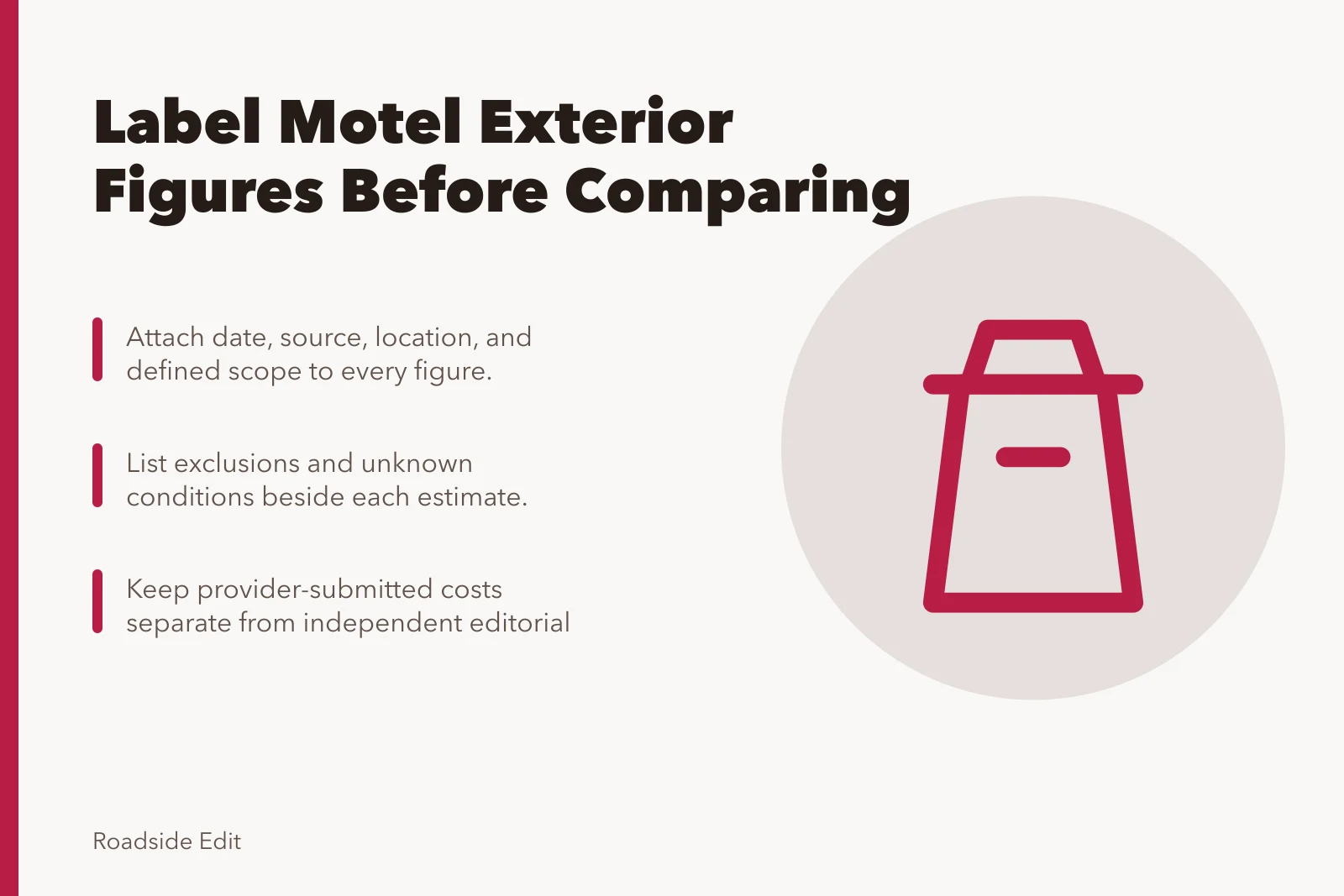
- Attach every figure to a date, source, location, and defined scope.
- List exclusions and unknown conditions beside an estimate.
- Do not describe a program announcement as project funding.
- Keep provider-submitted costs separate from independent editorial context.
Create a figure card
| Field | What to record |
|---|---|
| Number type | Historical cost, estimate, allowance, award, contract, or payment. |
| Source | Exact public record or attributed provider document. |
| Scope | Exterior areas, labor, materials, permits, travel, design, or other stated work. |
| Exclusions | Work or conditions not covered by the figure. |
| Assumptions | Access, weather, approvals, records, and site conditions. |
| Date | When the figure applied or was published. |
Department of Energy building-science guidance says water-managed wall systems drain water away from above-grade walls and cut water-damage risk. Read DOE water-managed-wall guidance.
The source gives no motel project prices. It supports a narrower budget point: exterior assemblies and water-management details shape scope, so a number without a defined system or condition is not a universal rate.
Avoid false comparisons
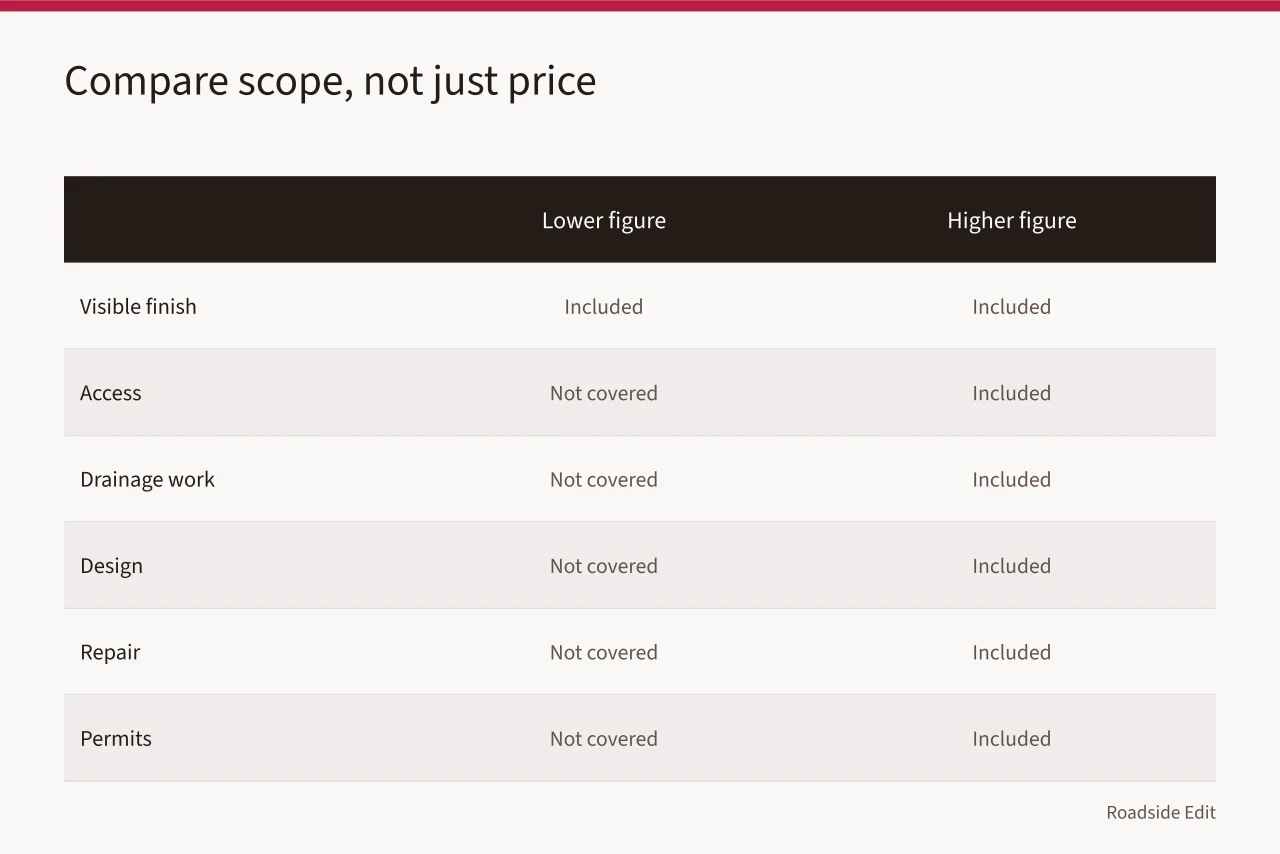
One estimate may cover only a visible finish, while another includes access, drainage work, design, repair, permits, and contingencies. The lower figure may simply cover less work. Put each figure beside its scope before reporting or comparing it.
Historical figures need the same caution. They can provide context when their date, place, and source are visible. They cannot predict a future motel project with different materials, climate, rules, labor, access, or current conditions.
The National Park Service Standards for the Treatment of Historic Properties distinguish preservation, rehabilitation, restoration, and reconstruction. They do not select a treatment or price work at a particular motel. The source supports keeping a proposed exterior treatment goal separate from a contractor scope or cost claim.
Separate exterior work into cost lanes
An exterior figure should identify the work lane it belongs to. A study, temporary protection task, design package, repair proposal, and operations expense answer different questions.
| Lane | What it may cover | What it does not establish |
|---|---|---|
| Documentation | Photos, records review, measured notes | A repair cost |
| Water-management review | Defined study of drainage or wall details | A hidden condition diagnosis |
| Exterior design | Drawings and stated revision rounds | A construction contract |
| Repair proposal | Dated package with stated inclusions | A universal motel price |
| Ongoing care | Scheduled cleaning or inspection tasks | A completed capital project |
The GAO Cost Estimating and Assessment Guide says an estimate needs a purpose, technical basis, assumptions, and data. It also needs methods and updates, and it covers government estimates, not a motel exterior project.
Its lesson: a visible total needs a visible basis. Do not compare two exterior amounts until you can see their sources, work boundaries, assumptions, and dates.
Keep unknown conditions out of the total
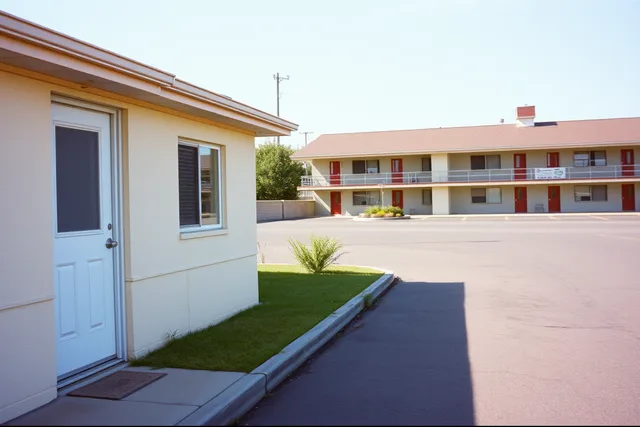
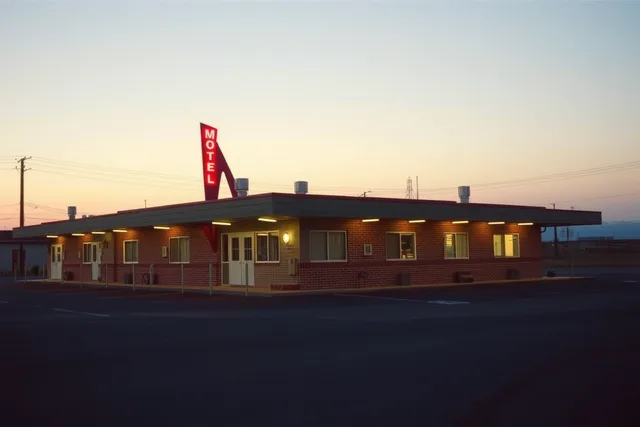
An exterior image can show finish, color, signage, openings, and a public-facing setting. It cannot reveal hidden wall, roof, drainage, utility, or material conditions. When the source does not address a question, record it as an unknown and name the next review needed. Do not add a generic contingency percentage and call the result a budget.
Use an update card when a new source arrives: date, prior scope, new scope, source of the change, and the sentence that needs revision. If a provider proposal expires, keep the old record as history and remove its current-price implication. If a new scope includes more work, describe the added work rather than implying the earlier number was wrong.
Keep funding language exact
Use the action the record actually shows: a program exists, an application was filed, an award was announced, or a contract was executed. Do not turn a general program page into proof that a specific property is funded. If a business supplies an estimate, label it as a business submission rather than independent market research.
The FTC's endorsement guidance explains that a material connection should be disclosed when it could affect how readers evaluate an endorsement. A paid motel, supplier, or provider statement can be useful when attributed. It is not independent proof that a service, material, or exterior option is appropriate for every property.
Before publishing, check that each dollar figure has a source date, stated scope, exclusions, and status. Check that award language identifies the named activity. Check that commercial relationships appear near the affected recommendation or price claim. This keeps a basic exterior guide useful without making it a property-specific estimate.
Common questions
Can a guide publish a rough exterior budget?
Yes, when it is attributed, dated, scoped, and clearly not a quote or commitment.
Is an award announcement proof of a completed project?
No. It describes the action in the announcement, not necessarily later performance or payment.
What should happen to unknown conditions?
List them beside the figure and explain that they require separate confirmation.