Guides
Motel exterior fundamentals: how to document what you can see in 2027
Documenting a motel exterior starts with dated views of roof edges, walls, openings, paving and signs, then names the question each view leaves open.
A motel exterior is a set of surfaces that age at different rates: roof edge, wall face, openings, paving, sign. Each one photographs well and explains little on its own.
This guide is for a surveyor, editor or owner building a dated exterior file. It records what is visible and names the question the view leaves open. It does not diagnose a building, certify safety, specify work, or decide which local rules apply.
What to take away
- Date every observation and name the viewpoint it was taken from.
- Keep water, walls, openings, paving and signs as separate evidence questions.
- Hold maintenance, repair, alteration and project authorization apart in your notes.
- Cite the ADA Standards and DOE moisture-flow guidance as background, never as a finding on a specific motel.
- Log the source page for each image so a later correction has somewhere to land.
Build a plain exterior inventory
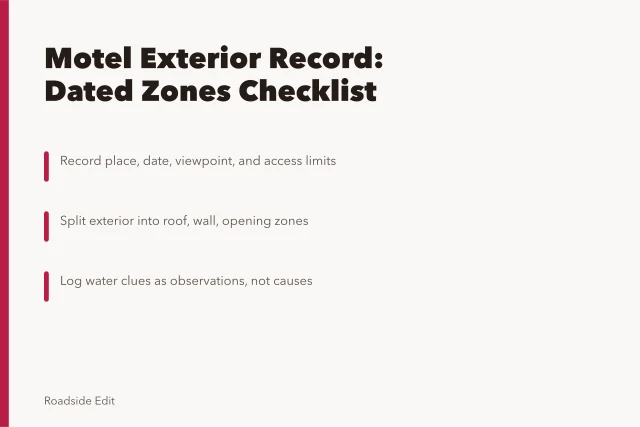
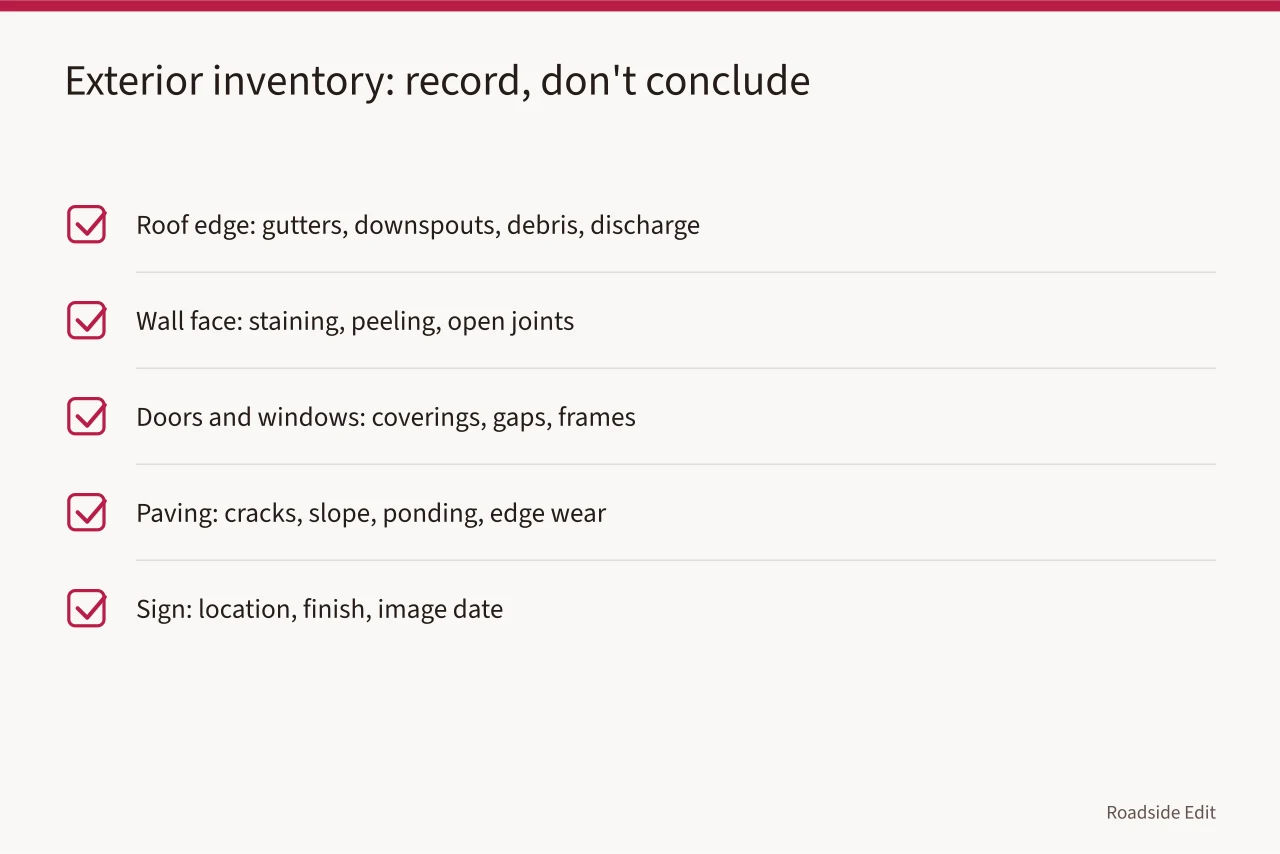
Work only from a lawful, safe viewpoint. Do not enter closed areas, climb roofs, or move materials. A short dated list beats a broad verdict on condition.
| Area | Record what is visible | Do not conclude |
|---|---|---|
| Roof edge | Gutters, downspouts, debris, apparent discharge direction | That the roof is sound or leaking |
| Wall face | Staining, peeling finish, open joints, material changes | Cause, moisture level, repair method |
| Doors and windows | Coverings, gaps, frames, screens, weathering | Security, compliance, energy performance |
| Paving | Cracks, apparent slope, ponding, edge wear | Foundation condition, drainage design |
| Sign | Location, visible finish, date of image | Electrical safety, permit status, operating status |
"Water is visible near the downspout after rain" is an observation. "The foundation is damaged" is a conclusion that needs different evidence and a qualified reviewer. Keep date, source, viewpoint and feature name beside every line.
Follow water without guessing at a cause
Water questions deserve early attention because rain, snowmelt, irrigation and paving touch many visible features at once. A photograph still cannot name the source of a stain or prescribe a fix.
The Department of Energy describes moisture moving as bulk water, capillary action, air-carried moisture and vapor diffusion. Control methods follow climate and construction. Read the DOE moisture-flow overview.
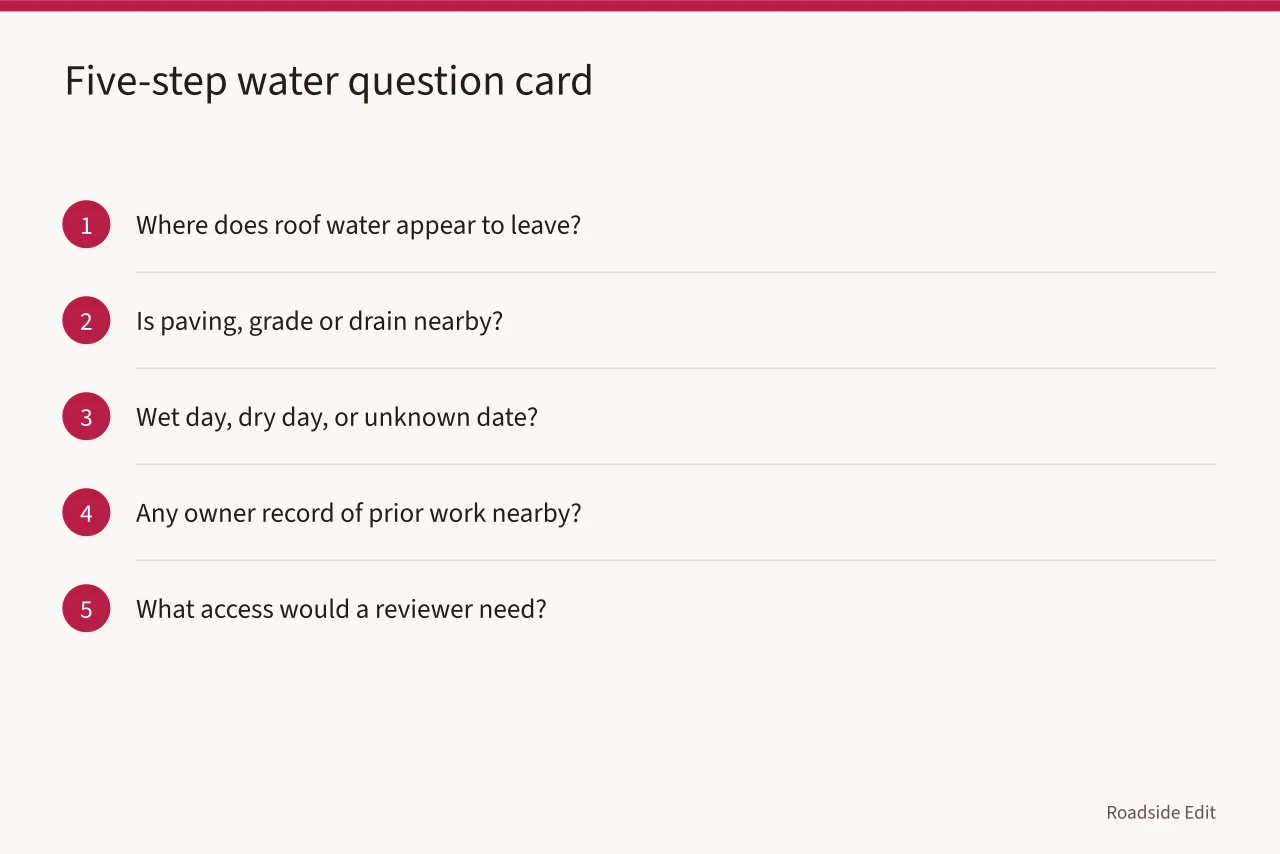
That is building science, not a diagnosis. Use a five-step card for each water question:
- Where does roof water appear to leave the building?
- Is there a paved area, grade or drain near the visible feature?
- Was the view taken on a wet day, a dry day, or an unknown date?
- Does any owner record or dated image identify prior work nearby?
- What access would a responsible reviewer need before making a finding?
An unanswered question is not a weak result. It tells the owner or editor what is missing and stops a caption from becoming a repair recommendation.
The National Park Service advises regular inspection and prompt attention to deterioration on historic exteriors. Review Preservation Brief 47. It is a maintenance habit, not a specification for your motel.
Date the sign before you describe it
Sign faces carry the clearest evidence of a motel's construction date, and the most misread. Porcelain-enamel panels, common on 1930s to 1950s roadside work, are steel sheets fired with a glass finish. They chip to a sharp edge and hold gloss for decades.
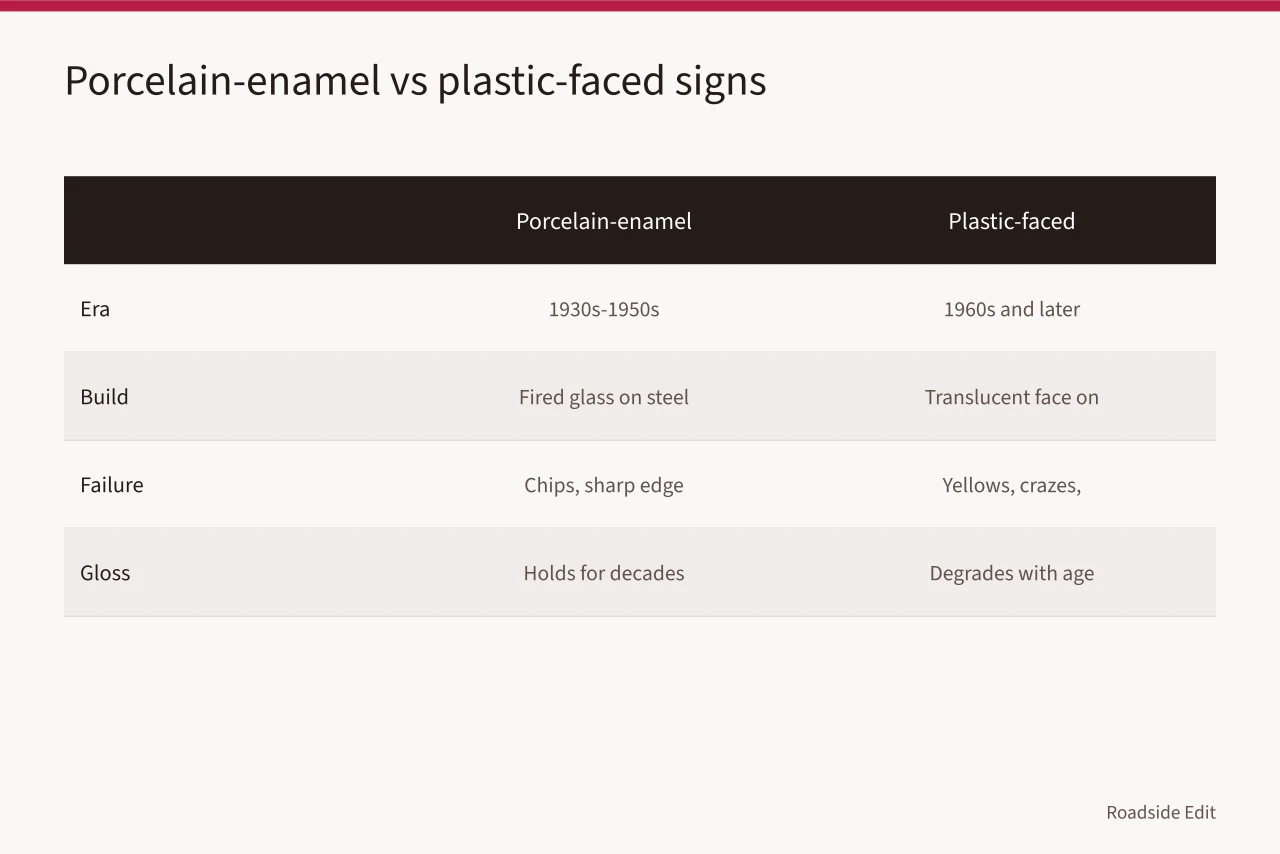
Plastic-faced box signs, typical of the 1960s and later, are a translucent face over a metal can, and they yellow, craze and chalk.
The two fail differently, so a finish note that does not name the material tells a reader nothing. Write "porcelain-enamel panel with chipped lower edge" or "plastic face with visible crazing," then date the image.
Neon tube diameter and transformer load are separate questions from the face. So is the wiring. Those belong to a licensed electrician and the authority having jurisdiction, not to an article.
Where status matters, check with the owner and the relevant local, state, tribal or federal authority. A roadside style or apparent age does not settle historic status, and the responsible record controls, not a visual impression.
Read walls and finishes as visible records
Paint, stucco, masonry, wood and metal panels photograph easily and overread just as easily. Light, weather, camera processing and crop all shift color.
Use the narrowest accurate language. "Paint loss is visible along the lower edge of the sign in this 2026 image" is clear. "The sign needs replacement" is a project conclusion that needs scope, permission, safety planning and a named decision maker.
Over-painting original enamel is a common loss. Once the fired finish is buried, the date evidence goes with it. Note the finish before anyone proposes a coating.
Treat doors, windows and routes as broader questions
Openings shape how a motel looks and also touch comfort, security, access, ventilation and energy use. A public image can show a window or door. It cannot determine performance, compliance or the right change.
The Department of Energy covers windows, doors and skylights and their energy performance. See the DOE guidance on openings. The material is written for homes. It does not set a motel's design or code duties.
Arrival routes need the same restraint. An exterior image may show a walkway, curb, parking stripe, ramp or entrance. It does not show that the route meets a particular accessibility standard.
The ADA Standards are the official technical requirements for covered facilities. Consult the ADA Standards for Accessible Design. They do not decide the obligations at a specific motel. Compliance questions go to the owner, the authority having jurisdiction or a qualified reviewer.
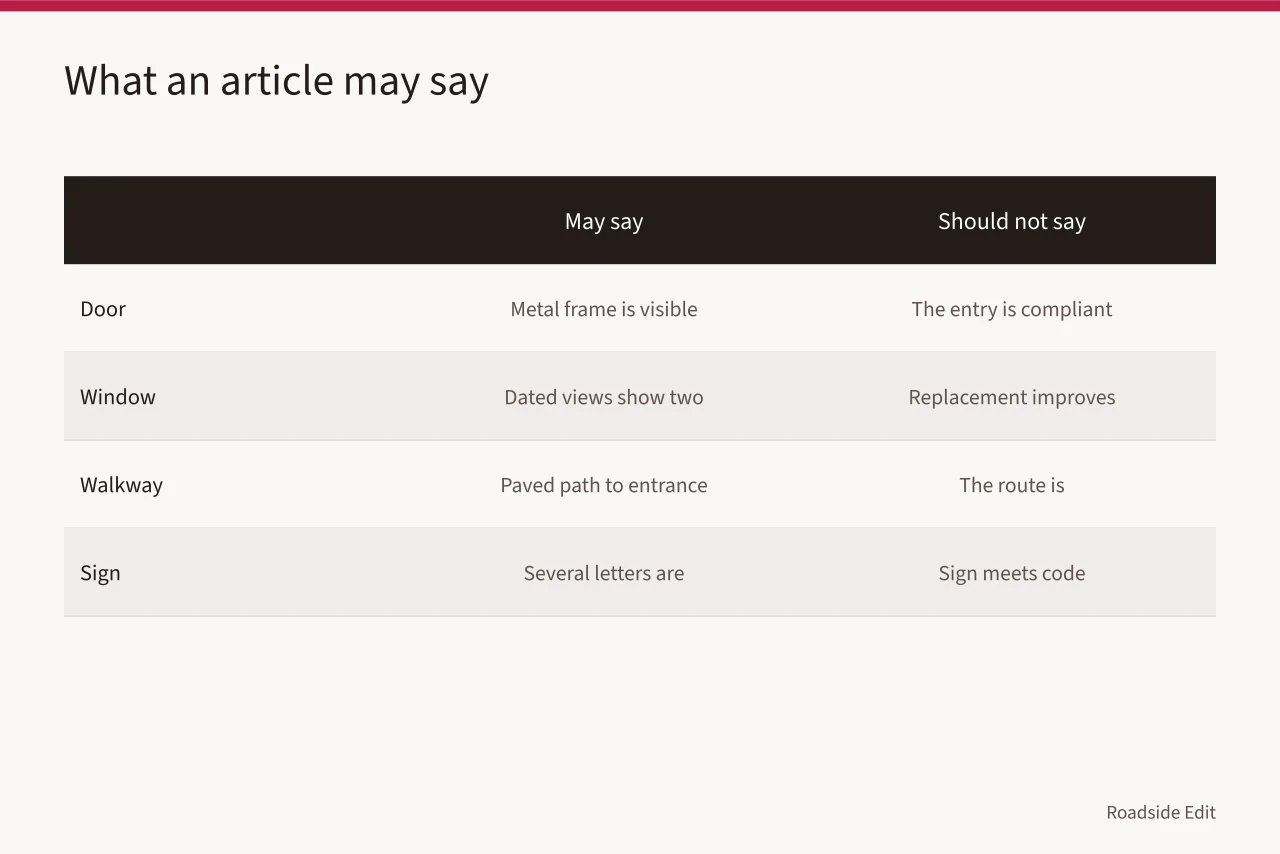
| Visible item | An article may say | An article should not say |
|---|---|---|
| Door | "A door with a metal frame is visible." | "The entry is compliant." |
| Window | "Two dated views show different frames." | "The replacement improves performance." |
| Walkway | "The source shows a paved path to the entrance." | "The route is accessible." |
| Sign | "Several letters are absent in this image." | "The sign is unsafe." |
Separate maintenance from a project decision
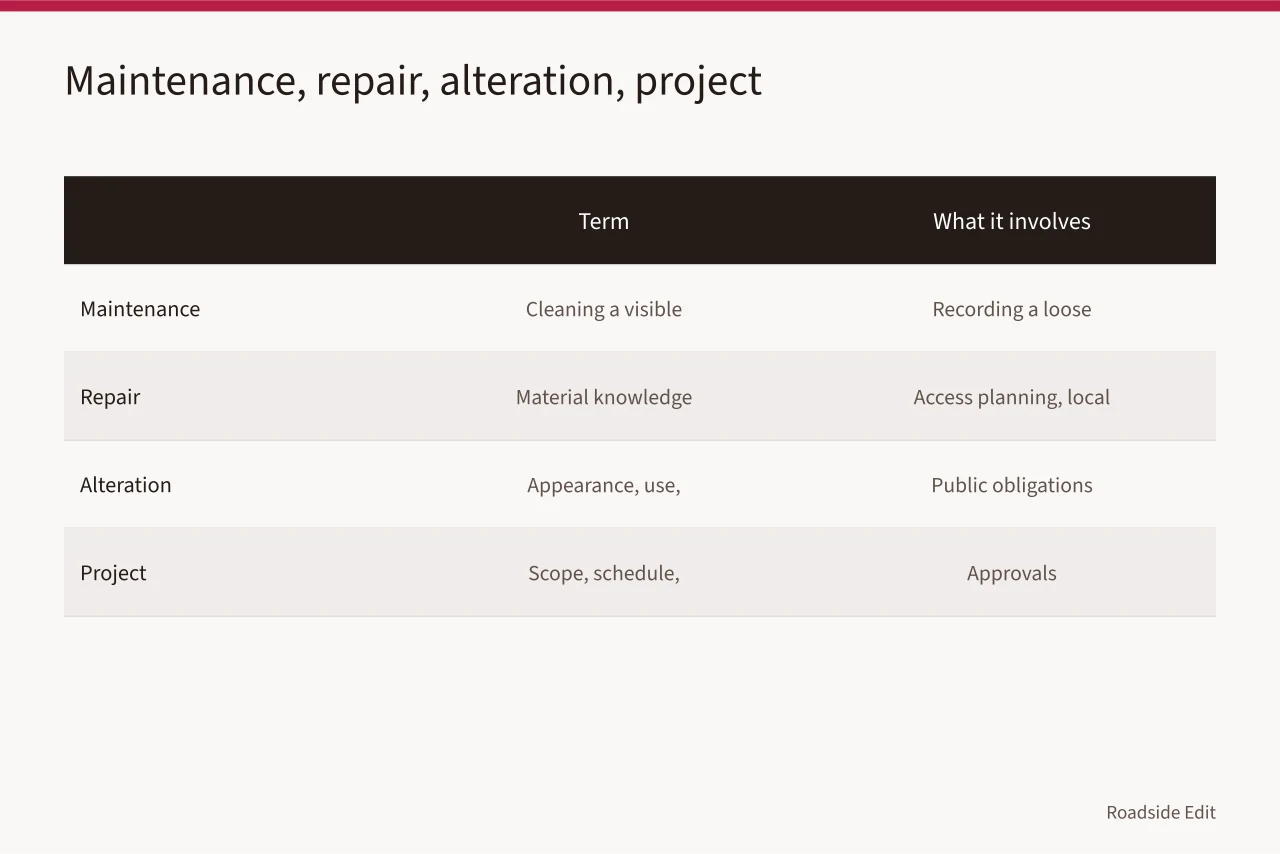
Routine upkeep, repair, alteration and rehabilitation are not interchangeable. A maintenance note may describe cleaning a visible drain or recording a loose sign panel. A repair may call for material knowledge, access planning and local checks. An alteration can change appearance, use, systems or public obligations. A larger project adds scope, schedule, funding and approvals.
Use exact verbs in public writing. "The photograph shows a painted masonry wall" is descriptive. "The wall should be sealed" is advice a broad article cannot responsibly give. "The owner could ask a qualified professional to evaluate the visible condition" names a next step without claiming a finding.
Do not use a provider profile as a condition report. Attribute owner or contractor updates, keep their date, and separate them from independent reporting. Label a paid listing plainly.
Keep a record that can be updated
An exterior article stays useful when its sources and limits are easy to find. For every image or factual statement, retain several details. Keep the source page, date accessed, and creator if known. Also keep the location stated by the source, the exact observation, and a note about uncertainty.
| Keep | Example |
|---|---|
| Source page | Exact archive, government or media file page |
| Observation date | Date shown on the source and date accessed |
| Claim boundary | "Visible staining; no cause established" |
| Submitted update | Owner statement with date and attribution |
| Change log | What changed, source checked, reason |
Review after a documented site change or when a stronger record appears. Do not silently replace an earlier account. Note the new source and what it changes.
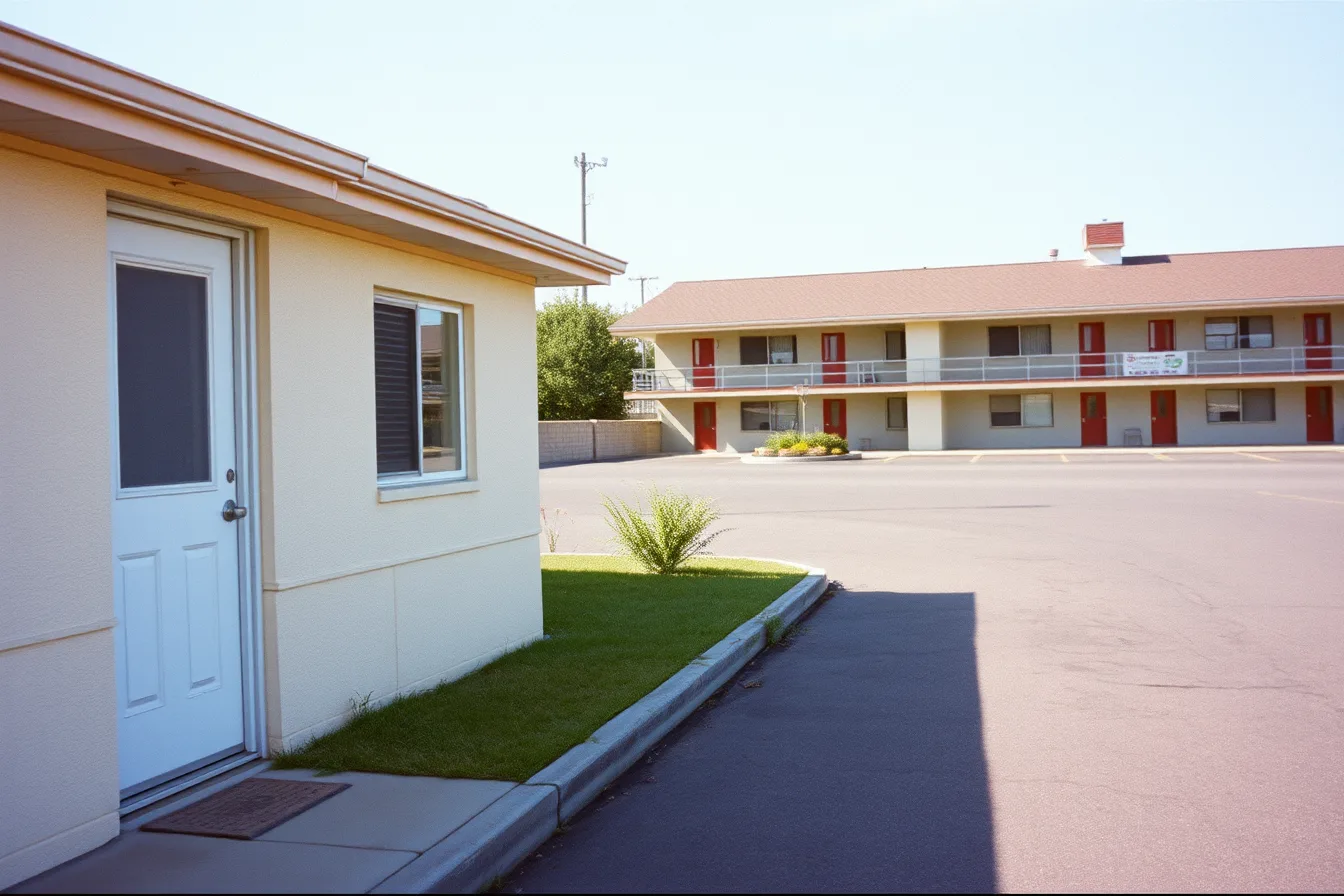
The image is illustrative. It does not establish present condition, ownership, safety, availability or project status of any motel in this guide.
A durable first-pass method
For a first exterior article, do only what the evidence supports. State the location and time boundary. Describe visible features from dated records. Keep observation, reported fact and proposal apart. Name the open question and the person or record that owns the next answer. Credit every image at its source page.
That method is not weaker than a quick verdict. It gives an owner, reader, editor or qualified reviewer a dependable starting point, and it keeps a striking exterior image from becoming a claim about the building behind it.
Common questions
Can a public photo establish that a motel is operating?
No. It documents the exterior at the time of the image, not current operations or room availability.
What should an article do with a visible exterior problem?
Describe what is visible, state the source date, and send project-specific questions to the responsible owner or qualified reviewer.
Does every older motel need preservation treatment?
No. Age or appearance does not determine a building's status or the requirements for a particular project.
Can an article say a walkway is accessible?
Only when a source with authority for that specific conclusion supports it. A photograph alone does not establish compliance.
In this guide
- Motel exterior basics checklist: how to record what you see in 2027Motel exterior basics checklist for 2027: create a dated visual record, track water and access questions, describe visible features, and route decisions responsibly.
- Motel exterior fundamentals: comparison questions for a 2027 first recordA 2027 motel exterior record starts with dated views, named features and the questions a photograph can answer before any paint or sign treatment claim.
- How to write motel exterior budget notes that hold up in 2027Motel exterior budget notes for 2027 helps U.S. readers label project figures, compare scope, explain unknowns, and avoid turning estimates into promises.
- Motel exterior warning signs: how to spot weak claims in 2027 listingsMotel exterior warning signs for 2027 help U.S. readers find unsupported claims, stale images, unclear commercial copy, and missing update records.
- How to keep a motel exterior records guide that holds up in 2027A motel exterior records guide holds up in 2027 when every claim, image, correction and inspection photo keeps its own dated source note file.