Guides
Part of Motel exterior fundamentals: how to document what you can see in 2027
Motel exterior warning signs: how to spot weak claims in 2027 listings
Motel exterior warning signs for 2027 help U.S. readers find unsupported claims, stale images, unclear commercial copy, and missing update records.
An exterior article can mislead readers even when its images are attractive and its language sounds careful. A photo may be old. A stain may have many causes. A listing may be paid. These warning signs help a writer distinguish a visible observation from a condition assessment, a provider claim from independent evidence, and an update from a real correction.
What to take away
- A photograph can show a feature but cannot diagnose its cause or current condition.
- Retain the source date and geographic boundary behind every property claim.
- Keep sponsored or provider-supplied copy visibly separate from independent findings.
- Correct the headline, summary, caption, and FAQ when a material fact changes.
An image carries a conclusion it cannot support
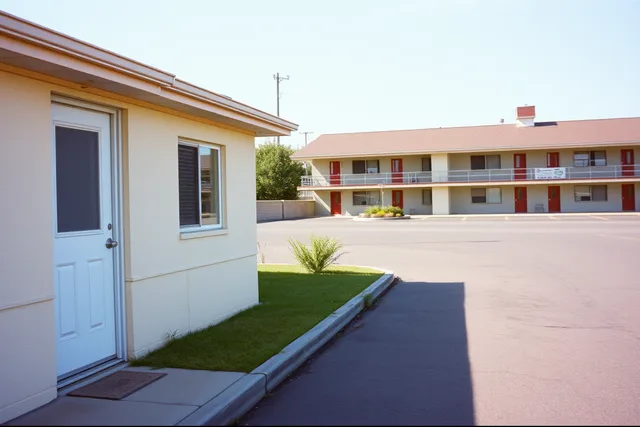
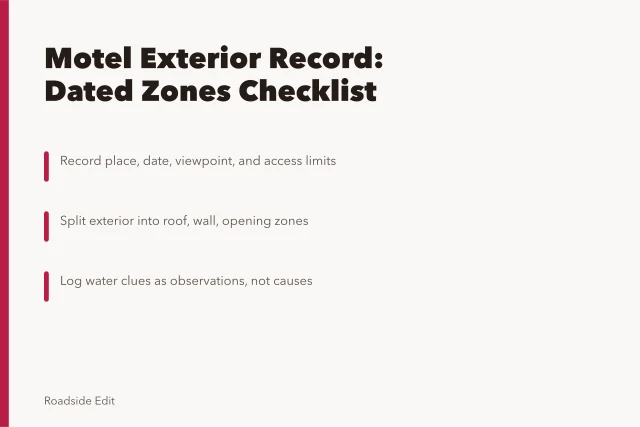
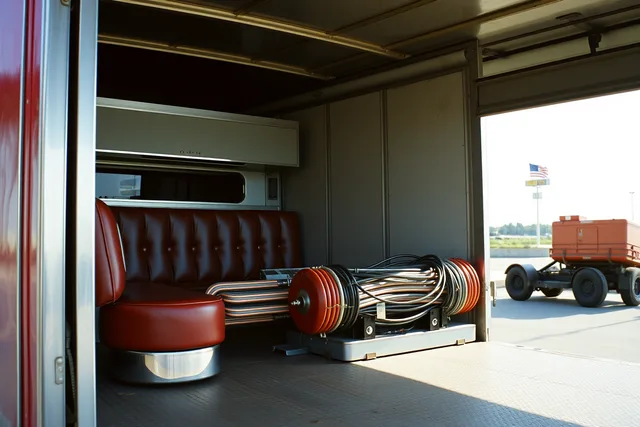
When a photo shows peeling paint, a dark mark, cracked pavement, or a damaged sign, describe the visible feature and stop.
Do not say why it occurred, whether it is current, or which repair is needed unless an appropriate record supports it. Date and credit the source image. Make its limits clear in the caption or nearby text.
This restraint matters with cleaning and surface treatment. The National Park Service cautions that moisture and cleaning products can cause unintended damage to historic surfaces. Read NPS exhibitry cleaning guidance. That page is not a motel-maintenance manual, but it supports the editorial rule that a general article should not prescribe a cleaning method for an unknown material.
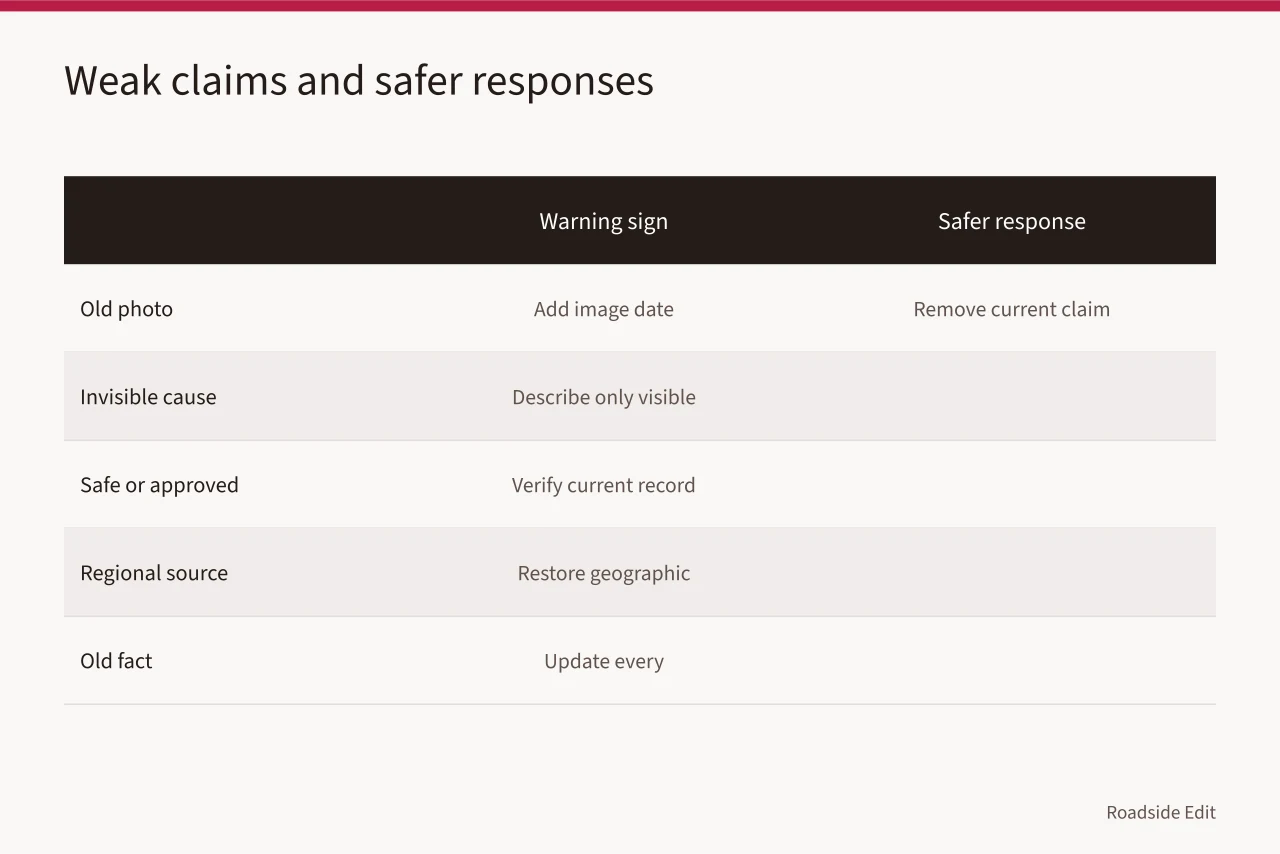
| Warning sign | Safer response |
|---|---|
| Old photo with present-tense copy | Add the image date or remove the current claim |
| Caption names an invisible cause | Describe only what the image shows |
| Property called safe or approved | Verify through the appropriate current record |
| Regional source applied to one motel | Restore its original geographic limit |
| Old fact remains in a page element | Update every public repetition |
Routine care becomes a repair instruction
General maintenance guidance can identify a question, not replace a property-specific evaluation. The National Park Service notes maintenance can prevent more serious deterioration and separates routine care from more substantial treatment work. Review NPS exterior-maintenance guidance.
An article can encourage a dated observation and a qualified referral, not declare specific products or repairs for an exterior from one image.
The article has no record of what changed
If a source changes or a reader provides better documentation, log the decision. Record the original claim, the source checked, the reason for the revision, and the update date. That makes a correction understandable without turning a public article into a private discussion.
The National Archives explains that records management involves controlling information created or received during activity. Review the National Archives' records-management basics. For an editorial team, a small correction log preserves the trail between a statement and the evidence that replaced it.
Commercial copy sounds like a finding
Paid listings can identify a provider's stated services, operating area, or submission date. They do not prove a provider worked at the pictured motel or that the property meets a standard. Use a clear sponsorship label and keep commercial statements in their own section.
The Federal Trade Commission says advertising that resembles independent content should be recognizable as advertising to consumers. See the FTC's native-advertising guide. The practical takeaway is simple: a reader should not need to guess whether an inclusion is paid, supplied by a business, or independently researched.
| Content type | Clear treatment |
|---|---|
| Provider submission | Attribute it to the provider |
| Sponsored profile | Label it near the placement |
| Public record | Link the specific dated record |
| Editorial observation | State its evidence and limit |
A correction reaches only the body text
When a material fact changes, look beyond the paragraph. Check the title, meta description, opening summary, table, image caption, FAQ, structured data, and directory copy. An incomplete correction leaves readers with conflicting answers.
Before publishing an update, ask one question: where else would a reader see the old statement? That check catches many errors that a basic proofreading pass misses.
Common questions
Does a warning sign prove a problem?
No. It identifies a reason to seek clearer evidence before publishing or acting.
Can an image caption include a business claim?
Only if the claim is clearly attributed and does not imply independent verification.
What should a correction record include?
The changed claim, source checked, reason for revision, and update date.