Guides
Part of How to compare motel exterior options for 2027 without a score
How to keep motel exterior options records clear before a 2027 decision
Motel exterior options records for 2027: retain comparable option cards, source notes, disclosure decisions, revisions, and correction history in one clear file.
An options record should let a new editor answer a basic question: what was compared, on what evidence, and what changed? Without that record, an early concept can look like an approved plan, a current photo can be used as proof of a historical claim, and a paid submission can quietly become an editorial recommendation.
This guide is for motel exterior option records. It covers the working materials behind an option comparison: existing-condition notes, source ledgers, option cards, decision notes, submitted material, and corrections. It does not authorize a project, establish a property condition, or replace a local or professional decision.
What to take away
- Give every option card the same core fields so the comparison remains fair.
- Keep source-backed facts, proposed ideas, and decisions in separate record groups.
- Save revisions rather than overwriting a card when the evidence or scope changes.
- Keep paid or submitted material separate from the evidence used for editorial claims.
Build the file around one decision
Create a record path for one motel feature and one decision. A useful subject line might be "Office facade and roadside sign, option comparison." A vague label such as "motel ideas" will collect unrelated images, quotations, and proposals that cannot be fairly compared.
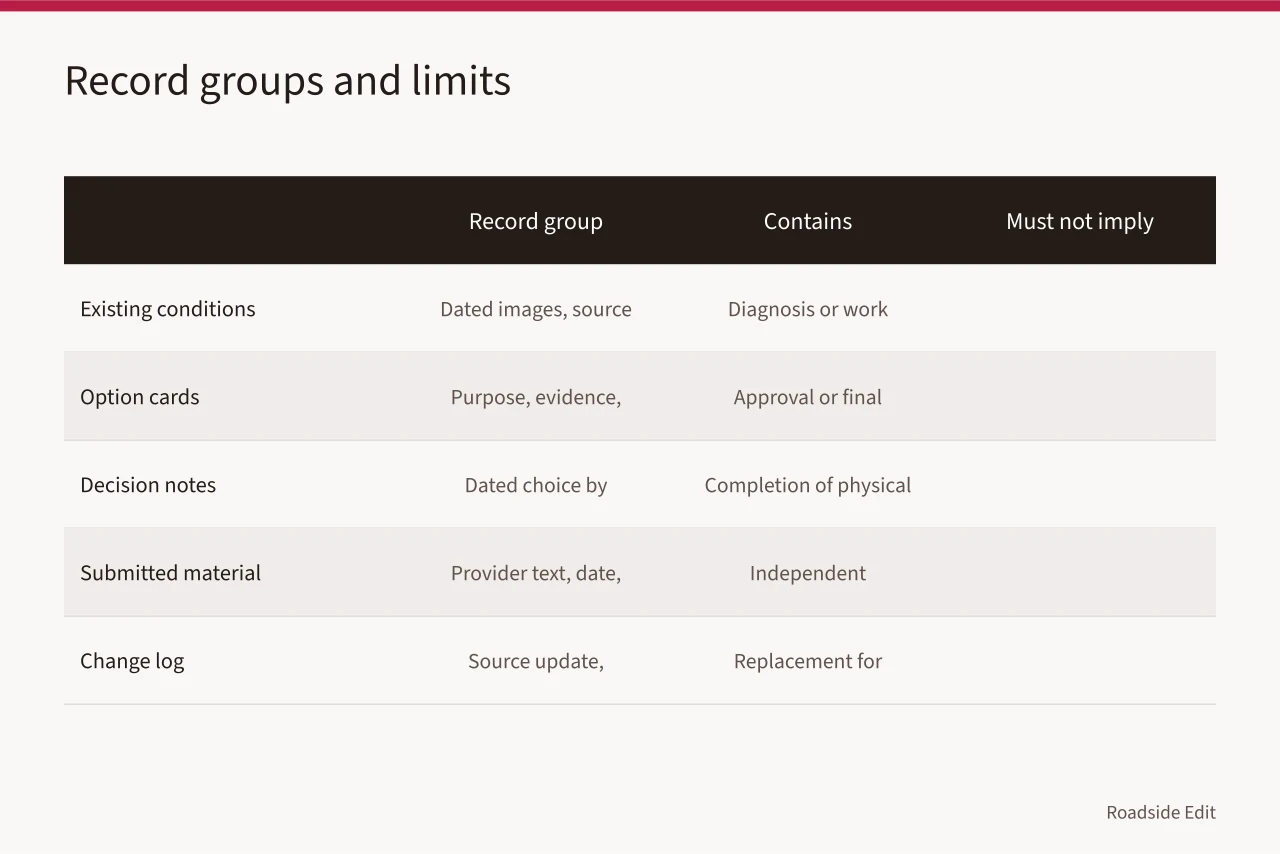
The first page of the file should list the decision question, subject, current scope version, record owner, and next review date. It should say what the comparison does not decide. For example, a choice between documenting a sign and requesting a concept study does not decide a material specification, permit path, or construction schedule.
| Record group | What it contains | What it must not imply |
|---|---|---|
| Existing conditions | Dated images, source pages, views, and limits | A diagnosis or work authorization |
| Option cards | Purpose, evidence, unknowns, and next action | An approval or final recommendation |
| Decision notes | A dated choice by the responsible person or body | Completion of physical work |
| Submitted material | Provider or advertiser text, date, and relationship | Independent verification |
| Change log | Source update, correction, scope revision, and effect | A replacement for the original record |
National Archives guidance says records related to the same project, transaction, study, or subject should be maintained together to preserve context. Read NARA's recordkeeping requirements. The guidance is for federal records, not motel files. The organizing principle still matters: an option card is easier to review when the evidence and change history are in the same record path.
Use matching option-card fields
Option cards should look alike even when the options are different. A current-record path, a concept study, and a broader project request have different purposes, but the reader should see the same questions answered for each one.
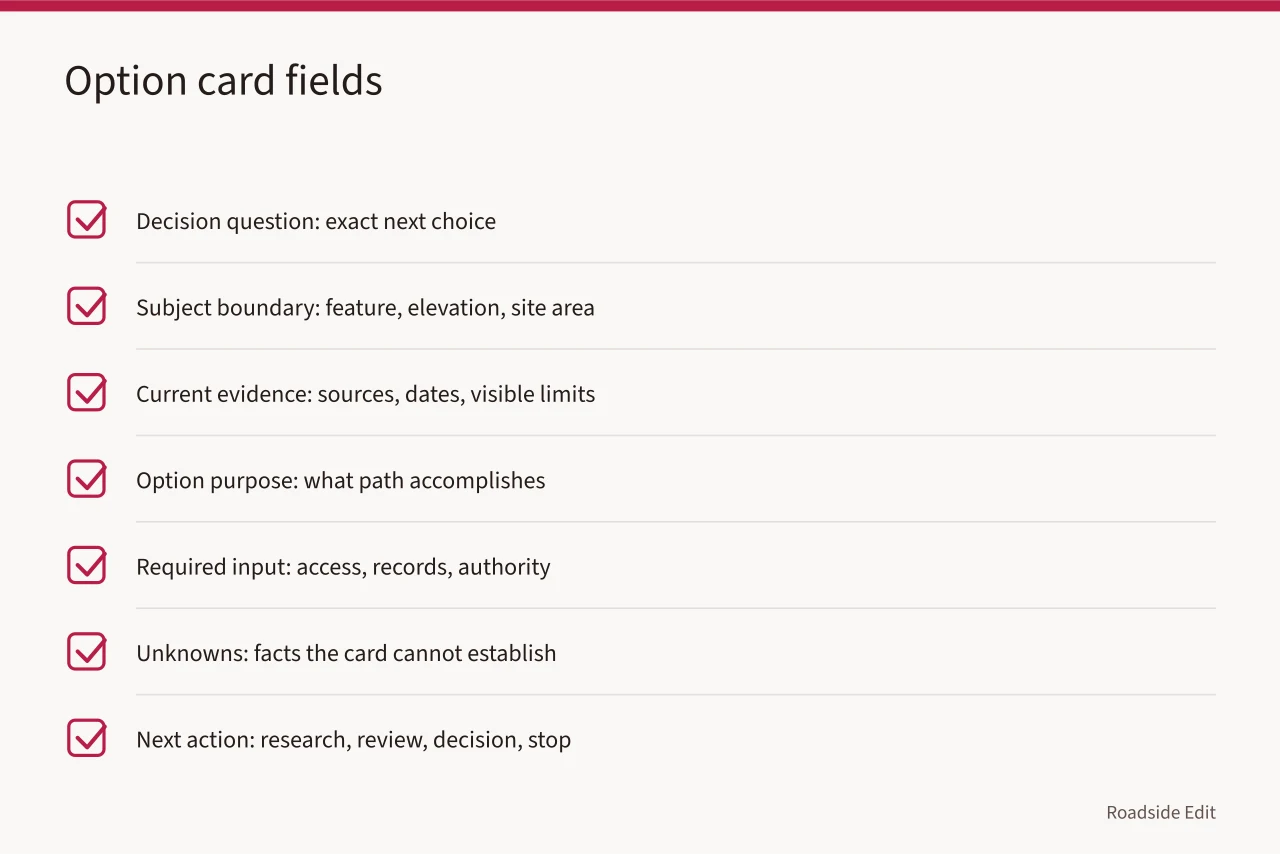
| Card field | What to record |
|---|---|
| Decision question | The exact next choice the card addresses |
| Subject boundary | Feature, elevation, or site area included |
| Current evidence | Specific sources, dates, and visible limits |
| Option purpose | What the path is intended to accomplish |
| Required input | Access, records, authority, or decision needed |
| Unknowns | Facts the card cannot establish |
| Next action | Research, review, decision, or stop condition |
| Version | Date, editor, and reason for revision |
Do not fill a missing field with a guess. If the owner is unknown, write "owner not confirmed." If a source date is missing, write "date not shown." An honest gap is more useful than a polished record that hides uncertainty.
The National Park Service's documentation standards call for reliable sources with limitations clearly stated so information can be independently verified. Review NPS documentation standards. The standards apply to formal heritage documentation. For an option file, they support a practical rule: each card should point to the evidence it relies on and state what that evidence cannot prove.
Keep facts, proposals, and decisions in separate columns
A motel exterior file may contain historical records, a business statement, a concept image, and a note from the owner. They are not interchangeable. Use a label for each item before it appears in an option card.
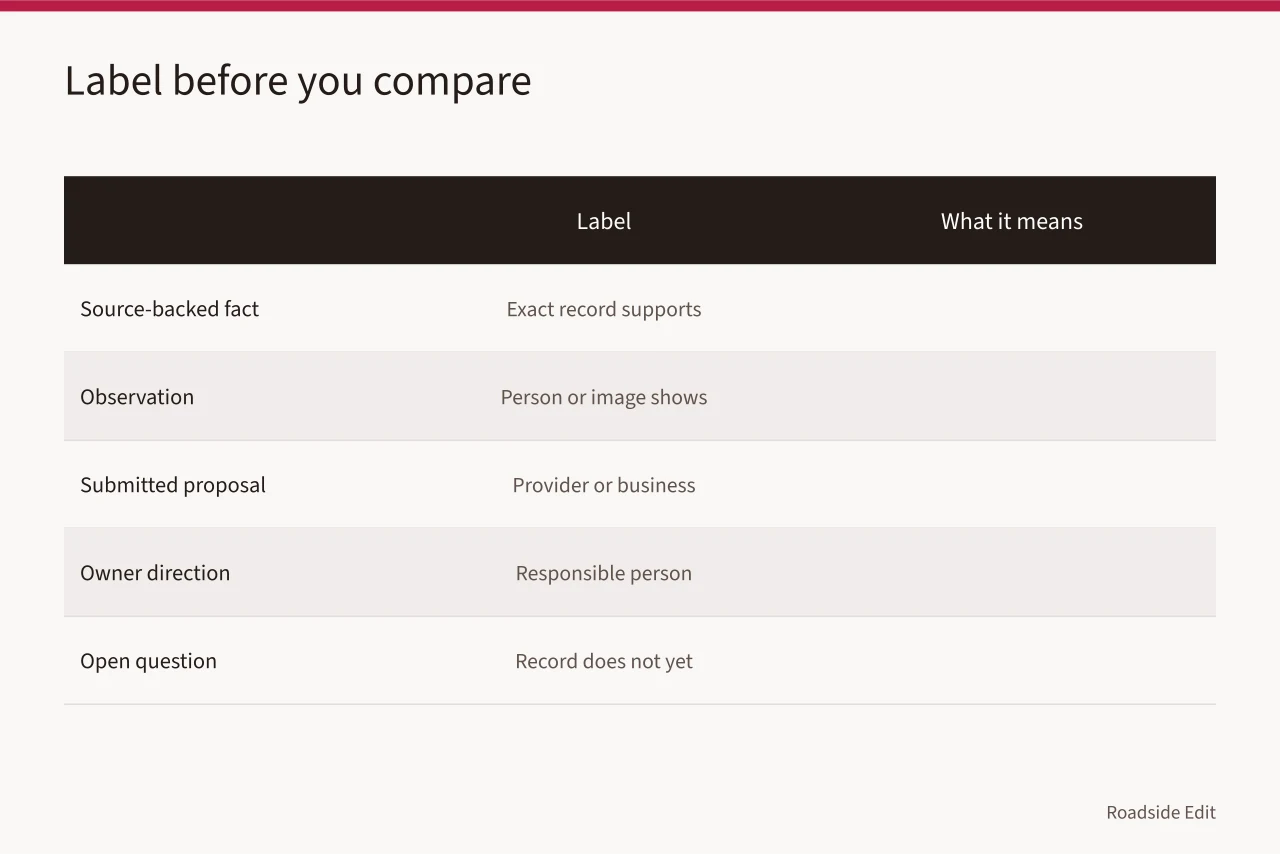
- Source-backed fact: an exact record supports the sentence and date.
- Observation: a stated person or image shows a visible view at a stated time.
- Submitted proposal: a provider or business offered an approach.
- Owner direction: a responsible person requested a next step.
- Open question: the record does not yet support a conclusion.
For example, "The source image dated May 2027 shows the sign face from the listed street viewpoint" is an observation. "The sign needs replacement" is a proposal or conclusion that needs a different record. The card should not quietly turn the first sentence into the second.
Preserve revisions and review comments
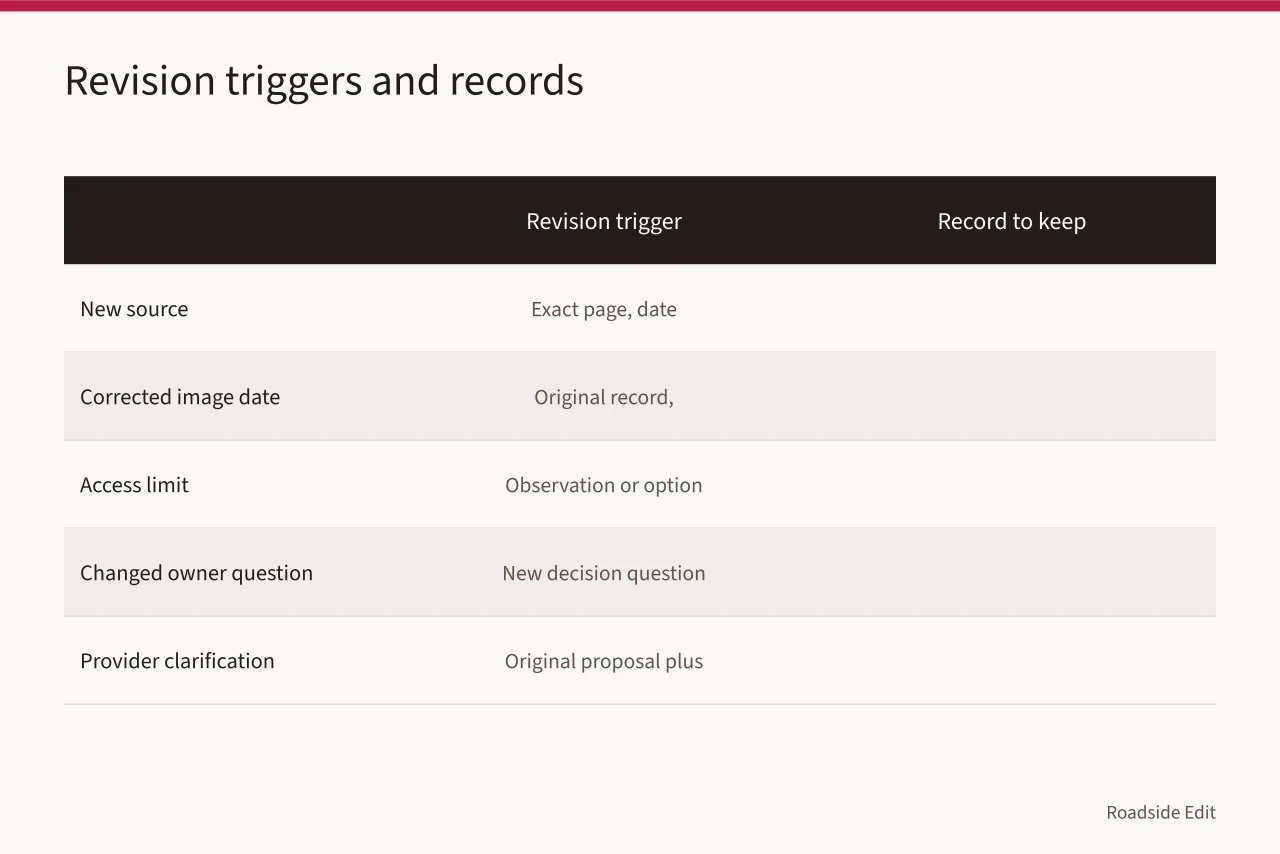
An option can change after a new photo, an updated source, an access limit, or an owner decision. Save the previous card and create a dated revision note. Do not rename the new document "final" unless it is truly the last version the record needs.
NPS quality-assurance guidance uses review stages and requires later submissions to address prior review comments. Review NPS quality-assurance guidance. The federal process is more formal than a motel option review. Its useful pattern is to keep a visible trail of what was reviewed, what changed, and what remains open.
| Revision trigger | Record to keep |
|---|---|
| New source | Exact page, date checked, and claim affected |
| Corrected image date | Original record, source correction, and revised caption |
| Access limit | What observation or option can no longer proceed |
| Changed owner question | New decision question and retired scope |
| Provider clarification | Original proposal plus dated response |
If a revision changes the comparison, update the decision table but do not erase the reason for the earlier version. This protects against copying an old conclusion into a new article.
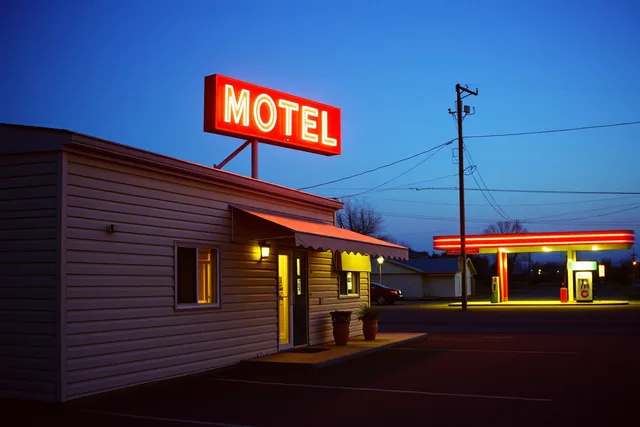
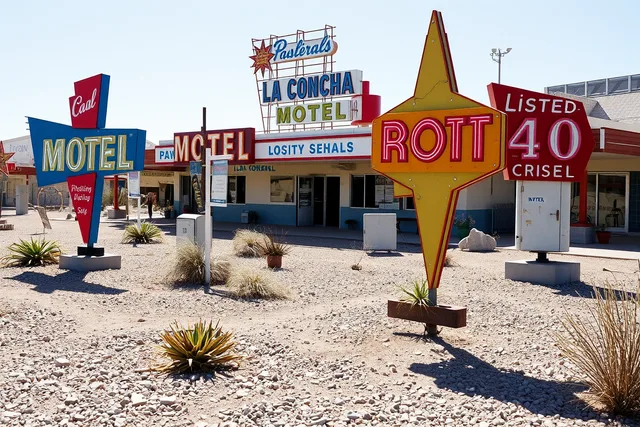
The image is visual context only. It does not establish a current condition, ownership, access, approval, cost, or appropriate option for any separate motel.
Store commercial material outside the evidence ledger
An advertiser or provider may send a service description, offer, concept, or paid-placement request. Preserve the original material with the sender, date, relationship, and disclosure decision. It can explain what the sender offered. It is not independent evidence that the motel needs a project or that the offered service will produce a stated result.
In public copy, make sponsorship or affiliate relationships clear where a reader sees the relevant recommendation or link. In the working file, keep commercial submissions separate from source-backed evidence. This lets an editor update a paid listing without changing the factual basis for an option card.
Add a correction log after publication
An options article can need a correction when an image is misidentified, a source date changes, a proposal is reported as completed work, or a business statement is no longer current. A correction log makes the response traceable.
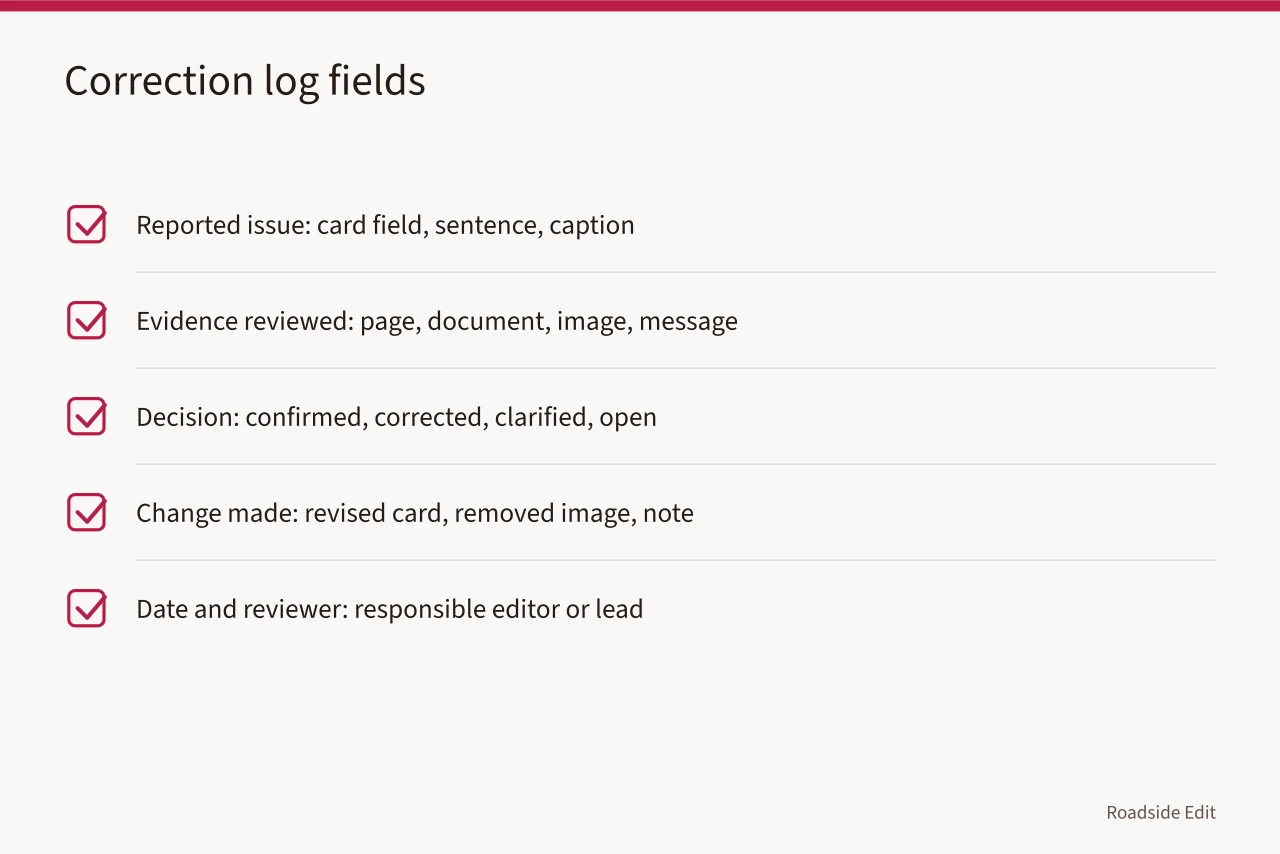
National Archives information-quality guidance says it corrects errors found after publication or includes a correction notice and tracks the change. Read NARA's information-quality guidelines. This policy governs NARA information products. A motel article can follow the same small process: preserve the issue, source reviewed, action, and update date.
| Correction field | What to record |
|---|---|
| Reported issue | Exact card field, article sentence, or caption questioned |
| Evidence reviewed | Page, document, image record, or message |
| Decision | Confirmed, corrected, clarified, or left open |
| Change made | Revised card, removed image, added note, or no change |
| Date and reviewer | Date and responsible editor or project lead |
Do not add a correction merely because a later source looks more convenient. The new record must support the change. If it does not, narrow the wording and leave the question open.
Review the full file before a decision
Before the owner or editorial team chooses a next step, open every current option card and its evidence links. Check that the cards use the same decision question, that their sources still support the wording, and that commercial material did not influence an evidence field without a clear label.
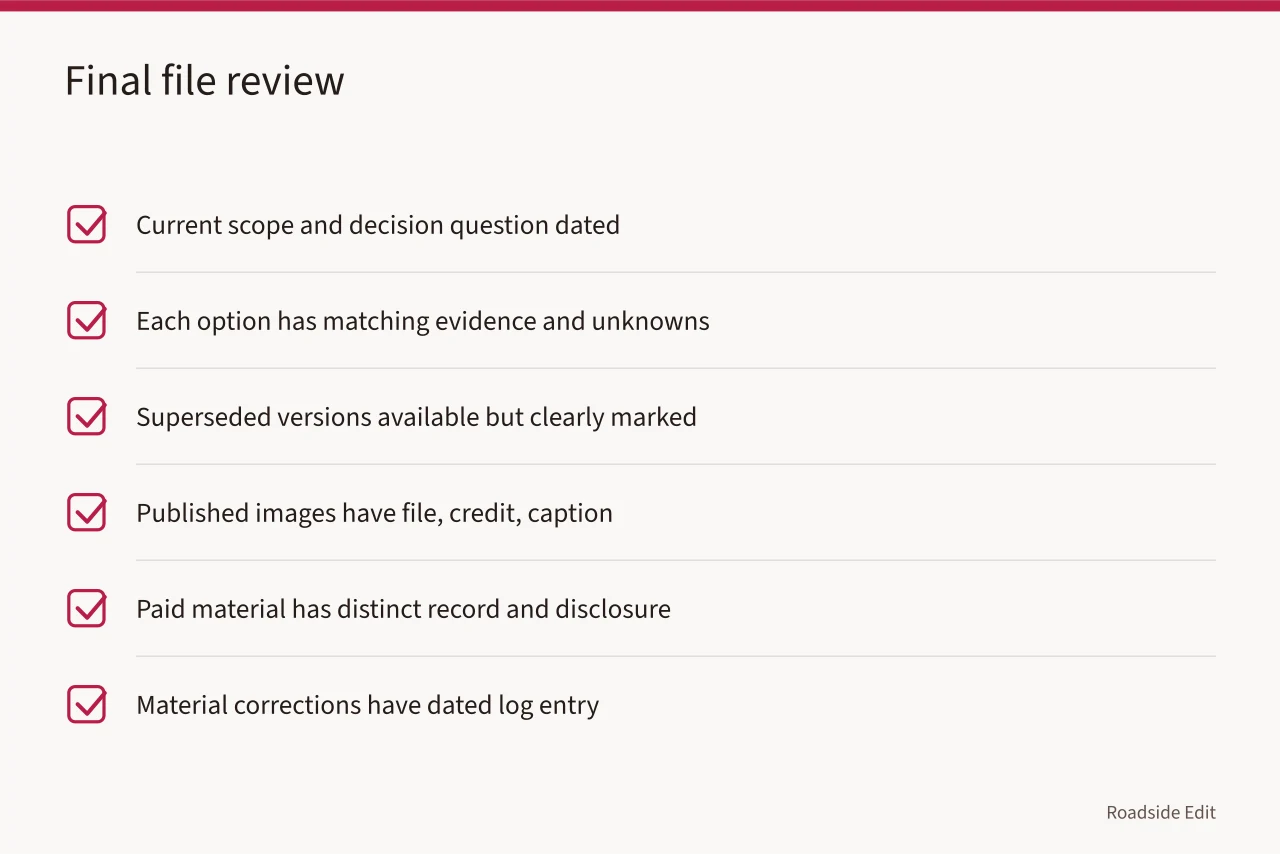
Use this short final check:
- The current scope and decision question are dated.
- Each option has matching evidence, unknown, and next-action fields.
- Superseded versions remain available but are marked clearly.
- Published images have a local file, exact credit page, caption, and limited purpose.
- Paid or submitted material has a distinct record and disclosure decision.
- Material corrections have a dated log entry.
This record makes the comparison explainable. It does not make the choice for the owner.
Common questions
What is the most important options record?
Keep the option card beside the exact source pages and records that support its evidence fields. The card alone cannot explain a comparison.
Should a paid placement sit in the evidence ledger?
No. Preserve it as disclosed submitted material and keep it separate from independent research and observation records.
Can a change log replace an approval?
No. A change log records what the article or option file did. Approval must come from the responsible party through the appropriate process.