Guides
Part of How to build a roadside architecture research plan before you start fieldwork
How to keep roadside architecture interview notes others can trust
Roadside architecture interview notes for 2027 show how to seek consent, ask useful questions, label recollections, and preserve a defensible research record.
An interview can explain a roadside place in a way that a map or survey form cannot. It can also introduce memory, opinion, uncertainty, and private information. The answer is not to avoid interviews. It is to keep a clear record of what the speaker said, what they approved, and what other evidence confirms.
What to take away
- Explain the article's purpose before the conversation and ask permission before recording.
- Use open questions first, then request dates, names, and documents that can be checked.
- Attribute a memory to the person who shared it. Do not silently convert it into a settled fact.
- Store contact details, recording files, notes, and release information outside the publishable draft.
Set the terms before asking questions
Tell the participant who is conducting the interview, what the story is about, where the material may appear, and whether you plan to record. Ask what name, if any, they want used. A person may welcome a conversation and still decline a recording, photo, surname, or publication. Put each answer in the notes while it is fresh.
The National Park Service offers guidance on legal and ethical issues. It says informed consent should cover the project purpose, future uses, where interview material will be held, and who may access it. Read the NPS guidance on informed consent for oral history.
For a small editorial interview, the principle is still useful: do not use the material more broadly than the person understood and accepted.
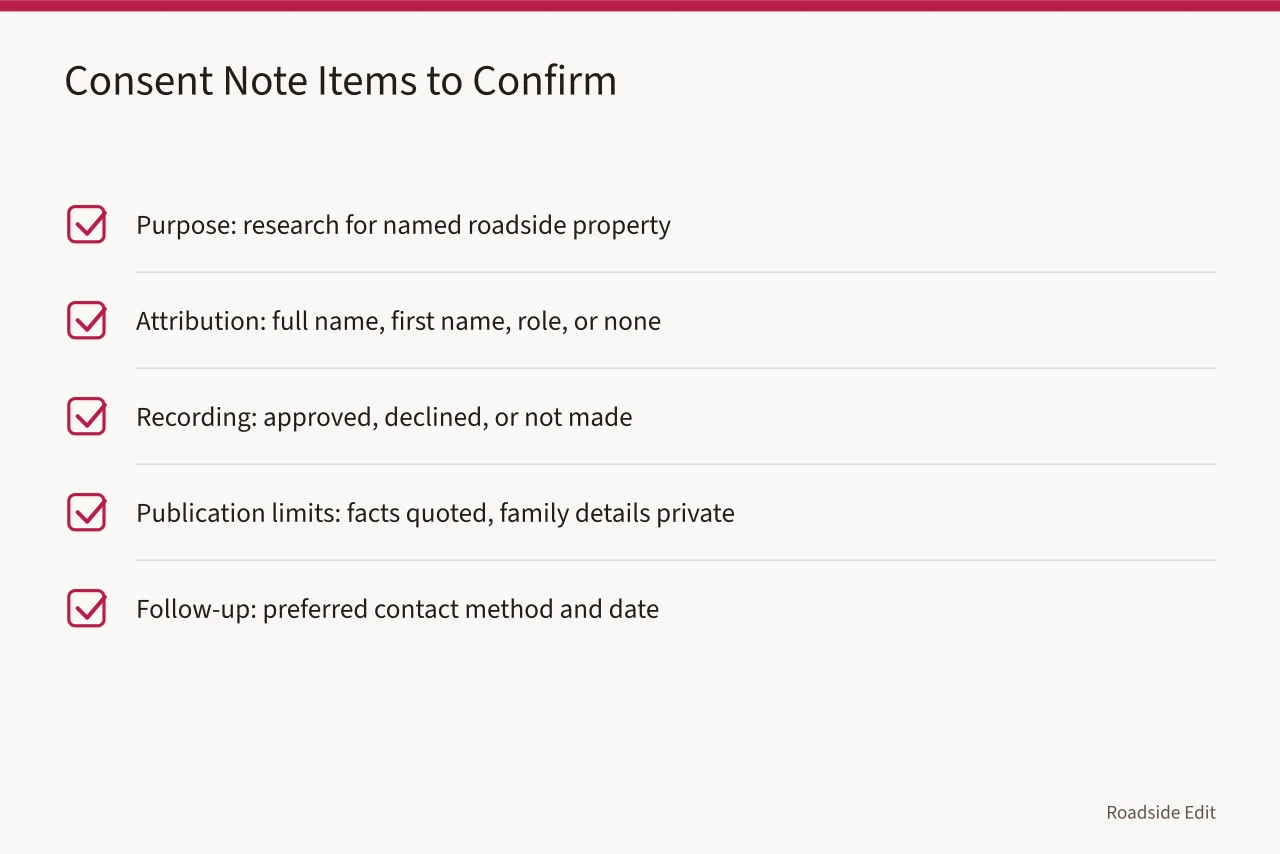
Use a simple consent note. It is not a substitute for legal advice or a formal release when one is needed, but it helps the writer and editor share the same understanding.
| Item to confirm | Example note |
|---|---|
| Purpose | Research for an article about a named roadside property |
| Attribution | Full name, first name, role only, or no name |
| Recording | Approved, declined, or no recording made |
| Publication limits | Facts may be quoted; family details remain private |
| Follow-up | Preferred contact method and date for fact checking |
Ask for stories, then ask for anchors
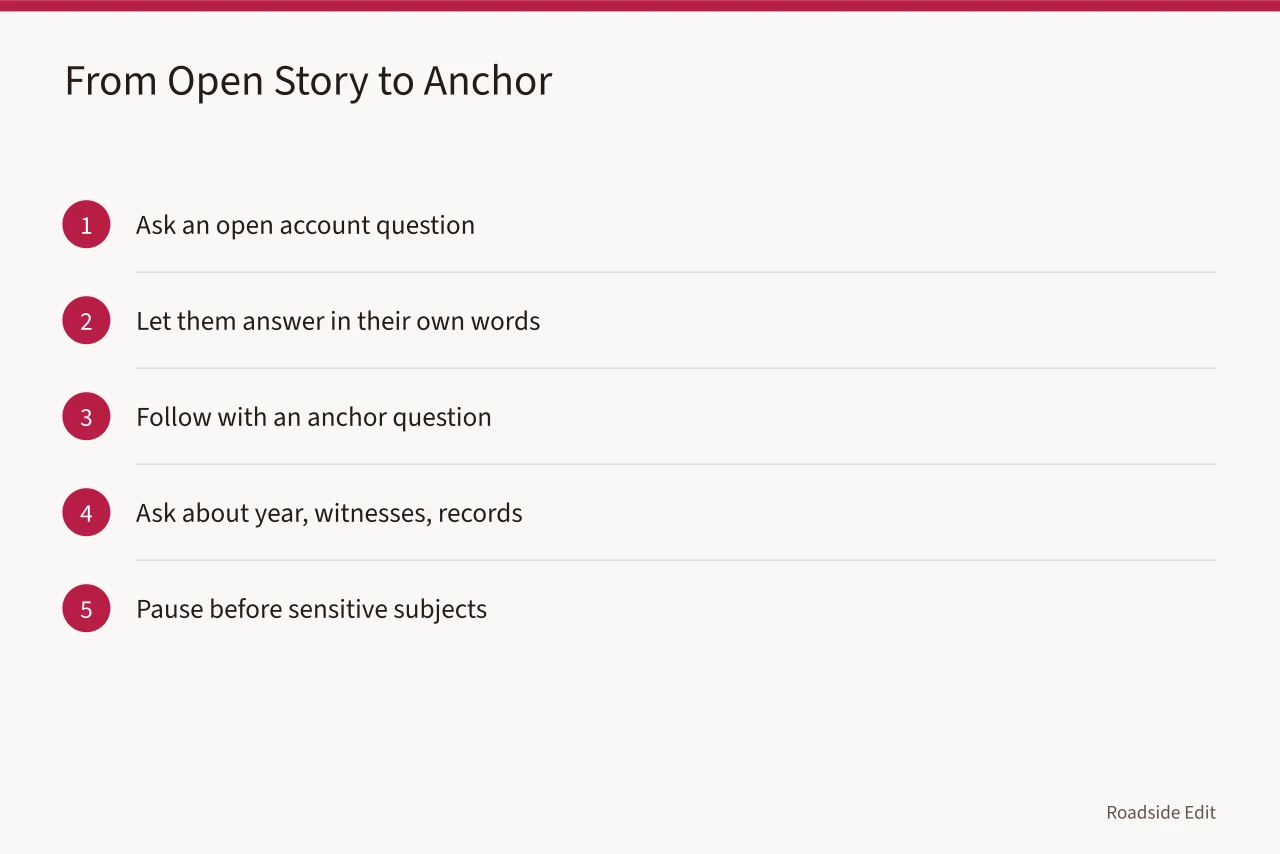
Start with questions that invite an account. "What do you remember about the sign?" and "How did people use this building?" often yield more than a narrow yes-or-no prompt. Follow with an anchor question: "About what year was that?" "Who else was there?" "Is there a picture, receipt, advertisement, or record that could help check it?"
The Smithsonian Institution Archives recommends explaining how an interview is likely to be used, asking permission to record, and using open-ended questions. See the Smithsonian's oral-history interview guidance. Those practices make the conversation easier to review later because the notes show both the question and the source of the answer.
Avoid stacking questions. One question at a time gives the person room to answer in their own words. If an answer raises a sensitive subject, pause before moving forward. You do not need a complete life story to write a careful account of a filling station, motel, diner, or roadside sign.
Separate recollection from confirmation
An interview is evidence of what a person remembers or believes. It may also point toward records that establish a date, ownership, business name, or physical change. Treat those as different jobs. The article should make that difference visible.
| Note type | Publication wording | Follow-up source |
|---|---|---|
| Personal memory | "In a 2027 interview, the former employee recalled..." | No replacement needed when presented as memory |
| Date claim | "The interviewee recalled the diner opening in 1968." | Directory, permit, newspaper, or photograph |
| Identification | "The participant identified the pictured building as..." | Caption, address record, or survey form |
| Interpretation | "The neighbor described the sign as a local meeting point." | Quote it as their view, not as a proven consensus |
The NPS interviewing guide tells interviewers to state project details at the start of a recording, ask for verbal consent, use open-ended prompts, and prepare brief field notes afterward. Follow the National Park Service's interview-note practices.
In a newsroom or content workflow, the field-note step records date, place, participants, permission, exact quote, and facts still needing confirmation.
Build an editorial record that another person can use
Keep the original recording or written notes in a private project folder. Add a short file name that includes the date and participant code, not a full phone number or street address. Make a separate publishable note with only the details readers need. This protects private data and leaves a clean trail for a later editor.
For recorded interviews intended for long-term keeping, the NPS archiving guidance lists the recording, transcript or index, documentation, and legal material among the items that should travel together. Review the NPS checklist for archiving interview materials. A short web article may not need a formal archive package, but the same habit prevents a quote from becoming detached from its source.
Before publication, read the draft against the notes and confirm every quotation keeps its intended meaning. Check dates, spellings, business names, and descriptions against a source that directly supports them.
If a record conflicts with a memory, keep the memory only if it adds value; label it as a recollection. Let the source that directly establishes the fact carry the factual claim.
Common questions
Can I record an interview on my phone?
Ask for permission first and follow the consent requirements that apply where you are recording. If the person declines, take written notes instead. A clear note is better than an unauthorized recording.
What if a participant asks to stay anonymous?
Agree on the level of description before you publish. A role such as "a former employee" may give readers enough context without identifying the person. Keep their contact details out of the article file.
Should I publish an interview claim that no record confirms?
You may publish it as an attributed recollection when it is relevant and permission covers that use. Do not state it as an established date, ownership fact, or general history without support.