Guides
Part of Choosing help for roadside architecture: a 2027 guide to named providers and criteria
Roadside architecture provider questions to ask before you compare fees
Roadside architecture provider questions for 2027 give U.S. owners a neutral interview method for roles, comparable work, records, and deliverables.
What to take away
- Use the same core questions for every candidate so answers can be compared fairly.
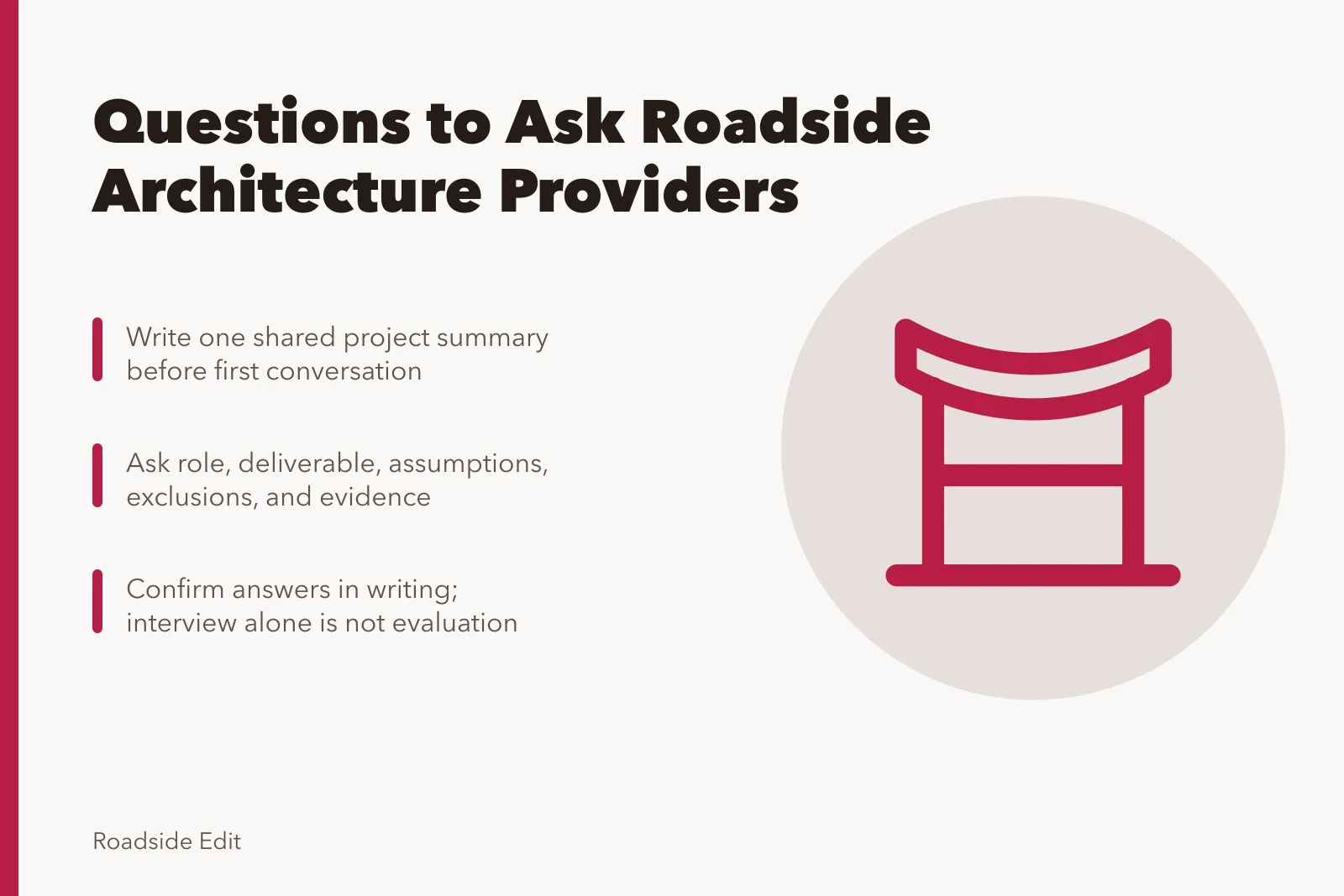
- Ask for the role, deliverable, assumptions, exclusions, and evidence behind a claimed example.
- Record important answers in writing. An interview alone is not a completed evaluation.
- Do not publish a candidate's answer as a verified fact unless the supporting record is clear.
Open with a shared project summary
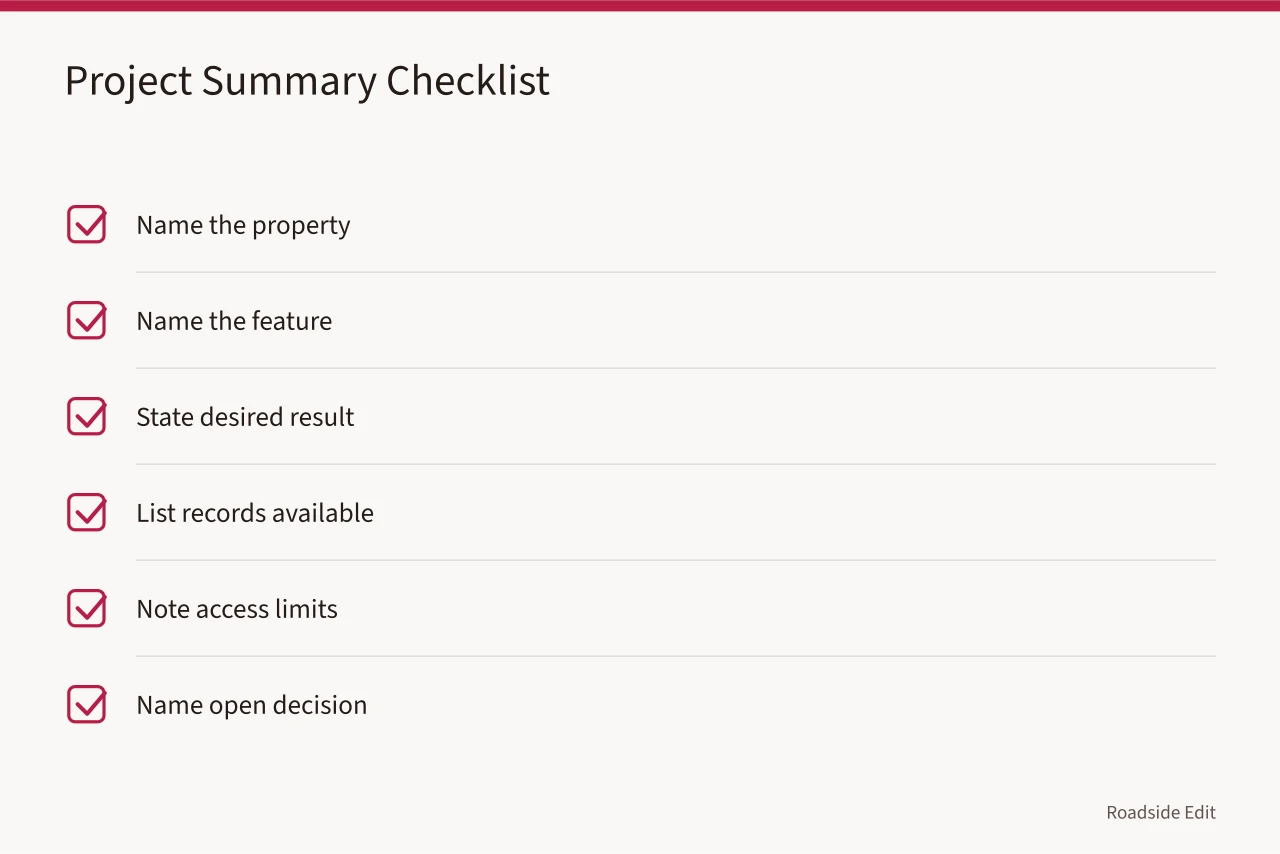
Write one short project summary before the first conversation. It should name the property, feature, desired result, records already available, access limits, and decision that remains open. Read or send the same summary to each candidate. Otherwise, responses may describe different projects while sounding comparable.
| Question | What the answer should clarify |
|---|---|
| What role would you perform? | The candidate's responsibility and boundary |
| What deliverable would you provide? | Report, drawings, records, or scope offered |
| What comparable work can you describe? | Relevance to the feature or task |
| What assumptions are you making? | Access, records, timing, or dependencies |
| What falls outside the scope? | Work the client must arrange elsewhere |
| What needs written confirmation? | Statements that affect price, schedule, or publishing |
NPS Historic Preservation Fund procurement guidance describes requesting proposals, identifying evaluation factors, using a written method to evaluate responses, and giving weight to experience with historic resources. Read NPS contracting and procurement guidance. It applies to its stated program context, not every private decision. It does support the use of written, disclosed questions.
Ask role questions before solution questions
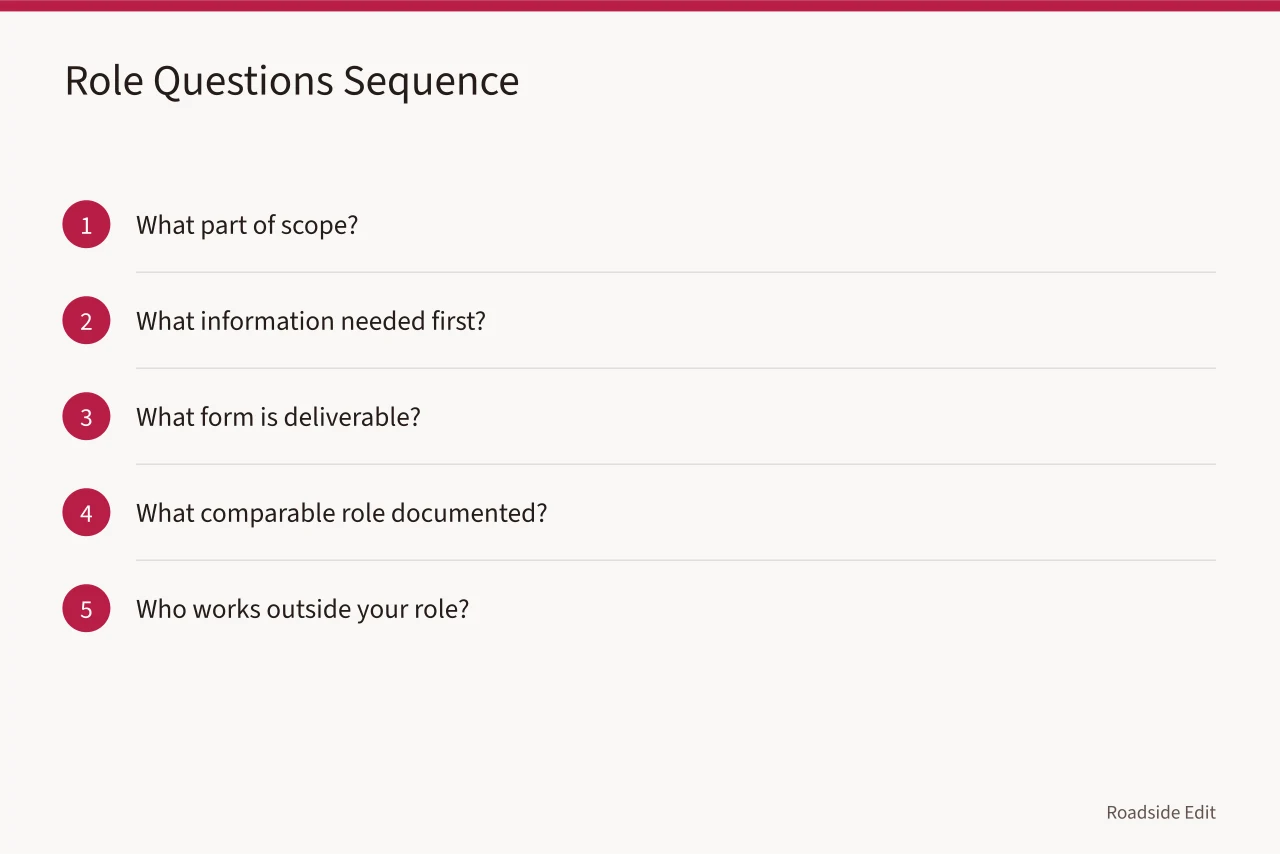
An early interview should establish what the candidate can address, not invite a promise to "save" a building. Ask for the candidate's function within a defined scope. A researcher, architectural historian, designer, specialist contractor, project manager, and photographer may all contribute different work. A clear answer names the role without claiming authority beyond it.
The NPS Professional Qualifications Standards identify minimum criteria for certain preservation activities and explain that complex projects may require additional expertise. Review the NPS qualifications standards. Use them to ask sharper questions about a stated discipline. Do not use them to declare that a candidate is qualified for every kind of project.
Use a neutral interview sequence
Consistency protects both the requester and the candidates. It also makes a published provider list more defensible because the article can describe its method without claiming that a conversation itself proved quality.
| Avoid this question | Use this question |
|---|---|
| "Can you save this building?" | "What part of the documented scope could you address?" |
| "Are you the best person?" | "What comparable work and deliverable can you describe?" |
| "How much will everything cost?" | "What assumptions are needed before discussing a fee?" |
| "Can you guarantee the result?" | "What result does the written scope actually describe?" |
GSA says its preservation checklist includes project-specific preservation design issues, comparable experience, specialist competency, and reference checks. Review the GSA preservation checklist. That is not a script for a casual interview. It supports asking whether the evidence is relevant to the task instead of relying on an impressive title or a portfolio image.
Confirm answers that matter
Send a short follow-up after the interview. Ask the candidate to confirm the proposed role, deliverable, date, assumptions, and exclusions. Preserve the response with the same project summary used at the start. If an answer changes, mark the change rather than comparing the revised response with an earlier version as if they were identical.
NPS documentation standards call for reliable sources and stated limitations that let records be independently reviewed. Use the NPS documentation standards as a note-taking model. A provider interview record should distinguish a candidate's statement, a public source, a reference comment, and an unresolved question.
Keep the original summary with every follow-up. It prevents later notes from being mistaken for answers to a different request.
Compare scopes before comparing fees
Price is meaningful only after the proposed work is comparable. One response may include a site visit, drawings, documentation, or coordination that another excludes. A lower figure is not evidence of better value if it refers to a smaller assignment. Put every response beside the same project summary, then mark each item as included, excluded, assumed, or unanswered.
Do not force a ranking from incomplete information. A fair article can explain the comparison method and identify what a reader should confirm without naming a best choice.
If a provider submits a profile or pays for placement, state that relationship clearly and keep the same factual standard for every listing. A provider statement is useful when attributed, but it is not independent proof of performance, availability, or a completed result.
Before choosing, ask whether the expected handoff is clear. A report, source folder, drawing set, photo record, or referral can all be useful deliverables, but they leave different work for the next person. Naming that handoff reduces the chance that a requester treats an initial review as final design work or a historical summary as a physical assessment.
Common questions
Should an interview include a site visit?
Only if the provider offers it and access is appropriate. Do not describe a visit as an assessment unless the written scope says it is one.
Can one interview establish qualifications?
No. It can clarify a candidate's statements. Supporting records, references, and scope documents still matter.
What if candidates answer different versions of the question?
Send a short written clarification to each candidate and record the revised scope before comparing them.