Guides
How a roadside building care checklist keeps maintenance records straight
Roadside building care checklist for 2027 helps U.S. readers document observations, schedule review, record source limits, and route maintenance questions safely.
Care content is useful when it records visible changes, repeatable review, and the person responsible for the next decision. It becomes risky when a photo turns into a diagnosis or a routine task becomes an instruction for unknown materials, access, or safety conditions. This checklist keeps the record useful and modest.
It does not inspect a building, select a repair, grant access, or decide a permit requirement.
What to take away
- Start with a dated baseline and named exterior areas.
- Record visible facts and access limits before proposing an action.
- Use the same review route and labels when practical.
- Keep public sources, provider reports, and editorial observations separate.
- Escalate urgent, electrical, structural, and access questions to responsible people.
Build the care file around areas, not vague notes
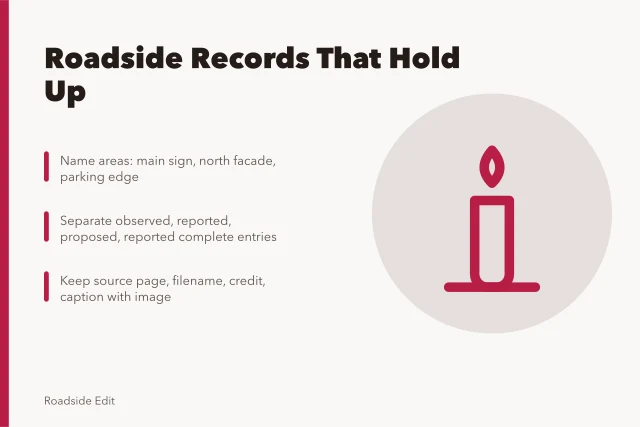
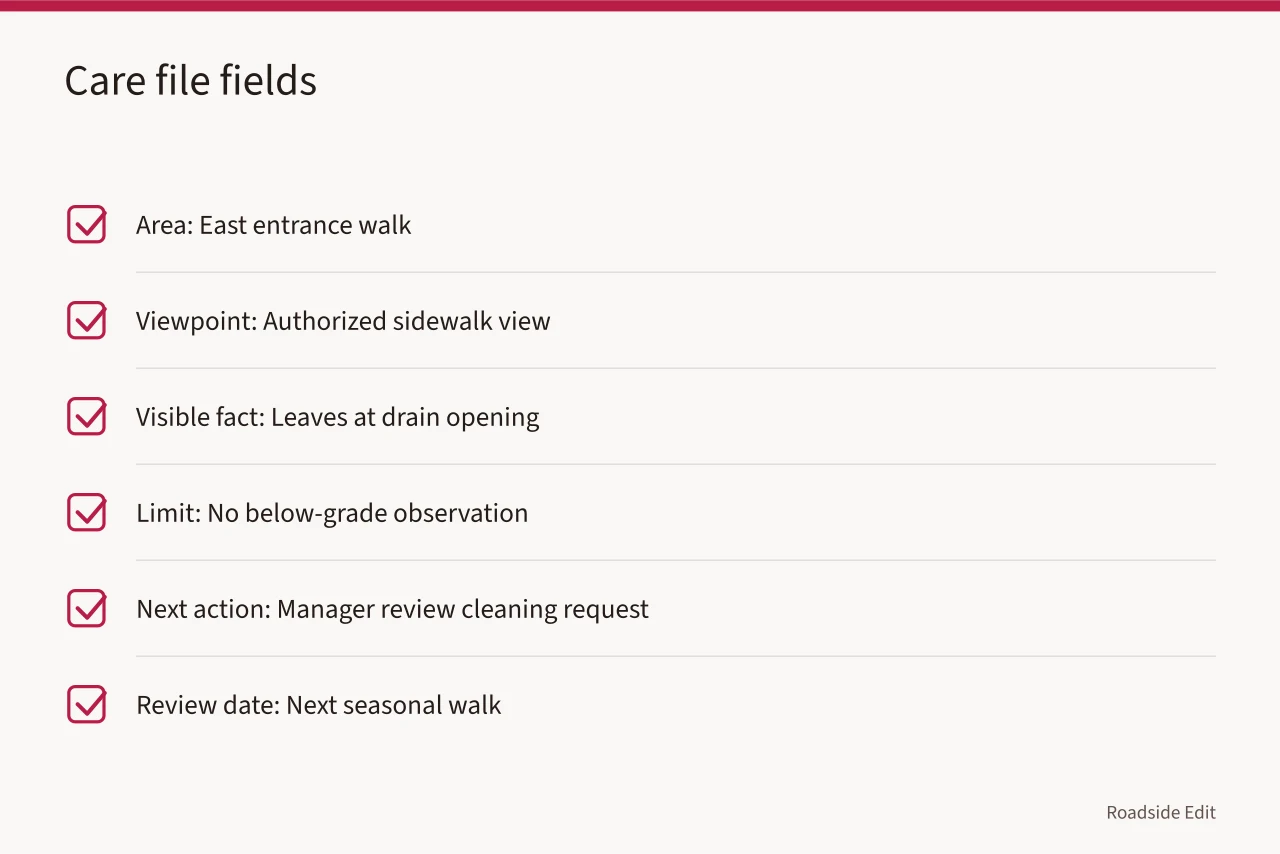
Give every area a stable name: main sign, north facade, entrance walk, parking edge, or service side. Record the date, viewpoint, source, visible fact, access limit, and next review date. A file called "outside issues" cannot show a future reader where or when something was seen.
| Care field | Example |
|---|
The National Park Service's Technical Preservation Services publications page gathers guidance on preserving, rehabilitating, and maintaining historic buildings. It is a research resource, not a site-specific work order. Use a source that matches the material and question before making a maintenance claim about a property.
Use a repeatable walkaround
Take the same route at each review when it is safe and authorized. Start with an overview, then document only visible changes that need a record. Do not climb, cross barriers, touch equipment, or enter restricted areas for a better image. Write "not observed because access was not authorized" when that is true.
Record first, interpret later
- Describe staining, debris, gaps, failed lighting, or changed surfaces in plain words.
- Separate an owner or provider report from what the observer saw.
- Do not name a cause, hidden condition, or repair method without appropriate evidence.
- Attach the date and weather context if it affected the view.
The National Park Service's Preservation Brief 47 describes planned, cyclical attention to exterior building features. It concerns historic buildings rather than every roadside structure. Its transferable point is to use a regular record and follow up on evidence instead of relying on memory.
Sort the next action by responsibility
The checklist does not need a technical severity score. It needs a clear owner for the next step. Use record, monitor, notify, restrict, or urgent as workflow labels. Each one should say who needs the information and when.
| Label | Use when | Next step |
|---|---|---|
| Record | A visible baseline or change needs preservation | Save note and image |
| Monitor | Current evidence does not settle the question | Set review date |
| Notify | Owner or manager needs the information | Send location and source |
| Restrict | Responsible party must decide whether access should change | Report promptly |
| Urgent | A potential immediate threat is apparent | Follow emergency or property procedure |
OSHA's walking-working-surfaces standard requires covered employers to inspect walking-working surfaces regularly and as necessary. It is not a remote inspection method for a roadside article. It supports the narrow habit of recording a visible route condition, notification, and follow-up instead of treating a photo as final action.
Keep commercial content out of maintenance evidence
A provider may later submit a service description or purchase a listing. Keep the supplied material, sender, date, and disclosure in a commercial file. It can support an attributed statement about that provider's offer. It does not independently prove a condition or the right course of care for a named building.
The Federal Trade Commission says advertising that resembles independent content should be recognizable as advertising. Read the FTC native-advertising guide. It does not decide a maintenance question. It supports a visible disclosure and a separate file for paid or submitted claims.
Review the file after each season or event
Check for unnamed images, open questions with no owner, and old provider details that no longer have a current source. Add correction notes rather than replacing old observations without explanation. If a source no longer supports a published sentence, revise or remove the sentence.
Keep private contacts, access details, and security-sensitive records out of a public care article. The public page should explain a method, not expose operational information.
Common questions
Can a care checklist identify a repair method?
No. It records evidence and directs the question to the responsible owner or qualified reviewer.
Does a photo prove a building condition?
It proves only a view at a date and from a viewpoint. State what is visible and what the image cannot establish.
What should happen after an urgent observation?
Follow the property's urgent procedure or contact the responsible service first. Preserve the location, time, visible fact, and notification record after that response begins.