Reviews
Roadside building maintenance plan comparison questions before you call
Roadside building care questions for 2027 help U.S. readers distinguish visible observations, documented maintenance, provider claims, and technical conclusions.
Roadside building care questions for 2027 help an editor compare records without mistaking a visible detail for a diagnosis. The questions separate what a source documents, what a visitor can observe, and what would require a qualified assessment.
What to take away
- Ask what the source actually confirms before choosing maintenance wording.
- Compare records by date, scope, and project stage.
- Treat a provider service description as an attributed claim, not project proof.
- Avoid technical conclusions based on an image or casual observation.
Questions to ask before a maintenance statement
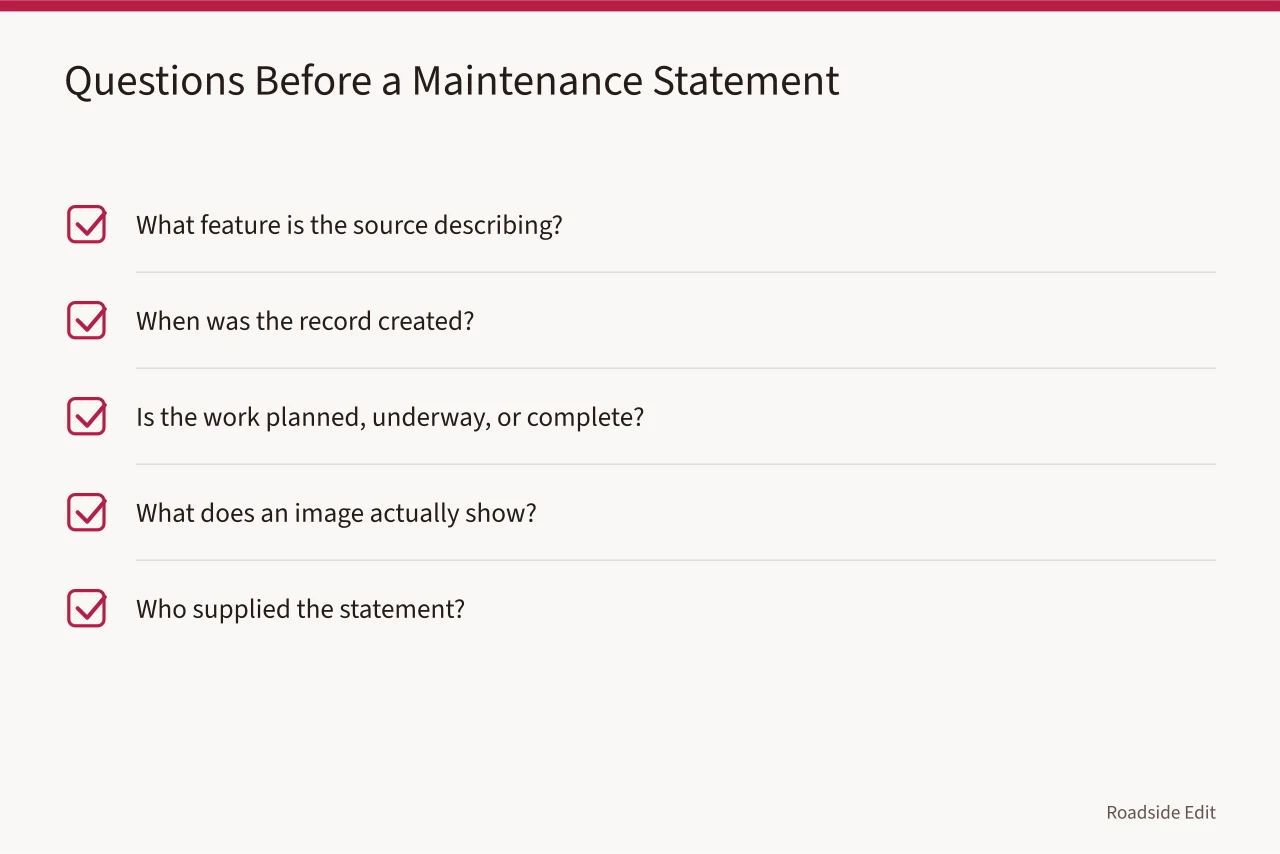
| Question | What it prevents |
|---|---|
| What feature is the source describing? | Mixing a sign, facade, roof, and whole building claim |
| When was the record created? | Presenting old information as current |
| Is the work planned, underway, or complete? | Turning an announcement into an outcome |
| What does an image actually show? | Overstating a visible observation |
| Who supplied the statement? | Presenting provider copy as independent reporting |
The National Park Service's Preservation Brief 17 explains that identifying a building's visual character is part of preserving its historic character. Read NPS guidance on architectural character. The source supports careful attention to visible features. It does not let an article diagnose a condition or prescribe work for a particular roadside building.
Compare records, not impressions
Two photos can show different moments at the same property. A public announcement may describe planned maintenance, while a later provider submission may describe an offered service. Keep each record in its own context. If the sources do not establish that work occurred, write about the plan or service offer instead of a completed result.
A practical comparison note is: "These records have different dates and purposes. They are not a shared condition assessment." That statement is more accurate than creating a single narrative from partial evidence.
Make a care record before calling for work
Record the building feature, source, date, viewpoint, and limit. Note the visible fact; wall, sign, roof edge, door, or mural may each need its own line.
Do not use one area's photo as proof of whole-building condition. If an owner or provider gives a maintenance update, label its source and date, and keep it apart from independently supported reporting.
The National Park Service discusses inspection and attention to deterioration in its exterior-maintenance guidance. Review Preservation Brief 47. It does not prescribe care for a particular roadside building. It supports identifying the feature and material before selecting a response.
The National Archives advises that photographic records need context about their history and handling. Read National Archives guidance on photographs. It does not authenticate a particular image. It supports retaining the source page, date, and limit of the visual record.
Ask who owns the next decision
An article can organize questions. It should not decide access, structural condition, electrical safety, permits, or project-specific treatment. Name the responsible owner, authority, or qualified reviewer.
If a route or entry raises a compliance question, do not label it compliant from a photograph. The ADA Standards for Accessible Design are technical standards for covered facilities. Consult the ADA Standards for Accessible Design. They do not determine duties at a particular property.
Keep corrections and commercial material visible
When a new record changes an article, add a dated correction note. State what changed and which source supports the revision. A provider listing may explain services or provide an update, but payment or submission alone is not evidence of completed maintenance or a safe condition. Clear attribution lets readers see the difference.
Before publication, read every care statement beside its source. Check whether the source identifies the same feature, date, and location. If it does not, rewrite the sentence as a question or remove it. This final check keeps a useful maintenance article from becoming a substitute for an assessment that no source actually supports.
Keep this review note with the source file for later editors and corrections consistently.
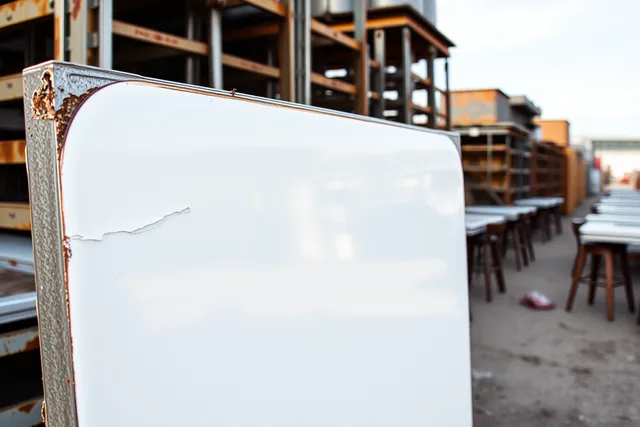
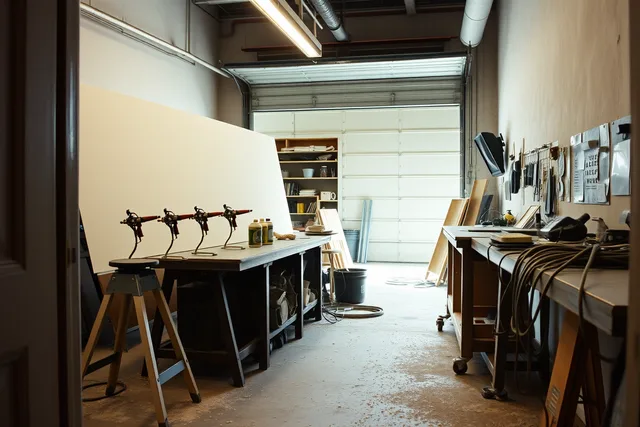
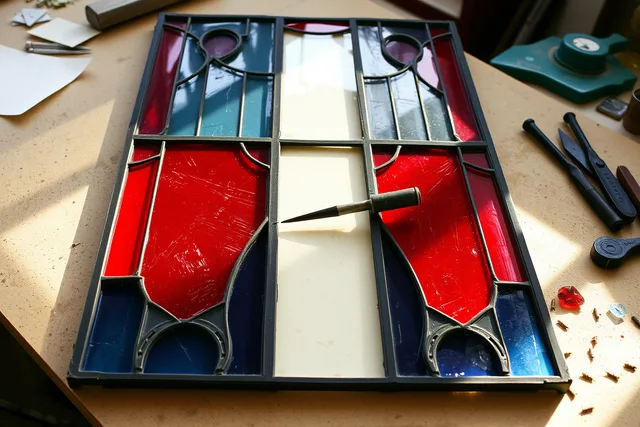
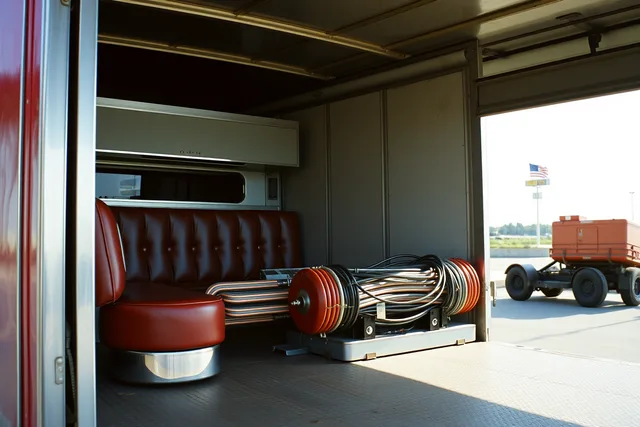
The image is illustrative. It does not establish current condition, ownership, safety, or a maintenance outcome.
Common questions
Can a photograph prove the cause of a surface issue?
No. It can document what is visible, not the cause or appropriate treatment.
Can a business listing verify completed maintenance?
No. Attribute its service description and use an independent source for a project outcome.
What if records conflict?
Report the documented difference or wait for a source that resolves it.