Guides
Part of How to run a roadside building case study method that holds up
Roadside building case study checklist: how to set scope and test claims
Roadside building case study checklist for 2027 gives U.S. editors a careful method for researching a place, testing claims, and explaining limits.
A roadside building case study should answer one clear question about one place during one stated period. It is not a sales profile, a property appraisal, or a technical inspection. This checklist helps a U.S. editor turn records, images, and local statements into a useful story without giving any document more weight than it can carry.
What to take away
- Name the building, the question, and the time period before research begins.
- Keep a source log that says what each record proves and what it cannot prove.
- Separate historic material from current observation and sponsored material.
- Show readers the limits of the evidence instead of filling gaps with assumptions.
Set the case boundary
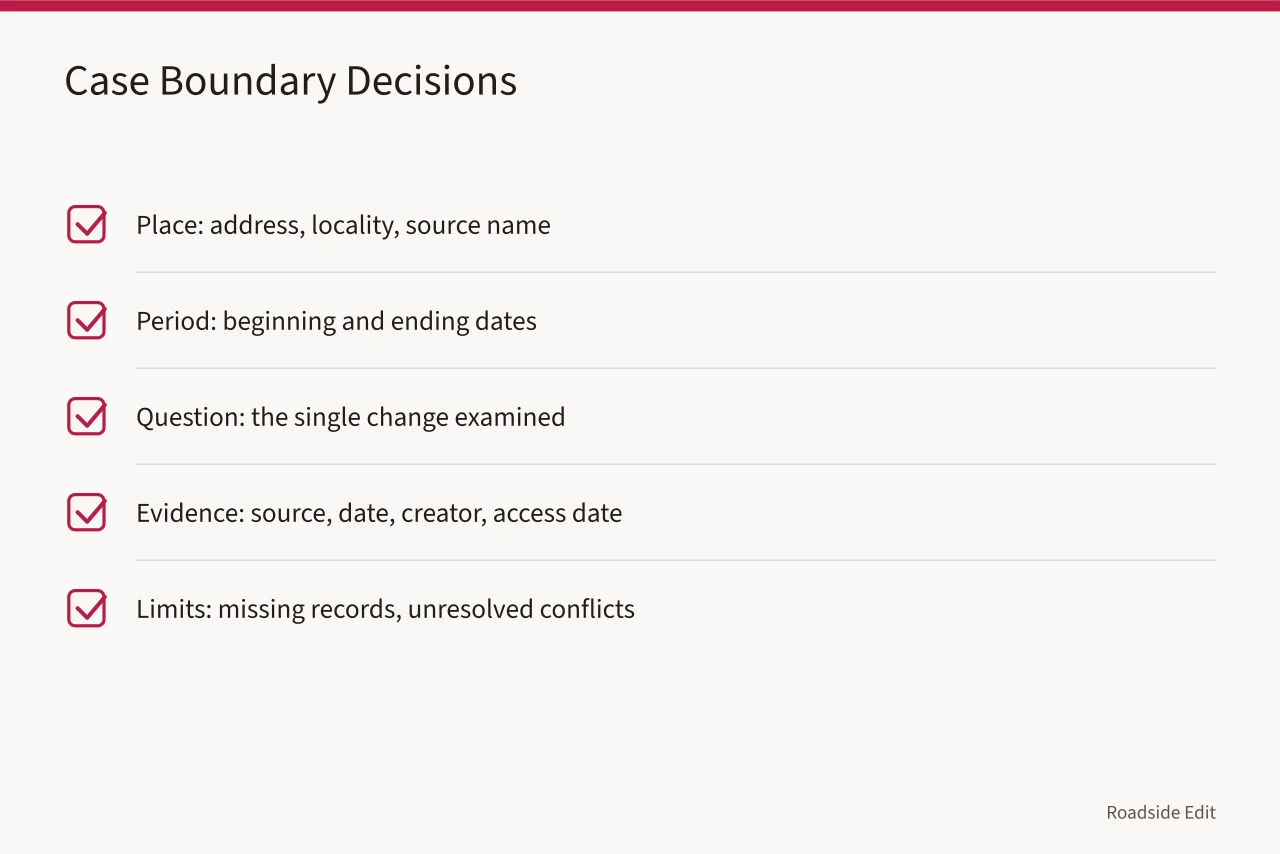
Write a one sentence brief before opening a search tab. It might read: "This case study examines how the facade of a named roadside building changed between 1955 and 1985, using dated photographs and public records."
That sentence keeps the reporting task narrow. It tells an editor what not to claim, such as current ownership, interior condition, or future plans.
Next, decide which version of the place is under study, since a building may have an original address, a later street number, several tenant names, or an informal local name.
Put every spelling and date variant in the working file. Do not merge them into one identity until a direct record connects them. The goal is to make later checking possible, not collect everything.
| Decision | Record in the project file | Do not infer |
|---|
Give every source one job
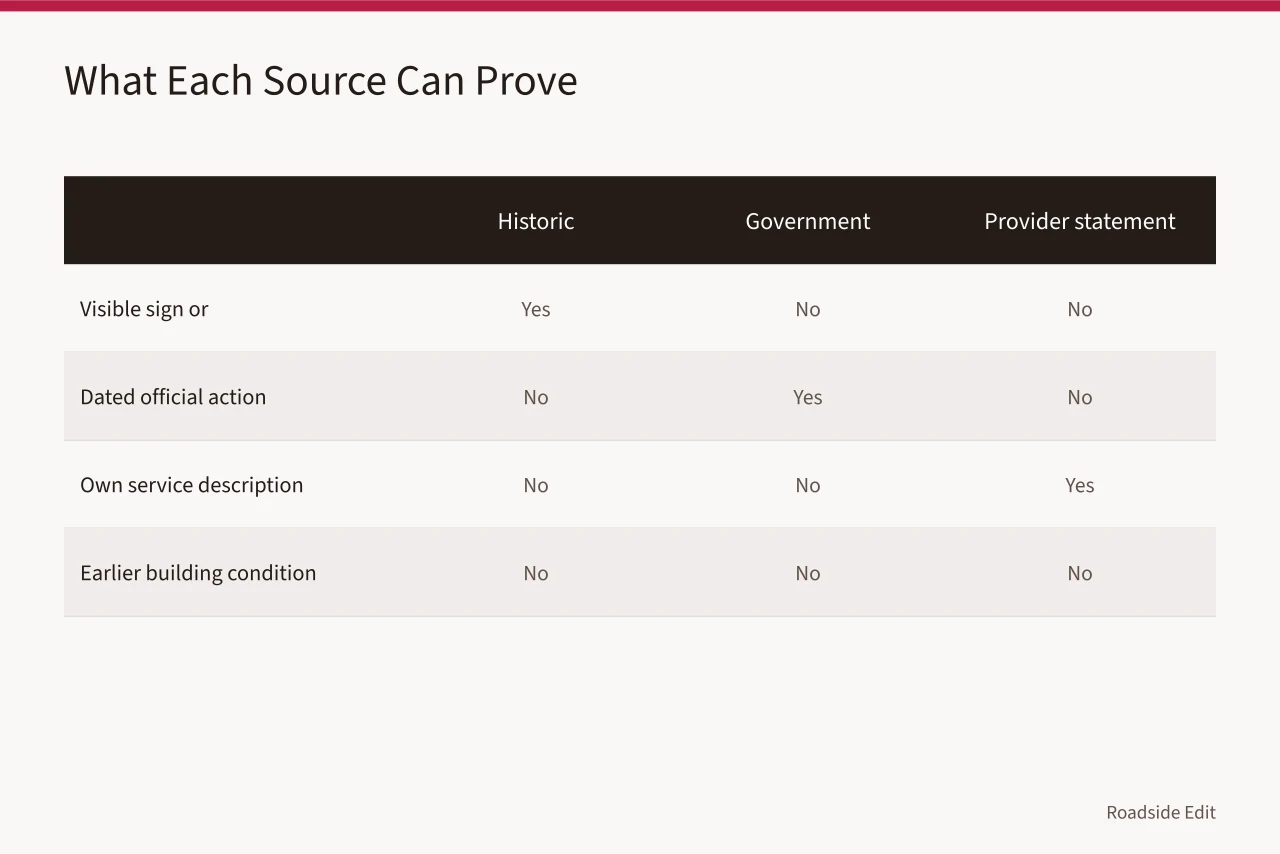
A source should have a written purpose before it appears in the draft. A historic photograph may show a visible sign, shape, or streetscape. A government document may establish a dated action. A direct provider statement may explain its own service but cannot independently prove the building's earlier condition.
Harvard's writing guide describes sources as serving distinct roles, including evidence, context, and a counterargument. Read Harvard's guide to a source's role. Use that approach to avoid asking one attractive image to support an entire narrative.
Make a small claim map. In one column write the sentence you may publish; in the next name the exact record that supports it; in the final column write the limit.
Example: "A 1940 photograph shows a painted corner sign" is a visual observation tied to that photograph. It does not establish when the sign was first installed, who paid for it, or whether it survived after the image was made.
If sources disagree, preserve the disagreement. Do not average dates, combine details, or choose the more colorful account. State the conflict in plain language and narrow the claim. A case study becomes more credible when it tells readers where the evidence stops.
Build a record that another editor can retrace
For each item, save the stable URL, the source's title, the creator or issuing body, the shown date, and your access date. A screenshot helps later review but does not replace the original page.
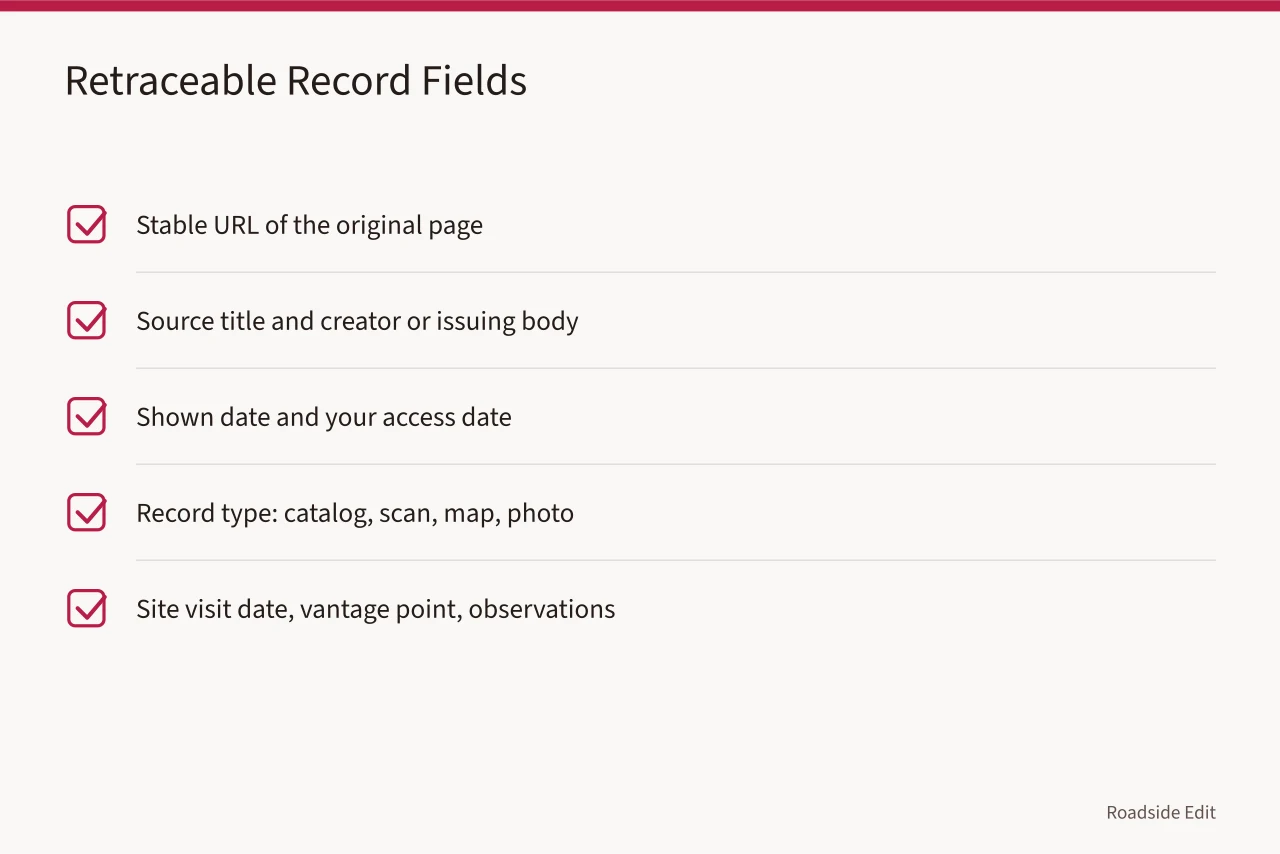
Save the original page address. Note whether the information came from a catalog description, a scanned document, a map, a photograph, or a current statement.
The National Archives explains archival descriptions connect records to their creators, giving context. Read the National Archives guidance on archival materials.
For this checklist, a photograph's catalog data and creator matter as much as the picture itself. A caption should identify the image as a historical record, not proof of conditions that were never documented.
Use a time line only when each entry has a source. Keep language modest: "By this date," "the record describes," "the photograph shows." Avoid phrases suggesting physical verification when no reporter visited the property.
If a writer does make a site visit, record the date, vantage point, and direct observations. A current observation does not rewrite the historical record.
Test historic language before using it
Words such as original, preserved, landmark, restored, and unchanged need special care. They can mean different things in local conversation, marketing, and formal preservation work. Do not use a formal designation unless the official record supports it. Do not call a change a restoration unless the source describes the work that way.
The National Park Service's National Register bulletin says the technical idea of historic integrity considers location, design, setting, materials, workmanship, feeling, and association. Read National Register Bulletin 15.
That framework belongs to its own evaluation process. A short editorial case study can use it to remind writers to describe what evidence shows, not to declare a building eligible, significant, or intact.
Ask four questions before publishing a historical sentence:
- Is the date visible in a source or only assumed from context?
- Does the source identify this exact building rather than a nearby one?
- Is the sentence reporting a visible feature, or making a claim about cause and intent?
- Would a reader mistake the sentence for a current condition report?
If any answer is uncertain, revise the sentence, add a limitation, or remove it. This is a better editorial result than a confident claim built on a weak connection.
Keep commercial material apart from reporting
An agency, contractor, or owner may offer information relevant to a current update. Record who supplied it, when, and which statement it supports.
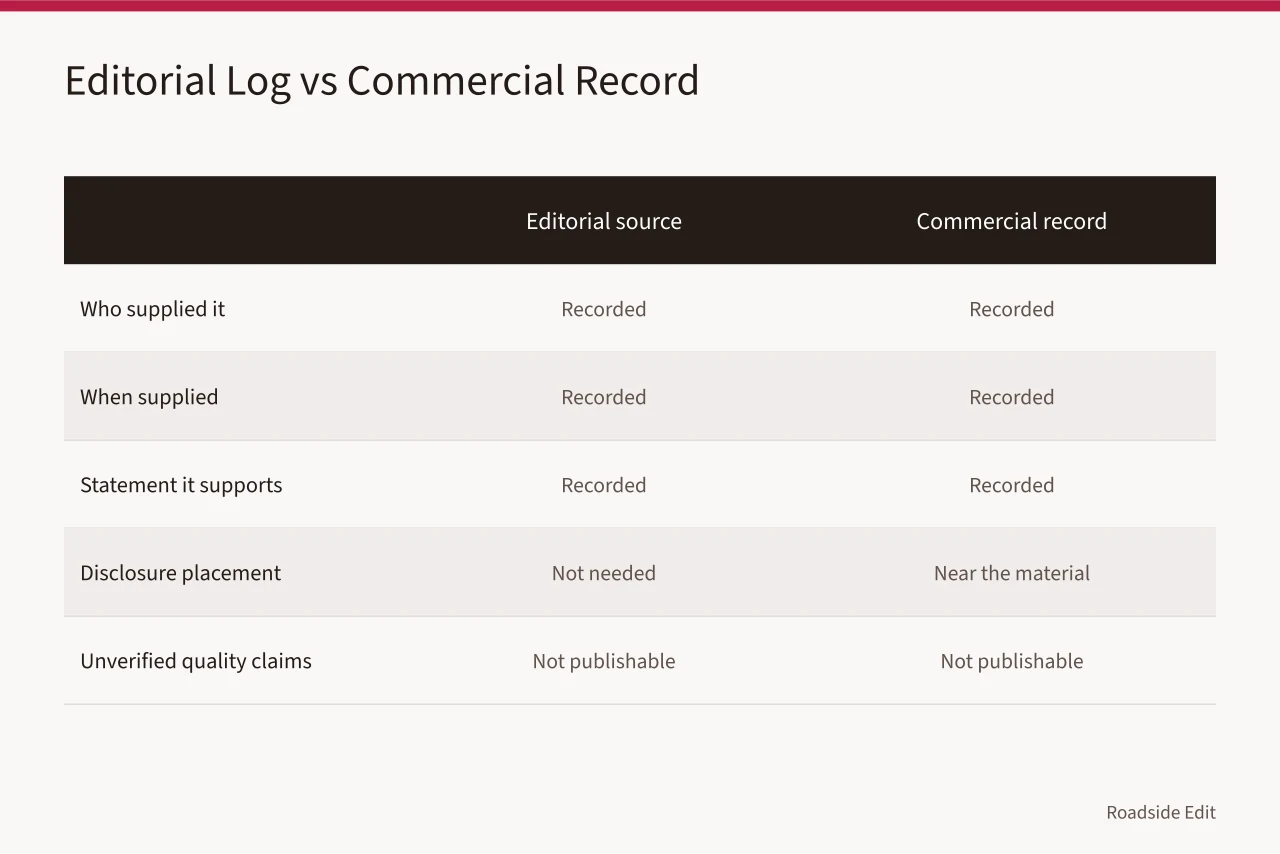
If a placement, provider profile, payment, or other commercial relationship is involved, mark it clearly where readers first encounter that material. Do not place a disclosure at the end and expect readers to connect it to a headline or image.
The Federal Trade Commission says a disclosure needed to prevent deception must be clear and prominent, placed close to the material it explains. Read the FTC native advertising guide.
Keep the editorial source log separate from the commercial record. A paid inclusion can identify a provider and its stated service area, but it does not make unverified quality, price, availability, or historic claims publishable.
Review the draft in two passes
First, read for evidence. Highlight every date, name, location, designation, and condition statement. Each one should point to a direct record or be rewritten as a limit. Check that every URL opens the page used, rather than a homepage, a search result, or a different item in the same collection.
Second, read for reader understanding. The opening should say why this building and question matter, and the middle should separate historical evidence from current reporting.
The ending should state what remains unknown and when to review the article again. Descriptive headings and a short table help readers follow the evidence, not fill the page.
Before release, retain the final source log, the published date, the editor's review note, and a list of claims that need rechecking. If an authoritative record changes, correct the affected sentence with a dated note. Do not silently alter a previous version until the new source is saved.
Source image
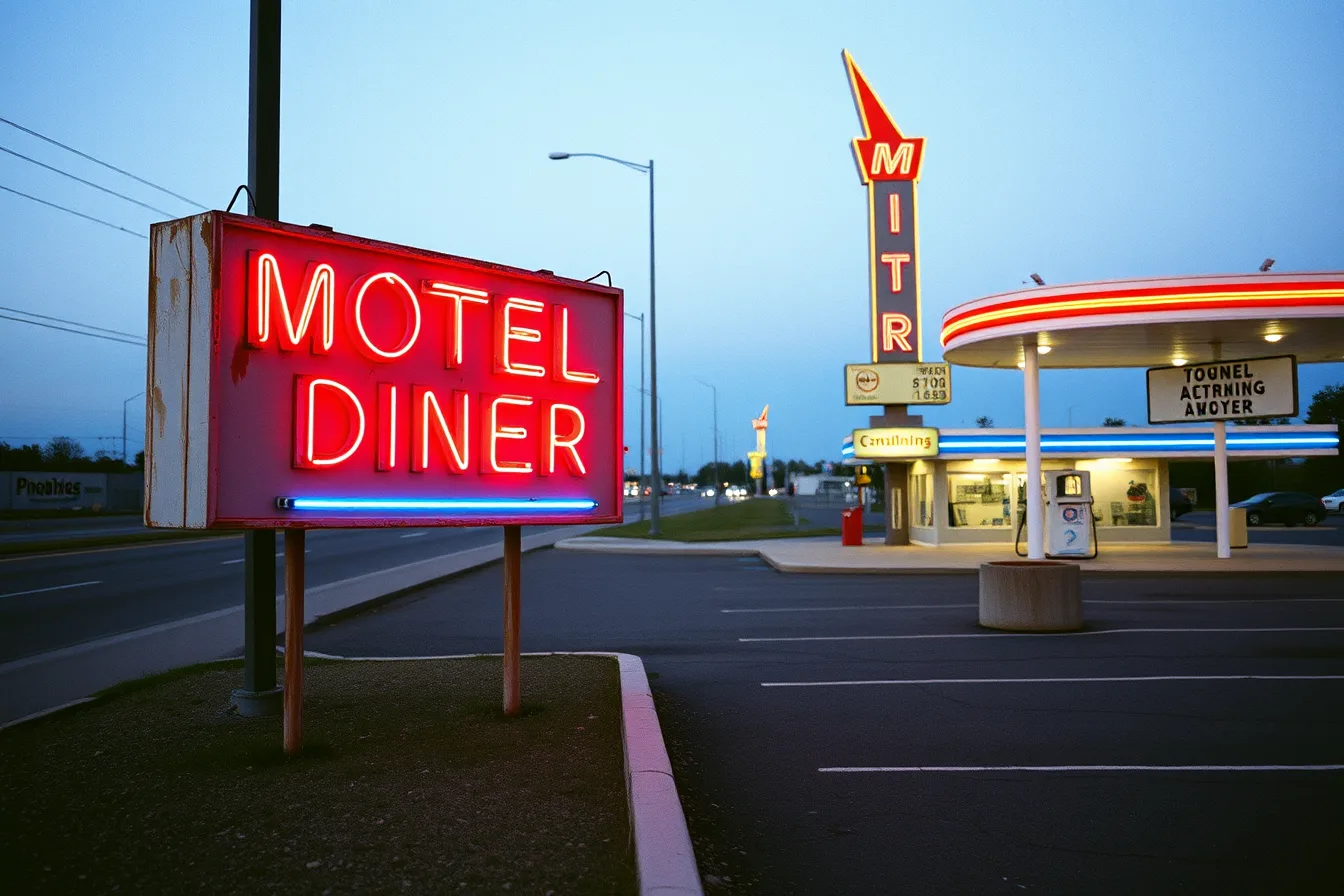
The image below is a historical Library of Congress catalog record. It is included for context and is not a statement about a current provider or building condition.
Common questions
Can one photograph establish a building's full history?
No. A photograph can support a narrow visual observation for the date and view it shows. It cannot by itself establish construction dates, ownership, or events outside that record.
What if a public record and a local statement conflict?
Keep both records, describe the difference, and avoid a conclusion that depends on choosing one without additional evidence. Update the article if a direct source resolves the conflict.
Can a case study include a sponsor?
It can, provided the commercial relationship is disclosed clearly and the sponsored material is limited to verifiable statements. Keep that material separate from the evidence used for historical reporting.