Guides
Part of How to run a roadside building case study method that holds up
How roadside building case study records keep owner files straight
Roadside building case study records guide for 2027 gives U.S. editors a practical file system for source notes, image credits, revisions, and review dates.
Good case studies rely on a file an unfamiliar editor can understand without guessing. The file should preserve the original record, identify the exact claim it supports, and show every meaningful change to the published story.
This guide covers editorial recordkeeping for a U.S. roadside building case study. It does not prescribe legal retention periods, property due diligence, or a technical survey.
What to take away
- Keep the original source separate from the editor's summary of it.
- Give each factual claim a dated evidence note and a stated limit.
- Preserve prior versions when a new record changes the published wording.
- Treat an image credit, a commercial disclosure, and a factual source as different records.
Start with a case file, not a draft
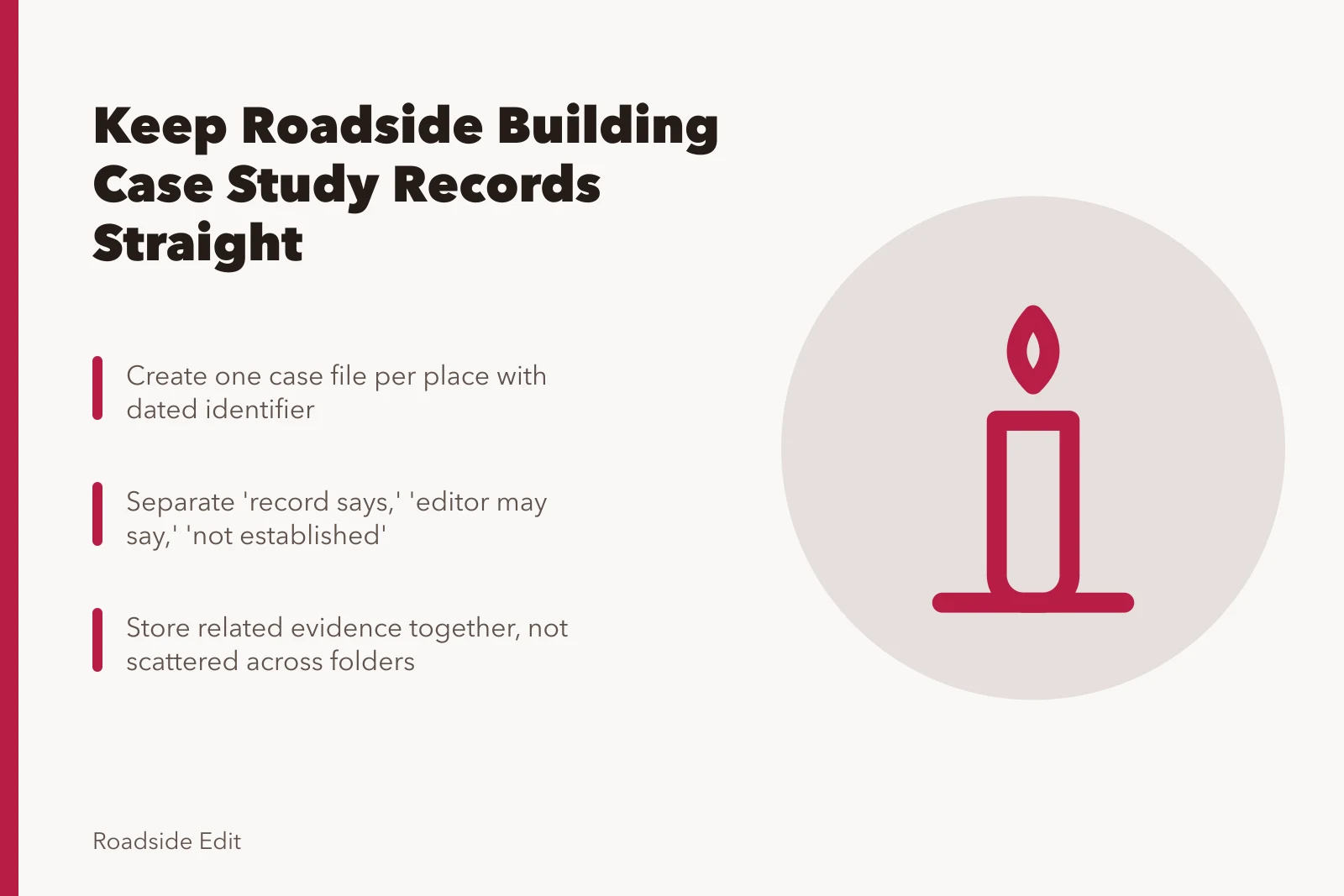
Create one folder or workspace for the place under study. Use a simple identifier with the place name and a date. Keep every associated note under that identifier.
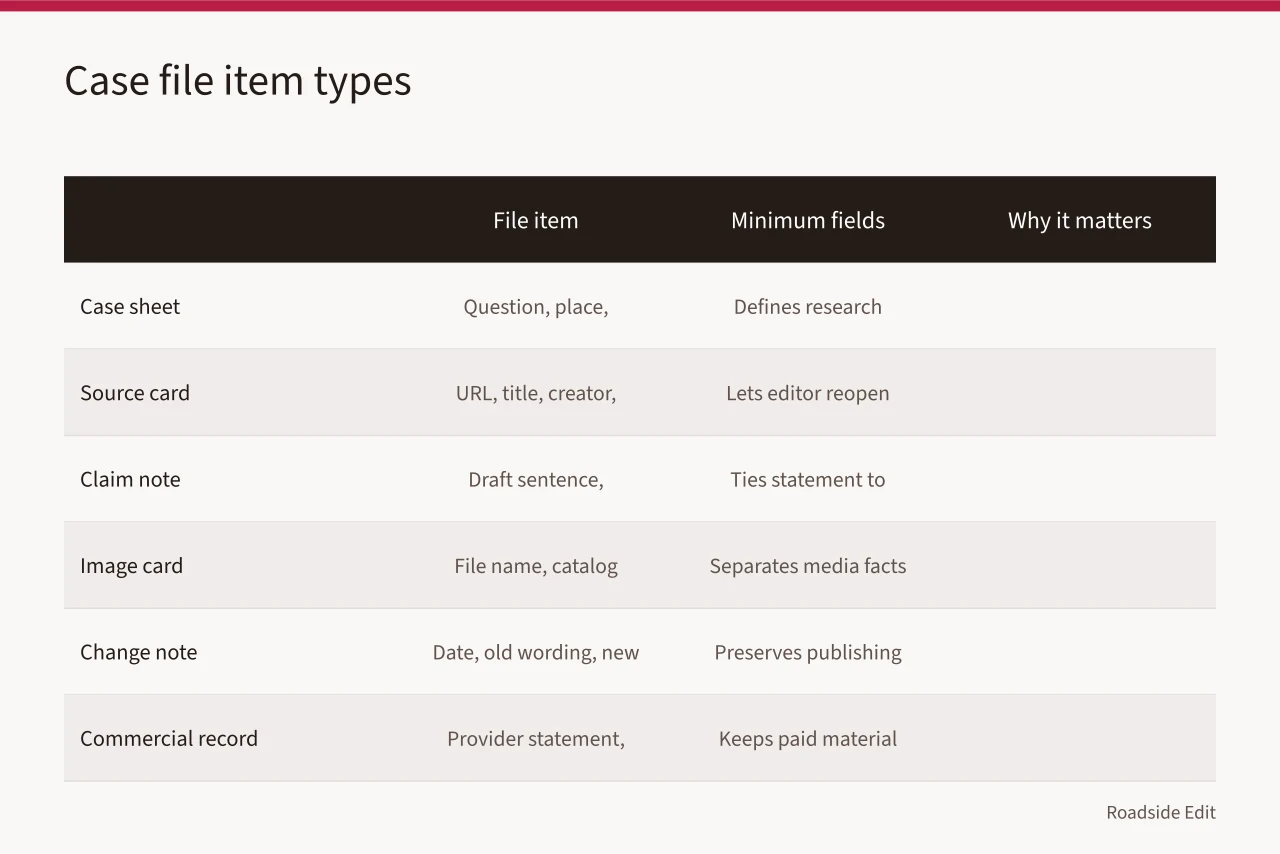
Begin with a case sheet. It holds the research question, building name variants, locality, date range, editor, and review date. This record tells a later reader what the file was meant to answer.
Do not start by copying paragraphs from pages into a document. Save the original URL and title first, then write a short note in your own words.
The note should say what the source supports, the date shown by the source, and what it does not answer. That protects against a common error: a smooth summary later looking directly like a record, but actually an editor's interpretation.
Capture the original record first
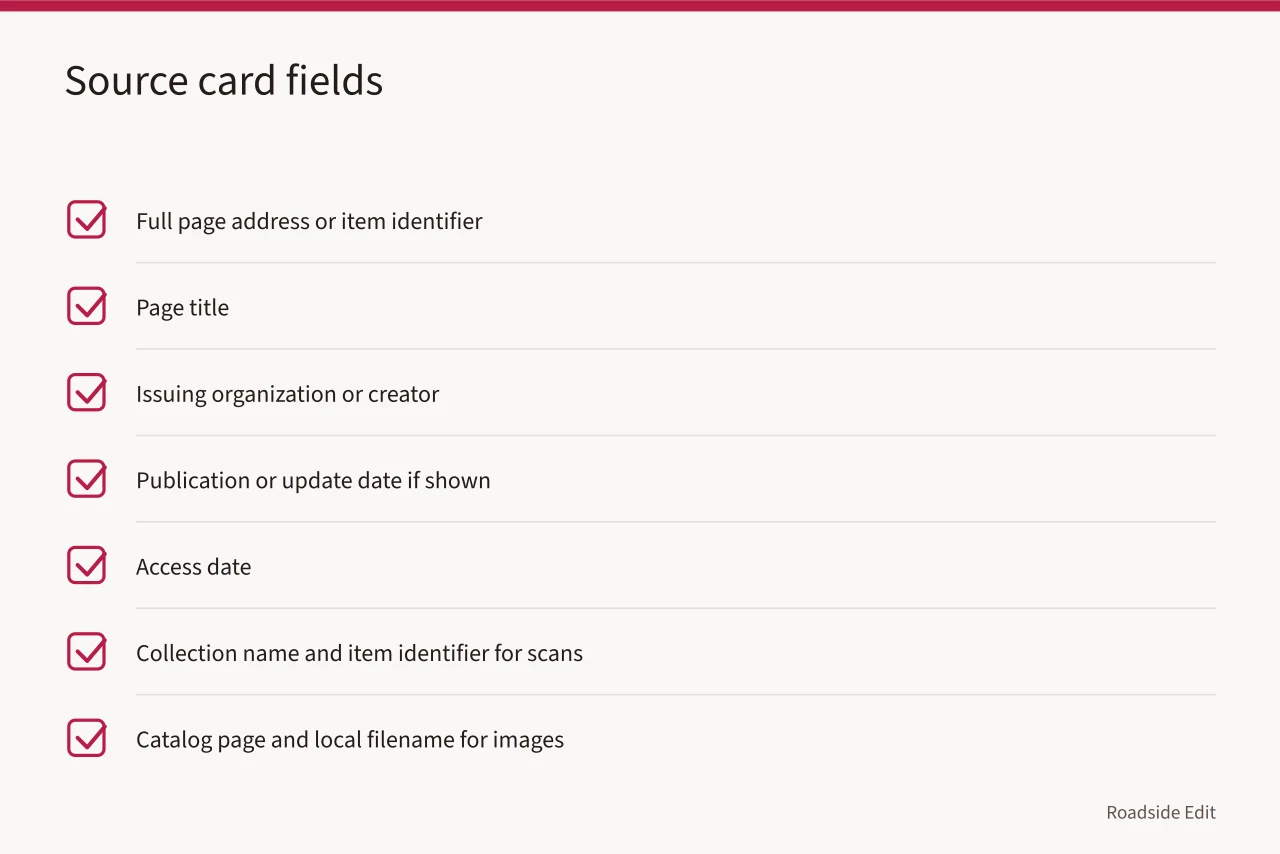
Do not rely on a search result, a browser history entry, or a shortened sharing link. Those are paths to a source, not the source itself.
Harvard's guide to integrating sources says a reader should understand which ideas come from a source and what that source adds to the writer's own thinking. Read Harvard's guidance on integrating sources
A source card does that work before publication. It gives the editor a place to explain the record's role without overstating it in the article.
Make a source card even for material you ultimately do not publish. A rejected source can explain why a tempting statement was removed. Mark it as rejected and give a short reason, such as wrong address, undated image, unclear creator, or unsupported claim. Do not erase it if the team may need to revisit the decision.
Separate source facts from editorial notes
Use two labeled fields for every important item. The first, "record says," gives a narrow description of what appears on the source page or document.
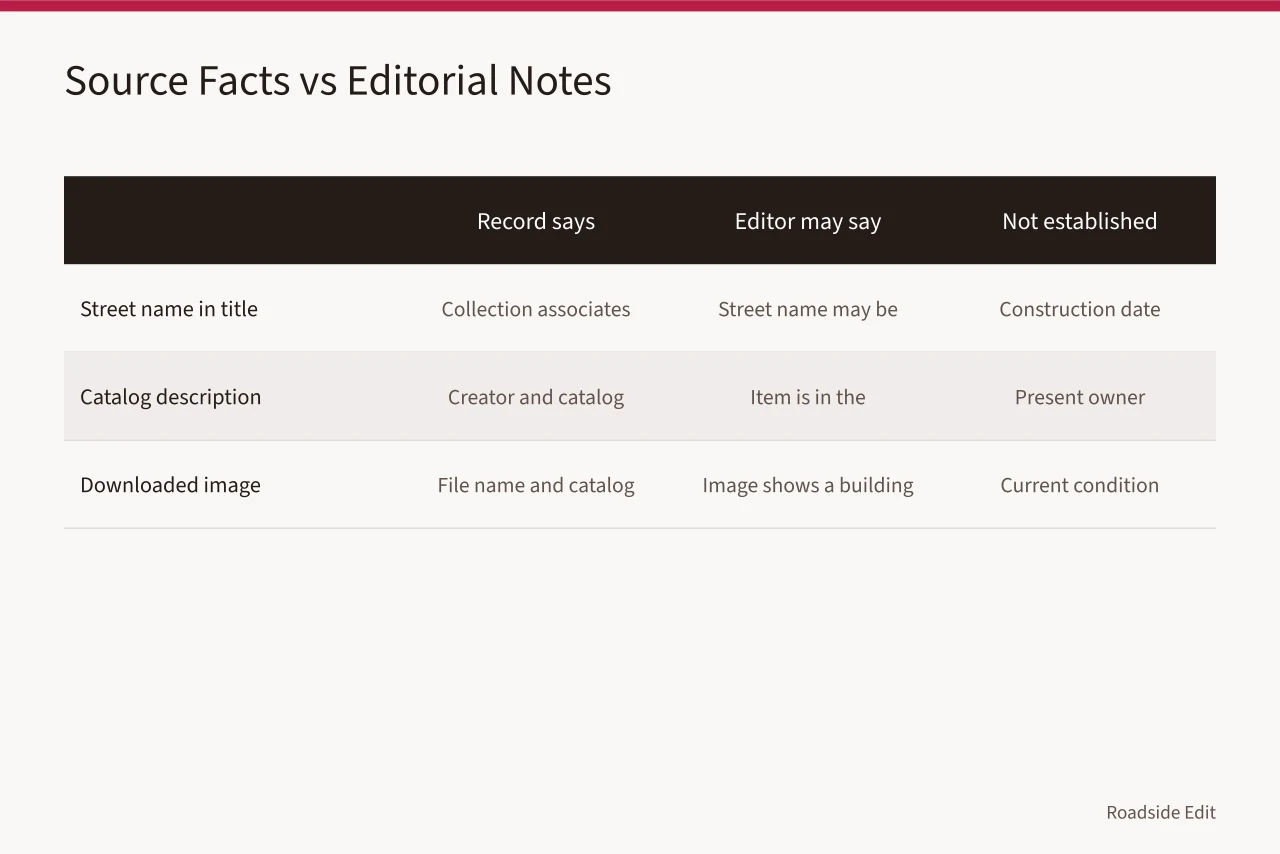
The second, "editor may say," holds only a sentence the source actually supports. A third field, "not established," is often the most helpful. It names the conclusion the record cannot carry.
For example, a collection item titled with a street name may support that the collection associates the item with that street. It may not establish the date of construction, the present owner, or the condition of the building today. Writing down the difference keeps a later update from turning catalog language into a larger historical conclusion.
The National Archives explains that archival descriptions connect materials with their creators in order to put the materials in context. Read the National Archives explanation of archival materials. Preserve creator information and catalog wording with the item. An editor who sees only a downloaded image loses details that may be needed to describe it responsibly.
Keep related evidence together
Store the records for a single change, event, or question together. If a case study examines a facade repainting, retain the dated image, public notice, direct statement, editor note, and any correction in the same file group. Do not scatter them across a generic folder of images, an email thread, and an unpublished draft.
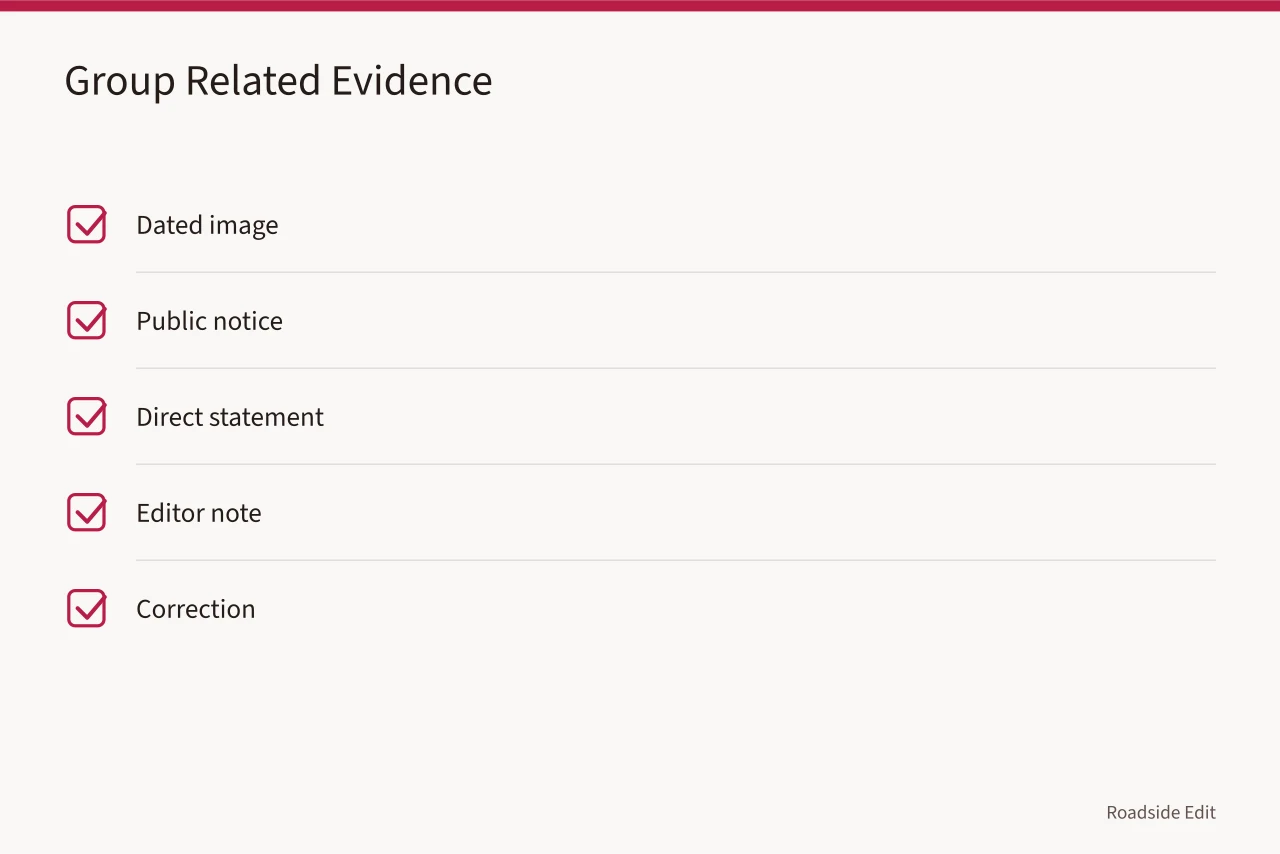
The National Archives says federal records connected to the same project, transaction, study, or subject should be retained together when their relationship provides context. Read the National Archives recordkeeping requirements. A private editorial file has different obligations, but the organizing method is sound: keeping related documents together makes the story's evidence easier to review and correct.
Use dates in a consistent format, such as YYYY-MM-DD. Keep the source date and the access date separate. A 1968 photograph accessed in 2027 is not a 2027 record. A current provider statement about an older project is not a record made at the time of that project. Precise labels avoid accidental mixing of historical context and current reporting.
Maintain a change ledger
Every material edit needs a short ledger entry. Record the date, editor, affected sentence or section, prior wording, new wording, source added or removed, and reason. A factual correction is different from a stylistic edit. Give it a clear label so a later editor can see why the published record changed.
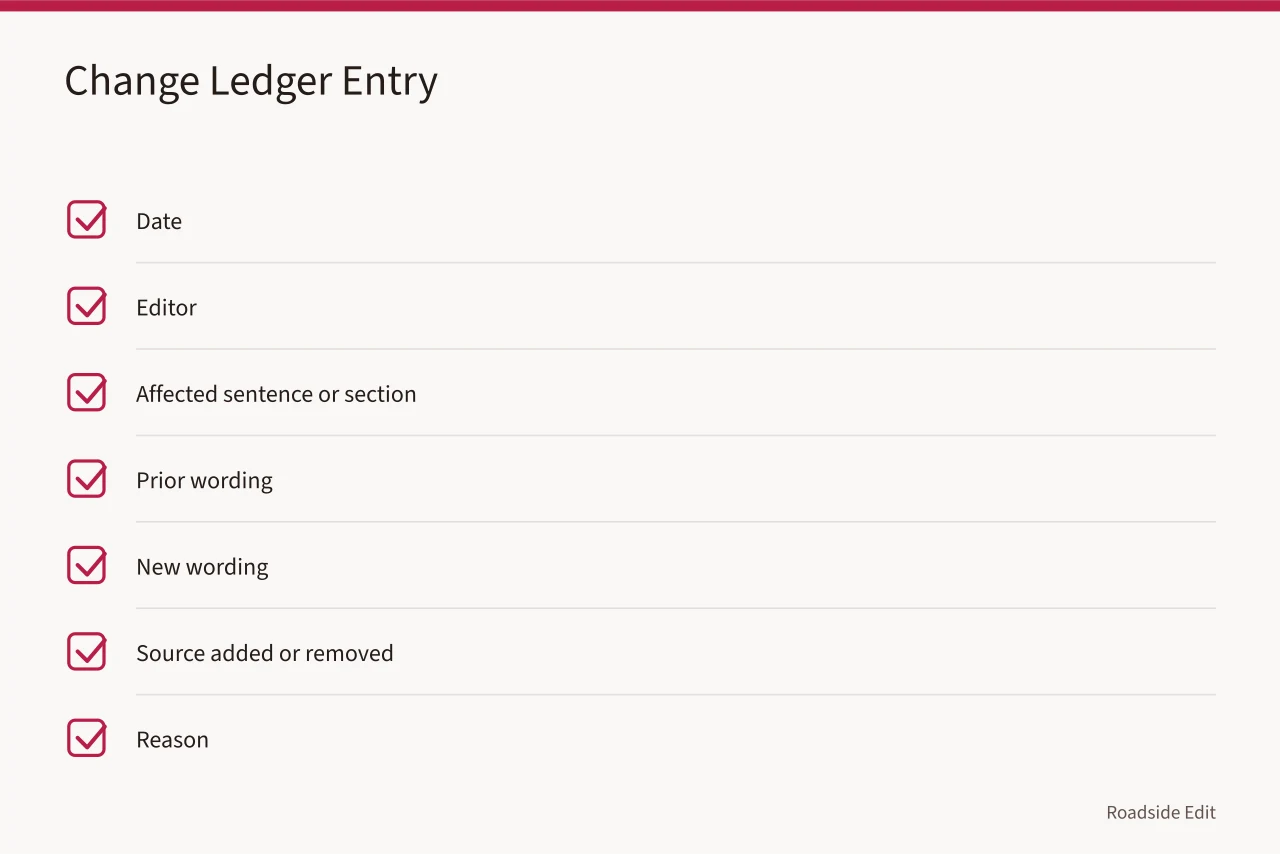
Use a correction rather than a silent rewrite when a source no longer supports a claim, an address was wrong, a record was misidentified, or an important date has been corrected. Leave an internal note even if the reader-facing page needs only a short update. That note protects the article's history and makes future corrections faster.
Set review triggers as part of the ledger. Common triggers include a new official record, a corrected catalog entry, a verified closure or reopening, a change to a sponsored provider statement, or the scheduled review date. Avoid an open-ended note such as "check later." State what event would require a new source check and who is responsible for it.
Record commercial information on its own track
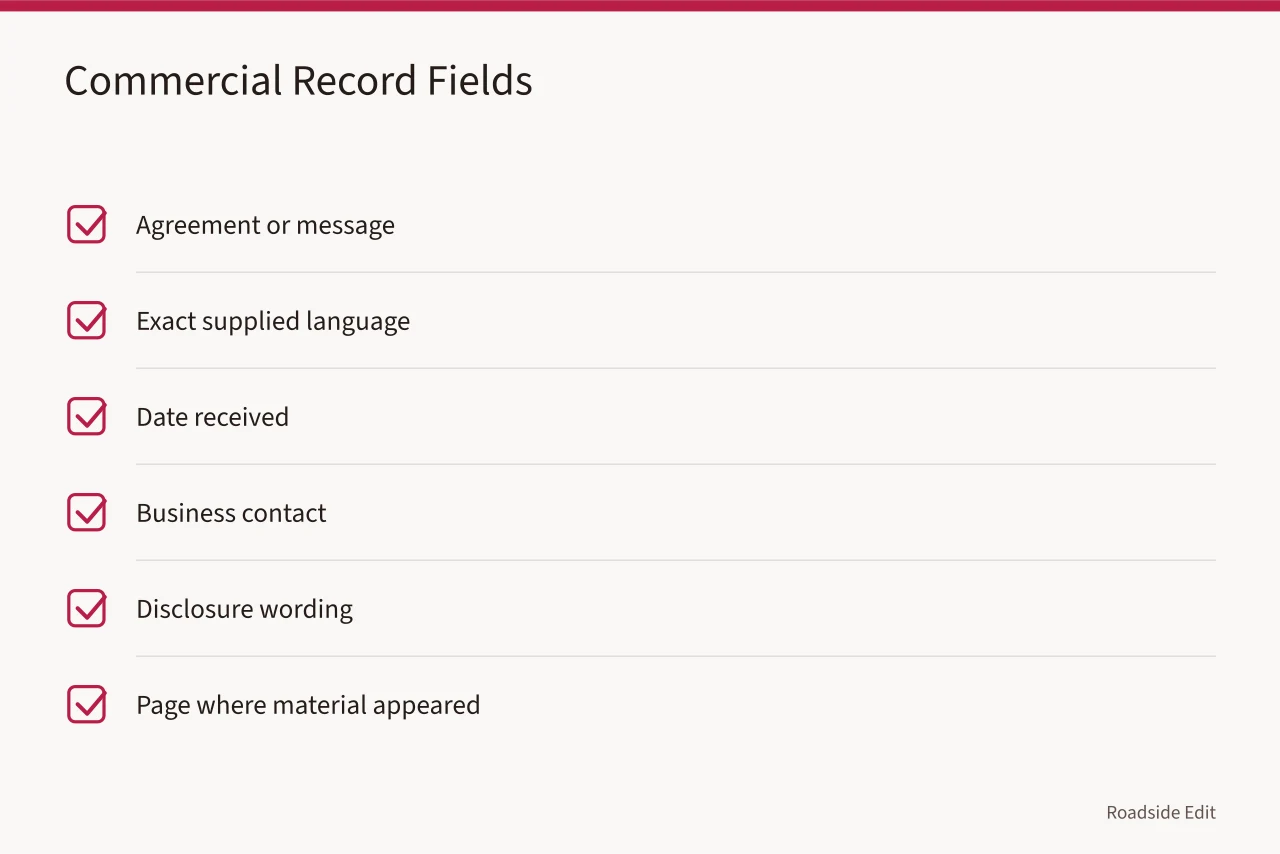
Paid placement, sponsored information, or a provider supplied description should never be filed as independent evidence. Keep the agreement or message, exact supplied language, date received, business contact, disclosure wording, and the page where the material appeared. Any objective statement in that material still needs its own suitable source if it will be presented as editorial fact.
The Federal Trade Commission says disclosures needed to prevent deception should be clear and prominent. Read the FTC guide to native advertising. Place the disclosure where readers first encounter the commercial material. A record buried in an internal file does not make the public presentation clear.
This separation also improves ordinary editorial work. When a provider changes its phone number, website, or stated service area, the commercial record can be updated without changing sourced historical material. When a historical claim changes, the evidence log identifies which record and sentence must be reviewed.
Check the file before publication
Use this final review list:
- Every factual claim has a source card with a specific URL or item identifier.
- Every source card has both a source date and access date when available.
- Each important statement has a limitation note.
- The image's local filename, caption, and credit point to the same catalog record.
- Commercial material has a clear disclosure and a separate record.
- The case sheet states a next review date or a specific update trigger.
- The final draft does not claim a condition, designation, price, or relationship that the file cannot support.
Keep the final package after publication. The records should allow an editor to explain why a sentence was included, remove it if evidence weakens, and add a correction without reconstructing the research from memory.
Source image
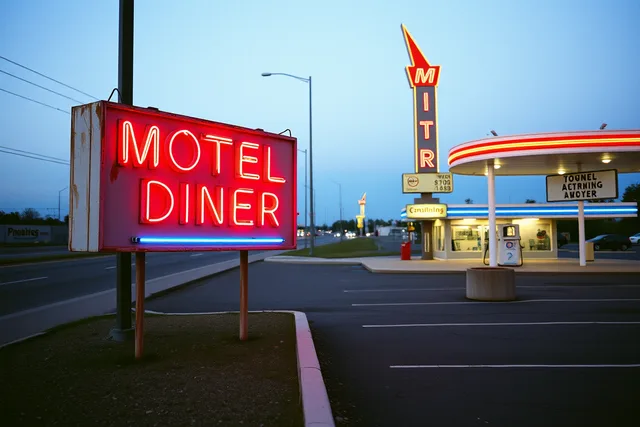
The image below is a Library of Congress catalog record used for historical context. It is not evidence of a current site condition or provider service.
Common questions
Should the file retain a source that was not used in the article?
Yes, if it influenced an editorial decision. Mark it clearly as rejected or background material and explain why it was not used for a published claim.
Does a screen capture replace the source URL?
No. A screen capture may help document what an editor saw, but the case file should also retain the specific page or catalog record that supplied the information.
When should an article be corrected?
Correct it when a source is misidentified, a statement is no longer supported, or a new authoritative record changes a material fact. Preserve a dated change note behind the update.