Guides
Part of Vintage diner interiors fundamentals: how to read a classic counter and booth honestly
How vintage diner owners can build interior records worth keeping
Vintage diner interior records guide for 2027: organize feature evidence, source limits, image credits, current updates, disclosures, and correction history.
An interior feature stays accurate when its evidence is organized before publication. A modest working record can save hours during an update: it tells an editor which image supports a visible detail, what a historic source actually says, which material came from a business, and what changed after publication.
What to take away
- Store the direct source page with the precise sentence it supports.
- Treat feature evidence, current updates, and supplied material as different records.
- Keep caption, credit, date, and purpose together for every image.
- Write a claim limit so a later editor does not overstate the source.
- Preserve corrections and disclosure language in the editorial file.
Set up the interior evidence file
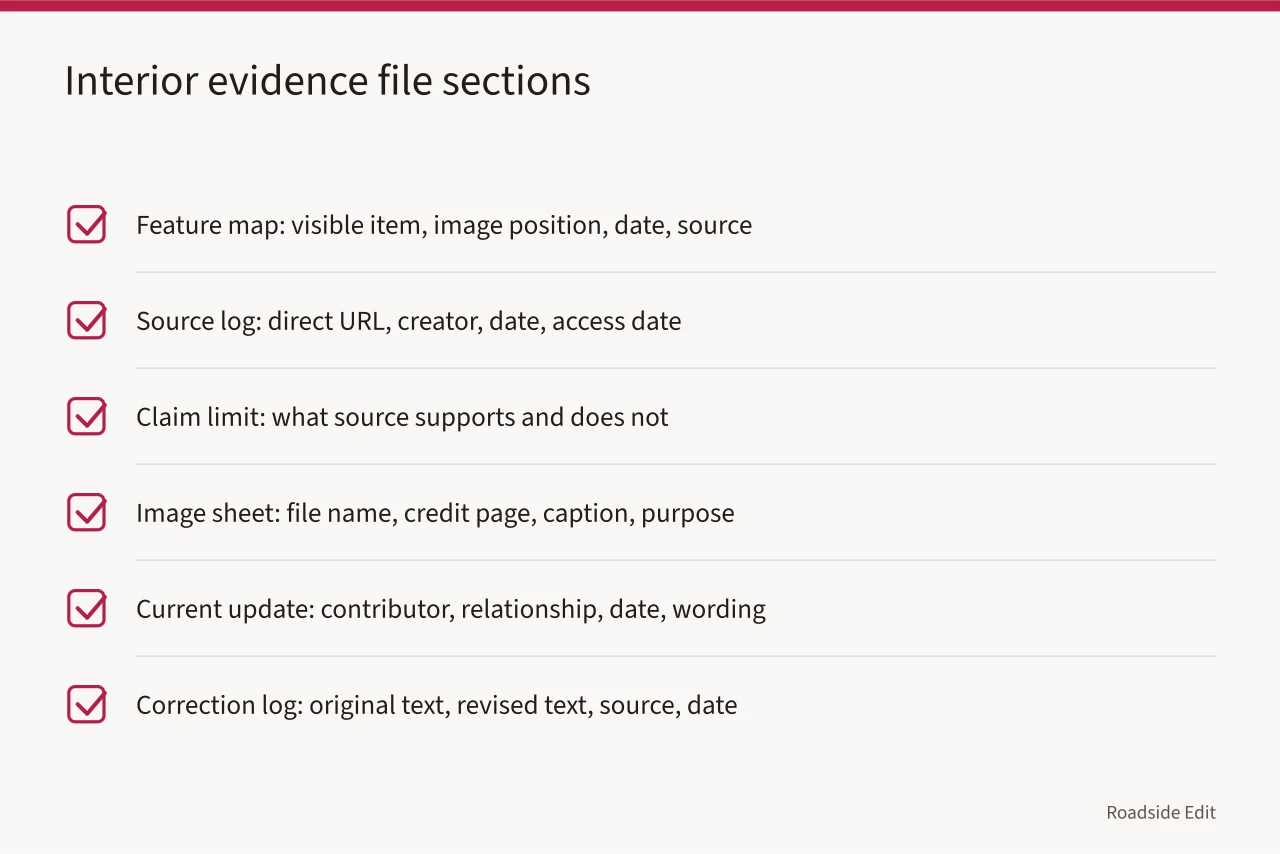
Make one folder or shared document for each article. Give it the article ID and subject name. Avoid a single folder labeled "research" that combines unrelated projects. The goal is a simple handoff: another editor should be able to reopen the file, find the source, and understand why each line appears on the public page.
The National Park Service historic interior guidance discusses elements such as entrances, circulation, floors, windows, doors, and detailing when assessing historic interiors. It does not determine the status of a specific diner. It supports the narrower reporting habit of naming the particular element and locating a record for that element, rather than using a generic interior checklist as proof.
Build a feature map, not a mood board
Describe each visible feature in plain terms. Note where it appears in a dated image, what the source identifies, and what remains unknown. "Stools appear at the counter in the west side of the 1967 photo" is a useful note. "The original stools remain" needs a source that establishes original installation and present survival.
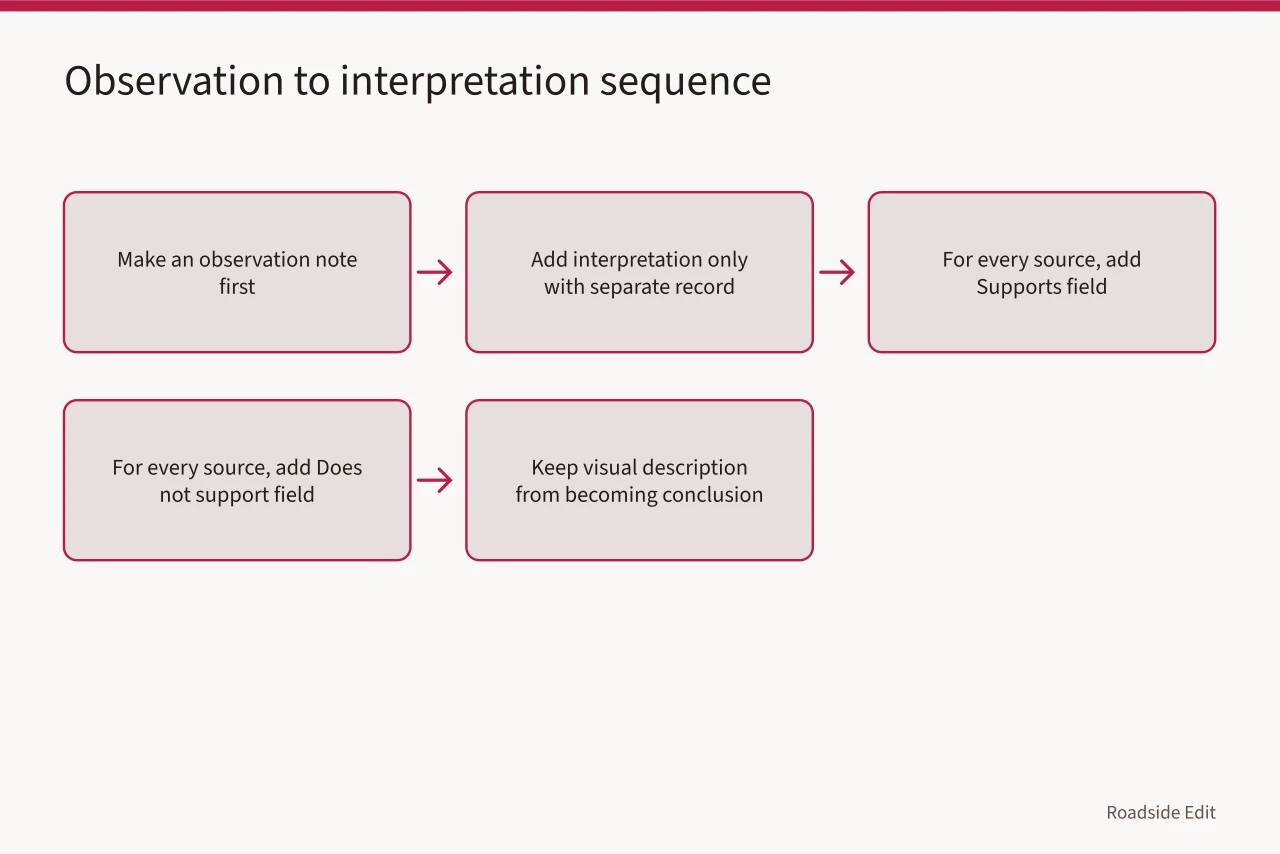
The Library of Congress primary-source analysis guide starts with observation, then reflection and investigation. Use that sequence in the file. Make an observation note first. Add an interpretation only when a separate record supports it. This keeps a detailed visual description from quietly becoming a historical conclusion.
For every source, add two short fields:
- Supports: the narrow point the record proves or identifies.
- Does not support: the tempting conclusion the record cannot establish.
A source limit is not an apology. It explains how the article stays accurate. A historic photo can support the room's appearance at a date. It may not establish current condition, ownership, material composition, or a project outcome.
Give images their own record
Store more than the local image filename. Save the exact page where the image came from, the creator or collection when stated, the known date, the credit text, and the intended use. Mark every image as either case evidence or contextual illustration.
The National Archives primary-source explanation notes that a source's role depends on the question. For an image sheet, that means a photograph from another diner may be valid context for a general article but not evidence of a feature at the diner being profiled.
If a business sends an image, record who sent it and whether they hold the rights to supply it. Label it as supplied. Do not drop a submitted image into an "archive" section simply because it looks old.
Separate current updates from history
Interior stories often mix a historic visual record with present-day details. Keep the dates visible. A current owner may be the right source for a recent repaint, a seating change, or a request to correct a business name. That account should remain an attributed current update, not a rewrite of the historical record.
When a fact changes, retain the old wording and the evidence that prompted the revision. The public article can use a brief dated correction note. The working record should say what the request was, what source was reviewed, and why the change was accepted or declined.
Keep disclosure language in the file
If a diner, designer, or product company paid for placement, supplied copy, provided a free service, or sent images, save the exact relationship and exact label in the article.
Material connections affecting how readers weigh an endorsement need clear, conspicuous disclosure, per the Federal Trade Commission's endorsement guidance. That provides context; it does not independently verify any supplied claim.
Leave a final handoff note: identify the strongest source, list any unresolved question, and say what must be checked before the next update. It is a small step that protects the article from losing its evidence boundary after an editorial change.
Common questions
Should a working record include business submissions?
Yes. Keep them labeled and dated separately from independent research, with the contributor's relationship to the article subject.
What is a claim limit?
It states the narrow point the source supports and the conclusions it does not establish. It helps future editors avoid stretching a useful source.
Can an owner correct a record?
Yes. Ask for the exact wording, supporting information, and a contact who can clarify the update. Keep the request and decision in the correction log.