Guides
Vintage diner interiors fundamentals: how to read a classic counter and booth honestly
Vintage diner interiors in 2027: a documented way to describe counters, booths, finishes, circulation, photos, historical context, and evidence limits.
Vintage diner interiors are often described with a short list of visual cues: a counter, stools, booths, a narrow service aisle, patterned floor, metal trim, or a bright sign outside. That shorthand can make an article lively, but it can also flatten a specific place into a generic theme.
A stronger feature begins with what can be documented. It identifies the source and date of a photo, distinguishes historical context from current operations, and treats an owner's or business's description as an attributed account rather than an independent finding.
What to take away
- Describe a diner interior as a dated place, not a collection of generic retro props.
- Separate visible features, sourced historical facts, owner reports, and interpretation.
- Use a photo caption to state date, viewpoint, source, and its limits.
- Do not call an element original, historic, or character-defining without an appropriate record.
- Keep paid placement and supplied imagery visibly labeled.
Begin with the setting
An interior is more than its decor. It includes the path from entrance to counter, the relation between booths and windows, the service area, ceiling height, surfaces, light, and how people use the room.
A case study or design feature should start with the location, date, and purpose of the record it uses. A photograph might document a particular interior on a particular day. It cannot prove when every feature was installed, whether it remains in place, or why the room looks the way it does.
The Library of Congress classic diner feature describes diners as a distinctive part of American food culture and notes that many were fabricated to resemble rail cars. That context helps a reader understand why certain forms recur. It does not prove that a specific restaurant was factory-built, original, or historically significant. Those are property-level claims requiring a more specific source.
| Article statement | Evidence needed | What not to infer |
|---|---|---|
| "A long counter is visible" | Dated image or observation record | Original installation date |
| "The collection caption calls it a diner" | Specific collection record | Current business status |
| "The owner reports a 2027 refresh" | Dated owner statement | Independent quality finding |
| "The interior evokes a mid-century style" | Clearly labeled interpretation | A documented historic period |
Read the room in layers
Use four interior layers.
First, name the visible form: counter, booth, stool, wall panel, or window. Also floor, ceiling, aisle, menu board, or service opening.
Second, locate it: near the entrance, along a window, behind the counter, or in the rear seating area. Third, attach a source and date. Fourth, state the claim's limit.
This method makes even a short feature useful. Instead of calling a counter original, write that a metal-trimmed counter is visible in the 2019 collection image. Then note that the record reviewed here does not establish its installation date. The second version is more precise and leaves space for a local archive, owner, or public agency to supply better evidence.
The National Archives primary-source explanation makes the same practical point in a different setting: the role of a source depends on the question asked. An image can be excellent evidence for its own scene and date without answering a question about installation history or current condition.
Counters and seating are not interchangeable details
In a diner, a counter shapes circulation, sightlines, staff interaction, and one visitor's experience. Booths can mark a window wall's edge or create small groups in a narrow room.
But an article should not treat either feature as proof of age or authenticity. Seating may have been replaced, reupholstered, moved, or added later. The responsible description is visual and dated unless a record establishes more.
Write captions and body text with the same restraint. A caption such as "Counter seating and booths visible in a 2021 photograph" is useful. A caption such as "Authentic 1950s booths" is a claim that needs a source. The difference matters when a reader, local organization, or business uses the page to understand what is known about a place.
Materials carry stories, but not automatic conclusions
Metal panels, glass blocks, terrazzo, painted walls, wood trim, tile, laminated surfaces, and patterned flooring are often visually striking. They can be described without turning an article into a treatment guide. Explain where they appear in the image or record, what the source calls them, and whether the article has information about the date or history.
Don't tell readers to clean, repair, remove, test, or match a material. Those actions depend on the actual material, current condition, access, building requirements, and responsible parties.
A general publication can ask better questions: What does the dated record show, and is there a collection caption? Does the owner have an earlier image or project record, and is the material presented as current, historical, or illustrative?
The National Park Service Secretary's Standards overview provides treatment principles for historic properties. It does not diagnose an individual diner from a photograph. The helpful editorial approach is to identify the exact property record before making preservation-related claims.
Keep the interior's timeline honest
Most rooms contain more than one period. A diner may retain a layout while updating lighting, seating, equipment, or signage. It may have a historical image and a current owner-supplied photograph that describe different moments. Treat that as a timeline, not a problem to be smoothed away.
| Time marker | Appropriate wording |
|---|---|
| Dated historical photo | "The [year] image shows..." |
| Current owner update | "The owner reported in [month year]..." |
| Undated source | "The source date was not available" |
| Different images disagree | "The records show different appearances; the reason is not established here" |
Do not use a 2027 title to imply that every visual feature was checked in 2027. The page should show the relevant source dates, its own review date, and a correction route. This makes an annual article current in the only defensible sense: readers can see when the information was examined and what remains open.
Make a feature useful to businesses without selling certainty
Businesses and agencies may want a diner profile to promote an event, reopening, menu, community story, or design project. That information can appear with attribution and a disclosure framework.
A business-supplied description should say who supplied it and when, and a paid placement should say "Paid placement" where a reader encounters the feature. A supplied photograph should credit its actual source, not be treated as editorial documentation.
This does not make a feature less attractive. It gives the business a fair way to describe its own work while protecting readers from a hidden endorsement. It also gives future editors a way to update a factual field without rewriting the entire story.
The Federal Trade Commission's endorsement guidance states that a material connection that could affect how an audience evaluates an endorsement should be disclosed clearly and conspicuously. A disclosure gives readers context; it does not independently verify a business-supplied account.
Use images responsibly
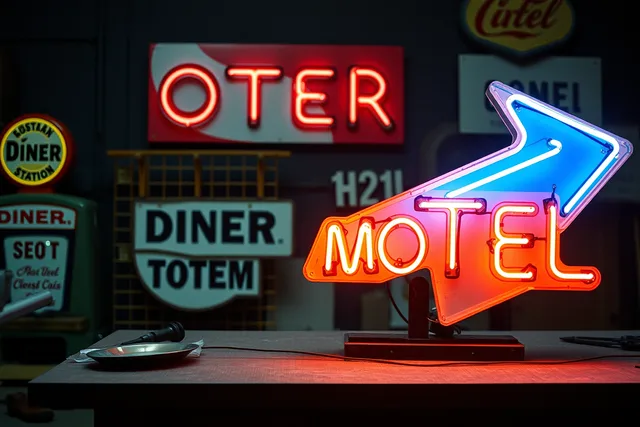
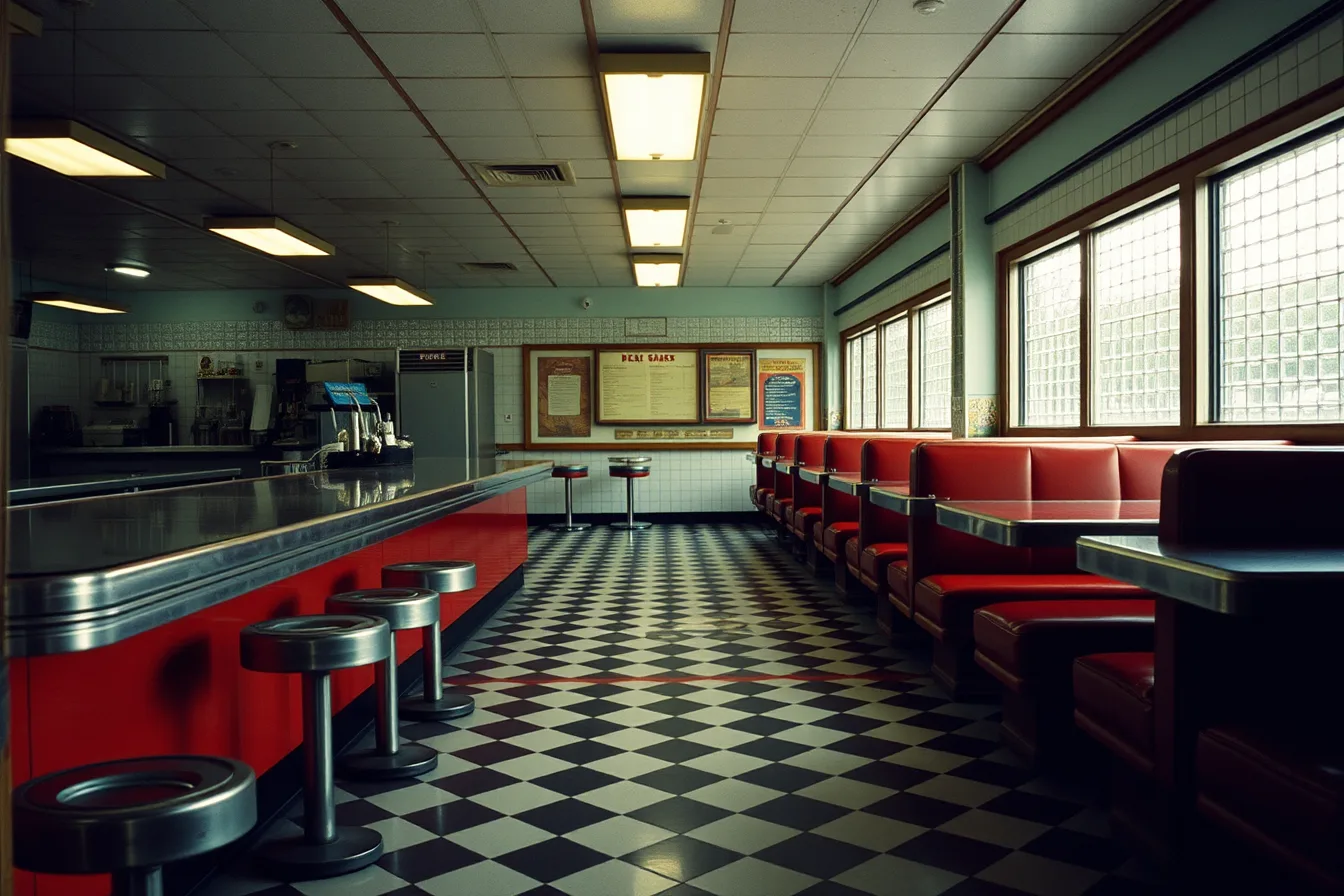
Every guide in this series uses one contextual image. The image is there to help a reader visualize a subject, not to stand in for evidence about another property. Label it as illustrative. Credit the file page directly. Do not use a photograph of one diner to suggest that another diner has the same layout, material, history, or condition.
When a photograph does document the featured place, treat it with the same care as a written source. State its creator or collection when available, the known date, what is visible, and what the image cannot establish. If the article crops a photo or uses it beside a modern update, make sure the caption still makes its original context clear.
A repeatable editorial structure
For a feature, listicle, or local profile, use the same five-part structure.
- Identify the location or subject and the article's limits.
- Describe visible features with a source and date.
- Add historical context from a specific institutional or collection record.
- Present owner or business information in a labeled, attributed section.
- End with an update route and an FAQ that explains the evidence boundaries.
The result is more durable than a generic style roundup. It can support future profiles, sponsored placements, and community contributions without asking the page to certify a property, endorse a provider, or offer technical advice.
Give readers a practical next step
Readers often want to know what to do with an incomplete story. The sensible next step is not to alter, test, or remove an interior feature. It is to improve the record.
Ask the responsible owner, local historical organization, archive, or public office for a dated photograph, a caption source, a project description, or an appropriate contact. Add only the narrow information the new record supports. This turns a feature into a living reference without pretending that a general article can settle questions of treatment, access, code, or ownership.
For a recurring local series, publish the same basic fields each time: article review date, image source, historical-source link, current-information attribution, and disclosure status. Add correction contact.
Consistent fields make pages easier to compare and help a business understand how to participate without buying an implied endorsement. They reduce the temptation to add dramatic but unsupported language when source record is thin.
Common questions
Can an article call a diner interior vintage?
It can use the term as a general style description when the context is clear. Do not use it to prove a date, original feature, or historic designation without a specific source.
Does a photo prove a feature is still in place?
No. A photo supports only its dated, visible observation. Current details need a separate current source or attribution.
Can a diner pay for a feature?
Yes, provided the placement is clearly labeled and business-supplied details are not presented as independent editorial findings.
What should a reader send to correct a profile?
Send the exact wording, a supporting record or responsible contact, the requested replacement, and the date of the information.