Guides
Part of How to plan vintage diner interiors coverage with an evidence-first workflow
Before you plan vintage diner interiors, spot these red flags early
Vintage diner planning warning signs for 2027 identify weak source paths, undated images, oversized claims, stale context, and hidden paid material.
The most serious errors in a diner-interior plan appear before a writer starts drafting. A missing record, an undated image, or an oversized promise can shape the whole article around a claim that the evidence cannot support. This review helps an editor find those risks while the outline is still easy to change.
What to take away
- A visual feature is not automatically original, historic, or unchanged.
- An image needs a source page, a date when known, and a narrow caption plan.
- Historical material and current business information need separate timelines.
- Paid and supplied material should be marked before it reaches the outline.
- A visible gap is safer than a plausible but unverified explanation.
Run a source-path review
For each planned section, ask one question: what direct record will support this sentence? Do not accept a general website, a copied social post, or an unattributed image as the answer. The plan should identify the specific collection item, public record, dated statement, or source page that will carry the claim.
The National Park Service design-development deliverables guidance includes an existing-conditions base and information about existing and historic structures. A local article is not a federal submittal. The limited planning lesson is still useful: establish what is being discussed before making a claim about change.
| Warning sign | Risk to the article | Fix before drafting |
|---|
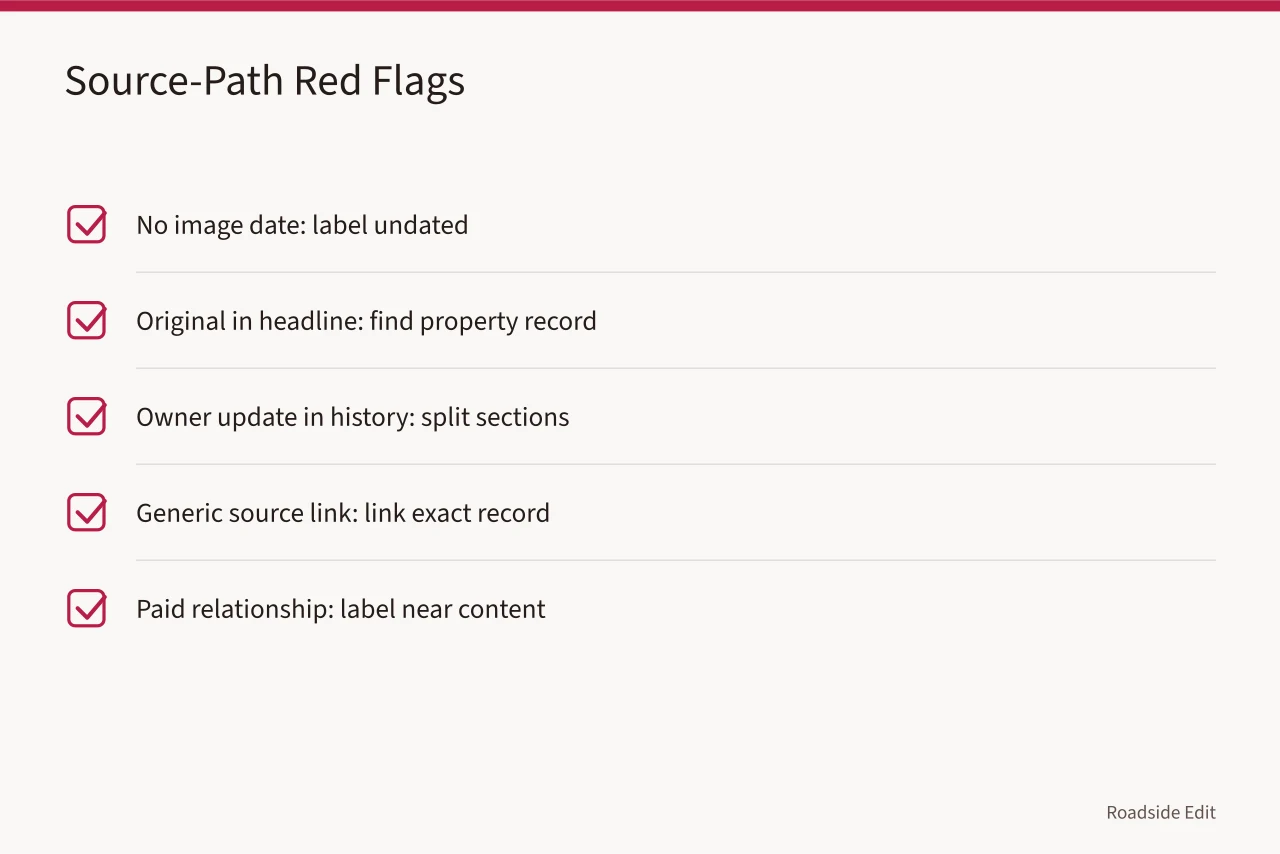
Catch visual overreach
An image may show booths, stools, a counter, wall paneling, or floor patterns. It does not by itself establish material composition, installation date, or condition beyond what is visible. Plan captions with the image's actual scope: subject, source, date, and a contextual label if it depicts another diner.
The Library of Congress primary-source analysis guide starts with observation before reflection and investigation. Make that the review order. First record what is visible. Then list the historical questions it creates. Only then look for a record that answers those questions.
Avoid a caption such as "original chrome counter" unless a source establishes both original installation and the material. A better planning note is "metal-trimmed counter visible in a 1960 photograph; installation history not established." That note may not be dramatic, but it tells the writer exactly what the article can say.
Check for date drift
Historic and current records often coexist in the same story. A historic photo may be accurate, while a current owner statement is also accurate about a later change. The risk begins when the outline blends them into one present-tense account.
The National Archives primary-source explanation explains that a source's role depends on the question. A 1950 photo can support an observation about 1950. It cannot prove a 2027 seating plan, owner, menu, or opening status. Plan separate paragraphs and dates for those different time frames.
When sources conflict, write the conflict into the planning file. Ask whether they describe different rooms, features, or years. If no record resolves the difference, say so. Do not average the two accounts into a new story that neither source supports.
Review promotional pressure early
An owner, designer, or supplier may send images, copy, or a project account. That can be useful material when it stays attributed. The planning file should record who supplied it, when, and what relationship they have to the feature.
The Federal Trade Commission's endorsement guidance says material connections that could affect how readers evaluate an endorsement should be disclosed clearly and conspicuously. Plan the label at the same time as the content. A disclosure gives readers context; it does not verify a business-supplied statement.
Use a final red-flag question before assigning the piece: would a reader understand which claims come from images, institutional records, current contributors, and paid participants? If not, revise the outline.
Common questions
Can one photo establish existing conditions?
It can support a narrow, dated visual observation. It cannot establish every condition, history, or current detail in a room.
What should a paid label say?
Use plain language such as "Paid placement" close to the relevant profile or section.
What is the best fix for missing history?
State the gap, keep the question open, and seek a specific archival, public, owner, or collection record.