Guides
Part of How to plan vintage diner interiors coverage with an evidence-first workflow
How to plan a vintage diner interior: a workflow and scope checklist
Vintage diner interior planning checklist for 2027: set the article brief, map room evidence, separate timelines, credit images, and review claims before publishing.
Planning a diner-interior article is not the same as planning work on the building. The editorial task is to decide what the page can document, where each fact came from, and how readers can tell a historic record from a current update. This checklist creates that plan before drafting starts.
What to take away
- Write the article brief before collecting attractive images.
- Map features to their source and date rather than to a generic style label.
- Keep a historical timeline separate from present business information.
- Decide whether each image is evidence or context before placing it.
- Review headline, caption, and disclosure as one evidence system.
Draft a one-page brief
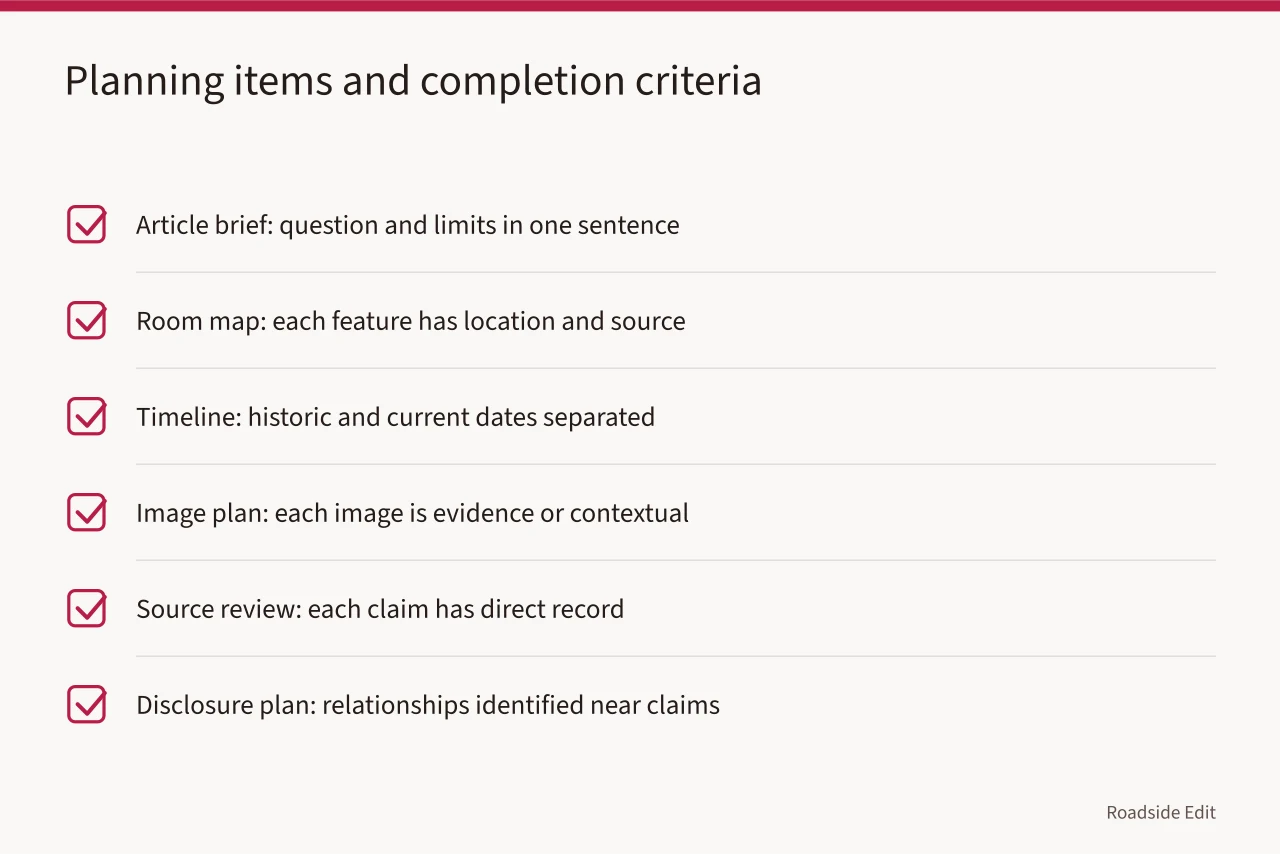
Start with a question the records can answer. "What features appear in the documented 1950s interior?" is workable. "How should this diner be restored?" is not an editorial question a general feature can answer. The brief should name the place or collection, intended time period, source types available, and what the article will not attempt to establish.
The Day & Night Diner HABS record shows why to organize a historic name, source information, features, changes, and condition notes in one record.
A magazine feature should not copy a HABS form or claim the same depth of documentation. It can use the limited planning lesson: put the question, sources, and known changes in one place before writing conclusions.
Make a room map from the evidence
Do not start with a list of supposed diner traits. Work from the source. Use a simple sketch or table to place the counter, booths, doors, windows, service opening, floor, ceiling, and signage as they appear in a dated image or described record. Then record the date and original source page beside each item.
The Library of Congress primary-source analysis guide follows an observe, reflect, question, and investigate sequence. That order is useful at planning stage. Observation fills the room map. Reflection raises questions. Investigation finds the record, if one exists. It stops a writer from calling a visible feature original before the evidence has been checked.
Plan two timelines
Most diner stories have at least two timelines. One is historical: dates on photos, surveys, advertisements, or collection records. The other is current: information supplied by an owner, operator, public office, or reporter. Do not merge them merely because they refer to the same room.
For each historic item, note source date and what it shows. For each current item, note supplier, relationship to the diner, and date received.
The National Archives primary-source explanation says a source is primary in relation to a question. A historical photo can answer a question about its own date, but not present ownership or current room condition.
Decide image purpose before layout
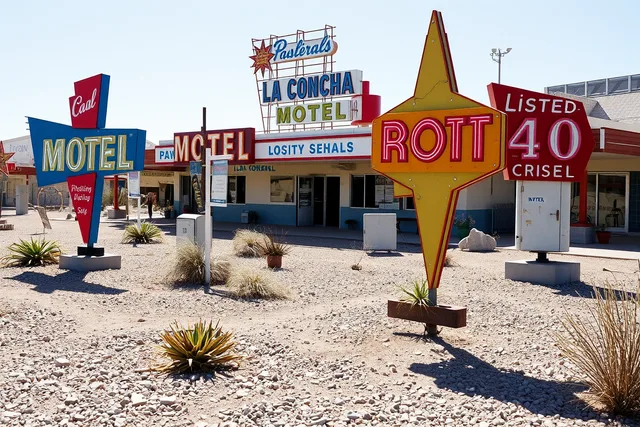
An illustrative photo can make the guide welcoming, but its use must stay clear. Label it contextual and credit its exact source page. A photo of the featured diner can be evidence only for the visible, dated point it supports. Never use an image from another property to imply a similar history or condition.
Plan every caption using three parts: what the image shows, date or time range when known, and source. Add a fourth part when necessary: "contextual illustration, not evidence for the featured diner." Captions should match the evidence boundary in the body and headline.
Review supplied material and placements
If a business provides copy, photographs, a project description, or payment, plan the attribution before writing. Use direct language such as "The operator said" or "According to material supplied by the business." Where the relationship could affect how readers weigh a recommendation, disclose it nearby.
The Federal Trade Commission's endorsement guidance says material connections that could affect the credibility of an endorsement should be disclosed clearly and conspicuously. A disclosure provides context. It does not make a supplied claim an independent fact.
Finish planning with a human review: Can every headline promise be traced to a source? Does each caption say what it can prove? Is a correction contact ready? If not, revise the plan before drafting.
Common questions
What is the first planning question?
Ask what the available records can show about a specific interior and date, not what should be done to the building.
Can a source file include an owner email?
Keep contact details secure. Record only the attributed information needed for the article and its correction route.
Should the article use every source in the file?
No. Publish only sources needed to support public claims. Keep the broader record for editorial continuity and corrections.