Reviews
Part of How to plan vintage diner interiors coverage with an evidence-first workflow
Vintage diner interiors: questions to ask before you plan a remodel
Vintage diner interior planning questions for 2027 help editors match room-history questions with dated images, records, current updates, and disclosures.
The best time to find a weak diner-interior claim is before the first paragraph is drafted. Planning questions identify what the article needs to know, which record can answer it, and when a point must remain open. They turn research into an evidence plan rather than a search for confirmation.
What to take away
- Ask what the source shows before deciding what the room means.
- Match each question to an image, record, current contact, or explicit gap.
- Treat historical appearance and current operations as separate subjects.
- Record conflicts as facts about the evidence, not as problems to hide.
- Identify supplied or paid content before it enters the outline.
Questions for the room itself
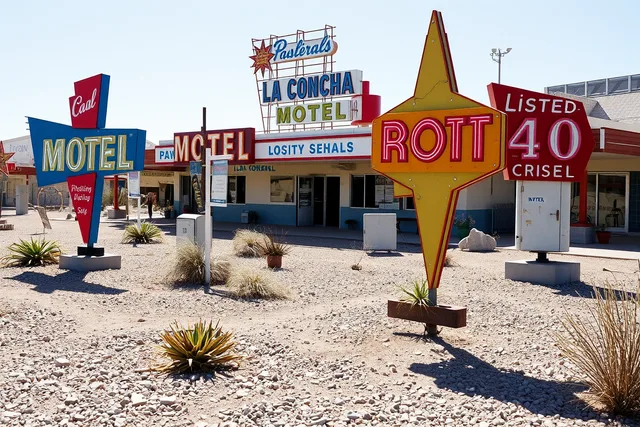
Begin with the visible setting. What part of the room appears in the dated image? Where is the counter in relation to doors, windows, and booths? Which feature is named by the caption, and which feature is only visible without a label? These questions keep the outline tied to evidence instead of a generic retro vocabulary.
The National Park Service's existing-conditions guidance video explains that conditions are best understood within a building's history and evolution, supported by historic documentation. An editorial feature should use that limited principle: place a dated view beside the source that explains it, rather than treating one polished image as the whole history.
| Planning question | Source to seek | What the answer can support |
|---|---|---|
| What is visible in the room? | Dated image or direct observation | A limited visual description |
| When did a feature appear? | Survey, collection record, or dated document | A documented time point |
| Is the feature still there? | Current owner account or current record | A dated present report |
| Who supplied the project story? | Email, interview, or written statement | The speaker's account |
| Why do records differ? | Side-by-side source notes | A description of the conflict |
| Is content promotional? | Placement agreement or contributor disclosure | A clear reader label |
Questions for historical claims
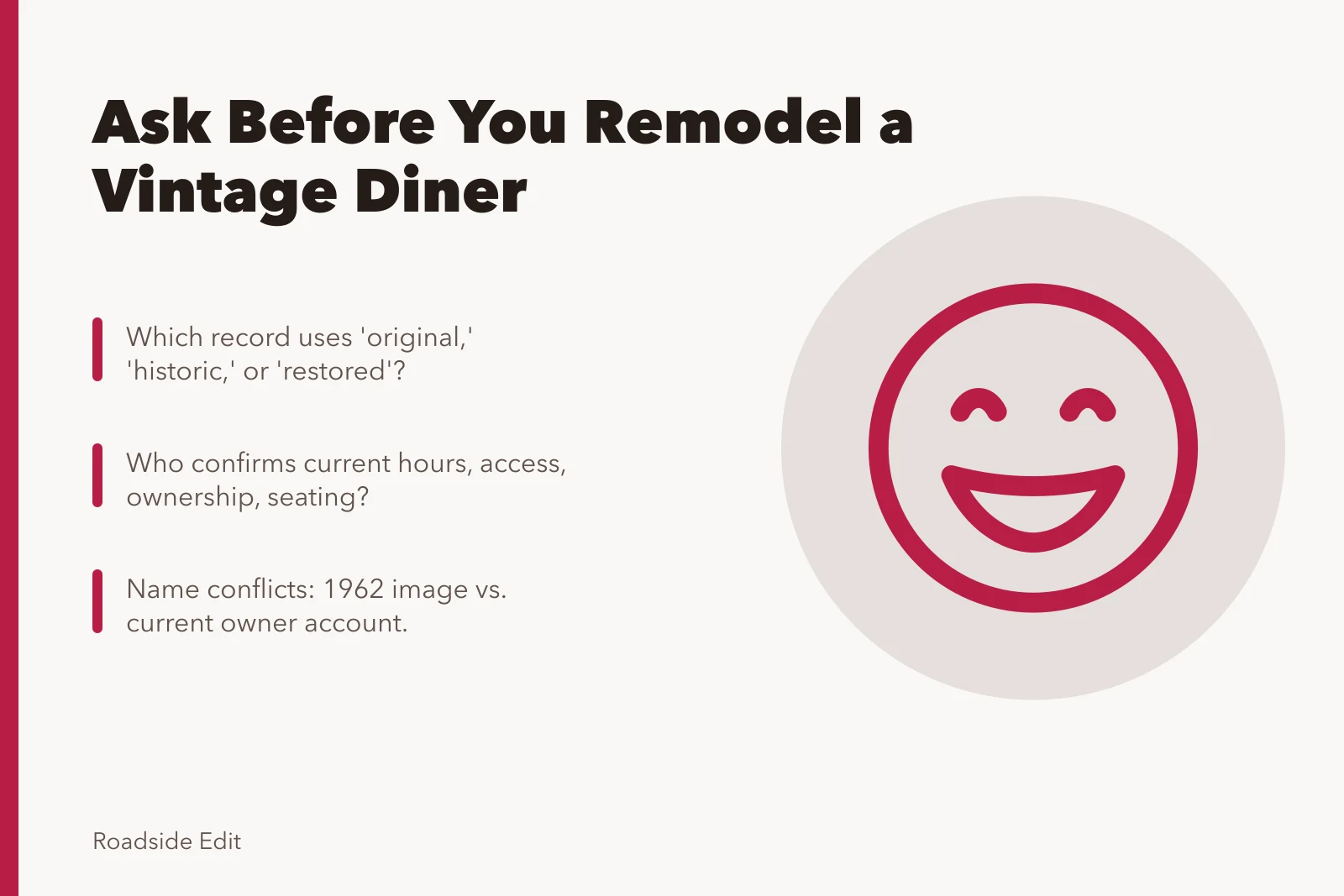
Words such as "original," "historic," and "restored" should be written as questions first. Which record uses that word? Does it refer to the whole building, a room, or a particular feature? What date does the record cover? A plan that asks these questions will not have to retreat from a dramatic claim after the page design is finished.
The National Archives primary-source explanation says that a source is primary in relation to the question being asked. A 1940 photo may be strong evidence for the appearance of a diner at that date. It does not establish who installed a countertop or whether it survived to the present day.
Ask one follow-up question for every historical statement: "What would disprove this?" If the answer is a missing permit, survey, photo, or contributor record, write that gap into the outline. A public article can explain that an installation date is not established. It should not turn a likely date into a fact.
Questions for current information
Current details deserve their own plan. Who can confirm current hours, access, ownership, seating arrangement, or a recent update? What date did they provide the information? What relationship do they have to the business? Separate these questions from historical research so a current update does not accidentally rewrite the past.
The Library of Congress primary-source analysis guide begins with observation before reflection and investigation. Use that order in the planning notes. Record the visible and stated detail first. Then investigate whether another source is needed before offering an explanation.
Questions for competing accounts
Two sources may disagree because a room changed, a caption was incomplete, or one account is mistaken. Do not solve the disagreement by choosing the most appealing version. Ask whether the sources describe the same feature, same location, and same time. If not, the article may be able to explain the difference without calling either account false.
When the conflict remains unresolved, name it precisely: "The available 1962 image and the current owner account describe different seating arrangements; the record reviewed does not explain when the change occurred." This is more useful than an invented bridge between the two statements.
Questions for supplied material
Before using a business-provided description or image, ask who sent it, when, and whether a reader would weigh the claim differently knowing the relationship. If payment, a free service, or another material connection is involved, place a direct disclosure near the affected content.
The Federal Trade Commission's endorsement guidance says material connections that could affect how readers evaluate an endorsement should be disclosed clearly and conspicuously. A disclosure adds context. It does not turn a business statement into independent historical evidence.
Common questions
Can a planning question remain open?
Yes. Name the missing evidence and the kind of source that could answer it rather than substituting an assumption.
Is a business description a historical source?
No. It is an attributed current account unless it cites and provides a separate record for the historical point.
Why record source conflicts?
It keeps the article honest and gives readers a focused route to provide better evidence without asking an editor to erase the record.