Guides
Part of How to choose a historic motel restoration provider in 2027
How to keep historic motel restoration provider selection records in 2027
Historic motel hiring records guide for 2027 explains how to keep requests, proposals, scope changes, decisions, and handoff notes in one usable file.
A historic motel hiring file should explain what was requested, what each provider supplied, and why a decision was made. It is not a public rating system or a place to collect unnecessary personal information. Its job is to preserve a clear project record that another owner, editor, or project manager can understand.
What to take away
- Start the record before proposals arrive.
- Give each document a date and version label.
- Separate provider statements from the owner's notes.
- Keep only material that serves the project decision.
Build one folder with a simple index
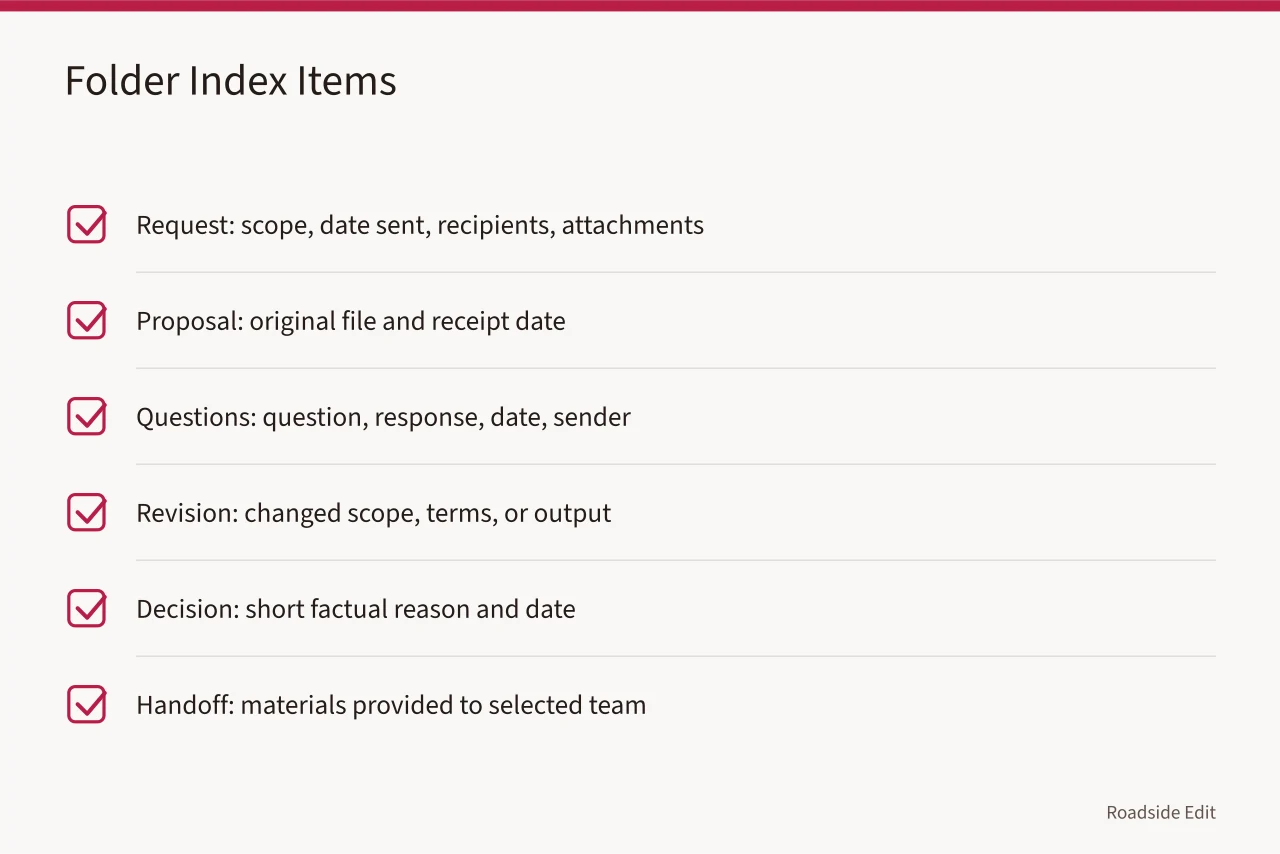
Start with a folder name that identifies the property, assignment, and year. Add an index that tells a reader where to find the request, proposals, questions, revisions, selection note, and later handoff material. A short index is usually more useful than a large set of unlabeled attachments.
The National Archives advises federal staff to identify records needed to document business and to manage them through their life cycle. Read National Archives records-management basics. A motel hiring folder is not a federal records program. The relevant idea is modest: keep the documents that explain the work and the decision, then organize them so they can be located later.
| Folder item | What to retain | Useful label |
|---|
Use file names that sort naturally. A date such as 2030-07-24 and a version number prevent an updated PDF from silently replacing the response that was reviewed first.
Keep the request and response together
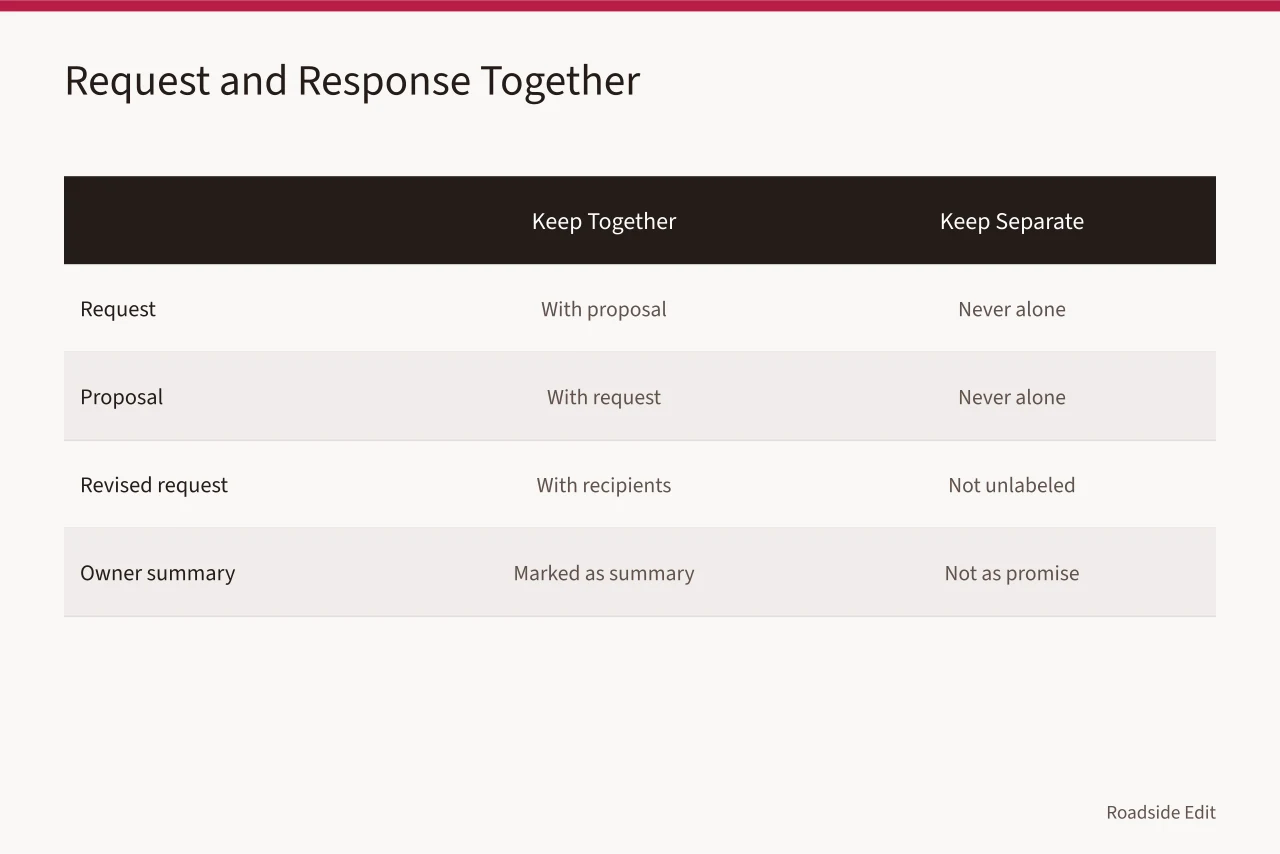
Do not save proposals without the request they answer. The scope, attachments, property information, due date, and stated output shape what a response means. If the request changes after providers reply, save the revised request and identify who received it.
NPS Historic Preservation Fund grant-reporting guidance instructs participants in that program to remain familiar with the approved scope and deliverables. Review NPS grant reporting guidance. The guidance does not govern private motel work. It reinforces one recordkeeping habit: a document is easier to evaluate when it can be connected to a stated scope and expected output.
An owner's comparison note should quote or summarize the provider's statement carefully. Mark a summary as an owner's summary. Keep the original nearby so a later reader does not mistake paraphrase for a provider promise.
Record changes as changes
Historic property work may change after access is confirmed, measurements are taken, or earlier records are reviewed. That does not make the first proposal worthless. It means the file needs a dated change note. The note should identify the prior version, the changed item, the stated reason, the effect on timing or fee if any, and the decision still needed.
The National Park Service describes Historic Property Project Documentation as a process that records information used in later scope and design decisions. See the NPS documentation overview. The source is not a private procurement template. It does help explain why a dated record of what was known at a decision point is preferable to recreating the decision from memory.
Avoid overwriting filenames such as final.pdf. Use a version label instead. A provider's revised scope can be read beside the earlier scope without suggesting that either document was hidden or wrong.
Set privacy and access limits
Hiring records can contain contact details, fee terms, references, and materials shared in confidence. Limit access to people who need the file for the project. Before publishing a case study or a sponsored listing, remove private correspondence and obtain permission for any material that identifies a person or company beyond what is already public.
NPS heritage documentation standards call for reliable source material and stated limitations so later readers can check a record. Read the NPS documentation standards. In a private file, the limitation may be access rather than research quality. Note what cannot be shared and why, instead of leaving an unexplained gap.
Prepare a clean handoff
When the owner selects help, give the selected team only the material needed for the agreed work. The handoff might include current site information, a confirmed scope, access instructions, a decision log, and relevant earlier records. Add a brief list of items transferred and the transfer date.
This step prevents a later team from relying on an outdated proposal or an owner note that was never confirmed. It also creates a practical boundary between a selection file and the active project file. The selection record explains how help was chosen. The project record documents what happens after work begins.
Common questions
Do I need to keep every email?
No. Keep messages that change the scope, clarify an offer, record a decision, or provide material needed for the work. Avoid retaining irrelevant personal material.
Should the decision note rank every provider?
No. A short factual note can state that the selected response matched the stated scope and record needs without publishing a ranking.
How long should I retain the file?
Follow applicable legal, contractual, privacy, and business requirements. This guide does not set a retention period.