
Guides
Part of Historic motel restoration: 8 planning mistakes to avoid before 2027
Historic motel restoration: 6 questions to ask before you assume
Six questions to settle before a historic motel restoration plan hardens, each naming the evidence it needs and the role that can answer it.
A motel plan built on guesses is expensive to unwind. The six questions below are the ones that decide whether a scope is real: what the sign is made of, what the roof did, who owns the answer.
What to take away
- Ask what the feature is made of before anyone prices a repair.
- Ask which decade the visible work belongs to, not which decade the motel opened.
- Ask who holds the decision: owner, State Historic Preservation Office, or a licensed professional.
- Ask what a photograph can and cannot prove.
- Write the question so a later reader can answer it without you.
1. What is the sign actually made of?
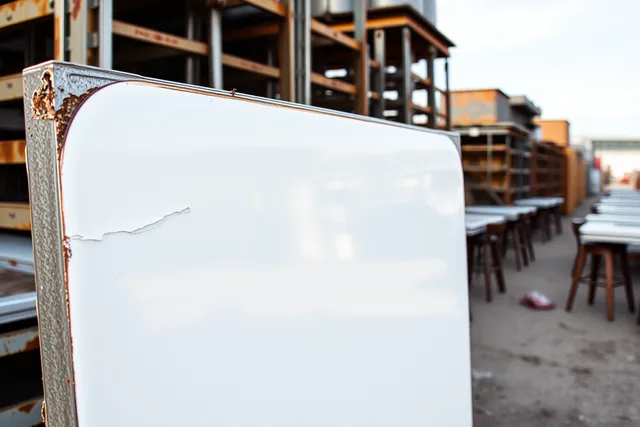
A 1950s porcelain-enamel panel and a 1960s plastic-faced box sign fail differently and clean differently. Enamel chips to bare steel and holds a fired finish; plastic face cracks, yellows, and takes paint badly. The material decides the treatment, so it is the first question, not a later one.
If the panel cannot be identified from the ground, the answer belongs to a qualified conservator or materials lab. Read the NPS case note on incompatible masonry work for what happens when a material is assumed rather than tested.
2. Which decade does the visible work belong to?
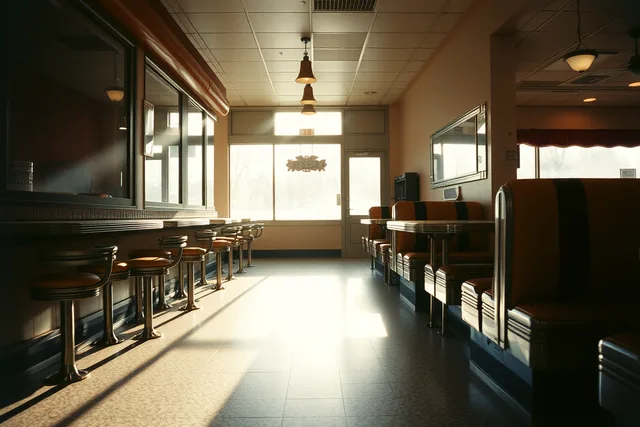
A motel exterior dates by its layers: brick veneer, curtain-wall glazing, butterfly roof, canopy soffit. Owners added and replaced in waves, so the opening date rarely matches what stands today.
Compare dated photographs and the Library of Congress primary-source guide method of observation before interpretation. State the decade you can defend and mark the rest as open.
3. What did the roof and drainage do?
A butterfly roof sheds to an interior valley; a flat roof with a parapet sheds to scuppers. The forecourt and dry-stand pipe follow that geometry. Get the drainage wrong and the repair returns every storm season.
Roof structure and drainage capacity are engineering questions. Name the licensed engineer and the local authority having jurisdiction rather than settling it in a planning note.
4. Who owns this decision?
Some answers belong to the owner, some to the State Historic Preservation Office, some to a licensed electrician or engineer. Section 106 review and the Secretary of the Interior's Standards set the frame, but the adopted ordinance and the local landmarks commission decide the permit.
Record the boundary plainly. An editor or planner who answers outside their role creates a liability the project carries forward.
5. What can a photograph prove?
A photograph documents appearance at a date. It cannot establish material composition, cause of change, or an appropriate treatment. Use it as evidence of what was visible, then state what needs another record.
The NPS standards for architectural and engineering documentation call for reliable sources and stated limitations. Test each claim against that standard before it enters the file.
6. Who answers this next, and by when?
Every open question needs a named role and a review trigger. The NPS Historic Property Project Documentation overview treats documentation as part of scope and design, which means the handoff is part of the plan.
Write the question so a later reader can act: "Compare the east office trim with the dated record and determine whether the visible change is comparable." That names the subject, the evidence, and the limit.
| Question | Evidence needed | Do not substitute |
|---|---|---|
| What material is present? | Defined record or qualified assessment | A visual guess |
| What changed? | Comparable dated observation | An unrelated image |
| Who can decide? | Documented role or applicable authority | A planning editor |
| What happened after work? | Completion and later review record | An early proposal |
Worked example: a neon canopy question
A canopy shows empty tube clips and a transformer box with no label. The loose question is "check the sign." The usable version is four numbered questions in answer order.
- What tube diameter and clip spacing are present?
- What does the dated photograph show at this canopy?
- Who is licensed to assess the transformer and wiring?
- What does the adopted ordinance require for a replacement face?
Question three goes to a licensed electrician and the authority having jurisdiction. Never open a transformer box to answer it yourself.
Keep the record open
When a later source answers a question, keep the original wording and date, then add a dated response with its own source. The file then shows how the conclusion developed instead of implying the answer was always known.
"Not determined in the available record" is more accurate than an attractive guess, and it is the line that protects the next reader.
For the wider set of planning prompts this article builds on, see planning questions, and for the exterior scope that follows, planning the motel exterior.
Common questions
Can a photograph answer a material question?
It can document appearance at a date. It cannot establish material composition, cause of change, or an appropriate treatment by itself.
What makes a question useful?
A useful question has a defined location, an evidence reference, and a responsible role. It can be answered without guessing.
Why record unconfirmed assumptions?
Labeling them stops a later reader from repeating them as facts, and it shows where the record was still open.