Guides
Historic motel restoration fundamentals: how to plan before any work starts
Historic motel restoration fundamentals for 2027 explain how to define the property, find records, and frame planning questions without presuming work.
Historic motel restoration starts with a record, not a treatment label. A motel may include guest rooms, office space, a manager's residence, neon sign, parking courts. It may have walkways, landscaping, service buildings, later additions, a business that may still operate.
Each part can have different histories and source trails, and an early article or planning note should make those boundaries visible.
This guide is for writers, owners, and community researchers. It is not a project specification, structural assessment, code review, cost estimate, or advice to perform work. Its aim is to make the early questions clearer so a reader can distinguish a source-backed fact from a proposal or an unknown.
What to take away
- Define one property and one feature before discussing restoration.
- Separate the history of a motel from its present condition and future work.
- Look for local, state, and federal records that describe their own role.
- Do not turn a preservation resource into a treatment recommendation for a named motel.
- Keep an evidence file that can support later corrections.
Start with a motel record
The words "historic motel" can hide differences. A motor court, roadside cabin court, motor inn, and later motel complex may differ in layouts, dates, features, and source records.
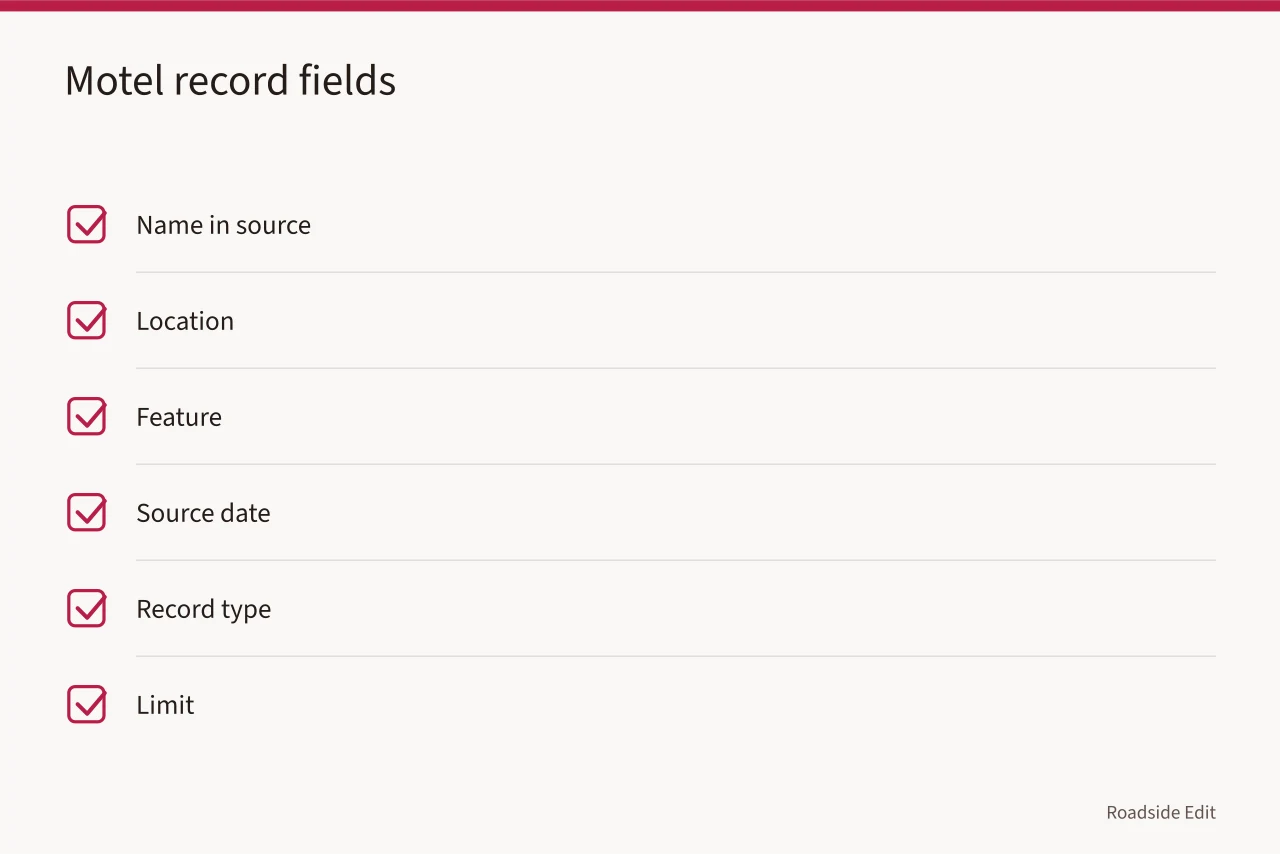
Begin with the place itself. Record the property name as a source gives it, city and state, address or route reference if available, the feature under discussion, and the date of every image or document.
| Record field | Why it matters |
|---|---|
| Name in source | Stops a current name from being confused with an earlier business name |
| Location | Keeps a roadside property separate from another motel with a similar name |
| Feature | Limits the research to a sign, office, room wing, parking court, or other defined area |
| Source date | Separates a past record from a current observation |
| Record type | Shows whether the item is a photo, archive entry, public notice, or project document |
| Limit | States what the item cannot establish |
A property record does not prove a designation, ownership, condition, or scope of work. It simply tells the reader what place and feature the article is discussing. That modest first step prevents an article from assembling facts from nearby sites or different time periods into one story.
The National Park Service documentation standard calls for reliable source material and stated limitations that make independent review possible. Read the NPS documentation standard. An editorial property record applies that approach by showing both what a source supports and what it leaves open.
Find the right kind of help
Early research often benefits from a local source that can explain its authority. The National Park Service's Route 66 building-preservation page points readers to resources: State Historic Preservation Offices, local programs, Route 66 associations, preservation organizations, and the Route 66 Corridor Preservation Office. Review NPS guidance on preserving a Route 66 building.
The page offers research and assistance paths, but it does not determine a particular motel's status, funding eligibility, or work scope.
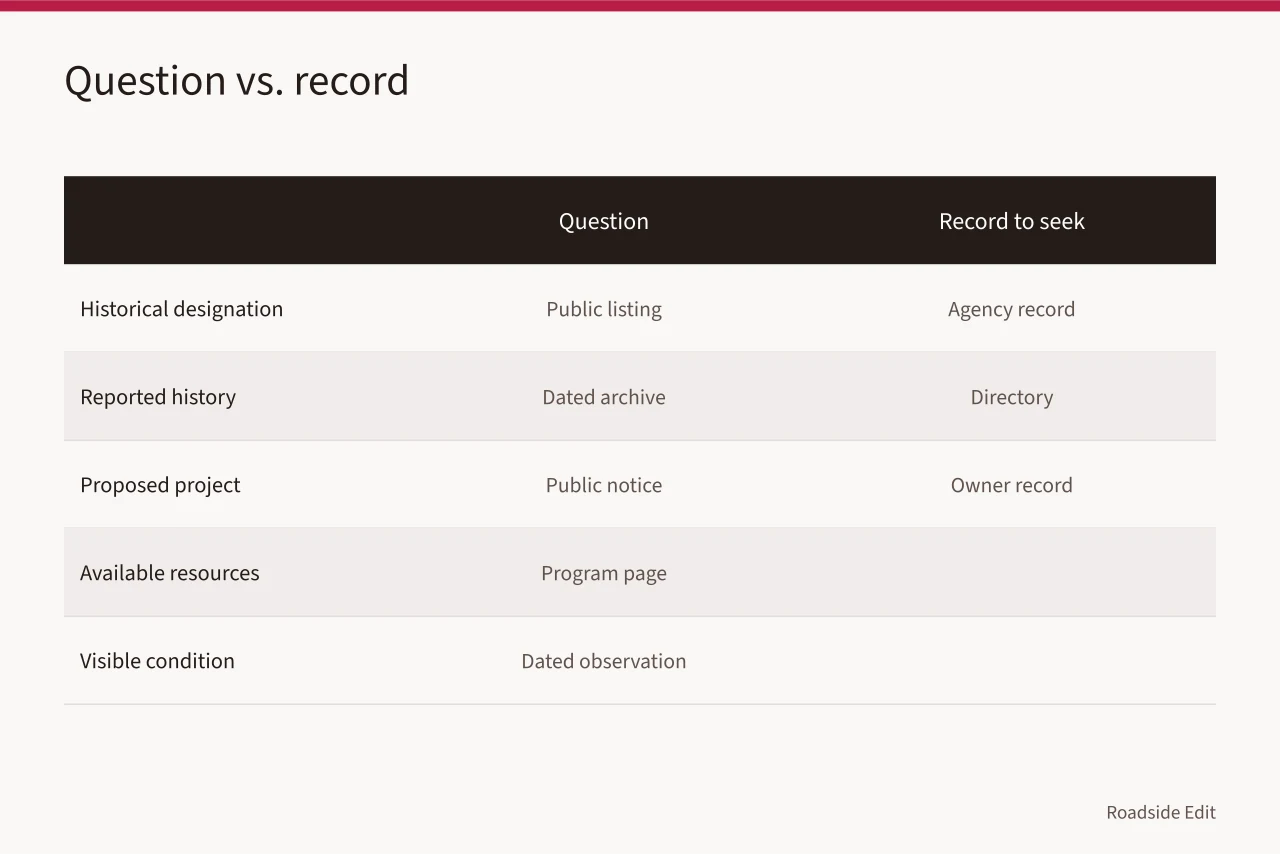
| Question | Appropriate record to seek |
|---|---|
| Is there a documented historical designation? | The relevant public listing or agency record |
| What is the motel's reported history? | Dated archive, directory, nomination, or other attributed source |
| What project is proposed? | A property-specific public notice or owner-supplied record |
| What resources may exist? | The program page that describes its own eligibility and role |
| What condition is visible? | A dated observation, distinct from a technical assessment |
Do not describe an organization as an approving authority just because it has a preservation mission. Do not call a resource a grant program unless its own page says it is one. These details matter when the article may be read by a business owner, a community partner, or a potential advertiser.
Divide the motel into research units
A single label such as "the motel" can produce vague writing. Break the site into research units. The unit may be an exterior feature, an interior area, a parking or circulation feature, a sign, a site element, or a document set. Each unit gets its own source, observation date, and limit.
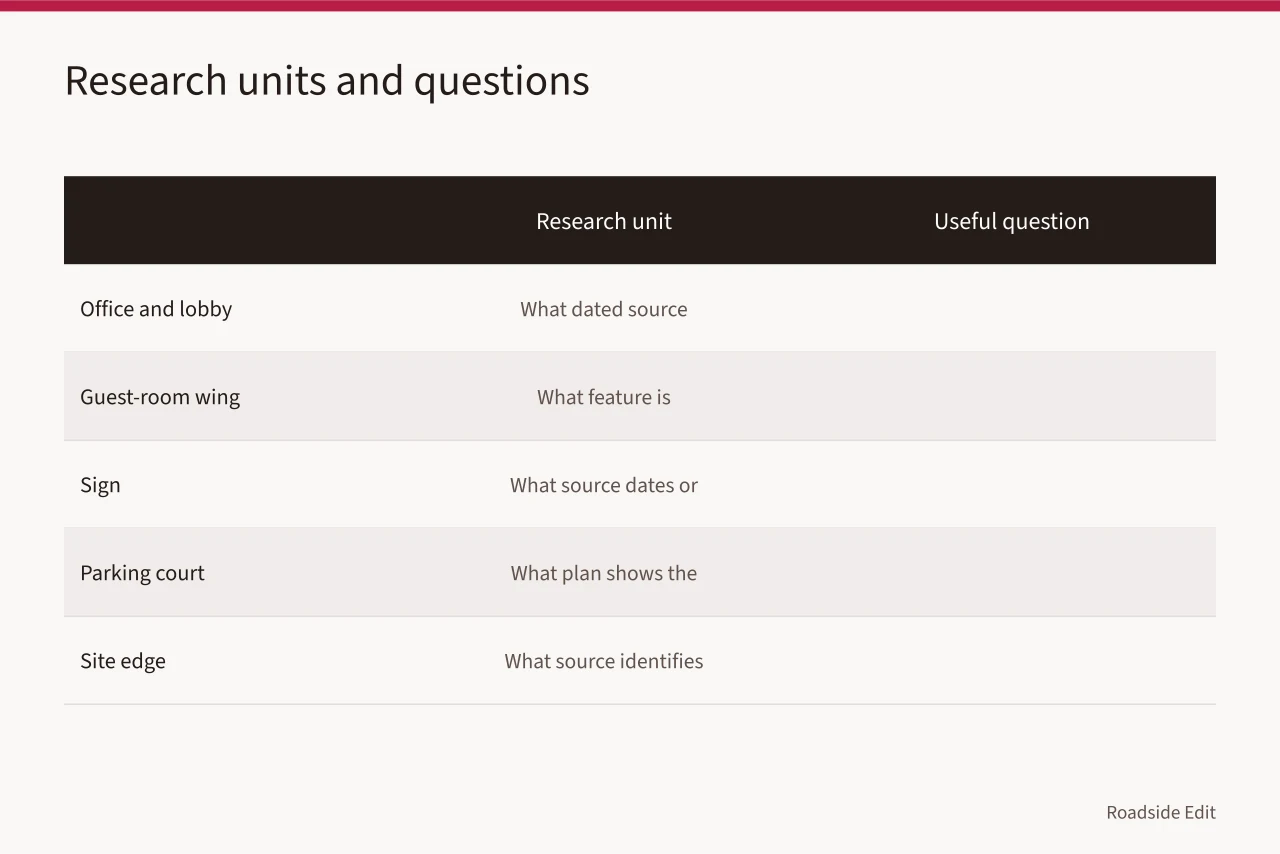
| Research unit | Useful question | Do not assume |
|---|---|---|
| Office and lobby | What dated source identifies this space or its use? | That its current finish is original |
| Guest-room wing | What feature is visible in the record? | That each room has the same history |
| Sign | What source dates or describes the sign? | That a visible component is original |
| Parking court | What plan or image shows the circulation layout? | That present pavement matches an older view |
| Site edge | What source identifies the boundary? | That a nearby feature belongs to the motel |
The research-unit method makes a general guide more useful without turning it into a technical report. It also prevents a writer from treating a scenic exterior photo as evidence about rooms, electrical systems, or interior finishes that are not visible.
Separate four kinds of statements
Most errors in restoration articles come from combining four different statements in one sentence: historical record, visible observation, condition finding, and proposed work. Keep them apart.
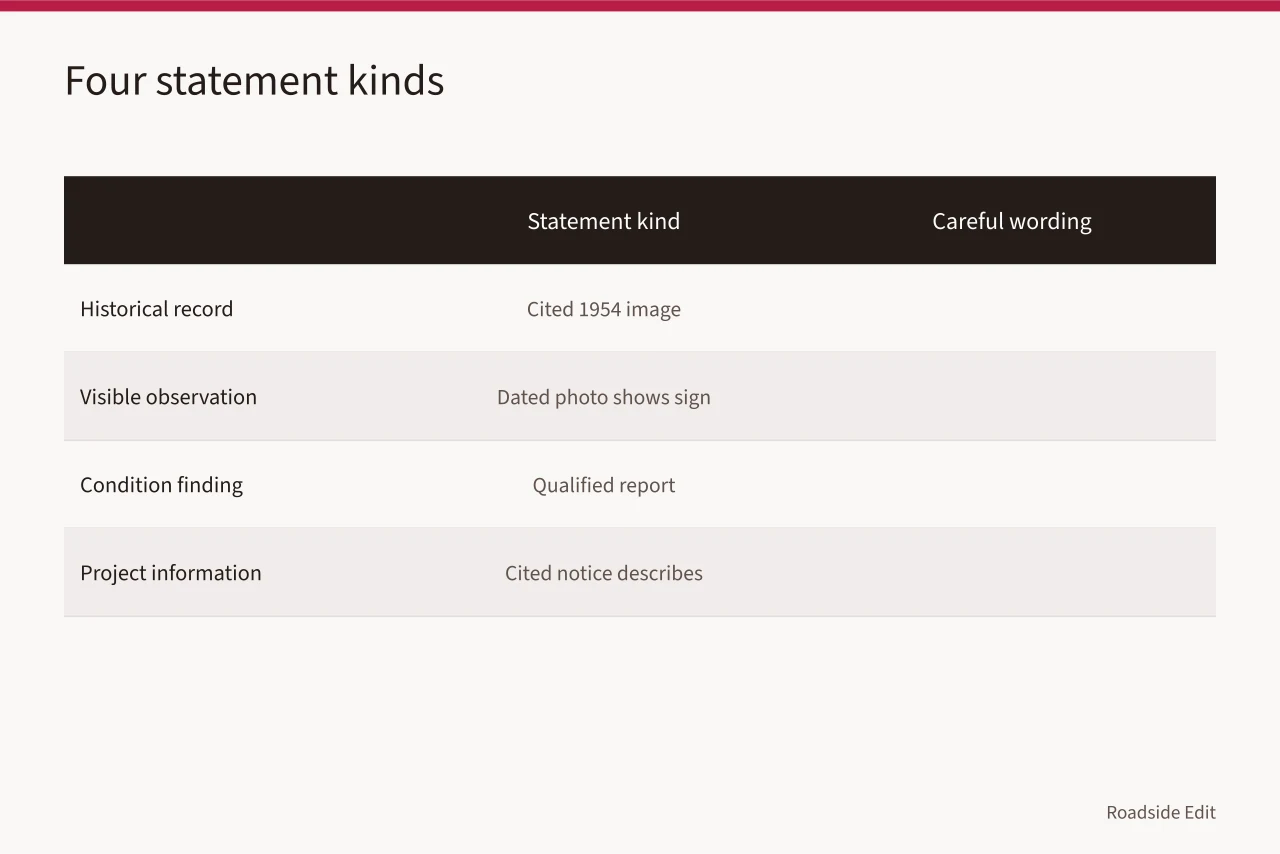
| Statement kind | Example of careful wording |
|---|---|
| Historical record | "The cited 1954 image caption identifies the property by this name." |
| Visible observation | "A dated photo shows a sign beside the office." |
| Condition finding | "A qualified report, if available, identifies a stated condition." |
| Project information | "A cited notice describes a proposed work scope." |
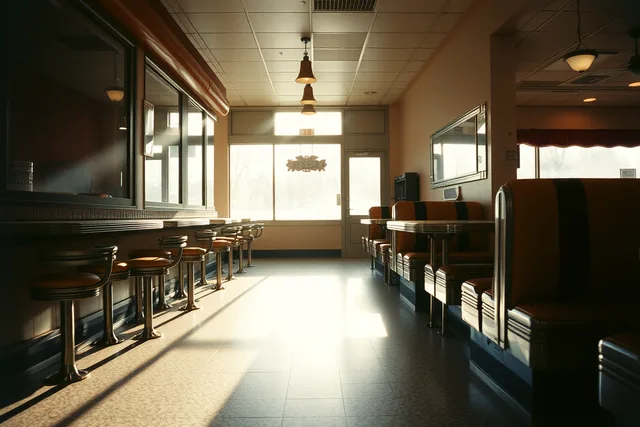
An image may make a reader wonder whether a sign needs repair or whether a building is still operating. That question is valid, but the image does not answer it by itself. Articles should say when the record does not establish a cause, a current status, a safety issue, or a completed project.
Build the source file before the narrative
Create a simple source file before drafting. Include the exact URL or identifier, source title, source date, the article sentence it supports, and its limit. Keep the image credit in a separate entry. The credit page establishes the media attribution. It does not automatically support a historical claim in the paragraph near the image.
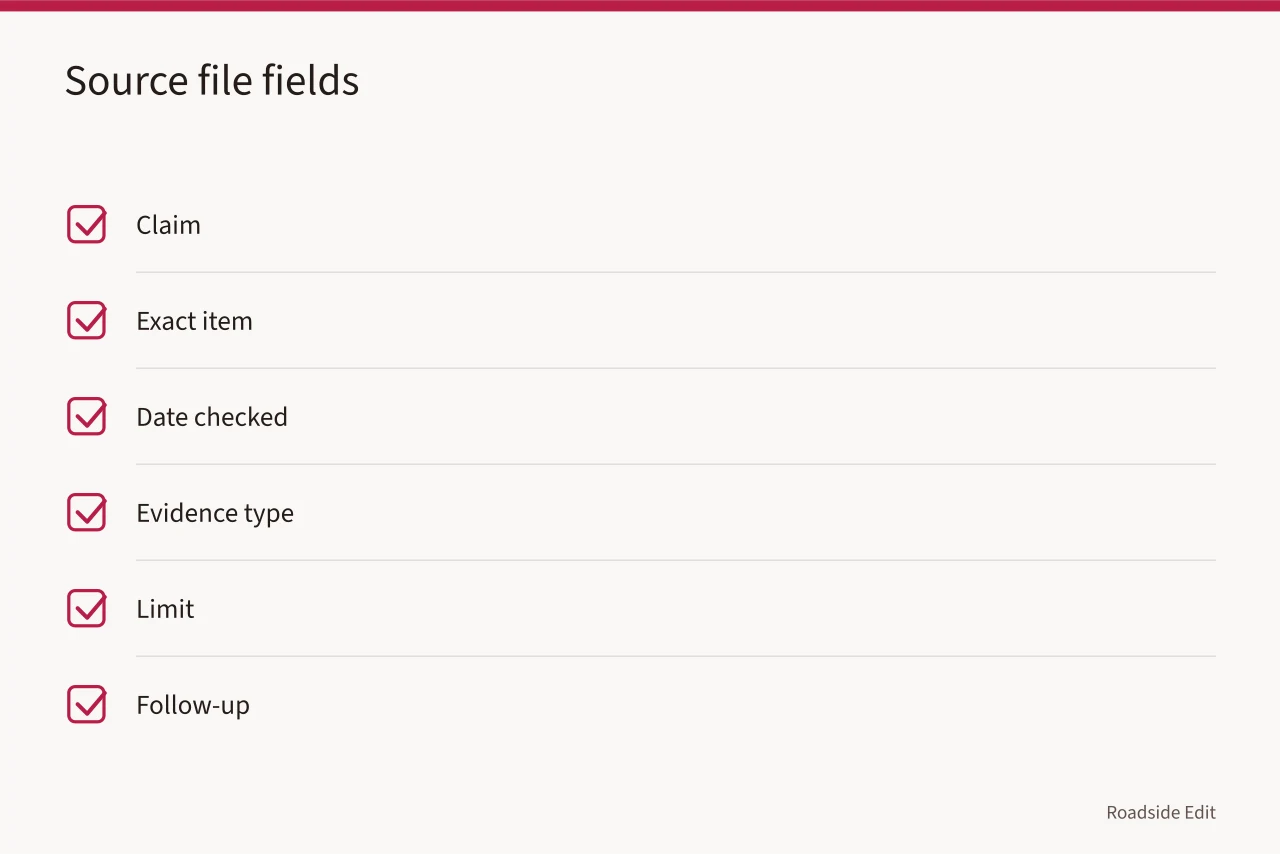
| Source-file field | Example use |
|---|---|
| Claim | "The source identifies the motel in the caption." |
| Exact item | Archive item URL, agency document, or image page |
| Date checked | Lets an editor revisit a changing page |
| Evidence type | Photo, public notice, historic record, or context source |
| Limit | Does not establish current condition or work method |
| Follow-up | A record that would answer the next question |
The source file is especially useful when a hotel or motel has changed names, ownership, or room configuration. A later editor can correct one sentence without replacing a documented older record with a present-day guess.
The Library of Congress primary-source process begins with observation before reflection and questions. Use the Library of Congress source-analysis guide. In a motel article, that means recording the words, date clues, and visible features of an item before asking it to support a historical explanation.
Use "restoration" with care
Restoration is a formal term in some preservation contexts. In ordinary conversation, it can mean anything from cleaning a sign to reopening an entire property.
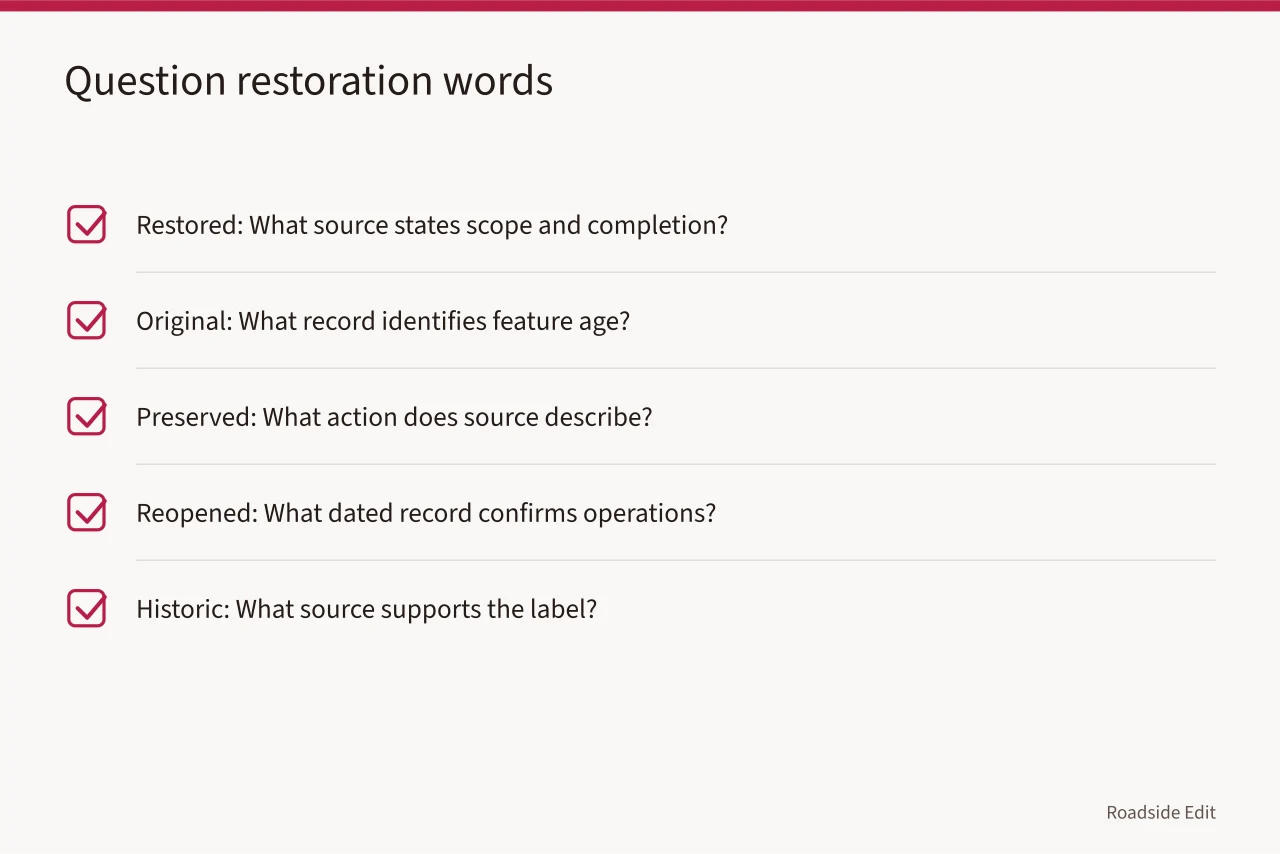
An article should say what it means in its own context. If the source calls a project a restoration, attribute that language to the source. If the source describes a roof project, window work, or an office renovation, use those narrower terms.
| Word in a draft | Question before publishing |
|---|---|
| Restored | What source states the scope and completion status? |
| Original | What record identifies the feature's age or component history? |
| Preserved | What action or condition does the source actually describe? |
| Reopened | What current, dated record confirms operations? |
| Historic | What source or designation language supports the label? |
The goal is not to make the article timid. It is to make its words match the available evidence. A source-backed detail about a motel's office, sign, or court can be more interesting than a broad claim that cannot be checked.
The NPS Historic Property Project Documentation process relates property information to later scope and design decisions. Review the NPS project-documentation overview. A fundamentals article belongs before those decisions unless a property-specific record states the decision directly.
Frame early planning questions
Early questions should identify records and decisions, not prescribe work. A responsible guide can ask about a public designation record, a dated photo set, a prior report, a current owner contact path, or a documented project scope.
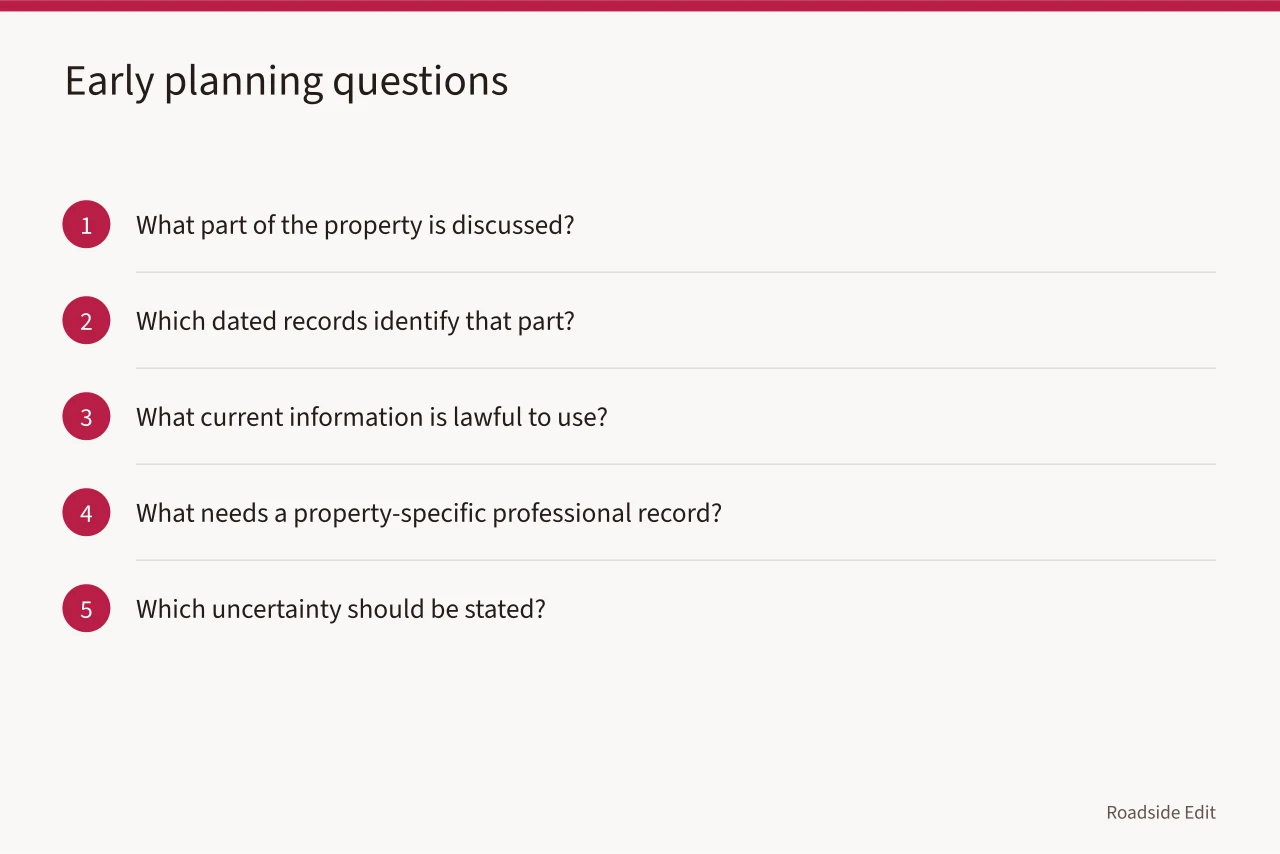
It should not tell a reader to remove materials, test a surface, enter a closed building, or undertake repair. That covers one online article's advice.
- What part of the property is the article discussing?
- Which dated records identify that part and its history?
- What current information is visible, public, and lawful to use?
- What question needs a property-specific professional or agency record?
- Which uncertainty should be stated rather than inferred?
This sequence keeps the first-stage work useful. It also protects a motel that remains active by avoiding claims that a visible image can make about the business, its owner, or its operations.
Record change without rewriting history
Motels change. A later owner may alter a sign, add a room wing, update a lobby, change a business name, or begin a new project. Record the date of each claim and do not overwrite earlier information as if it never existed. A 1960 postcard, a 2008 survey, and a current photo can all be valid records with different jobs.
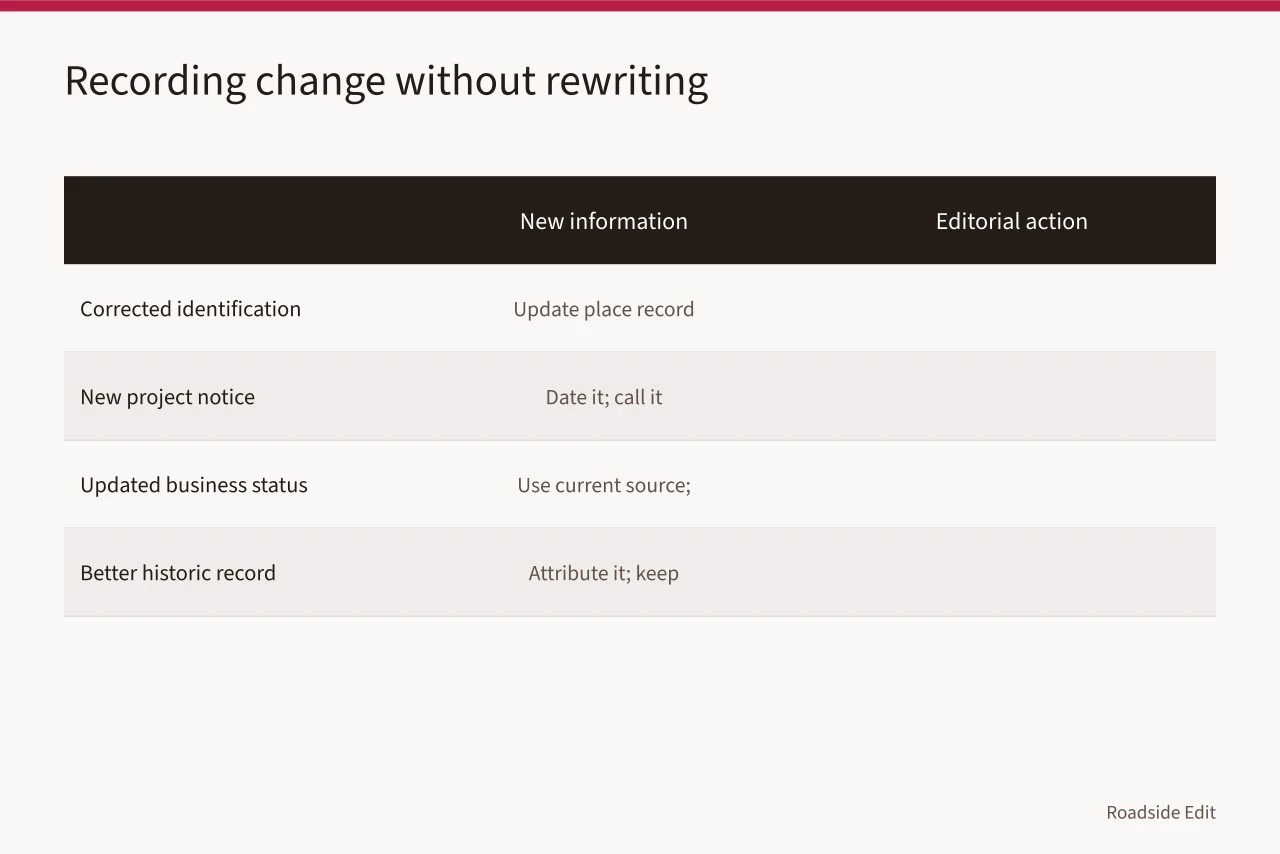
| New information | Editorial action |
|---|---|
| Corrected property identification | Update the place record and affected caption |
| New project notice | State its date and describe it as proposed unless completion is documented |
| Updated business status | Use a current, attributable source and revise only relevant sentences |
| Better historic record | Attribute the new information and preserve the correction note |
The fundamentals are simple: identify the place, define the feature, find the records, name the limit, and keep the trail. That is enough to make a restoration article useful without pretending it can replace a project-specific review.
Common questions
Does an old motel photo prove a feature is original?
No. It can document what was visible at the image date when the source identifies the image. It does not establish a feature's full component history.
Can a general preservation guide approve work at a motel?
No. General guidance can help frame questions. A specific property needs its own records, scope, and appropriate review.
What is the first record to look for?
Start with a clear property identifier, then locate dated records that fit the exact feature or question in the article.
In this guide
- Historic motel restoration basics checklist for 2027: what to gather before work startsHistoric motel restoration checklist for 2027 separates interior records, visible features, planning questions, and source limits before work is discussed.
- Historic motel restoration questions to ask before you assume a full site scopeHistoric motel restoration questions for 2027 separate phased project records, individual features, and current facts without assuming a whole-site scope.
- Historic motel restoration basics: three budgets to keep separate for 2027Historic motel restoration budget notes for 2027 help readers distinguish planning records, project scope, and unknown costs without generic repair estimates.
- Historic motel restoration warning signs: what to record before you diagnoseHistoric motel restoration warning signs for 2027 separate visible observations from structural claims, scope labels, and unsupported repair conclusions.
- How to keep historic motel restoration records straight for 2027Historic motel restoration records for 2027 explain how to track source dates, project claims, energy context, image credits, and corrections.