Guides
Part of Modern roadside design regional adaptation: a 2027 factor comparison for owners by U.S. region
How modern roadside design regional adaptation budget notes work for 2027 planning
Modern roadside regional budget notes for 2027 help owners plan observation, local review, maintenance capacity, and uncertainty without price claims.
A regional adaptation budget should pay for better decisions before it pays for a dramatic change. It should identify the recurring observations, local questions, maintenance workload, and possible approval steps that a regional concern makes relevant. It should not present a universal price for a roadside feature.
What to take away
- Budget site records and review as separate work.
- Keep regular care distinct from a change needing approval.
- State the condition that would change a cost assumption.
- Do not price a regional scenario as if it is a confirmed site outcome.
Build from work items
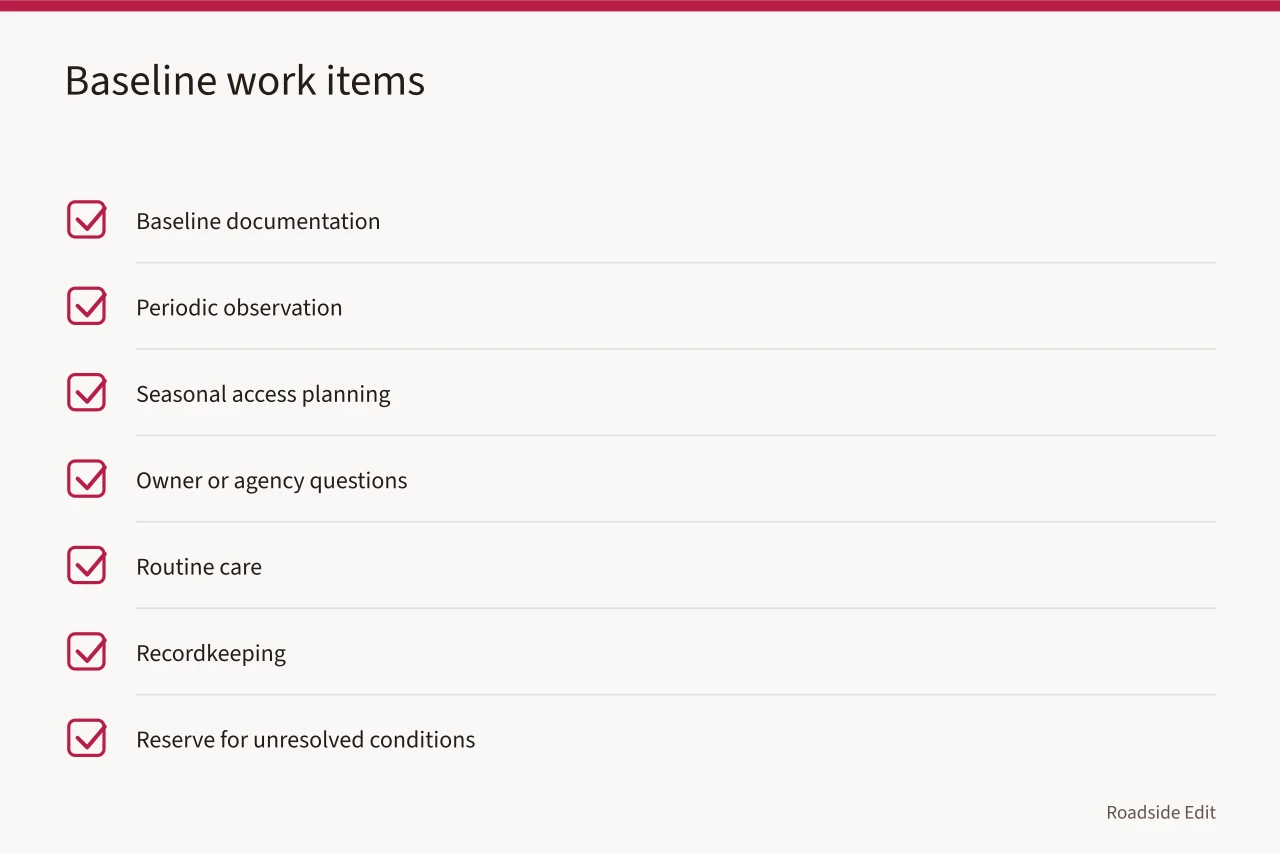
List baseline documentation, periodic observation, seasonal access planning, current owner or agency questions, routine care, recordkeeping, and a reserve for unresolved conditions. The Environmental Protection Agency's climate-resilient economy planning framework describes integrating resilience into broader planning. It does not provide a cost estimate for a local feature, so use it to support planning integration rather than a dollar claim.
NPS climate-adaptation planning says monitoring information can inform scenario consideration during a planning process. Read NPS climate-adaptation planning guidance. That does not create a budget number. It supports setting aside time and records for observation before a team treats a regional concern as a local work scope.
| Cost category | Scope question |
|---|---|
| Baseline record | What must be photographed, mapped, or collected? |
| Observation | Which season or event triggers the review? |
| Coordination | Which authority must answer before work? |
| Maintenance | What routine task is already approved? |
| Reserve | What unresolved condition could change the scope? |
Keep estimates comparable
When comparing proposals, apply the same site boundary, observation schedule, access assumptions, and closeout record. Label donated material, volunteer time, and owner labor separately. A low figure that excludes documentation or local review is not a lower price for the same work.
GSA says its estimates evolve as requirements and scope become clearer. Read GSA cost-management guidance. Its federal stages do not apply as private-project price ranges. The useful discipline is to label each number by the information available when it was made.
| Budget status | What it means |
|---|---|
| Planning record | Time or materials needed to answer a local question |
| Routine care | Work already within an approved boundary |
| Proposed change | A new scope awaiting a decision |
| Reserve | A named uncertainty with a review trigger |
| Reported amount | Dated cost supported by a reliable record |
Review after the season
Compare the estimate with completed tasks and the reasons for any change. Record whether the difference came from a new observation, a delayed authority answer, an access constraint, or an added scope. This history is the basis for the next budget, not a generic regional average.
Keep a short assumption note beside every estimate. State the season, access route, owner-supplied information, and any omitted activity. If an assumption changes, revise the estimate rather than hiding the difference in a broad contingency line.
Name what a reserve can and cannot do
Use a reserve only for an uncertainty that the file identifies. State the condition, record basis, next information needed, and person authorized to decide. Do not use it for a vaguely desired improvement. A reserve acknowledges that an outcome is not yet known; it does not make that outcome more likely.
At the next review, compare each budget line with work actually completed and the evidence available then. Keep a short note when a planned observation did not happen because access, weather, ownership, or timing changed.
That note keeps a missing activity from being mistaken for completed maintenance. It also helps the owner decide if the next budget needs a revised schedule, a smaller initial assignment, or a different question before any larger work is considered.
Keep the prior version available so later readers can see why the planning basis changed.
NPS resilience guidance calls for evaluating risk, documentation, options, feasibility, and applicable requirements before adaptation work. Read NPS resilience guidance. This source concerns historic buildings, not general roadside budgeting. It supports treating an unresolved local risk as a review item rather than as a disguised construction commitment.
Common questions
Should a regional budget include a reserve?
Yes, if it names the uncertainty it covers. A reserve should not hide an undefined scope.
Can climate data set a project price?
No. It can identify questions and planning needs, while a local scope and current quotes determine cost.
What is the most useful budget record?
A dated list of work completed, conditions encountered, approval limits, and what remains open.