Guides
Part of How to plan neon sign restoration costs without guesswork
Neon sign restoration cost questions to ask before you approve a budget
Neon sign restoration budget questions cover what a quote includes, who approves changes, and how to log each response before you commit funds.
A neon sign quote is a scope document with a number attached. Approve the number without reading the scope and you have approved whatever the fabricator decided the scope was.
What to take away
- A restoration quote usually bundles survey, fabrication, and installation into one figure, so ask which of the three it covers.
- Neon work is priced by tube, transformer, and service call, not by the square foot of sign face.
- A quote that excludes removal, disposal, or reinstallation is not comparable to one that includes them.
- Every change to the scope needs a named approver before the fabricator orders glass.
- Log each response with its date, deliverable, inputs, exclusions, fee basis, and next action.
What a neon restoration quote actually covers
Most fabricators quote three cost centers: survey and documentation, fabrication of replacement parts, and installation with a service call. A quote that names only one is a partial number, not a low bid.
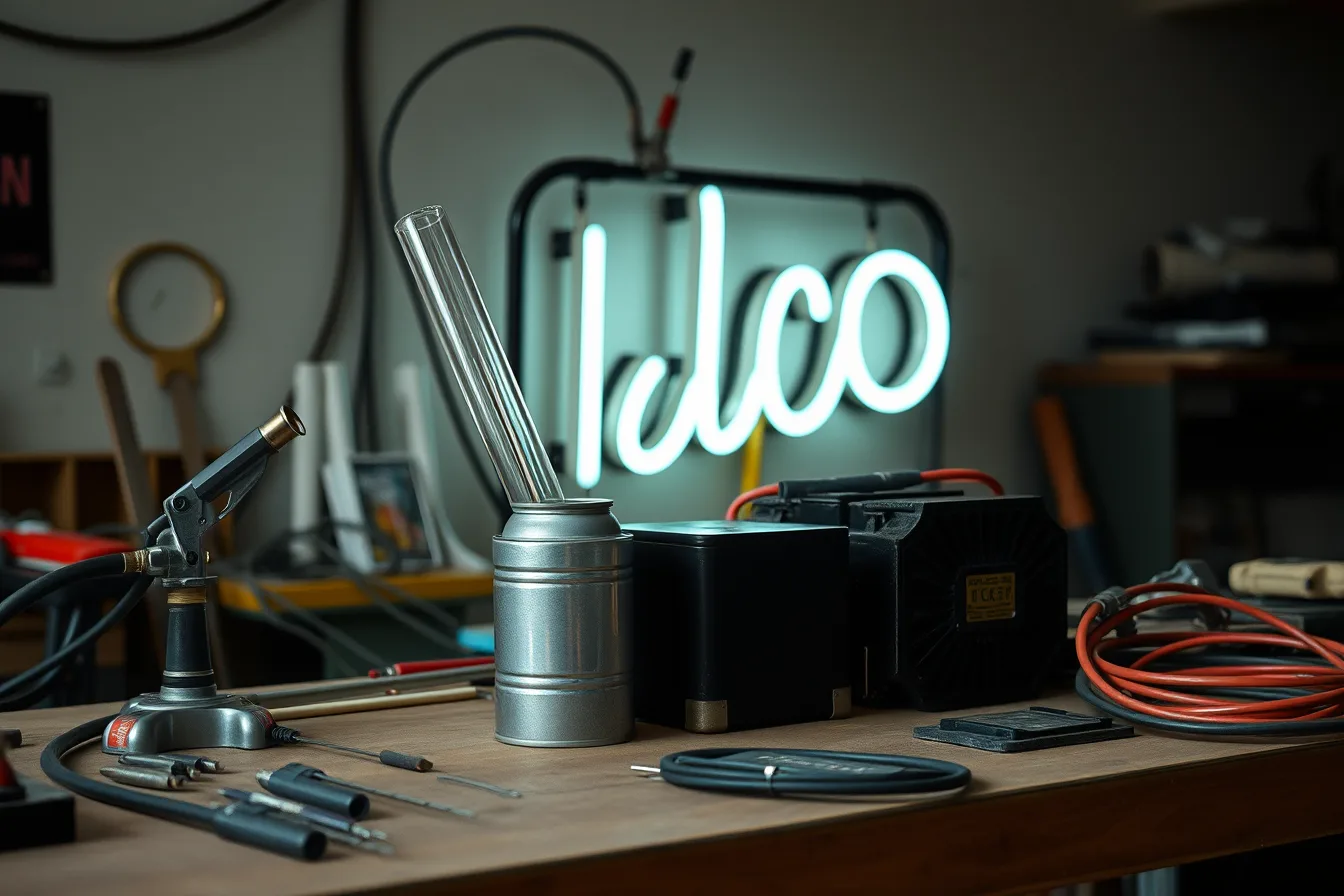
Fabrication is the largest line on most jobs because it is priced per part. A replacement tube is quoted by length and diameter, a transformer by load rating, and a new can by sheet-metal size. None of those are square-foot prices, so a per-square-foot comparison across two fabricators compares nothing.
Ask what the number is built from before you compare it to anything.
Where the money goes, in named variables
No published rate card covers neon restoration, and any figure quoted here would be invented. What you can do is price the parts yourself and check the total against the quote.
A defensible estimate uses variables you fill in:
- Tubes: number of tubes x price per linear foot of tube at the diameter specified
- Transformers: number of transformers x price per unit at the load rating specified
- Glass and electrodes: number of bends x price per bend, plus electrode pairs
- Removal and disposal: hours x labor rate, plus disposal fee
- Installation: service calls x call rate, plus lift or bucket truck if the sign is above reach
- Documentation: survey days x day rate, plus travel
Ask the fabricator to break the quote along those lines. A quote that cannot be broken down is a quote you cannot audit when the invoice arrives.
The comparison log
Keep one row per response, tied to the version of the brief it answered. Compare only responses to the same brief.
| Response date | Deliverable | Inputs assumed | Exclusions | Fee basis | Next action |
|---|---|---|---|---|---|
| Date the quote arrived | What the fabricator will produce | Records, access, or drawings the price depends on | What the price leaves out | Per tube, per call, or lump sum | Who does what next |
Two quotes with different exclusions are different products. The log makes that visible before you sign, not after.
Who approves a change
Name the person who can authorize a scope change, and put a dollar threshold on it. Below the threshold, the fabricator proceeds. Above it, work stops until the owner signs.
The threshold is yours to set. What matters is that it exists in writing before the first tube is ordered, because a fabricator who has already cut glass will bill for it.
What leaves the budget and goes to someone else
Some questions are not cost questions at all. If a quote raises a question about the sign's structural attachment, that question goes to a licensed engineer or electrician. The same applies to the electrical supply to the transformer. The same applies to the condition of the canopy it hangs from. The authority having jurisdiction decides what the permit requires.
The OSHA electrical eTool for Subpart S covers installation topics, not restoration pricing. It is the reason to route those questions out, not to answer them in a budget.
When public money is involved
If the project touches a Historic Preservation Fund grant, the National Park Service grant requirements govern what must be submitted and approved before work proceeds. That rule belongs to the program and the agreement, not to every sign project.
Documentation produced for the project should follow the Secretary of the Interior's Standards and Guidelines, which cover how historic properties are recorded. They set no price and no treatment decision for your sign.
If a fabricator pays to be listed
A directory placement or a sponsored profile is a commercial relationship, and the FTC endorsement guides govern how that relationship is disclosed when it appears alongside a price or a testimonial. Ask where the disclosure will sit before the listing runs.
Common questions
Should every question be answered before planning starts?
No. Open questions should be logged and assigned rather than treated as facts.
Can I compare two fabricators on price alone?
Only if the two quotes share the same deliverable, inputs, and exclusions. Otherwise you are comparing a partial number to a complete one, and the cheaper figure usually just covers less.
Does an estimate authorize work?
No. Authorization depends on the owner, the threshold you set in writing, and the actual project facts. A quote is a proposal, not a commitment.