Guides
Part of Before you write about roadside architecture, check the local record
How to document roadside architecture regional budget notes without overstating the evidence
Regional budget notes for roadside architecture work best when each figure keeps its own date, scope and source instead of being averaged into one number.
What to take away
- Three documents about the same sign can carry three different scopes; file each one with its own date instead of averaging them.
- Keep a hazard index in a context column, never in the same column as a dollar figure.
- Over-painting original porcelain enamel and swapping neon for LED destroys the provenance a future grant file depends on.
- Survey days, travel and fabrication are separate cost lines, and a regional note should say which one a figure covers.
Why a corridor is not a cost unit
Route 66 preservation work gets written up by corridor, by decade, by material. A 1930s stucco tourist court and a 1962 motel with curtain-wall glazing sit in the same corridor and share almost no cost structure. Access, crew, scaffold, and haul distance differ site by site.
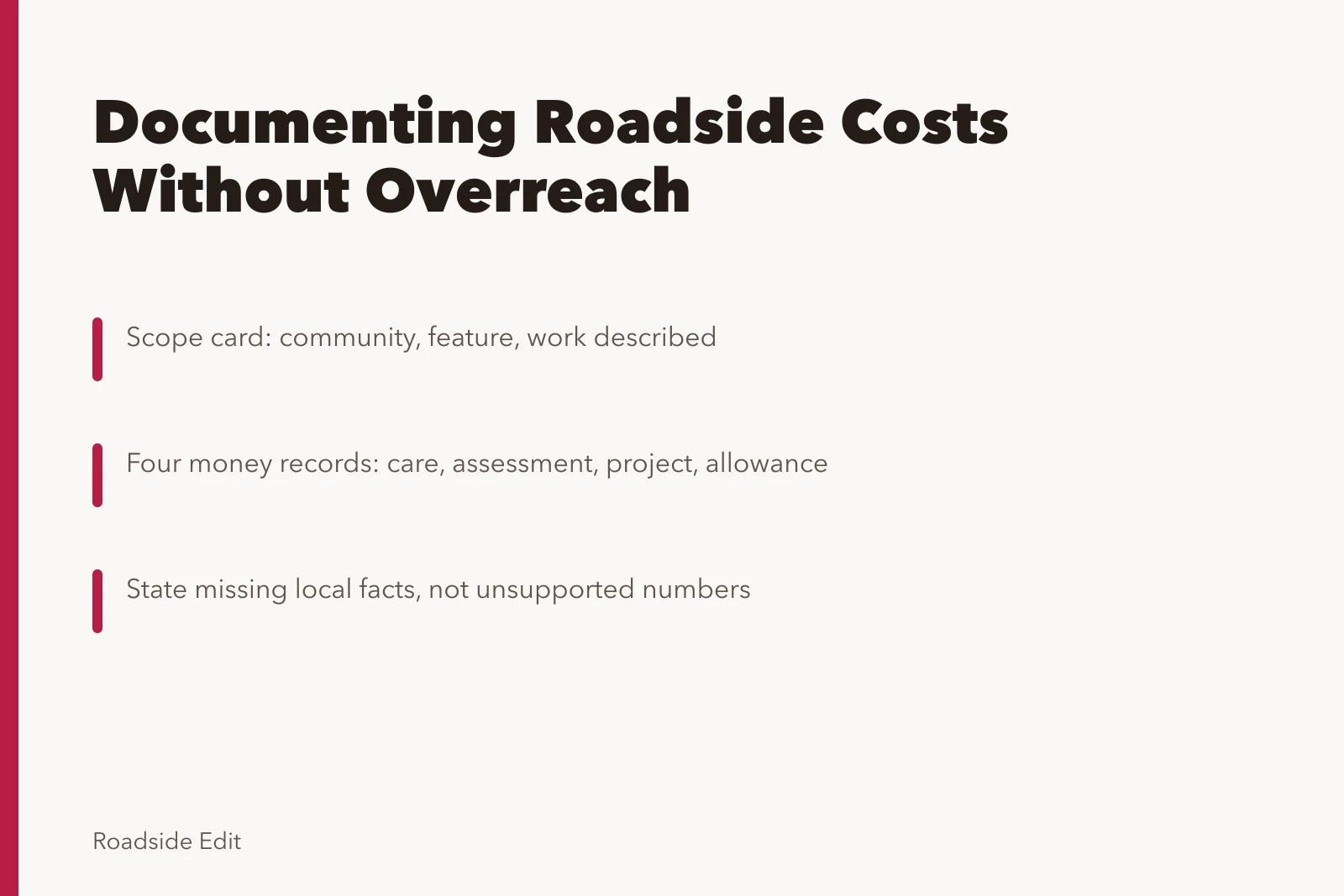
So a corridor average is a research finding, not a budget. Treat it as a list of documents, not a number.
Reconcile the documents instead of averaging them
The work is reconciliation. Take three real documents about one property and read them against each other.
Show the numbers
| Sign shop quote | 2,019 |
|---|---|
| Contractor invoice | 2,021 |
| State historic preservation office file | 2,023 |
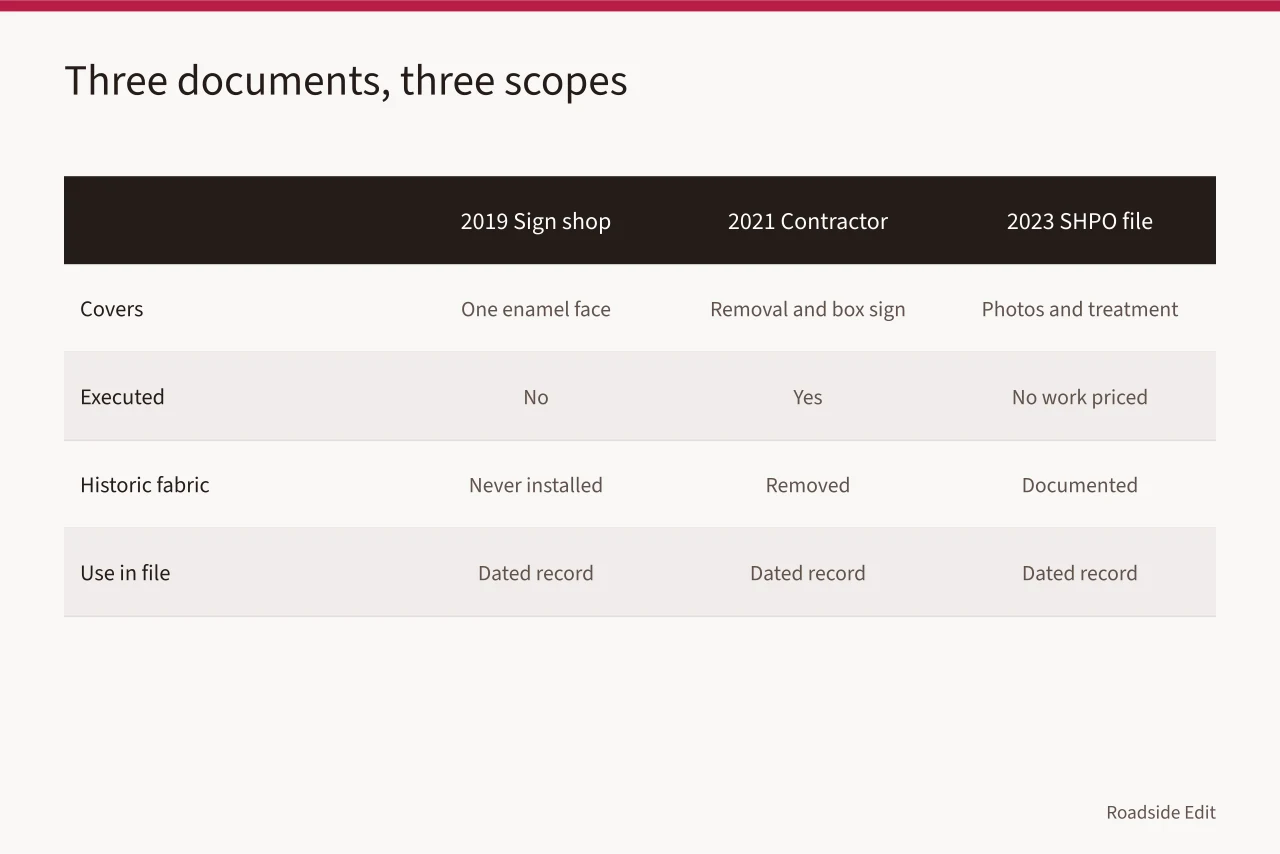
Averaging those three produces a figure that describes nothing. The 2019 quote prices a face that was never installed. The 2021 invoice prices a replacement that removed the historic fabric. The 2023 file prices no work at all.
File each with its own date, scope, and source, then write what the set shows: the property lost its enamel face in 2021 and the replacement is not a restoration. That sentence is checkable. An average is not.
Do the same for a motel exterior. A brick veneer repoint, a curtain-wall glazing replacement, and a butterfly roof repair are three trades with three schedules. Historic motel restoration cost records shows how to keep those lines apart when the property changes hands mid-project.
Keep the hazard index out of the money column
A hazard category tells a community where to look. It says nothing about the condition of a canopy soffit, a dry-stand pipe, or a pump-island footprint.
FEMA's National Risk Index documentation describes the data as support for community decision-making, risk communication, and identifying where a refined assessment is needed. Read the FEMA National Risk Index technical documentation. It is not an estimating method, and it never prices a specific building.
Give it its own column in the note. When a hazard score sits beside a dollar figure, readers assume the score drove the figure. It did not.
Name the authority, not the requirement
Canopy structure, neon transformer load, and underground tank status are three different authorities. A licensed structural engineer, a licensed electrician, and the state environmental agency each own one of them. A budget note records that the review is outstanding and names who owes it.
The same applies to easements, historic tax credits, and customs paperwork for neon parts or diner booths brought in from Canada. Those belong to an attorney, an accountant, and a customs broker. Write the line item, name the professional, and cite the adopted ordinance or statute rather than a remembered rule.
Cost lines that stay separate
Split every figure into the part it actually covers. Fabrication is not survey, and survey is not travel.
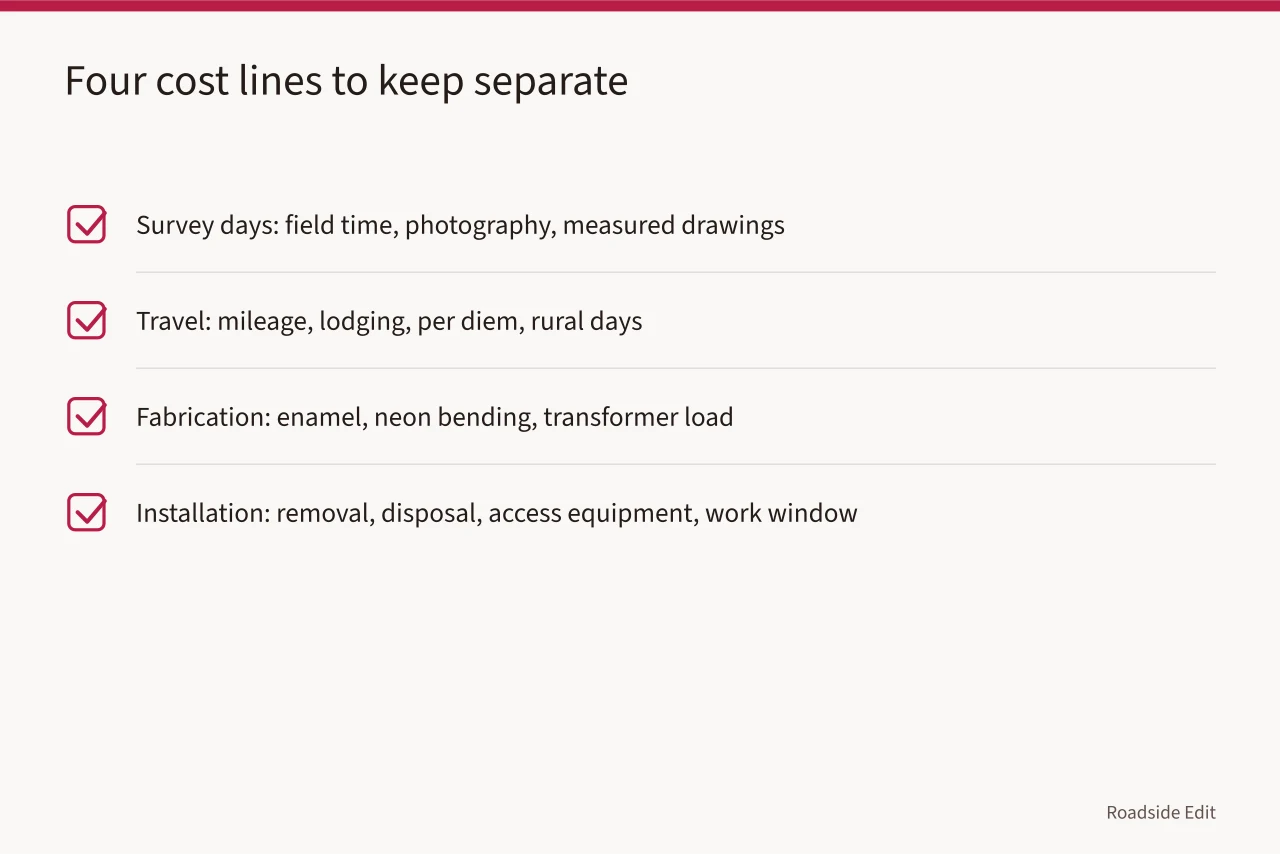
- Survey days: field time, photography, measured drawings, condition notes.
- Travel: mileage, lodging, per diem, and the days consumed getting to a rural site.
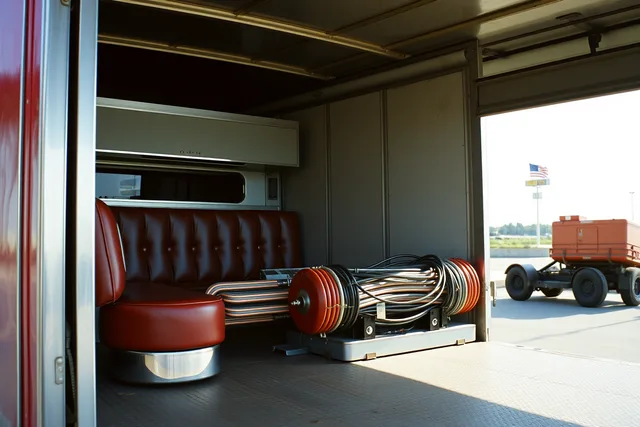
- Fabrication: enamel work, neon bending, tube diameter and transformer load, laminate and chrome-edge trim for a diner booth.
- Installation: removal, disposal, access equipment, and the window the work is allowed to happen in.
A quote that names only fabrication is a partial amount. Label it that way.
Provenance is the part that cannot be re-bought
Two failure cases recur. Over-painting original porcelain enamel to brighten a sign face, and replacing neon with LED to cut maintenance. Both lower the operating cost and both remove the evidence a nomination or a grant file needs.
Once the enamel is covered, the original color, the manufacturer's mark, and the porcelain chipping pattern are gone. Once the neon is out, the tube diameter and transformer load that date the sign are gone with it. Roadside studio care checklist covers the recurring inspection routine that catches deterioration before either swap looks like the cheap option.
Record the condition before any treatment. A dated photograph of the intact face is worth more to the next editor than any figure in the file.
Where the figures come from
GSA's historic-building technical procedures require project-specific editing and professional judgment about whether a procedure applies to a given building, project, or location. Review GSA technical procedures. A procedure written for one building type is a starting point for research, not a price.
NPS Preservation Brief 43 describes a historic structure report as a record of existing condition, treatment objectives, and later documentation of work performed. Read NPS guidance on historic structure reports. That structure suits a corridor file: what was proposed, what was done, what the record does not contain.
The Secretary of the Interior's Standards tie treatment decisions to a property's significance, physical condition, and available documentation. See how NPS describes treatment choices. None of those sources sets a private project's cost, and none of them should be cited as if it did.
NPS documentation standards ask for accurate records from reliable sources, with stated limitations that let someone else check the work. Use NPS documentation standards as a recordkeeping model. Apply that to the money columns: source, scope, date, limitation, together.
Worked example: one sign, three figures
A 1954 porcelain-enamel station sign on a Route 66 alignment. The file holds a 2019 sign shop quote for one enamel face, a 2021 invoice for removal and a plastic-faced box sign, and a 2023 preservation office condition file.
Write it as three dated records, not one range. State that the 2019 quote was never executed.
State that the 2021 work removed the enamel face. State that the 2023 file recommends treatment and carries no cost.
For a full walkthrough of keeping dated budget notes organized for a 2027 cycle, see How to keep historic motel restoration budget notes for 2027 without pricing a thing.
Then add the context column: the corridor's hazard category, the survey date, the source. A reader can now see which figure covers what, and no editor downstream can lift a number out of the file and call it the price of a sign.
Common questions
Can three documents about one sign be combined into a single figure?
No. Each covers a different scope on a different date. Averaging them produces a number that describes none of the three, and the note loses the fact that the enamel face was removed.
Why give a hazard index its own column?
Because a score beside a dollar figure reads as a cause. The index points to where more assessment is needed; it does not describe the condition of a canopy, a sign, or a roof.
What is lost when neon is replaced with LED?
The tube diameter and transformer load that help date the sign, and the physical evidence a nomination or grant file would cite. The maintenance saving is real; the provenance loss is permanent.
Who decides whether a canopy, transformer, or tank is safe?
A licensed structural engineer, a licensed electrician, or the state environmental authority, depending on the item. The note records that the review is outstanding and names the professional who owes it.